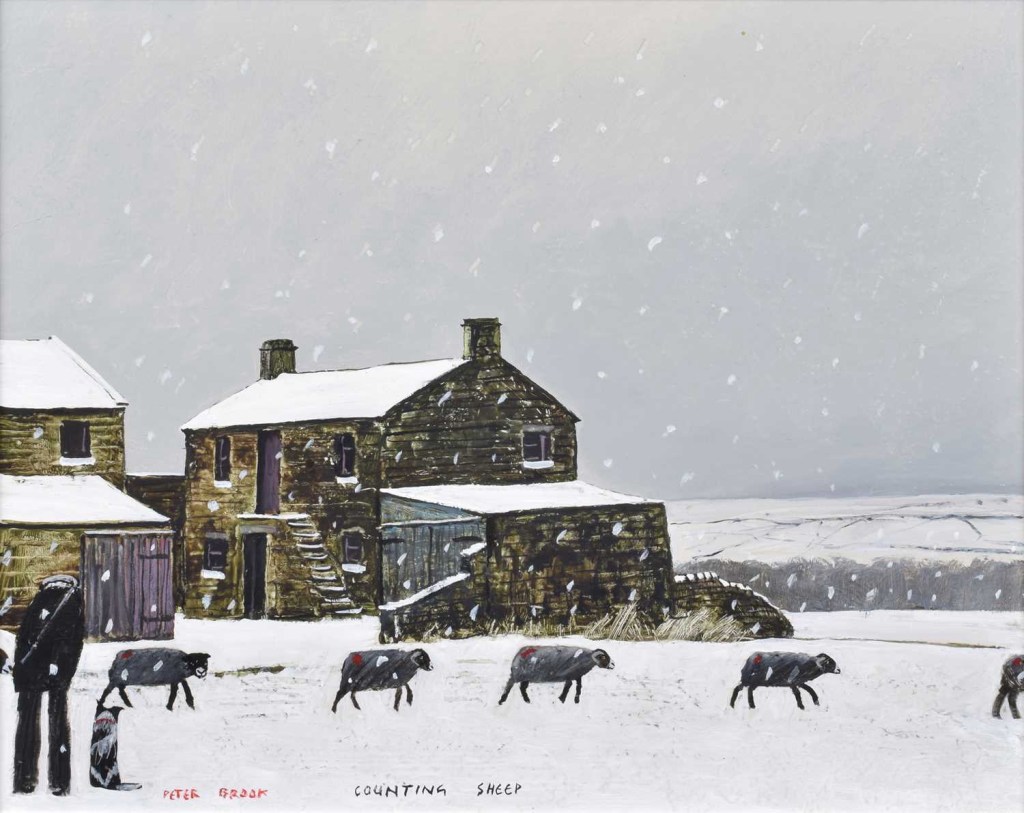
This time of year, (around the end of November / start of December as of writing) is known as the “hinge of the year” by upland farmers. The clocks have gone back, the bracken has bleached to rust, and the last of the swallows are long gone. Up on the fells the year’s main outdoor work might be done, yet it never really stops. This is the season of maintenance, mending, and quiet worry.
The Sheep Year Turns
By November, most hill flocks have been “gathered”, brought down from the high summer grazing on the open fell or heaf. The ewes are pregnancy-scanned (often in the last week of October or first week of November), and the results dictate the winter:
- Twins and triplets go into the best “in-bye” ground or are housed early and fed barley and silage.
- Single-bearing ewes stay out longer on the rougher pastures.
- Thin or old ewes are culled or sold as ‘cast’ ewes to the lowland fattening trade.
- Tups (rams) are turned out with the ewes around Guy Fawkes Night (5th of November) in many areas, timed so that lambs arrive from early April when the grass is just starting to grow again.
“Ewes yeerly by twinning rich masters do make, the lamb of such twinners for breeders go take”.
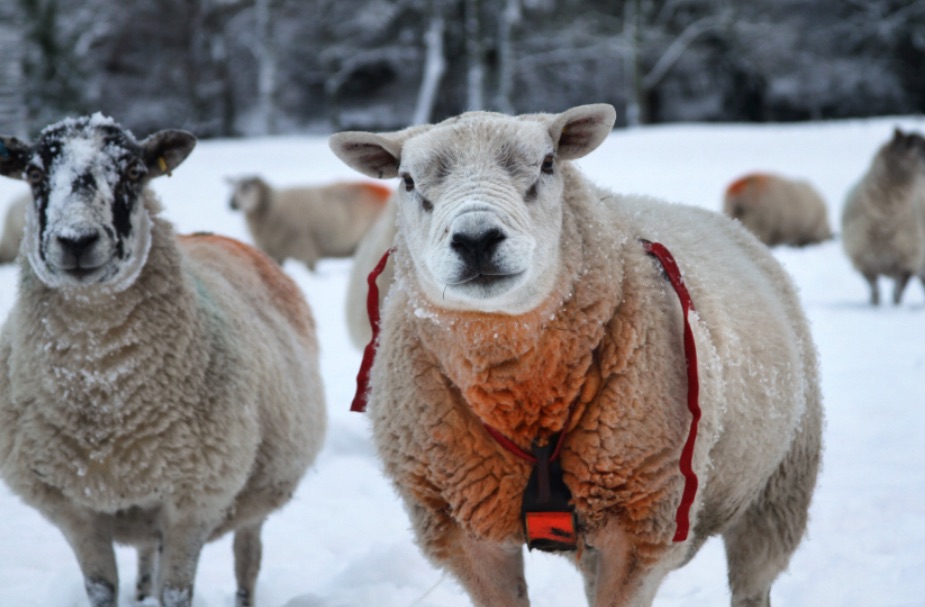
You’ll often see rams wearing coloured raddle harnesses, painting the ewes’ rumps bright red, blue, or green as a clear record of mating.
Cattle and the Rush to House
Most upland suckler herds are housed by mid-November. The grass has stopped growing once soil temperatures drop below about 5 to 6 °C, and the cattle would only churn the fields to mud if left out. Bringing them in is a major operation: cleaning sheds, laying fresh straw, checking feed barriers, and making sure silage quality is good enough to last until turnout in April or May.
Some hardy Luing, Galloway, or Highland cows with calves at foot may stay out all winter on the hill with supplementary hay or blocks, but even they are usually brought closer to the farm by now.
“In wet weather a cow has five mouths, for each foot destroys as much sodden grass as the animal can eat.”

Walls, Fences, and Water
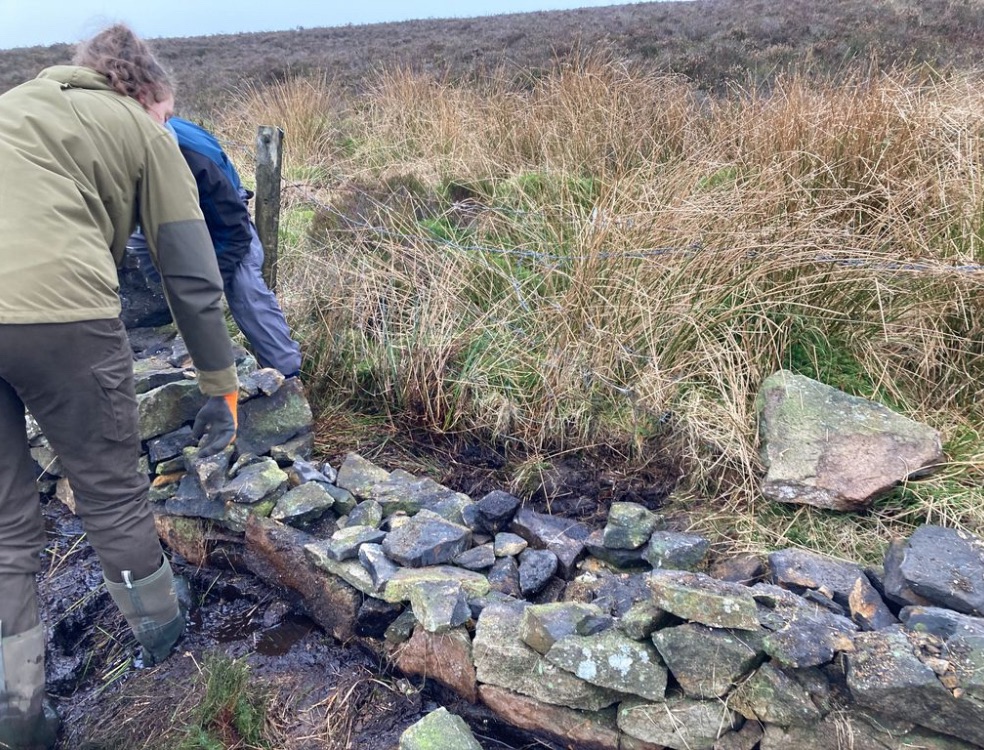
This is traditionally the time of year when that dry-stone wall that “fell down in March” finally gets rebuilt. The ground is soft enough to dig footing stones, but not yet frozen. Fences are strained, gates re-hung, and water troughs cleaned before the first hard frost splits a pipe and leaves you hauling water in buckets.
Hedge-laying and Tree Work
In lower-enclosed fields, November and December are the traditional months for laying hedges; cutting and bending stems to make a stock-proof barrier that will thicken over years. It’s skilled, cold, prickly work, but it has to be done before the sap rises in February. Any fallen trees or branches may be cleared and chopped up too, ready to be stacked to dry for the next winter replacing the logs burnt through this one.

Feeding and Finances
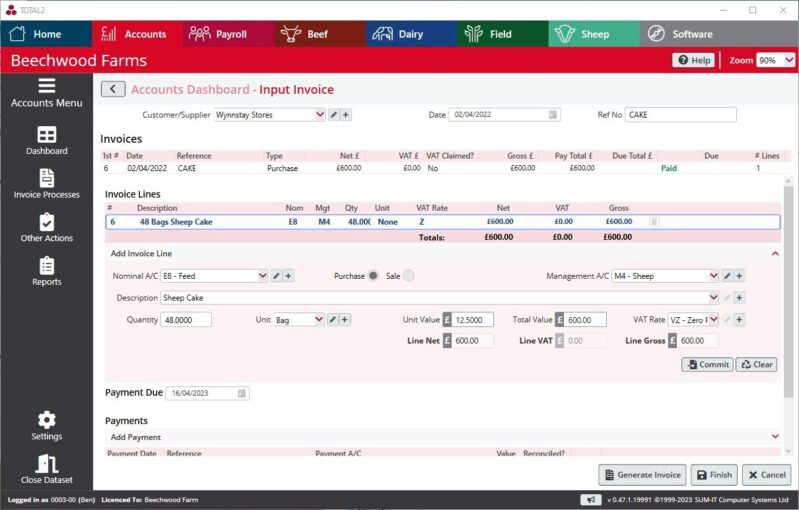
Silage pits are opened, hay barns raided. Many upland farms that are on marginal land rely on the Basic Payment Scheme (now being phased out) and agri-environment money. November is also when accountants send the first draft farm accounts, rarely cheerful reading after a bad summer and high feed prices.
Weather and Mood
The light is thin and low, mist clings to the valleys, and the first snow has dusted the tops. Farmers talk about “getting stock away” (sold) before Christmas if prices are decent, or “carrying them through” if they think fat cattle or spring lamb will pay better later.
There can be a strange calm, with no shows left to prepare for, no silage to cut, and no tourists staying in the camping barn or asking for directions. Just the daily round twice a day, the sound of a quad bike echoing off the fell, and the sobering knowledge that winter has only just begun.
Yet there is satisfaction too, the sheep are tucked down off the high ground, the sheds are full of forage, the walls are (mostly) standing). The farm is as ready as it can be, in the hills that is sometimes the most an upland farmer can ask for.
Lastly the uplands can be, in their quiet and cold way, uniquely beautiful at this time of year.

Many thanks to Andrew and Wendy Newhouse, George and Liz Simpson, Tom Robinson, Liz Scott, Ralph Rigby, Natasha Smalley and all of the other farmers that have taught me so much about upland farming over the years.
If you enjoyed this you can show your appreciation by buying me a coffee, every contribution will go towards researching and writing future articles,
Thank-you for visiting,
Alex Burton-Hargreaves
(Dec 2025)
 Northwest Nature and History