Yain Tain Tethera
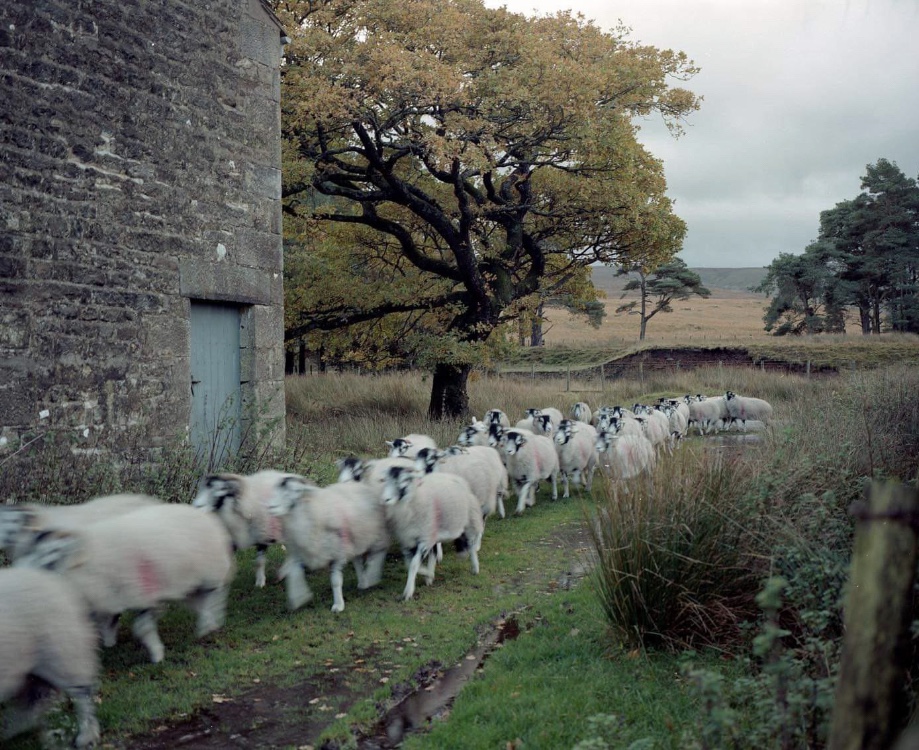
‘Yain Tain Tethera’ is a rhyming system of counting historically used by shepherds in the Bowland area, it is the local dialectic version of an ancient counting system with many variations around the British isles collectively known as ‘Yan Tan Tethera’, here is the Bowland version;
Yain=1
Tain=2
Eddera=3
Peddera=4
Pit=5
Tayter=6
Layter=7
Overa=8
Covera=9
Dix=10
Yain-a-dix=11
Tain-a-dix=12
Eddera-a-dix=13
Peddera-a-dix=14
Bumfit=15
Yain-a-bumfit=16
Tain-a-bumfit=17
Eddera-a-bumfit=18
Peddera-a-bumfit=19
Jiggit=20
Most of these ways of counting almost died out at the start of the 20th century, but still held on in some of the more remote parts of Britain, they have become less obscure in recent years due to the resurgence of interest in rural traditions and ways of life.
Cumbric counting
‘Yan Tan’, is one of the last surviving vestiges of a now extinct dialect of the ancient Brythonic language (Brythonic being the origin of British) called ‘Cumbric’, which was spoken in the area bound by the Firth of Clyde, the River Ribble, the Southern Scottish Uplands and the Pennines.
It is recorded as widely spoken up until about the 12th century, and hung on up until the 19th century as a way of counting stitches in knitting, counting money, in the cotton mills (I’ll explain a bit more about this later) and in a couple of popular children’s rhymes, which are still remembered, if not in popular use by children, to this day, such as “Hickory, dickory, dock”, which can clearly be seen to come from the words for eight, nine and ten; “hovera, dovera, dick”.
Vigesimal system
This method of counting, which as you can see is in series of 5’s up to 20, is known as a ‘vigesimal’ system, deriving from the Latin adjective vicesimus, meaning ‘twentieth’, and is still the basis of many counting systems around the world.
It is the oldest form of counting and may have been the first to evolve, simply because humans, having, of course, 5 fingers, find it the easiest way to carry out multiplication, in Britain it is still in used in Gaelic, Welsh and in the Imperial measurement system, where twenty hundredweight make up a ton.
When a shepherd reached 20, he would mark off this number in one of several ways, which vary around the country, he would either move his thumb onto a notch or bump on his shepherds crook, with the number of notches corresponding to the total of his flock, he might pick up a pebble from one pocket and move it to his other pocket, (official score-keepers in cricket still do this now, even in test matches!) or he might mark a ‘score’ on the ground or other surface. In fact the word ‘score’, as in ‘keeping score’, or ‘score and twenty’ both have the same origin.
Mee-Maw
Although the vowel sounds of yan tan tethera vary around the country, as can be heard in these two videos, video one by Jake Thackray ‘Molly Metcalfe’ which is a song about Yorkshire’s sheep counting system; and video 2, a version from the Lake District, it is apparent that they all share one common similarity, this being that each individual number, and it’s place in the series of 5’s, is easily recognisable in a noisy working environment.
Video 1: https://youtu.be/TiXINuf5nbI
Video 2: https://youtu.be/0njzBEOnRww
As you can imagine a sheep fold or farmyard is a fairly noisy place when a flock is being gathered in for marking, scanning, worming or dipping, especially on the fells in the wind and rain (see link for a list of sheep terminology), so to avoid miscounts, which may cost money and time, it is essential to have a system of communication which is clear audibly and visibly.
This system of exaggeratedly pronounced vowels is similar to ‘mee-maw’, which is the name given to a manner of communication which is also composed of exaggerated vowels and consonants, reinforced with lip and mouth movements for added clarity, and used up until fairly recently in the country’s mills and factories, in particular the cotton mills of the north with their many clattering looms. Indeed many of the factory workers will have originally been from farming stock before moving to the mill towns for work, so likely carried this with them.
Hopefully yan tan tethera, with its many dialects, will be remembered as an important part of our linguistic heritage just like mee-maw, and will continue to be used by future generations of farmers, as the loss of such an integral part of the history of our language and culture would weaken our future, not just our past.
A B-H
 Northwest Nature and History
2 thoughts on “Yain Tain Tethera”