
(My original title for this article was going to be ‘lambing time, a season of anticipation, and worry’ but I think my wife’s title is more fun!)
Lambing Time
For most sheep farmers right now lambing time is getting into full swing. Sheep pens all across the countryside will soon be alive with the questioning baas of the ewes and the answering bleats of the newborn lambs.
Lambing always brings with it a complex mix of contrasting emotions for the farmer with excited anticipation on one hand and nervous worry on the other.
There are so many things for them to worry about; were the ewes in the best possible condition, neither too fat nor too thin?, do they have plenty of milk?, how many losses are they getting?, and will the ewe that had trouble lambing last year lamb all right this time round?
Weather and the condition of the ewes are two of the biggest concerns. The weather is not something that can be helped, as of writing (Feb 2023) it’s been exceptionally mild and dry for weeks now, but of course it can change very quickly and all shepherds will have somewhere warm and dry for the ewes to lamb in if it gets too nasty.
Waterlogged ground can be deadly for lambs and if wet weather persists it can be a serious problem later on, especially if there’s not enough light for the grass to grow, some sun is needed to warm the ground up as well.
This means that when the year starts off wet and cold farmers have to concentrate more on the condition of the ewes, it’s also one of the few things they can exert any control over.
Ewe Nutrition
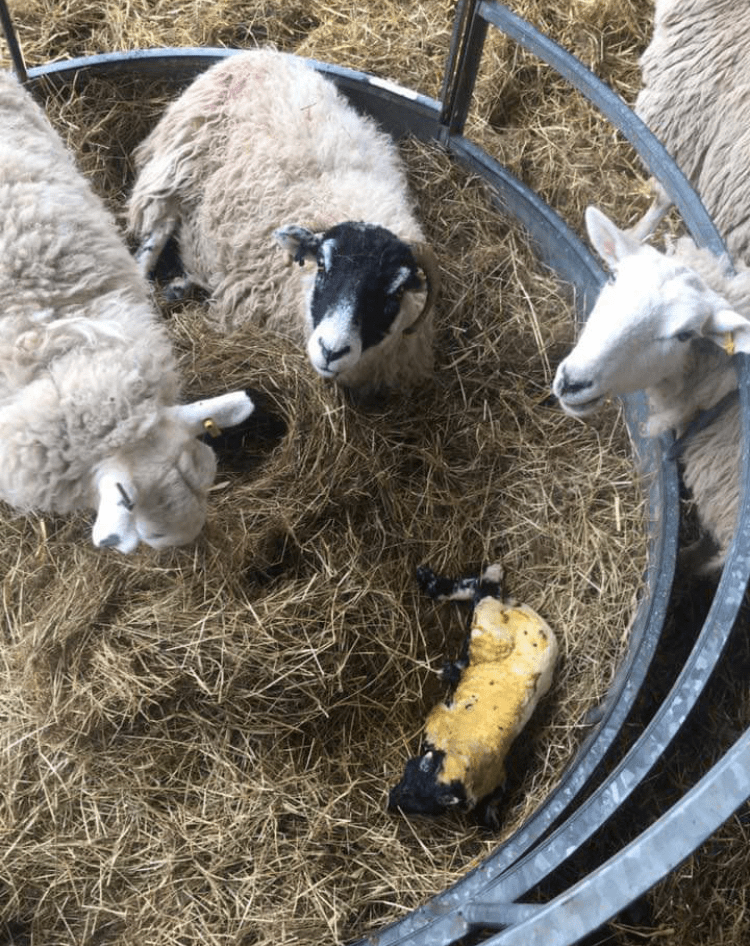
Careful balancing of nutrition is the best way to keep ewes in peak condition so they give birth to good birthweight lambs with relative ease.
The aim is to have the lambs standing upright and suckling within 15 minutes of being born. To achieve this a farmer can feed ewes supplementary vitamins and minerals, this is called ‘drench’, and is applied with a ‘drenching gun’ through the ewes mouth. This is fairly straightforward but care must be taken to avoid hurting the ewes mouth, wormer will also be given to ewes as well with a drenching gun.
When the lambs are born they will be given a kind of milk called colostrum, this is rich in vitamins but also contains antibodies and gut microbes and is produced by most mammals for their newborns to help toughen them up and shield them against diseases.
Farmers will quite often give them additional colostrum to that which the ewe produces using a milk bottle at a ratio of 50ml per kg of bodyweight in the first two hours after birth. This may be obtained from a ewe if she has only one lamb to feed and she has already fed it, in which case 100 or 200ml will be milked off, if it tests very well for antibodies than it might even be frozen for the next year.

The time immediately after birth is the most dangerous for a lamb as they are extremely vulnerable, so they need to be tough enough to survive.
Deficiencies a farmer needs to be vigilant for are Copper, vitamin E, Iodine and Selenium, as a shortage of any of these in the lamb or the ewes milk can cause diseases like ‘white muscle disease’, which causes their muscles to be weak, or ‘swayback’, which is caused by a lack of copper which makes lambs unsteady.
Safety and shelter
Any weaknesses in the lamb will also make them more susceptible to bad weather and predators, to protect newborn lambs from weather a farmer might have them born in shelters, such as heated closing pens which are draught free and dry, or commonly in large poly-tunnels which work like greenhouses.

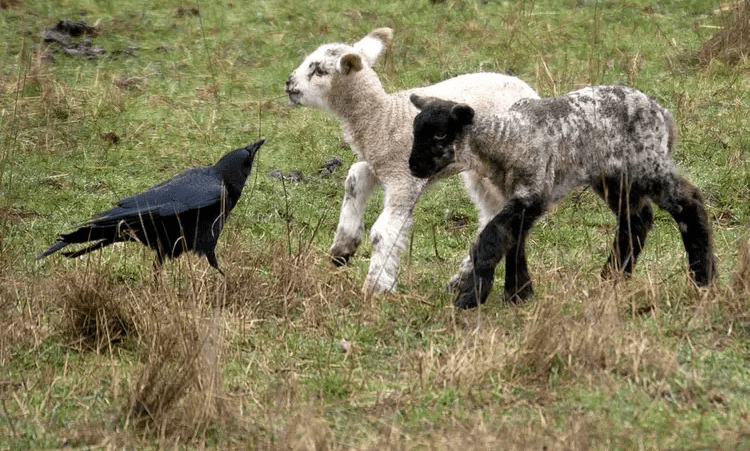
These shelters will be secure from predators like foxes, loose dogs or crows but when lambs are born in the open there is no such protection, and the ewe can only do so much to protect her young, so the farmer has to very vigilant about this too.
Foxes and Crows, which will go after a lambs eyes straight after they are born, can be discouraged by human presence and the loss of a few of their kind from a farmers shotgun or a farmhand’s air rifle will put them off, but if they get a taste of lamb they will become very persistent and hard to get rid of.
Loose Dogs
Loose dogs are another issue entirely though and can be a real problem, as a farmer can’t tell when a walker has let a dog off in a field and it’s currently ripping through their flock.
No matter how many signs there might be or public information videos people still let them off, and simply shooting a dog is not as easy as shooting a crow as there can be unpleasant repercussions for the farmer, who is simply trying to protect his livelihood.
Sheep farmers still have to, somehow, retain a sense of optimism, even though they have to deal with all this, they will think of the potential and the possibilities: the ewe lambs that will become the future ewes to help restock the flock, for example.
Hopefully the lambs that are being born now will bring good prices in the lucrative market for early spring lambs, especially if they are selling to the restaurant trade.
For pedigree breeders though there is always the hope of producing that extra-special lamb, the one that could grace the country show a few months down the line and make serious money at the sales later.

It takes a very tough breed of sheep to survive life out in the open in a typical British spring, especially with hill farming where the sheep are exposed to the elements on the open fells, and it takes a very tough breed of farmer to look after them, there must also be a certain kind of madness as well as it is a lot of hard work for very little return.
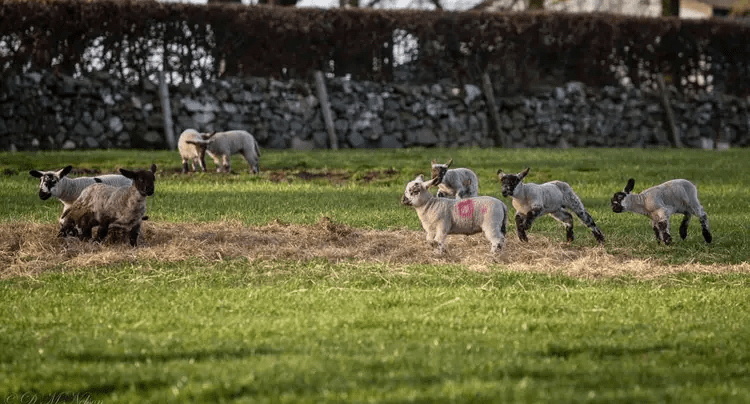
But the simple pleasure of leaning on a gate and watching lambs, that you may have successfully raised yourself, suckle from their mothers and giddily race around after each other must sometimes be enough compensation.
A B-H
 Northwest Nature and History
3 thoughts on “The Hills are Alive, with the Sound of Bleating!”