This is a guide to some of the Hill Sheep breeds that can be found in the Northwest of England, (for an explanation of some of the terms used please see this article) ;
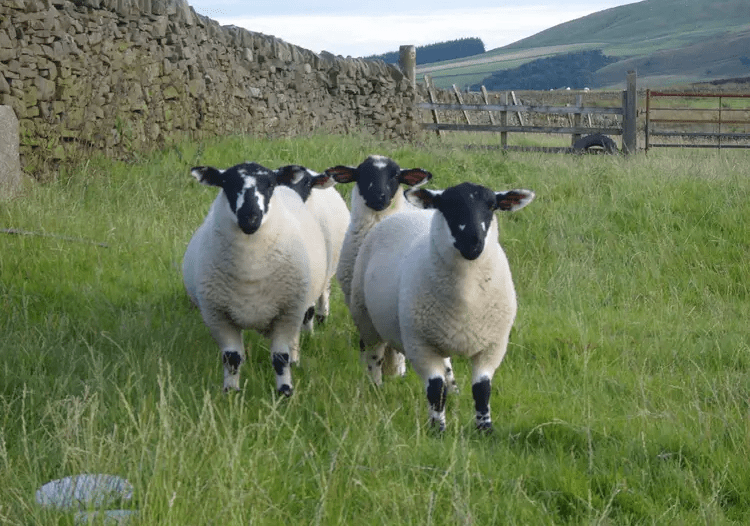
The Derbyshire Gritstone
This hardy breed of hill sheep was originally bred by Peak District hill farmers to survive in harsh environments and to thrive on the poor quality grazing found on the moors and it is one of the oldest breeds to be found in the British isles. Today the breed is found around Cheshire, Derbyshire, Lancashire and Yorkshire and Gritstone rams have been bred with Welsh hill sheep breeds to increase their size. They are large, strong sheep with a very weatherproof fleece which is widely considered to be one of the finest of all the fleeces found in the hill breeds. Both male and female are polled, or hornless, and they have distinctive black and white faces.

The Swaledale
Swaledale Sheep are well suited for the harsh conditions of the moors and fells, they have short, broad teeth for cropping the coarse vegetation, and strong legs and feet for crossing the rough hill sides. Their wool is also very hard wearing, with that found near to the skin being very dense and insulating, whilst the outer layer is wind and rain proof.
They are famous for their distinctive curled horns and they have a black face with a distinctive white muzzle and white rings around the eyes, when exhibitors are preparing a Swaledale for showing they will clip any black hairs from around the eyes and the muzzle to make it entirely white.

Jacob’s Sheep
The Jacob Sheep takes its name from a story in the Old Testament of how Jacob became a selective breeder of black and white sheep. It is an upstanding, deep bodied sheep with a striking white and black fleece and a badger like face with a white blaze, they also have two or four dark coloured horns which grow proudly upright.
Jacob ewes are known to make excellent mothers and frequently have twins or triplets, their meat is also tender and well flavoured, both of which make them popular to breeders of lambs, and with the resurgence in crafting their fleece has recently become popular again for spinning and weaving due to its unique colour and pattern.

The Herdwick
Read my article about Herdwicks to learn more about this iconic Hill Sheep.

The Suffolk
The Suffolk is found throughout the world and was originally bred to produce mutton, they are one of main breeds found in the British Isles and are often used as the terminal sire on a variety of ewes of other breeds to produce good quality prime lamb.

The Lonks
The Lonks sheep is a hardy and popular breed which I’ll cover in another article.
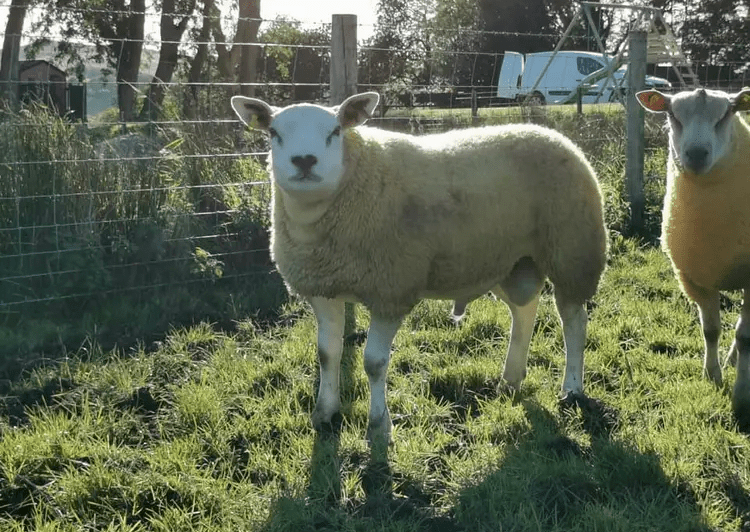
Texels
The Texel breed of sheep originates from the Island of Texel off the north-west of Holland and has been popular since Roman times, it is famous for being hardy, tough and docile, all characteristics which have given the breed a loyal following amongst sheep farmers.
It is a medium sized sheep with a long body which is well proportioned with a level back and hefty bone structure, it also has a solid, square stance and a dense, crinkled, cream coloured fleece with shorter, wirier, white coloured hair on the head.

The Cheviot
The Cheviot is an extremely versatile sheep with a very long pedigree going back over 200 years, they will thrive in all sorts of places and can be found in Scotland, England, Ireland and Wales.
The ewes are known to be good mothers and easy to handle at lambing time too with few lambing problems. They are very alert looking polled sheep with erect ears and a brilliant white and woolly head with a short and strong neck and their fleece is long, deep and white.
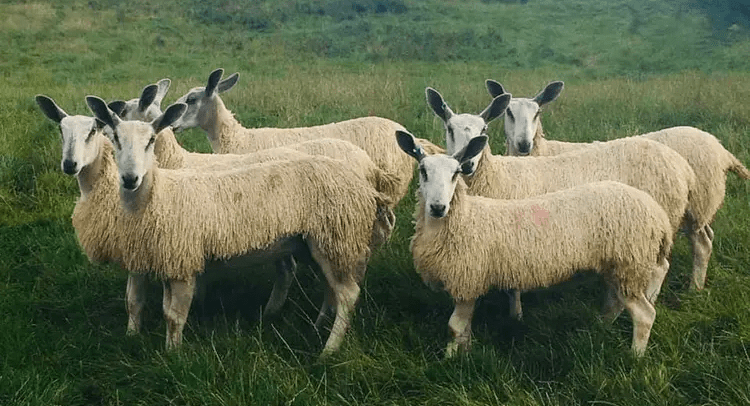
The Bluefaced Leicester
Bluefaced Leicester are regularly crossed with many other breeds, in particular hill breeds such as Swaledale, Blackface, Welsh Mountain and Cheviot, to produce what is called a ‘Mule’ ewe.
Mules are of great importance to the sheep industry, this is because they are prolific and hardy with good mothering instincts. Their lambs have what is called ‘hybrid vigour’, meaning they are more resilient to diseases and genetic defects than pure bred lambs, and grow very well. The wool from mules makes up around a quarter of the wool input to the British wool industry, called the ‘British wool clip’ and is mostly used to make carpets.
A Bluefaced Leicester has a broad muzzle, bright, alert looking eyes and erect ears, their head is usually dark blue which shows through a thin white hair, this is what gives them the name ‘bluefaced’. They also have broad shoulders and a long back, overall they are a solid looking sheep which is something that makes them consistently popular with sheep breeders.
There are many, many other breeds of Sheep in the British isles, which I’ll write about in the future, but these are some of the most popular ones to be seen in the fields of the Northwest and on the stock books of the area’s auction markets, I hope this article sheds some light on the complex and archaic world of the upland shepherd!
A B-H
 Northwest Nature and History
6 thoughts on “Some of the breeds of Hill Sheep that can be found in the Northwest”