
The Red-Tailed Bumblebee
The Red-tailed Bumblebee’s scientific name is Bombus lapidarius, bombus simply meaning bee and lapidarius meaning ‘relating to stones’, referring to the small mounds of tiny gravel found where the bumblebee has dug a nest.
Common and easily identifiable
It is a common and easily identifiable Bumblebee found all across the British isles but rare in Northern Ireland and the far Northwest of Scotland and numbers have declined in recent years like many other bee species. The females are jet black with striking red ends to their abdomens, indeed they were commonly known as ‘red-arsed’ bumblebees until prudish Victorians altered their common name to something deemed less crude in guides of the time.
The male is similar in appearance to the female but with red hairs on the hindlegs and a yellow/orange collar and head, their tails, or behinds, might appear more of an orange colour later in the year as they tend to fade, a bit like a wooly jumper might fade in the sun.

Habitats
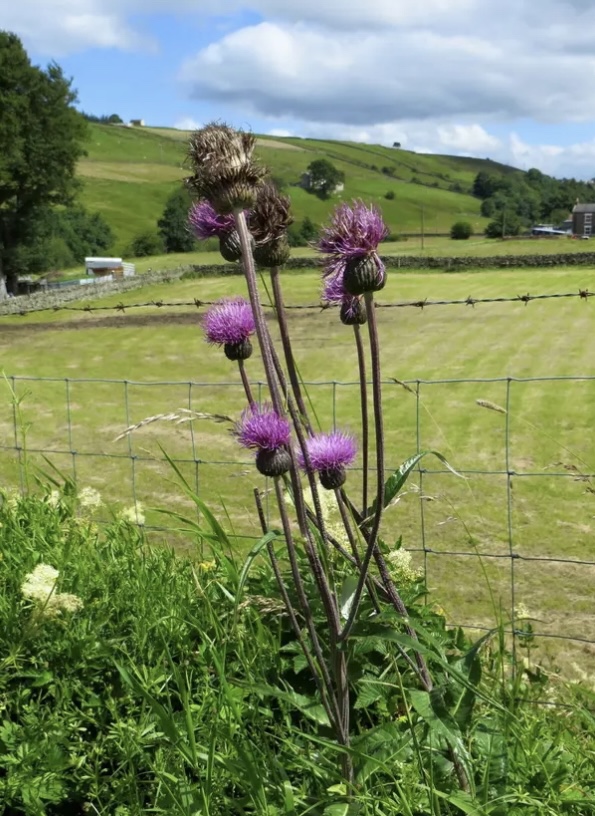
The flight period of the Red-tailed Bumblebee is from March to October and they can be found in all sorts of habitats. In the height of summer they will visit verges and wildflower meadows where they will pollinate Thistles, Orchids, Globeflowers, Buttercups, Hayrattle, Dandelions and other flowers.
Later in the year the heather moorlands will be buzzing with them as they fly between the blooms of Heathers and Bilberries, they will also pollinate the flowers of hedgerow plants such as Blackthorn, Gorse, Foxgloves and Hawthorn.
In very late summers when it is still warm enough for them to fly but most plants have gone to fruit they have occasionally been observed eating aphids as an alternative food source, how often they resort to this is not known.
They will cover a lot of distance in a days foraging, up to 3 miles from their colony, and are able to fly up to 35mph which means they can fly against moderate hilltop breezes which would ground other flying insects, this gives them a competitive edge and means that quite often they are one of the only bees you will see on the moors.
Lifecycle
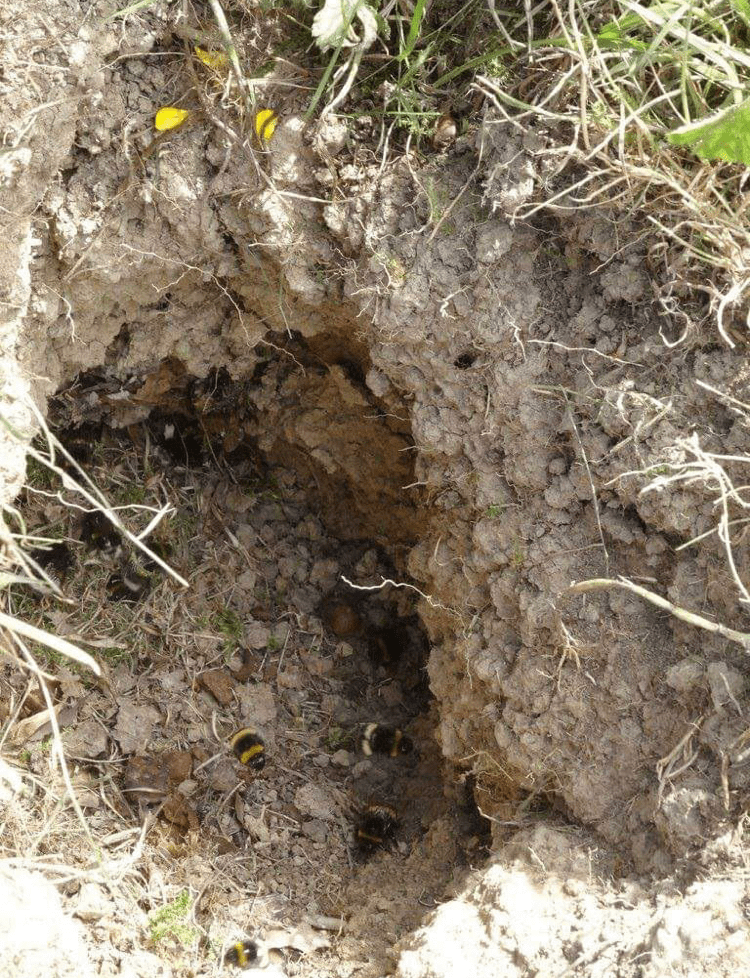
The lifecycle of the Red-tailed Bumblebee is quite similar to that of other species, in the first warm days of spring you will see the large queens flying about the first flowers, they are gathering nectar and pollen for their newly hatching brood. A queen Bumblebee will have found a suitable place to build her nest first, this will be deep in dry leaf litter, a hole in dry ground ,in a drystone wall, fence post or tree or quite often in the wall of an old barn. These places will all have one thing in common which is that they will be dry, not prone to water logging and south facing to catch the morning sun in the spring.
In this dry, warm and safe place the queen will make a nest in which she will lay just a few eggs at a time, around half a dozen, these eggs will hatch into worker bees which support the colony and their queen. The Queen will continue to lay eggs in this nest throughout the year but as the workers mature they will do all the work of gathering food, defending and cleaning out rubbish from the nest, this gives the queen a chance to rest until later in the year.

Royal jelly
In late summer the queen will lay eggs which are destined to become next year’s queen bees as well as ones which will develop into drones or male bees. A drones only purpose is to mate with the queens which will develop new colonies the next year. Queen bees will ensure that these larvae grow to become drones or queens instead of common workers by feeding them a special food secreted from a gland called a hypopharynx, this food is called ‘royal jelly ’ and contains hormones which trigger the development of sexual organs which the workers, which aren’t fed royal jelly, don’t have.
When autumn arrives and brings with it the first cold nights the old queen, her workers and the drones will all die, leaving only the newly mated queens alive, they will leave and find somewhere quiet, warm and draught-free to hibernate until the next spring.
Predators
Their main predators are animals which can dig up their nests such as Mice, Foxes and Badgers, when a Badger has destroyed a Bumblebee nest there will be a hole scraped out in the ground surrounded by bits of dried grass and moss which the queen had painstakingly gathered to insulate it and make it snug. Increases in the populations of Badgers in recent years have led to sharp declines in bee numbers in some areas with some species becoming locally extinct where there are high numbers of Badgers.
This is a problem that conservationists are desperately trying to find some kind of solution to as pollinating insects such as the Red-tailed Bumblebee are a vital part of ecological cycles and chains and without them whole ecosystems would collapse.
Projects such the rejuvenation and creation of wildflower gardens and traditional hay meadows, continued management of heather moorlands, hedgerow and tree planting and smaller, yet still important, schemes such as simply not mowing roadside verges and installing man made nesting boxes, means that they will have more and more wildflowers and places to nest in the future which will go a long way to helping secure the future of these busy, attractive and vital bees.
A B-H
 Northwest Nature and History
4 thoughts on “The Red-tailed Bumblebee”