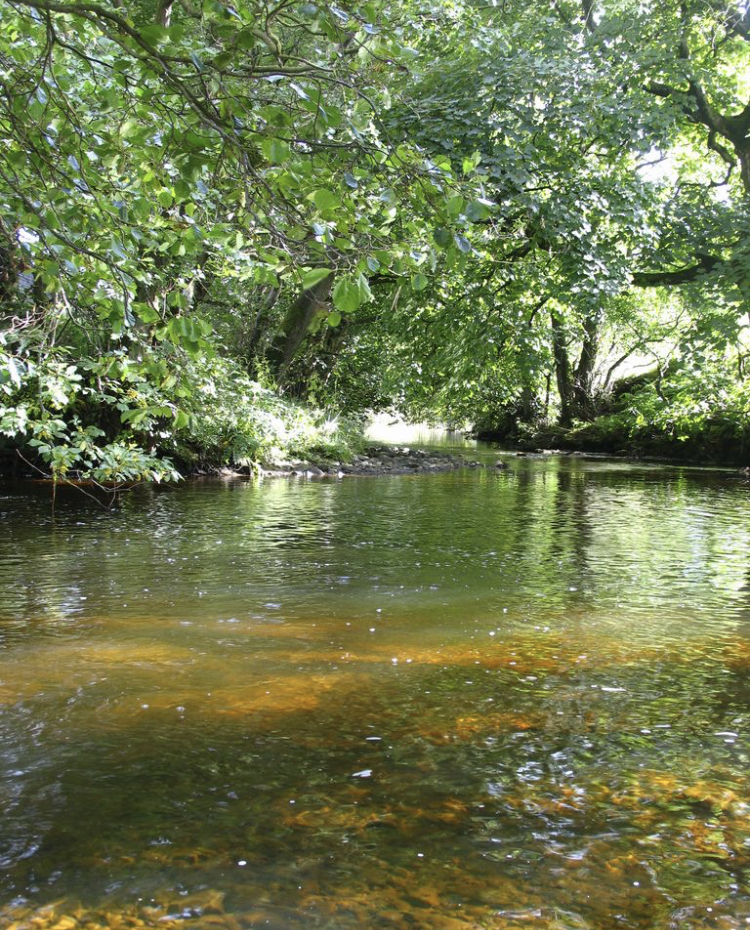
The Common alder Alder glutinosa, is a very hardy species of tree found all along the cloughs, streams and riverbanks of the Northwest, with some areas of Alder woodland traditionally referred to as ‘Carr’. As it does not usually suffer from late spring frosts and is hardy to early autumn frosts it has been planted in many places as a shelterbelt tree too.
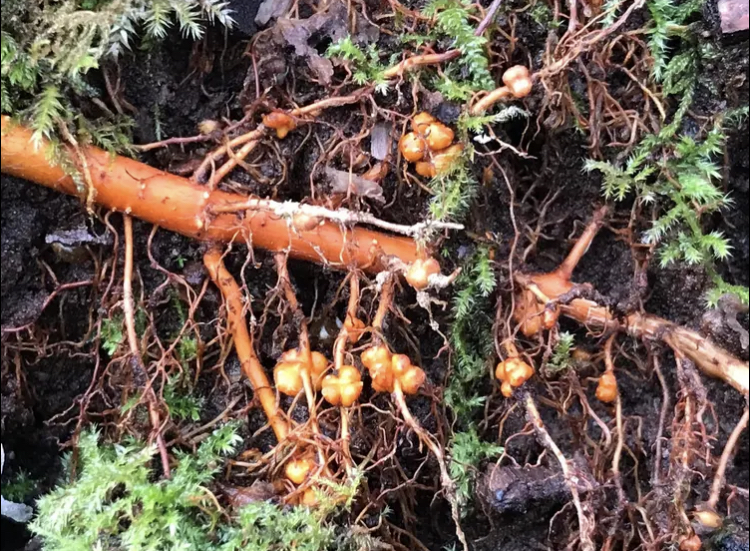
It is often seen in groups and you might notice an unmistakeable mat of dark orange/red roots along the waters edge when they are growing on riverbanks, these form a very good barrier against erosion and in some places it has been planted to protect river banks.
If you look closely you will see some nodules on the exposed roots, these contain nitrogen-fixing bacteria, this means that Alders can survive well on the infertile soils found in the area, they can also obtain nitrogen from the air as well.
Timber
The timber of the Alder is useful for several purposes, charcoal from it was used to make gunpowder and it was also used to make boats, lock gates, bridge footings and sluice gates in millraces as it withstands wetting and drying very well.
The wood can also be used for smoking foods and as it is waterproof and doesn’t impart any flavour to food it can be used to make bowls and storage containers, it’s easy to turn and carve too so in the Northwest it was traditionally used to make clogs.
Modern uses include veneers, plywood and barbecue charcoal but it is still used for a lot of its traditional purposes and in historical restoration projects.
Habitat for other species
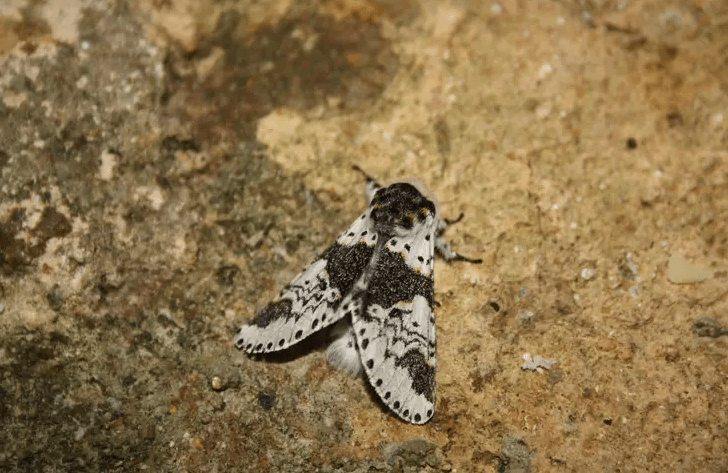
Many of our native species rely upon the Alder for food and shelter, with a number of insects, lichens and fungi being completely dependent on the tree, it is a popular food plant for many insects and moth larvae including the Alder Kitten, Pebble Hooktip, the Autumnal and the Blue Bordered Carpet moth.
In spring the Catkins of the Alder provide an early source of nectar for bees and later on in the year its seeds will provide a food source for finches such as siskins, redpolls and Goldfinches.
The damp conditions of an Alder wood usually ensure an abundance of dead wood which makes Alder woodland an ideal foraging site for woodpeckers, it also means there are a lot of potential nesting sites too. In poorer soils the tree doesn’t live for very long which makes for a lot of dead trees but it can live to up to 100 years if the conditions are right.
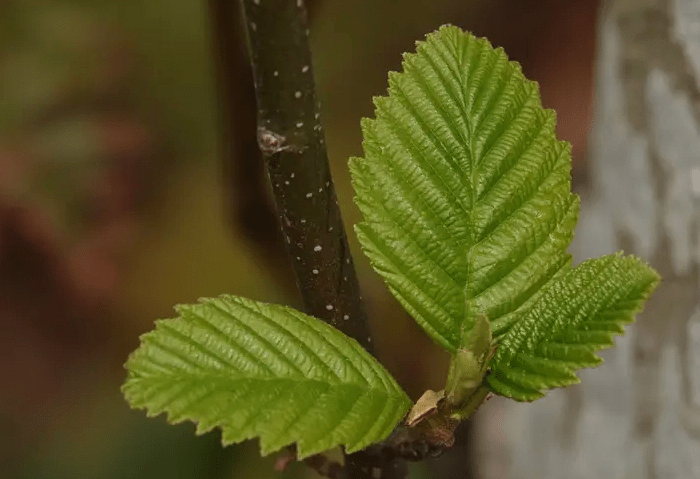
Young Alder trees have a smooth, greenish bark which after the age of about 20 starts to turn dark brown and scaly and it’s leaves are a bright green in colour and almost circular in shape.
Catkins
One of the most distinctive characteristics of the Alder is its catkins which appear early in the spring, the male catkins are yellow and shaped like elongated pendants up to 10 cm long and the female catkins are oval green cones, these form into pine cone like seed cases later in the year.
Alder is ‘monoecious’ meaning that both male and female flowers are found on the same tree, and the pollen is carried from the male to female flowers by the wind, on dry, breezy days this can be one of the spectacles of spring as yellow drifts of pollen fall from the trees like golden wraiths.
The seeds of the Alder are conveyed by the wind too or by the water which allows this humble yet very important tree to colonise the most remote corners of the northern valleys and hills.

Round her cave there was a thick wood of alder, poplar, and sweet smelling cypress trees, wherein all kinds of great birds had
built their nests—owls, hawks, and chattering sea-crows that occupy
their business in the waters
From Book Five of The Odyssey, by Homer
A B-H
 Northwest Nature and History
4 thoughts on “The Alder”