
Part One; How sheep farming became a major industry in the British isles
There are currently around 38 million sheep in British isles, made up of more than 60 different breeds, not to mention an enormous variety of crossbreeds, or ‘mules’. In this series of articles I’ll write about the history of some of these breeds and how sheep farming has played such an integral part in the making of our history and landscape. See the article below to read about some of these breeds and for a brief explanation of some of the terms I’ll be using in this series.
Tulit itaque abraham oves
Because of the enormous diversity of landscapes and climates we have here the British Isles have always been ideally suited for farming sheep, the ancient Celts were exporting raw wool and cloth to Rome, ‘so fine it was comparable with a spider’s web’, long before the Roman invasion in 55BC.
The Romans brought with them long-wool breeds from Spain to improve our small, horned, native sheep, and established a large wool-processing factory at Winchester early in their occupation and, by AD100, England and Spain were recognised as the two main centres of wool production in the Western world.

The sheep industry fell apart in the chaos following the fall of the Roman Empire but, by the Eighth century, the Saxons had begun exporting wool again and the importance of sheep breeds is reflected in such Saxon place names as Shepley, Shipley, Sheppey, Shipton, Shipbrook, Ramsbottom and Ewesley. Although in Saxon Britain, milk for cheese, which was an important source of winter protein, was the main product of sheep, with wool being a valuable by-product.
Sheep breeds are the most numerous of all livestock listed in the Domesday book and the Normans, and Cistercian monks in particular, created an industry with sheep breeds that became the backbone of the country’s prosperity, which is symbolised by the Woolsack in the House of Lords.
The whole object of the Cistercian Order was simplicity and self-sufficiency, but a surplus of wool from its farming operations, coupled with a huge demand from Continental wool merchants and a desire to build beautiful religious houses, soon led to commercial sheep farming on an industrial scale, here in the North of England they developed a breed called the Lonks, which is still enormously popular to this day.

’I praise God and ever shall, it is the sheep hath paid for all’
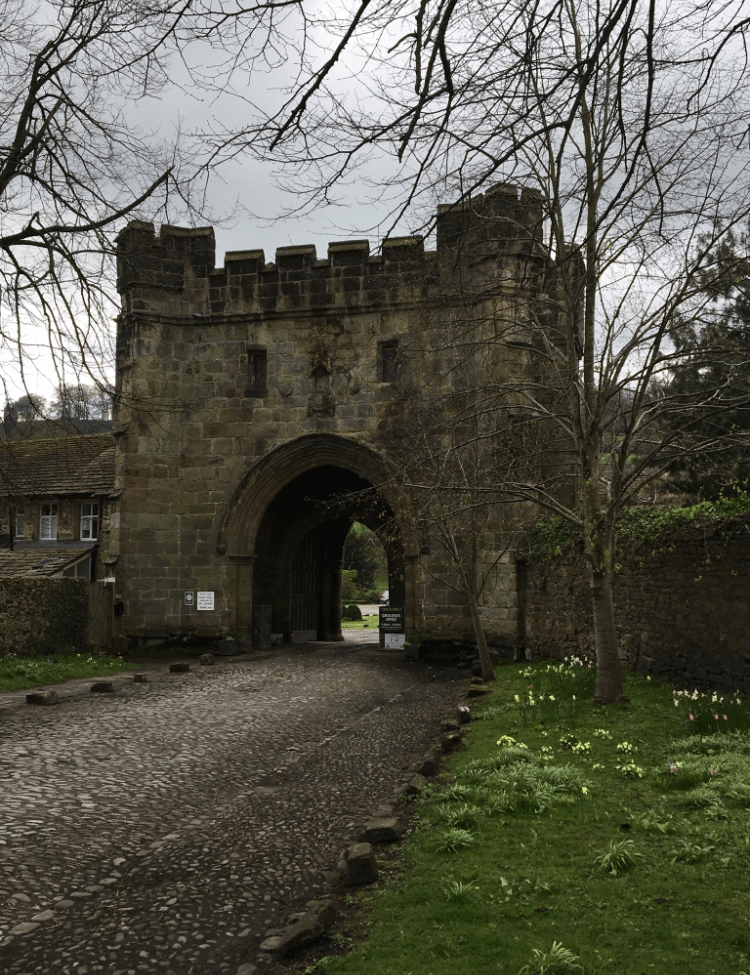
Vast flocks of sheep became established across the uplands of Britain in Norman times, eventually even outnumbering people, in the North of England, sheep belonging to abbeys such as Fountains, Kirkstall, Rievaulx, Sawley and Whalley are thought to have numbered at least 250,000, with Fountains alone recorded as keeping a flock of at least 18,000 in the 1300’s.
Other monastic establishments, and many landowners too, were quick to follow, as Britain’s sheep breeds fast gained a reputation among European wool merchants for growing the finest wool.
By the early 14th century, our sheep numbers had reached over 20 million and raw wool was exported to Bruges, the centre of the European weaving industry, and re-imported as cloth.
However, in 1370, Edward the Third increased the value of wool enormously by encouraging Flemish weavers to settle in England, transforming our domestic cloth industry and creating a lucrative export market in woven goods, many of these weavers settled in Norfolk and Suffolk, with others moving to the Westcountry, Yorkshire and Cumberland.
The Church, the land-owning elite and wool merchants made immensely huge fortunes from wool and bequeathed to us magnificent and architecturally stunning ‘wool’ churches such as St Peter and St Paul’s in Lavenham,
St Mary’s in Bury St Edmunds, St Agnes’s in Cawston, All Saints’ in Stamford and St John the Baptist’s in Burford and Cirencester.

In Part Two of ‘The Role of the Sheep in shaping Britain’s History and Landscape ’ I’ll write about the various breeds of sheep which were developed to produce the wool which made our country so prosperous.
A B-H
 Northwest Nature and History
4 thoughts on “The Role of the Sheep in Shaping Britain’s History and Landscape, Part One”