
Devils- bit scabious Succisa pratensis, is found throughout the British isles on unimproved grasslands such as those found along established hedgerows, wasteland, meadows and pastures.
Violet, globe-shaped flowers
It has pretty, globe-shaped flowers which come in a variety of shades of blue from navy through to violet, and is in bloom from around June to October, it differs from similar species, such as the Field Scabious in that it’s flowers have 4 lobes, whereas Field Scabious has 5.
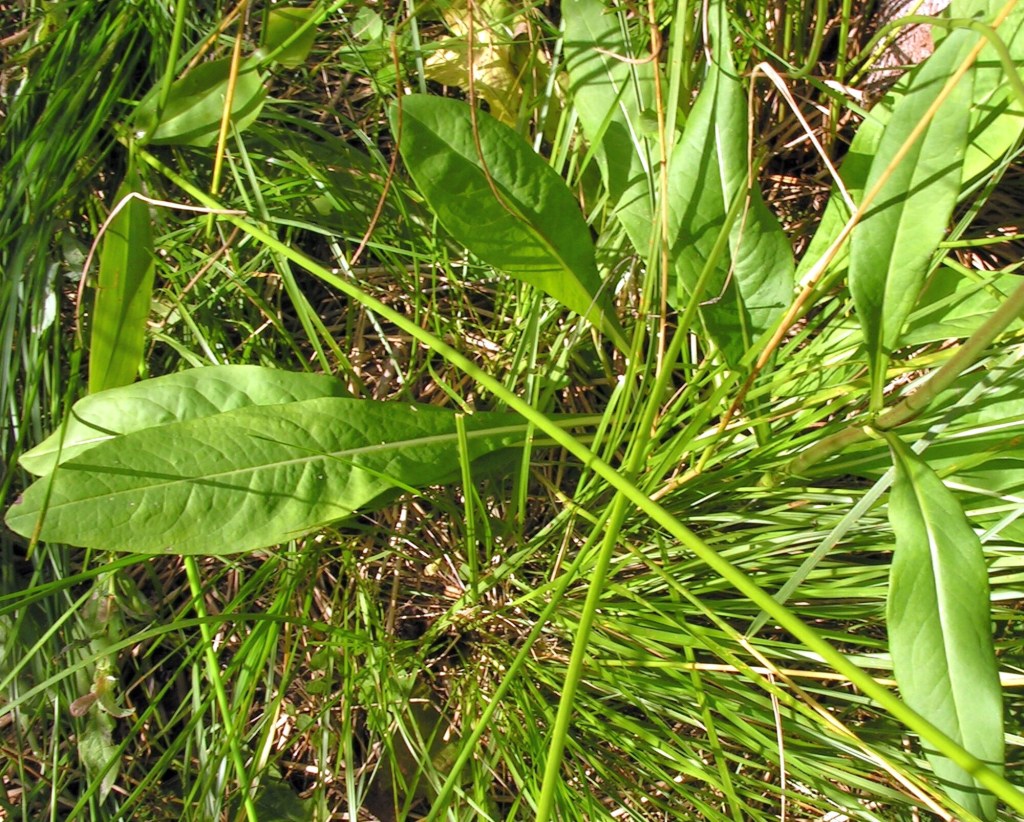
The leaves of Devils-bit Scabious also differ from those of the Field Scabious and similar species, in that they are un-lobed and are arranged in opposite pairs. The plant can sometimes be confused with Greater Knapweed, however Knapweed has alternating, not opposite, leaves.
Not too dry, not too wet
It is most commonly found on damp sites which have less than 10 weeks of dry soil per year and less than 10 weeks wet soil per year, and prefers acidic soils.
As It is the main larval food plant of the Marsh Fritillary butterfly, whose eggs are laid in groups on the underside of the plant, it is one species that is being encouraged to grow in Lancashires wildflower meadows, as the Marsh Fritillary, which is now a very rare species nationally, was once very common here but at the moment the nearest colonies are found in Cumbria.
As this wildflower plant blooms so late in the year it is very valuable for other insects too, providing a plentiful nectar source when others have been exhausted, with Hoverflies, Bumblebees, butterflies like the Brimstone, which favours purple flowers and moths.

Traditional uses and folklore
Nicholas Culpepper, the famous London herbalist and astrologer thought very highly of the medicinal properties of the Devils-Bit. He famously wrote in his book, ‘Culpepper’s Complete Herbal’, which is still in print now, that; “The root was longer until the devil bit it away, envying its usefulness to mankind”.
This is indeed the story behind the name of the plant; ‘Devils bit’, as according to legend the devil, who was not too fond of the plant and its many uses for undoing his evil deeds, tried to bite off the root of the plant to destroy it, of course he failed but this is supposedly why the roots appear to have been bitten off from below, this tale is honoured in the scientific name of the plant; succisa, which means ‘cut off underneath’, (pratensis simply means meadow).
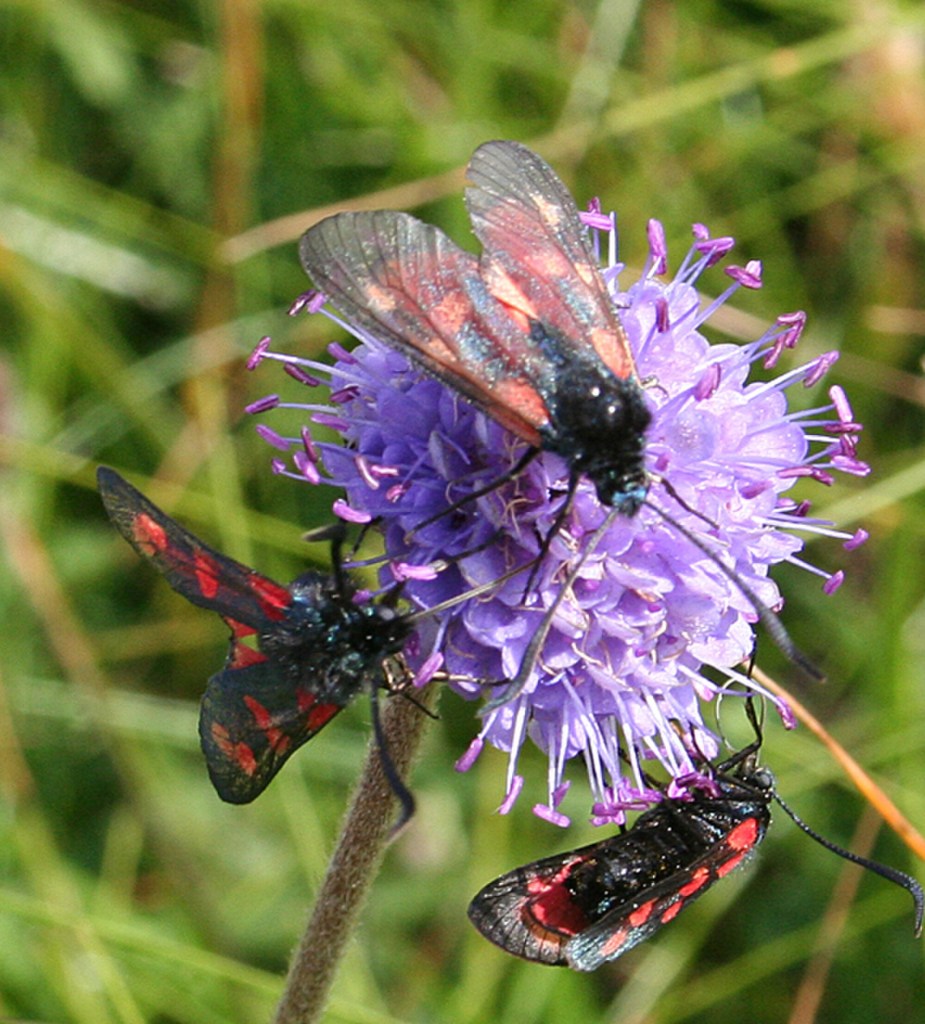
Devils-bit scabious does have many uses; a tea can be made out of it, it has been used as a dye, and even makes a kind of seasoning, medicinally it is useful for treating scabies, ( hence ‘Scabious’) eczema, fevers, and wounds, historically it was prescribed as a cure for the plague! although no records exist relating to its efficacy for this purpose.
Auguries of Innocence
“To see a World in a Grain of Sand
And a Heaven in a Wild Flower
Hold Infinity in the palm of your hand
And Eternity in an hour.”
William Blake (1757-1827)
A B-H
 Northwest Nature and History