
The Bee Orchid
Elusive and seemingly from a more tropical climate, the Bee Orchid, Ophrys apifera, (Ophrys meaning ‘eyebrow’, referring to the furry edges of the petals and apifera meaning bee), can be a bit of a surprising plant to find growing in the north of England.
Unusual Orchid
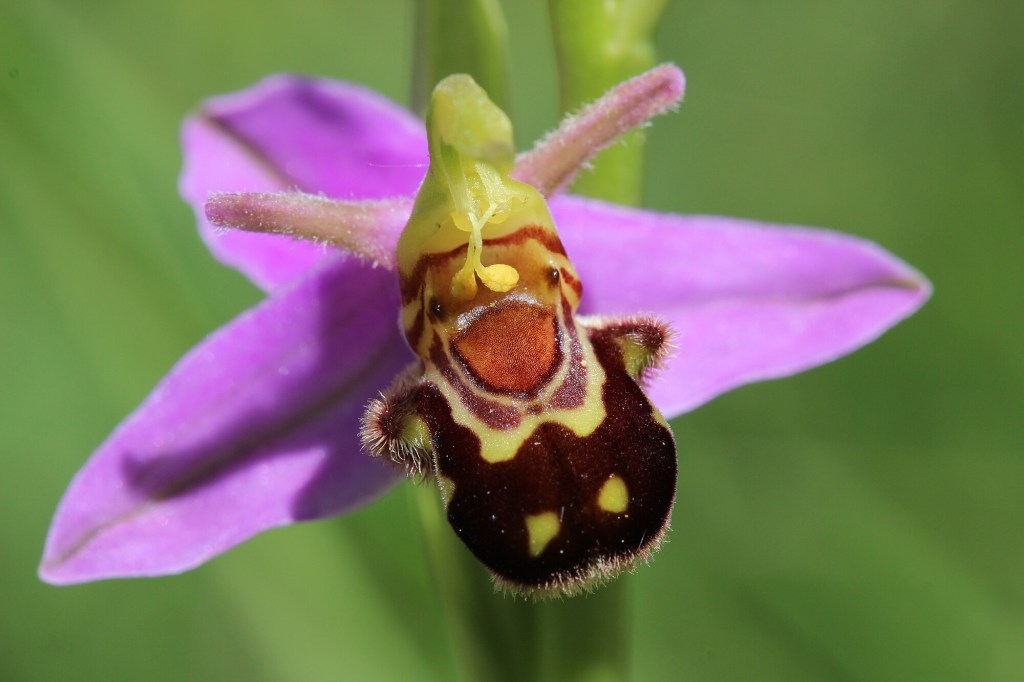
It is a very unusual orchid, called the Bee Orchid due to the appearance of its flowers, which are uncannily shaped and coloured just like a Bumblebee, and also produce a scent called an allomone, to entice them to mate with the flowers and unwittingly pick up pollen from its stamens instead.
The British isles is at the northern-most limit of the Bee Orchids range, it being more common in the South of Europe and the Mediterranean, even so there are almost 50 different types of Bee Orchid here, some very rare. They are all protected by law but are spreading and becoming more common, possibly due to climate change making the climate warmer.
Habitat
The Bee Orchid prefers Limestone soils which are not too water-logged, but is found in quite a wide range of habitats, locally I have seen it in flower in the more established wildflower meadows and in abandoned Limestone quarries. Although I have returned the next summer and failed to see a single flower whereas the year before they were abundant.
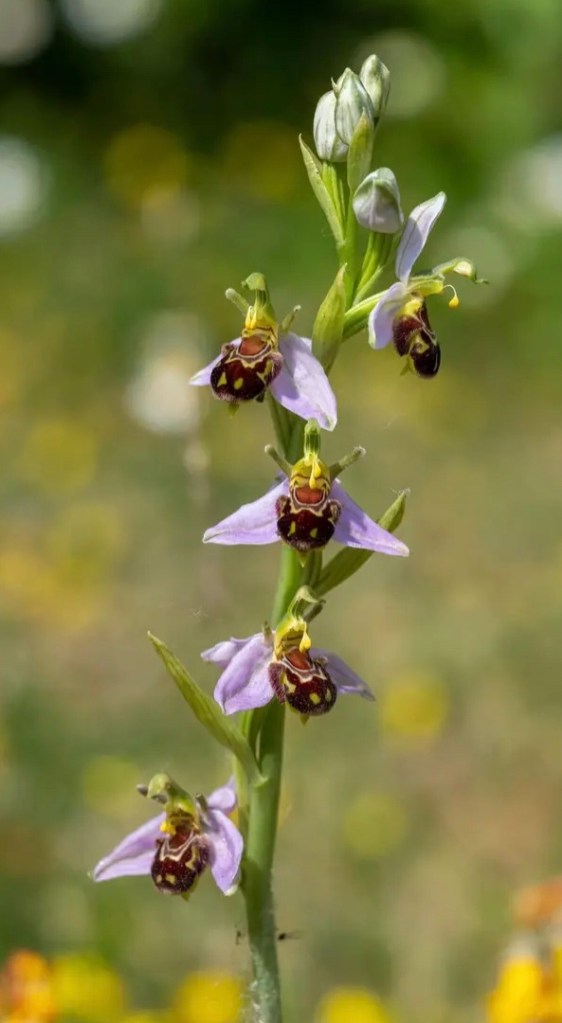
The reason it can be so elusive is that it flowers very sporadically, some years a plant may produce lots of flowers, other years none, the flowers are easily identifiable though, growing on stalks up to 50cm high, with anything between 2 to 10 flowers on one stalk.
Partly symbiotic
As well as being found in a variety of habitats it is also self-pollinating in the British isles due to a lack of its preferred species of Bumblebees, so sometimes the flowers can be quite varied in shape due to in-breeding, they always closely resemble a bumblebee though, with 3 pink petals above the bee-like main flower underneath. They usually bloom around June to July, after most other orchids have finished flowering, they are also partly symbiotic like most orchids, relying upon a type of mycorrhizal, meaning ‘soil living’, fungus to provide nutrients in otherwise poor soils.
This means that it is vulnerable to herbicides and disturbance from improvement techniques used to increase the growth of grass, such as tilling with fertilisers, that kill this fungus. it also requires a lot of direct sunlight so will disappear from areas that become overgrown with shrubs and trees, so lightly grazed, unimproved and undisturbed grasslands on limestone soils are its favourite habitat.

Decoy queens,
Honeyed and furred,
Linger and cling
To each lolling lobe;
Nervous, green-veined,
Lilac sepals
Prick at the twitch
Of a pollinating wing.
From; Bee Orchid at Hodbarrow by Norman Nicholson
A B-H
 Northwest Nature and History