
Three main species of heather
There are three main species of plants which fall under the collective name of ‘heather’ and can be found growing on the uplands of the British isles. All three are native and evergreen, with Bell heather and Cross-leaved heather flowering from June to September, and the more plentiful Common heather, usually simply called heather or Ling, flowering later, from about July to October.
They are all fairly woody shrubs, growing up to 1m tall and having a preference for peaty, acidic, nutrient-poor soils, so are found predominately on dry and wet heathlands and peat bogs, all terrain types which are common throughout the country.
Important food plants
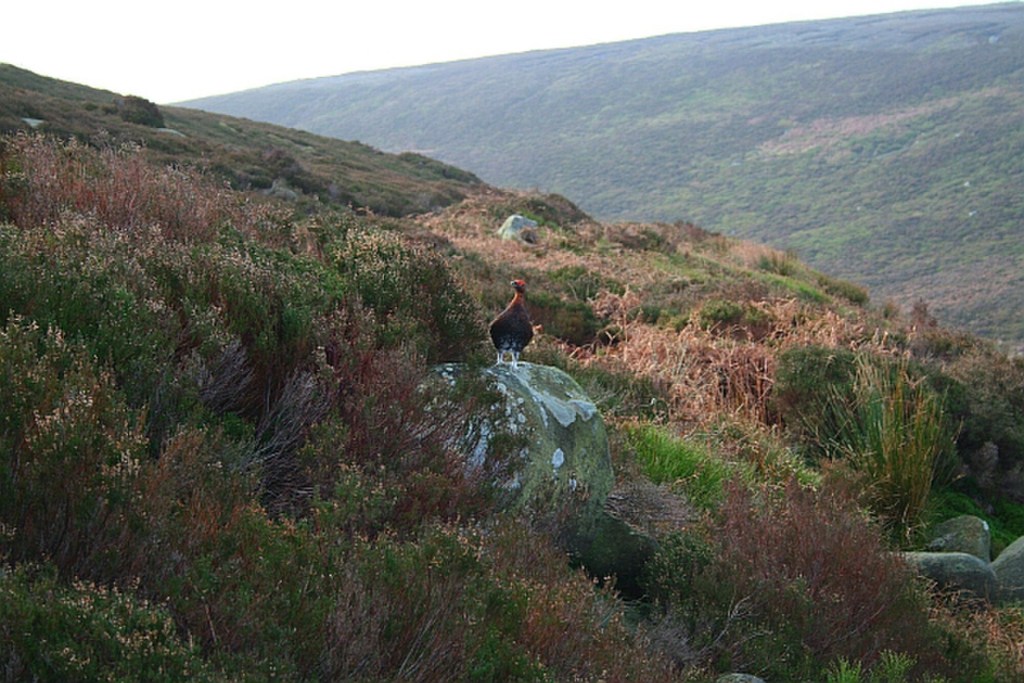
As with all living things, heathers are part of the biosphere and have important roles to play as food plants for other species, Red Grouse (Lagopus Lagopus scoticus), for example are only found in the British isles and are heavily reliant on heather, requiring a patchwork of older heather for nesting and cover from predators, and nutritious young heather shoots for food.
This is something that gamekeepers aim to achieve by controlled burning, a contentious practice similar to that practiced by conservationists in American national parks and elsewhere around the world, which is important for preventing lots of highly flammable dead heather building up, which would otherwise become fuel for high temperature wildfires which can kill off other species of plants as well as the heather and ignite the underlying peat. (See this article for a deeper look into this land management method);

Young heather is also an important source of food for moths and other insects, such as the Emperor moth and the Northern Eggar moth, also bees, such as the Bilberry Bumblebee and the Red-tailed bumblebee which would otherwise struggle to find any nectar at all on the windswept heights, if you look very closely at the flowers of Bell heather, you might notice tiny holes in them, these have been drilled by bees in their eagerness to extract the nectar.
Heathers have close relationships with other plants too, such as Lousewort, which is a semi-parasitic plant that attaches to the roots of heathers to extract nutrients which are otherwise hard to get hold of on the uplands.
In some years heather moors can be devastated by a species of beetle called the Heather beetle, Lochmaea suturalis, which eats vast swathes of heather, causing a knock on effect throughout the moorland food chain, but this is something I’ll write about in another article.

Bell Heather, Erica cinerea
Bell Heather is the classic heather, the species which gives the hills their magnificent purple hue, it is found on the drier hillsides and has vivid purple bell-shaped flowers which grow in groups along the plant’s wiry stems.
It is closely related to Cross-leaved heather, and the two are easily confused, but Bell heather’s preference for drier parts of the fells is one way of distinguishing this species, as are the flowers, which on Cross-leaved heather are larger and paler than those of bell Heather and also at the top of the stem.

Cross-leaved heather Erica-tetralix
The leaves of Bell heather are also different, being hairless, compared to those of Cross-leaved heather which have tiny hairs on the stems and leaves, the individual leaves are easy to see and grow in threes, with little tufts of short leaves at the junction of the longer leaves and the stem. They are also dark green and narrow in shape to cope with the hard frosts, droughts, and extended dry periods which occur on the fells throughout the year.
Common heather, or Ling, Calluna vulgaris
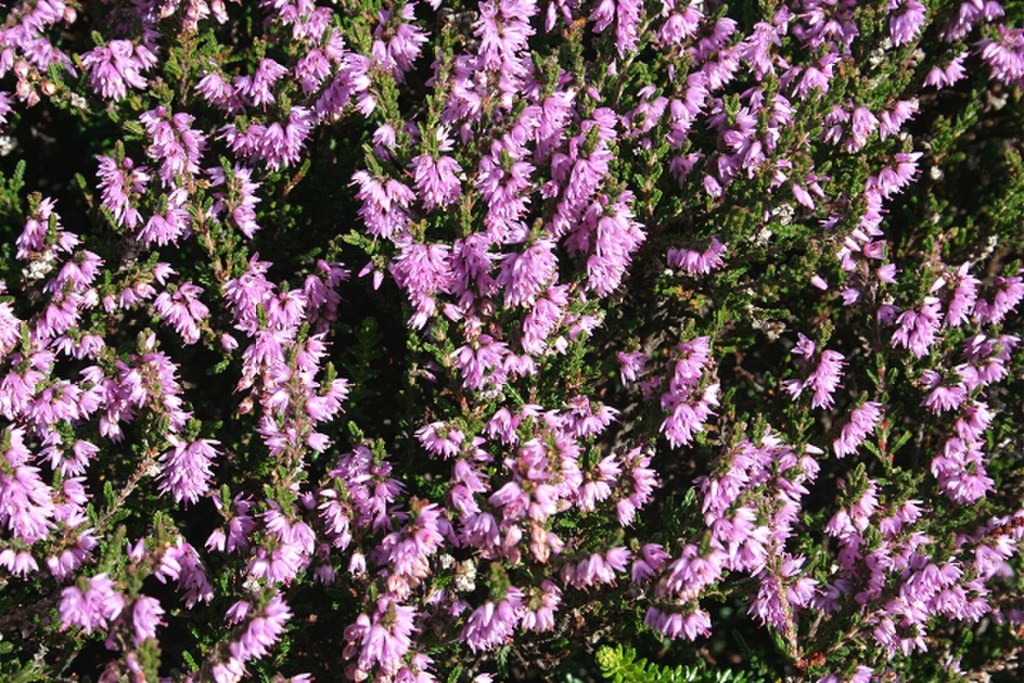
Common heather, as its name suggests, is the most abundant and widespread of our heathers and can be distinguished from other heathers by its leaves, which overlap and appear to cling tightly to its stem. The heather’s mauve coloured flowers grow in a spike on the top part of the plant’s woody stems and are smaller and prettier than those of the Bell and Cross-leaved heather.
Sometimes you might come across ‘lucky heather’, or white heather, the valley of Whitendale, in the heart of the Bowland fells, derives it’s name from the Norse ‘Wytlyngdall’ given due to the abundance of white heather there.
The name ‘Ling’ is also derived from the Norse language and means ‘fire’, relating to the flammability of the plant when dry, indeed it was commonly harvested as a fuel source and for other purposes too.
The scientific name of the plant Calluna, comes from the ancient Greek for ‘brush’, as stems of heather tied together make for an excellent brush, and it would also be used to thatch roofs and as bedding for stock too, in fact it is surprisingly springy and comfy and I’ve fallen asleep in it several times myself when out on the fells!

Methought, the very breath I breathed
Was full of sparks divine,
And all my heather-couch was wreathed
By that celestial shine!
(Extract from A Day Dream by Emily Brontë)
A B-H
 Northwest Nature and History
8 thoughts on “The Heather on the Moors”