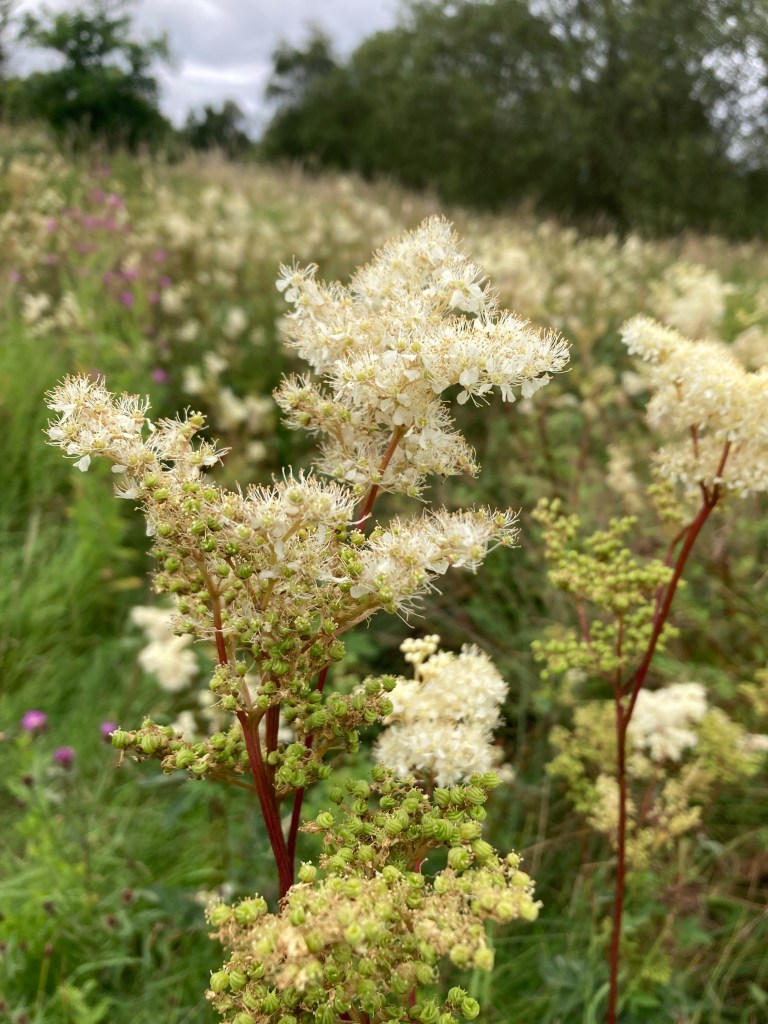
Meadowsweet, Filipendula ulmaria, is a common wild flower in the countryside, found growing in damp meadows and woods, on roadside verges, along hedgerows and near streams, it usually flowers between June and September.
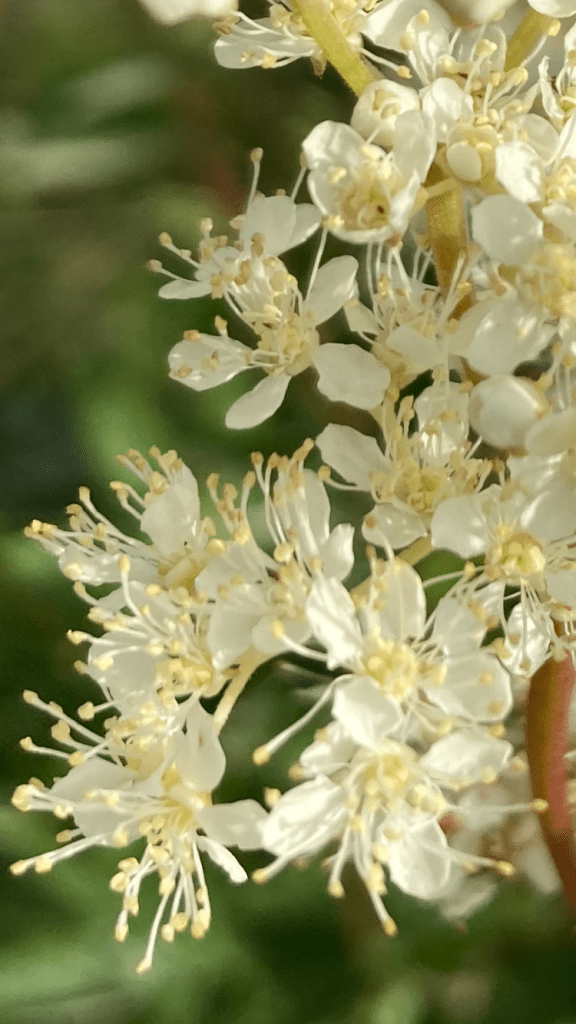
Its frothy tufts of delicate, graceful, creamy white flowers have a distinctive, sweet fragrance, possibly one of the reasons for its common name, and its fern-like foliage is green on top and silver underneath, it towers over most other wildflowers, growing up to 2 to 4 ft high on a red angular stalk.

As a native wildflower it plays a vital role in our ecology supporting at least 75 invertebrate species as a larval host, including 23 species of moths, these are some of the species it supports;
Leaf beetles
Many species of leaf beetle feed as adults or larvae upon the foliage or flowers of Meadowsweet, these include; Galerucella tenella, the Strawberry Leaf beetle a common and widespread leaf beetle, Apthona lutescens, a leaf beetle of wetland areas, Orsodacne serasi and many other leaf beetles.
Other beetles
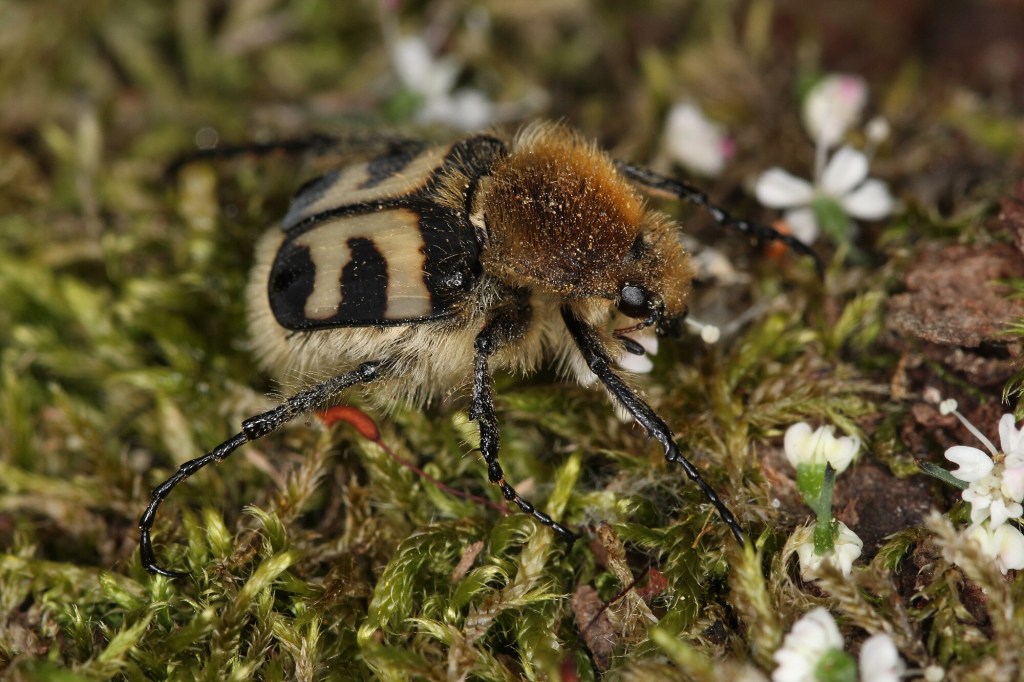
The plant also supports other species of beetle, such as Trichius fasciatus, the Eurasian Bee beetle, a Scarab beetle, the adults of which feed on the plant’s petals, and Rhagonycha fulva, the Soldier beetle, otherwise amusingly known as the ‘Hogweed bonking beetle’, which likes to use tall, open hedgerow flowers, like Hogweed and Meadowsweet, to meet and court beetles of the opposite sex.

Moths
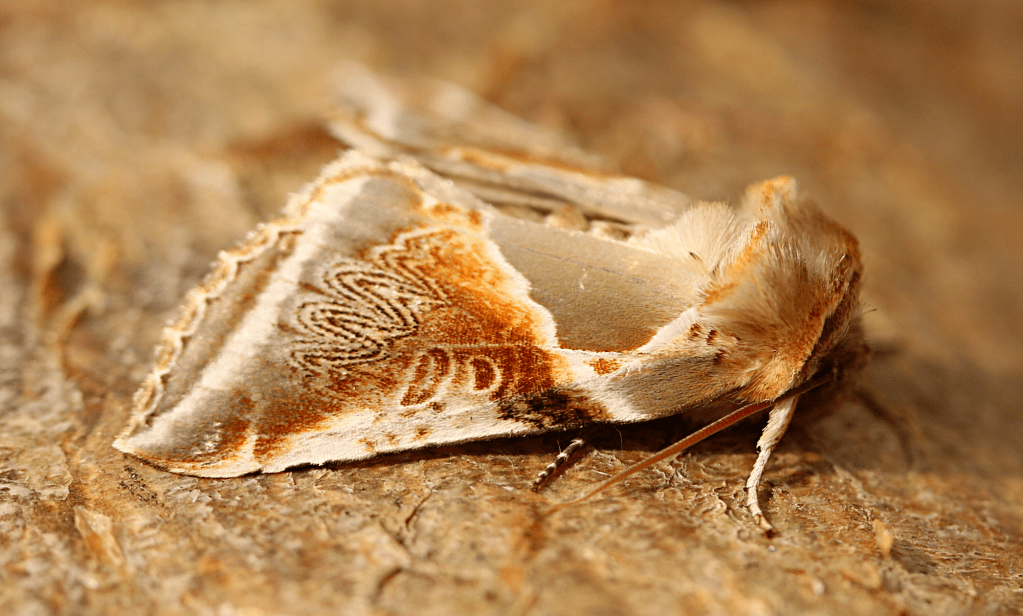
Amongst the 23 odd species of moth which need the Meadowsweet there is Callimorpha dominula, the Scarlet Tiger Moth, the larvae of which use a range of herbaceous plants, but prefer Meadowsweet, Macrothylacia rubi, the Fox Moth, which uses meadowsweet as a larval host plant, Saturnia pavonia, the Emperor Moth which include meadowsweet among its larval plant hosts, and Habrosyne pyritoides, a beautifully marked moth which has the charming common name ‘Buff Arches’.
Meadowsweet continues to produce pollen and nectar throughout its flowering season, which makes it invaluable to pollinating insects such as Bumblebees, Butterflies, Sawflies and Hoverflies as well.
Traditional and modern uses
As a fragrant and widespread herb Meadowsweet was traditionally used for many purposes, dairy farmers would used its foliage for scouring milk churns, and it would often be strewn across floors to give rooms a pleasant smell, like medieval shake-and-vac, which meant it was an especially valuable commodity in medieval times!
One theory suggests that its free common name is derived from ‘mead sweet’, as it was once used to flavour mead, and these days the sweet smelling flowers are used in exactly the same way in a wide variety of recipes, such as wines, sorbet, jam, sauces and cordials, a recipe for which can be found at the end of this article.
One, rather unique, recipe simply entails dipping the flowers of the Meadowsweet in batter and frying, to make a kind of fritter, but more a more prosaic and widespread use for the plant is in making tea, as the flowers and young leaves, either fresh or dried, make a delicious tea which is supposedly very good for relieving depression.
A local gin distillery, Goosnargh gin, uses Meadowsweet to flavour their summer gins, which maybe counteracts the depressive qualities of gin (did you know that’s why it’s given to you on planes?)
Medicinal uses
Meadowsweet contains a compound called Salicylic acid, which has pain relieving qualities and it has been used for this purpose for thousands of years. In 1897 the chemist Felix Hoffmann synthesised acetylsalicylic acid from the plant for the Bayer pharmaceutical company, which marketed it as Aspirin, after the old name for the plant; ‘Spirea’.
The original source for Salicylic acid was the bark of several species of Willow, but this could cause irritation and damage to the stomach lining, so a new source for the compound was desperately sought.
Like Aspirin, Meadowsweet is mainly used to relieve pain, but also as a diuretic, being useful for kidney and bladder complaints such as cystitis. It also reduces stomach acidity and is good for rheumatic conditions, as it rids the body of excess uric acid.

As it is such a general purpose herb which can help alleviate a wide variety of ailments, here is a general purpose recipe for cordial which is very easy to make;
Recipe for Meadowsweet Cordial
For this cordial all you need is about a dozen fresh flowering heads of meadowsweet, 4 tablespoons of freshly squeezed lemon juice, 400g of sugar, and fresh water.
First wash the Meadowsweet thoroughly and remove the stems,then put the whole flower heads in a pan and add just enough water to cover them.
Next bring the pan to the boil, and then turn the hob down and simmer gently for 10 minutes.
Strain the resulting liquid through a sieve into a measuring jug to remove all of the flowers, and measure the volume of liquid that is left, pour this into a clean pan and add the lemon juice.
Next add the sugar, the quantity of sugar you need to add depends on the volume of meadowsweet liquid that you have, for each 750ml of liquid add 400g of sugar.
Finally, gently heat the pan, stirring all the time to dissolve the sugar, once the sugar has melted, boil the resultant mixture for about 5 minutes, making sure not to let it burn as it will turn into an interesting kind of toffee substance!
When boiled skim off the residue that has built up on the surface and allow to cool before bottling.
This cordial should keep in the fridge for several months and is delicious diluted with spring water, it’s also good for making spritzy summer cocktails too.
IMPORTANT NOTE: As Meadowsweet cordial contains salicylic acid it is not suitable for anyone who is allergic to aspirin.
A B-H
 Northwest Nature and History
Fascinating! I knew it was strewn across floors in times past, to make rooms smell more betterer, but had no idea about the rest. I shall look on it with new respect!
LikeLiked by 1 person