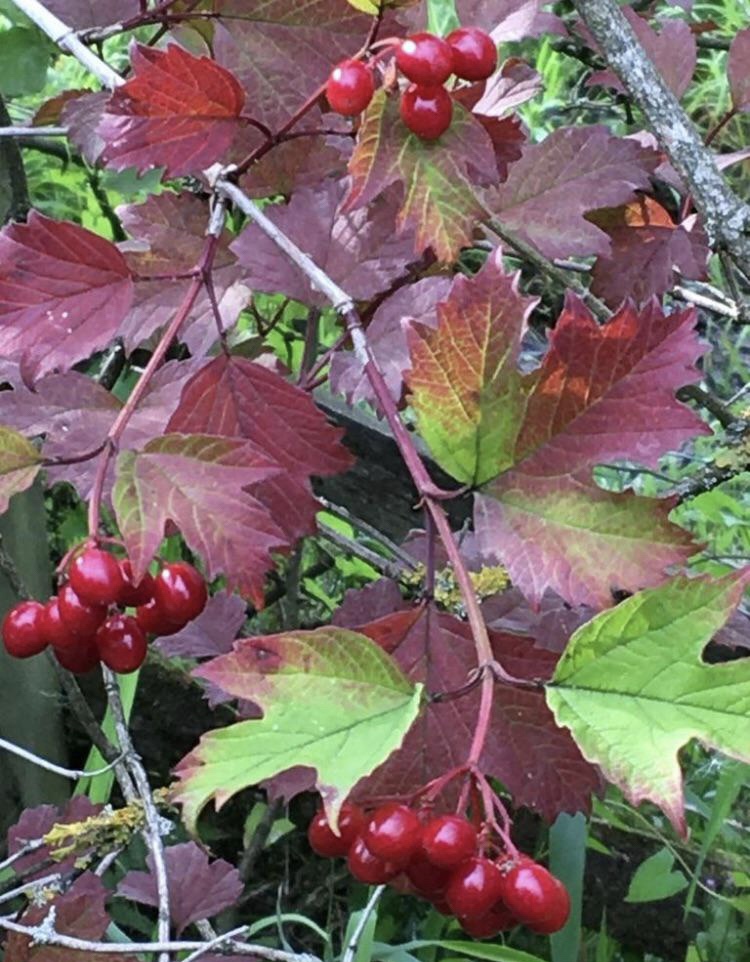
In late summer our hedgerows begin to take on many different hues, from subtle coppers and ochres through to vivid ambers and crimson.
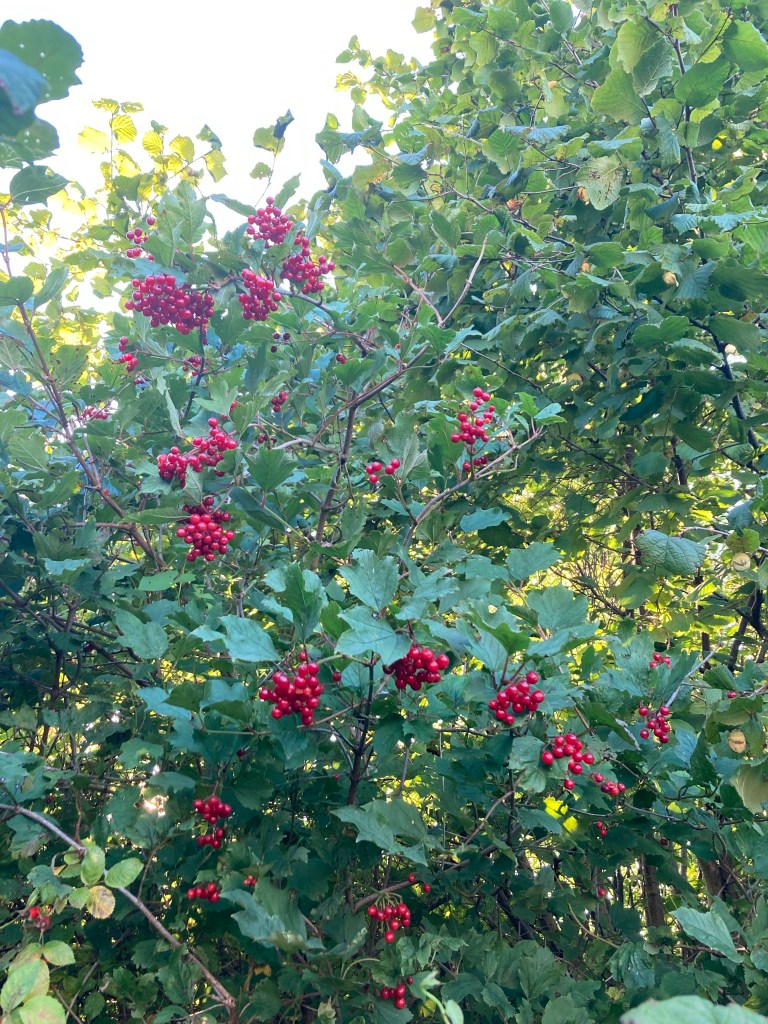
One native species which really adds a punch to this autumnal palette is the Guelder Rose Vibernum opulus. Sometimes called the Dogberry the foliage of this hedge shrub develops into striking tones of russet and scarlet, with dense clumps of shiny red berries which are hugely popular with flocks of migratory birds such as Fieldfare and Redwing.
Through most of the year Guelder can be identified fairly easily by its leaves, vaguely similar to a maple or sycamore in shape, hairless, shiny green and with serrated edges. Guelder can also be identified by its greyish coloured bark and the way it spreads through the hedge like a climbing plant.
Traditional Uses
The bark of the Guelder contains a compound, glucoside viburnin and is used in traditional medicine as an anti-spasmodic and sedative to treat cramps so is sometimes referred to as ‘cramp bark’ in some texts on traditional medicine.
Its berries are useful in treatment of indigestion and contain many vitamins including K and C, they are the ‘Gaitre-Beries’ which Chaucer mentions in his work ‘The Nun’s Tale’ as being amongst the plants that ‘shal be for your hele’ to ‘picke hem right as they grow and ete hem in,’.
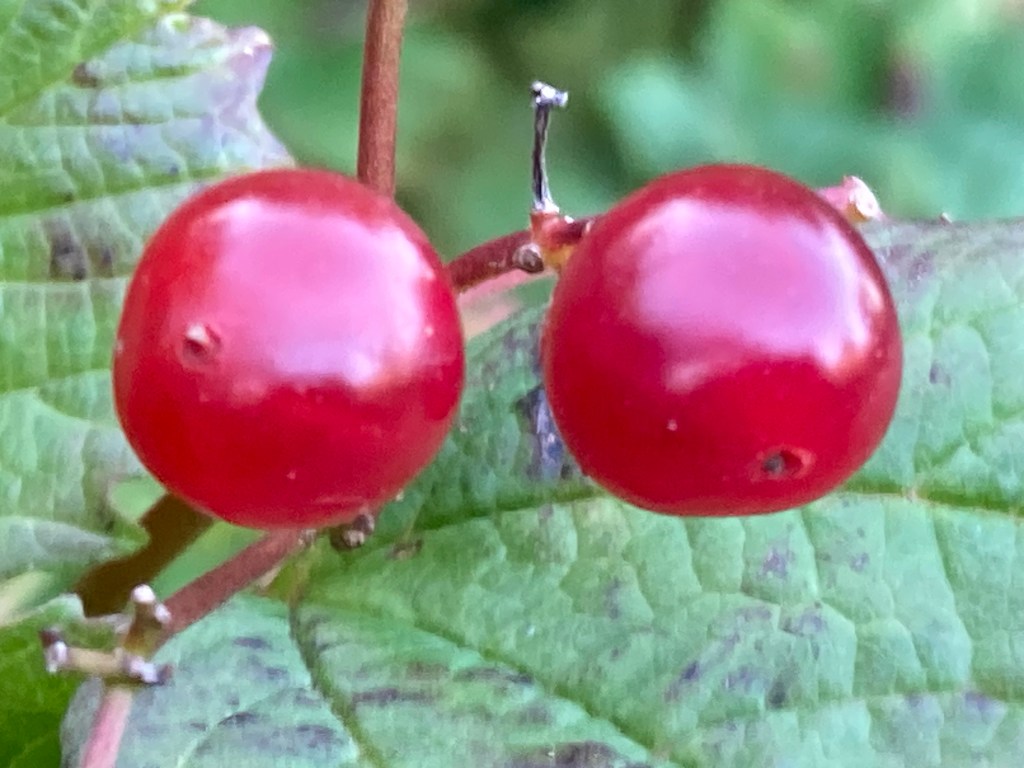
In Canada and Eastern Europe they are often made into jellies or jams, this Ukrainian recipe describes how to make jam, the plant having a special place in folklore there where it is known as Kalyna and regarded as a national symbol.
Its not recommended to eat the berries raw though, I’ve tried!, they are very bitter and mildly toxic too, my reaction was similar to the one in this video where a girl is picking some for her gran to use.

Indicative of Ancient woodland
It is an indicator of ancient woodland and grows in damp, but not flooded soils having a preference for alkali ground, it is fairly easy to propagate and plant and is quite often planted in gardens with many varieties such as ‘snowball’ having been bred to show off the shrubs prodigious blooms. These are naturally a creamy/white in colour and dense, similar to those of the Elder, at their peak they become hugely popular with pollinating insects such as hoverflies.
In native woodland regeneration schemes Guelder is one of the preferred plants suitable for habitat creation as both the blooms and its berries are so important to overwintering and resident wildlife, although it struggles at higher altitudes where the Rowan may be planted instead.

Foraging
This video shows how to forage for and identify the guelder, it goes without saying that you must always be very, very careful when picking any wild fruits, please take a reputable identification book and double check everything, if in doubt leave it be, lastly please leave some berries for the birds, after all they need them more then we do!
A B-H
 Northwest Nature and History
One thought on “Guelder Rose”