
The Hart’s Tongue Fern’s scientific name is Asplenium scolopendrium, asplenium meaning ‘belonging to the spleenwort family’ and scolopendrium deriving from the Greek skolopendra, meaning millipede or centipede, which the underside of the fronds is supposed to resemble.
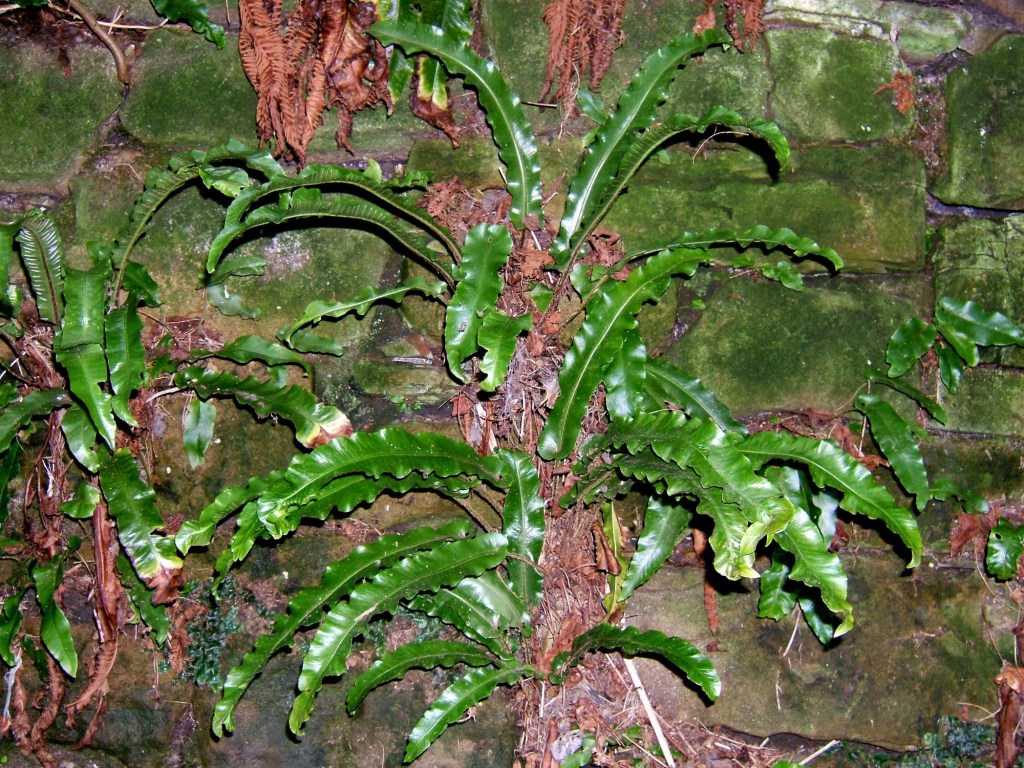
It is a small, very hardy evergreen fern with dark green fronds and forms clumps with broad, wavy edged leaves, looking entirely different to the usual, frilly plants we think of when asked to picture a fern, it is our only native fern with undivided leaves.
Often seen at the foot of dry stone walls and in dark, damp cloughs it also likes moorland gullies, the cracks in between branches in old trees, gaps in boulders and nooks and crannies on old barns where it thrives on the lime leaching out of the mortar and the drips from broken gutters.

Long and Noble Lineage
It has a very long and noble lineage, fossil records have found it to be over 360 million years old and it is thought to be the ancestor or proto-fern to more modern species.
The name of the fern; ‘hart’s tongue’, possibly derives from the shape of the leaves, looking vaguely like the tongue of an adult stag. On the underneath of these leaves are found reproductive organs called sporangia which are arranged in lines along a bit like centipede’s legs, hence the latter-half of the scientific name ‘scolopendrium’.

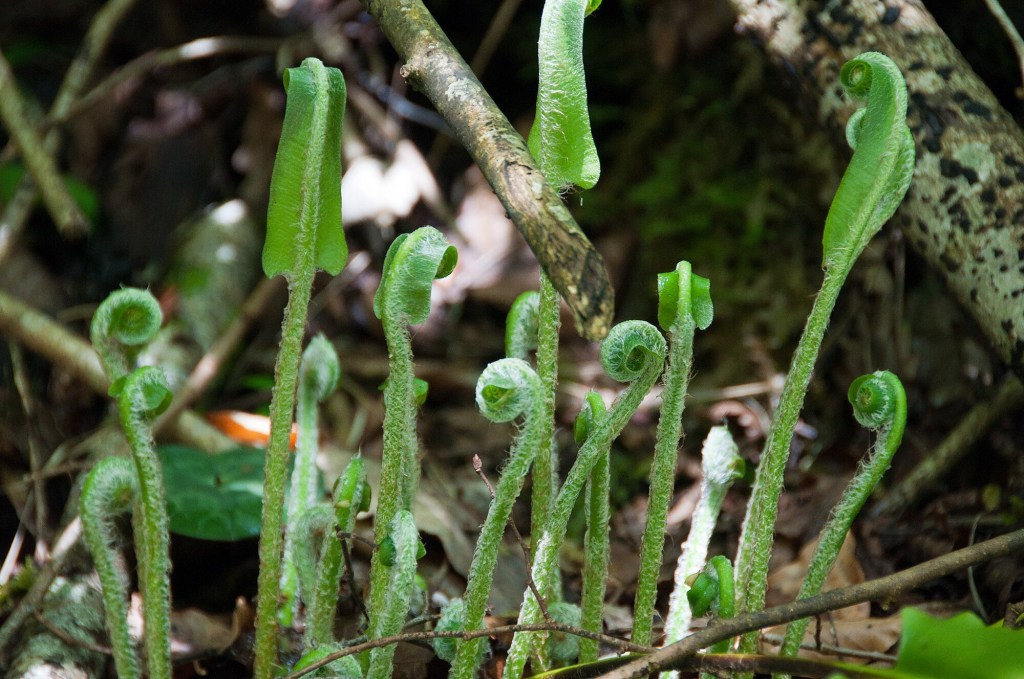
Like all ferns they reproduce by releasing these spores so don’t produce seeds or flowers, this means they require a damp habitat. Hart’s tongue is very tolerant to short periods of exposure though and can recover quickly from being dried out, unlike frilly fronded ferns which are more fragile and will die. It can also grow back quickly after being battered by floods and storms, producing emerald green ‘fiddle heads’ which is what the curled-up new fronds are called.
‘Good against biting of serpents’
The fronds have medicinal properties and can be used to treat coughs, digestive problems and open wounds. Culpeper’s Complete Herbal, which botanist Nicholas Culpeper wrote in 1653 and is still in print today, says of the fern;
“Hart’s Tongue is much commended against the hardness and stoppings of the spleen and liver, and against the heat of the liver and stomach, and against the bloody-flux. Dioscorides (who was a Greek physician) saith, it is good against stinging or biting of serpents.”
As Hart’s tongue grows in the same kinds of habitats that Adders like to frequent, much like Dock leaves grow where Nettles are, it is quite likely it was commonly used for this purpose, the method of application being to burn the leaves and use them in a poultice.
Indeed many of our native plants have medicinal uses which have been mostly forgotten now, or discarded in favour of modern drugs, in my future articles I’ll look a bit closer at this aspect of our flora as well as how some of these odd common names for them, such as ‘Hart’s Tongue’, came into being.
A B-H
 Northwest Nature and History
Thanks for the post, yes we’ve forgotten, or conditioned to forget so many Natural cures. Equally I’ve often wondered. Who took the first bite to say, that’s magic mushrooms or good for gout?
LikeLiked by 1 person