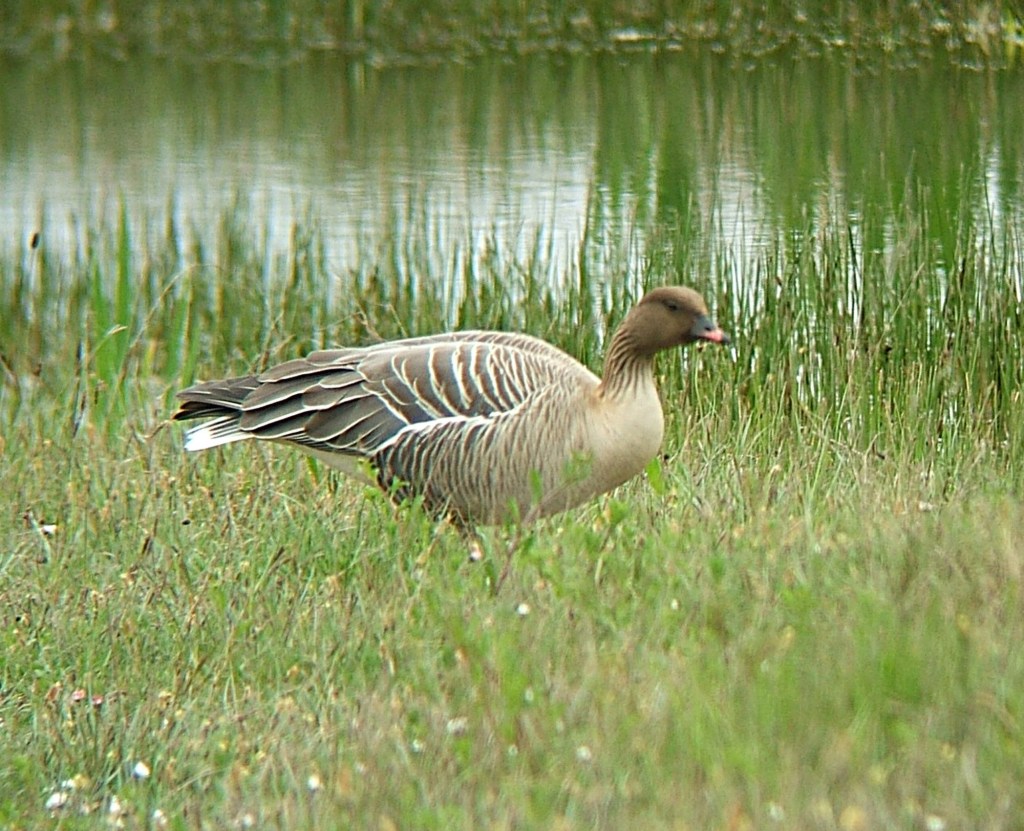
The Pink-footed Goose, Anser brachyrhynchus visits us from October through to March and usually associates with other geese, often Greylag and Whitefronted.
Every year over 400,000 fly here and head straight for the coastal marshes of the country, with about a quarter of this number over-wintering in Norfolk and the rest staying at various other parts of the country.
These locations include the east coast of Scotland, the Montrose Basin in Angus, Ireland, in particular Co Wexford and Lough Neagh, the Solway, the Northwest of the country and the Wash, as well as other places, depending on where the species of geese they are accompanying choose to fly to.
Pinkfeet in the Northwest
The Ribble and Alt estuaries are one of their main destinations here in the Northwest, along with Morecambe bay, the Duddon estuary in Furness, Martin Mere near Burscough and the Merseyside coast. Many will stay at these sites, although they regularly travel anything up to 15 miles to forage on agricultural land.
Increasing numbers are choosing to stay in the Northwest each winter and most of the skeins you might see flying over will stay all winter although small numbers fly onwards to other places in the country or even to mainland Europe where they stay on the coast of the north sea.
Whilst here they graze on coastal grasslands and nearby arable farmland, having a taste for sugar beet and winter wheat in particular. In large numbers they can cause significant crop damage and farmers will often utilise bird scaring devices such as gas-guns to move them on, this can sometimes lead to the geese being unable to obtain enough food as they are made to wheel around the fields instead of being able to settle.
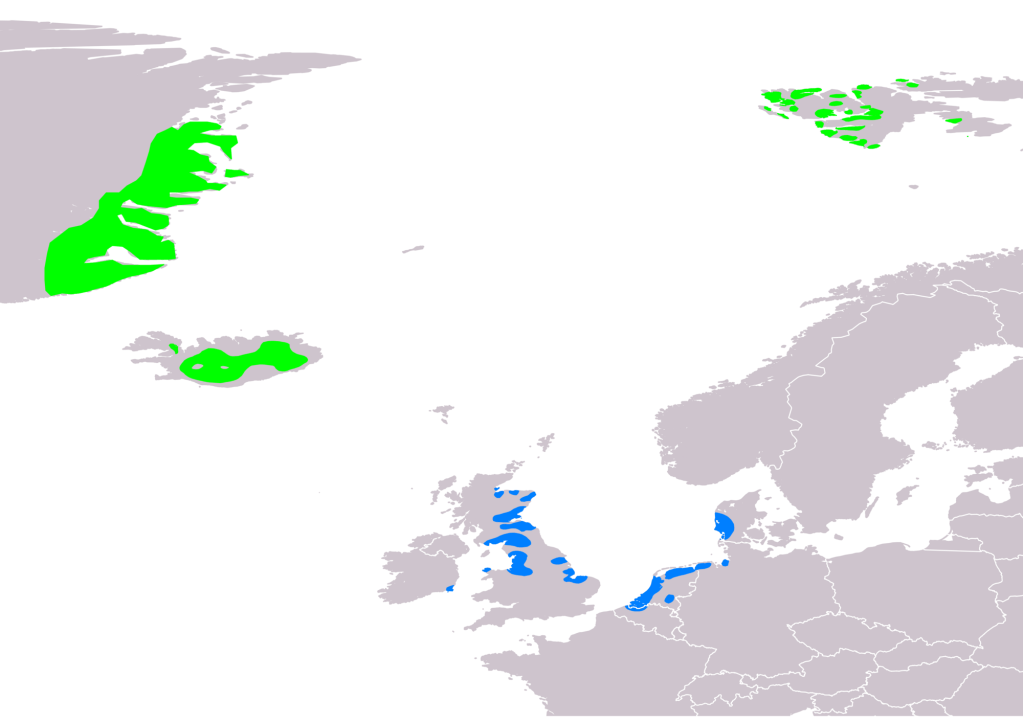
Having flown here from their summer breeding grounds in Greenland, Iceland and Svalbard they need to refuel as, apart from some geese making a brief stop over on the Faroe Islands, most Pinkfeet will have flown here nonstop across the Atlantic.
The Pinkfeet that breed in Svalbard, about 80,000 of them, have it slightly easier as they winter in Denmark and the Netherlands which is closer to home for them.
Identification
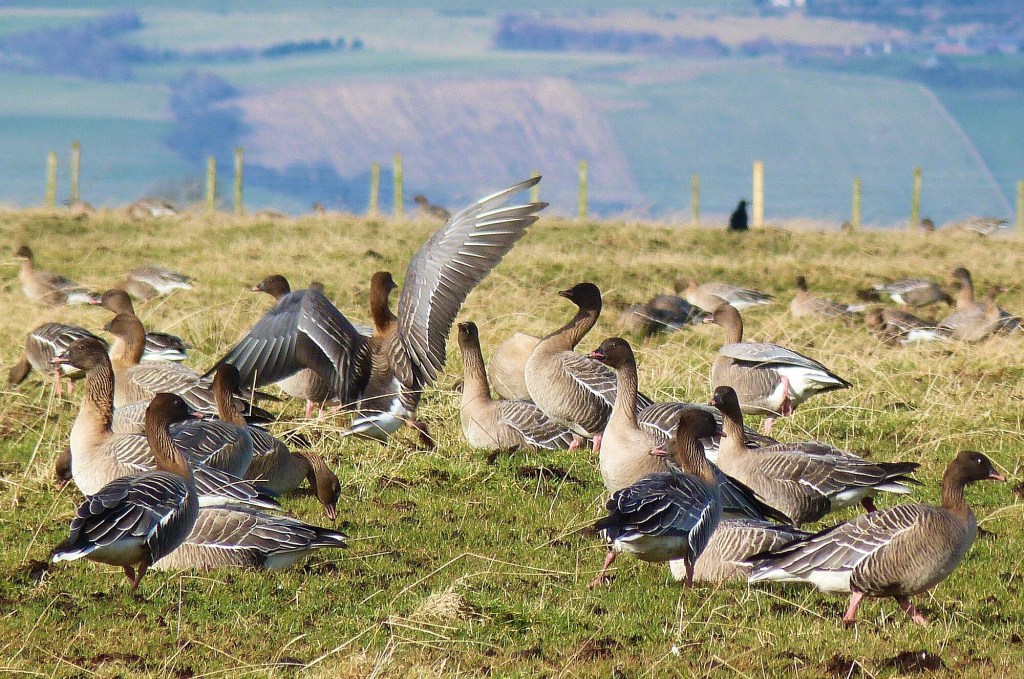
Pinkfeet look very similar to Greylags, with which they associate, so identification can be very difficult, they are slightly smaller than Greylags but this is only immediately obvious when they are side-by-side.
Apart from that they can be identified by their darker brown head and neck, as well as having a small and dark beak, in fact brachyrhynchus, the second half of their scientific name, comes from the ancient Greek brachus, meaning ‘short’ and rhunchos, for ‘bill’.
They are usually fairly silent compare to Greylags, though they will occasionally issue a ‘wink-wink’ call when in flight.
Update: Recently (Sep 2024) a pair of Pinkfoot have bred at Martin Mere NNR which is a first for the reserve and very rare in the UK;
https://www.birdguides.com/news/pink-footed-goose-pair-breeds-lancashire/
A B-H
 Northwest Nature and History
One thought on “Pink-footed Geese”