
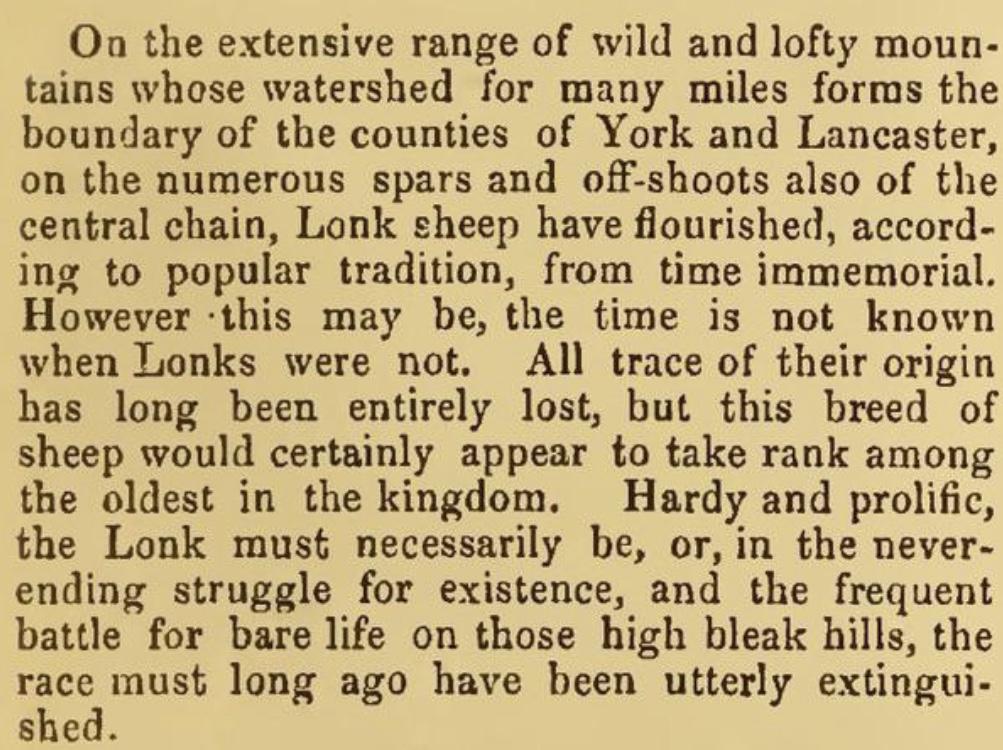
Lonks are a handsome black-and-white faced hill sheep traditionally kept in Bowland and the Pennines, the breed is at least 200 years old, having first been added to farmers stock books in the 1900’s. They are said to derive from flocks that Cistercian monks kept hundreds of years ago at monasteries such as Sawley Abbey.
The origin of the name ‘Lonks’ is uncertain, it may originate from ‘lonkyshire’ or might come from a type of stone quarried in Rossendale called ‘Lonkey’ which is famous for being very tough and hard weathering, like the breed.

Qualities
It is a very hardy and agile sheep, well suited to the exposed moors and possessing the qualities of being disease tolerant and long living, which are both important to a sheep farmer. They also have long (lanky?) legs ideal for negotiating the region’s ubiquitous rushes and bogs. Having been bred and improved by generations of farmers for these qualities it is also now considered to be purebred.
Lonks are also widely admired for their coat, having a thick and well coloured wool which is weather proof. Most of the flocks kept in the Northwest are organic and there is currently a lot of demand for their wool for homespun knitting yarn, it also makes a nice felt ideal for Loden. The wool from Lonk crossed with Bluefaced Leicesters produces a very versatile wool used for making tweed.
They are sometimes bred with a breed called a Texel, which originally comes from Holland, to produce ‘fat lambs’, or with Bluefaced Leicesters to produce strong ewes, which are used to build up a hardy flock.
This post looks at some of the breeds that Lonks may be cross-bred with;

Strong following
Their lamb has a strong following amongst butchers and chefs with many restaurants in the area having it on their seasonal menus including the Inn at Whitewell and Parker’s arms in the Hodder valley, the lamb coming from pedigree flocks like one kept at nearby Burholme bridge farm.
Lonks are shown every year at the Hodder valley show where they have their own class and the main sale for Lonks lambs is held at Clitheroe auction market in early October every year. The breed is proving as popular as ever which is promising for the future of the Northwest’s sheep farmers and this handsome and iconic hill sheep.
A B-H
 Northwest Nature and History
Great post
LikeLiked by 1 person
Thanks, glad you liked it 🙂
LikeLike