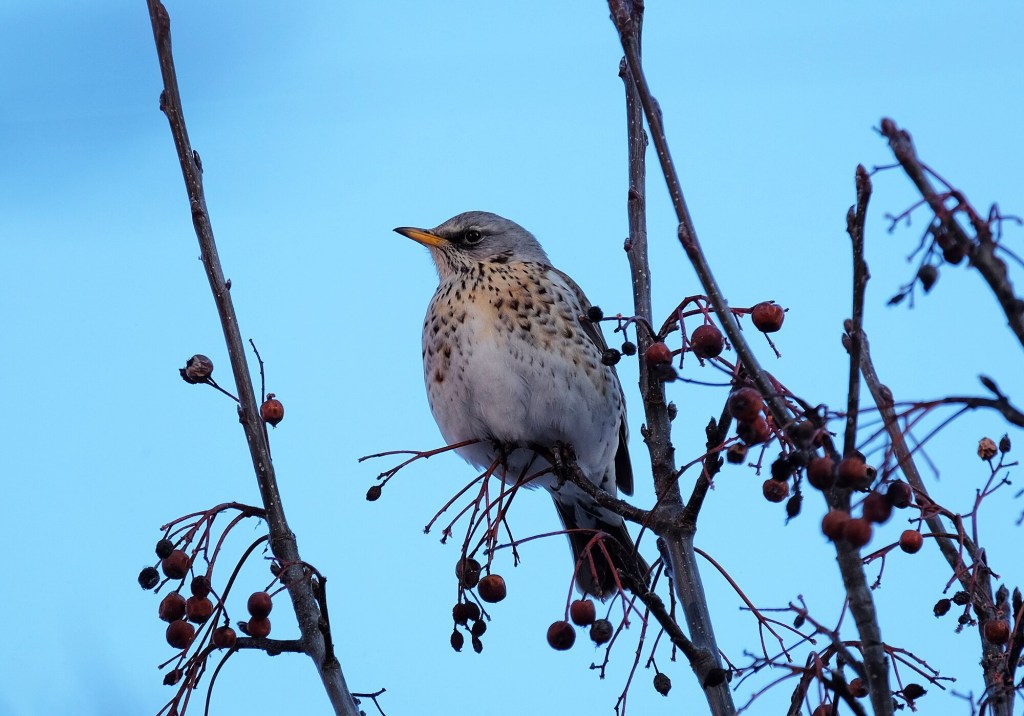
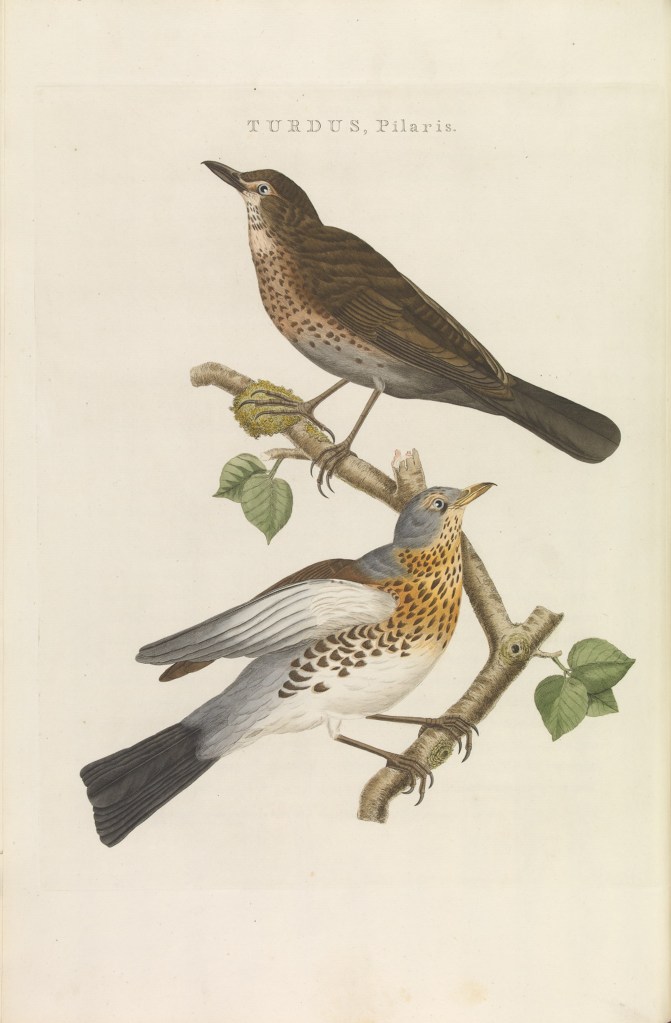
The Fieldfare, Turdus Pilaris, is a large migratory Thrush and the first Flocks of the winter may be seen now as they fly in from their summer breeding grounds in Russia and Scandinavia to overwinter in the British isles.
Gregarious gatherings
They are a very Gregarious bird, gathering in flocks of 2 to 3 dozen, sometimes even more, and constantly on the move as they forage in hedgerows and the edges of woodland for berries, their name reflects this as it comes from the Anglo-Saxon ‘feldware’ meaning ‘field traveller’.
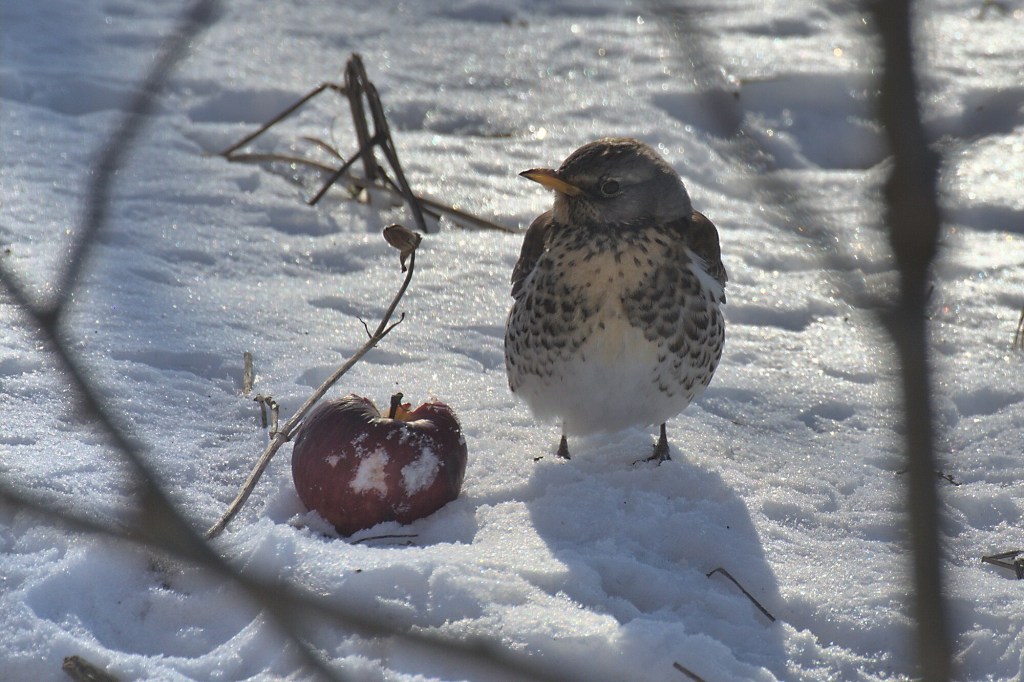
Hedgerow plants such as Guelder-rose, Hawthorn, Rowan, Holly, Blackthorn and Buckthorn are essential food sources for them as they will have burnt a lot of calories crossing the Baltic and North Sea, they also forage for insects and will quite happily visit gardens for fallen apples.
Chattering and Chuckling
Fieldfare constantly chatter and talk to each other as they move, uttering unmistakably harsh calls which can be heard from quite a distance, they sometimes make a chuckling noise as well to communicate as they cross the Fields.
Their plumage is unique, having a well-feathered, plump build, a bit like a Mistle Thrush, with prominent dark speckles on the chest and flanks, their wings are red-brown, their head and rump a blueish-grey and their beak yellow.
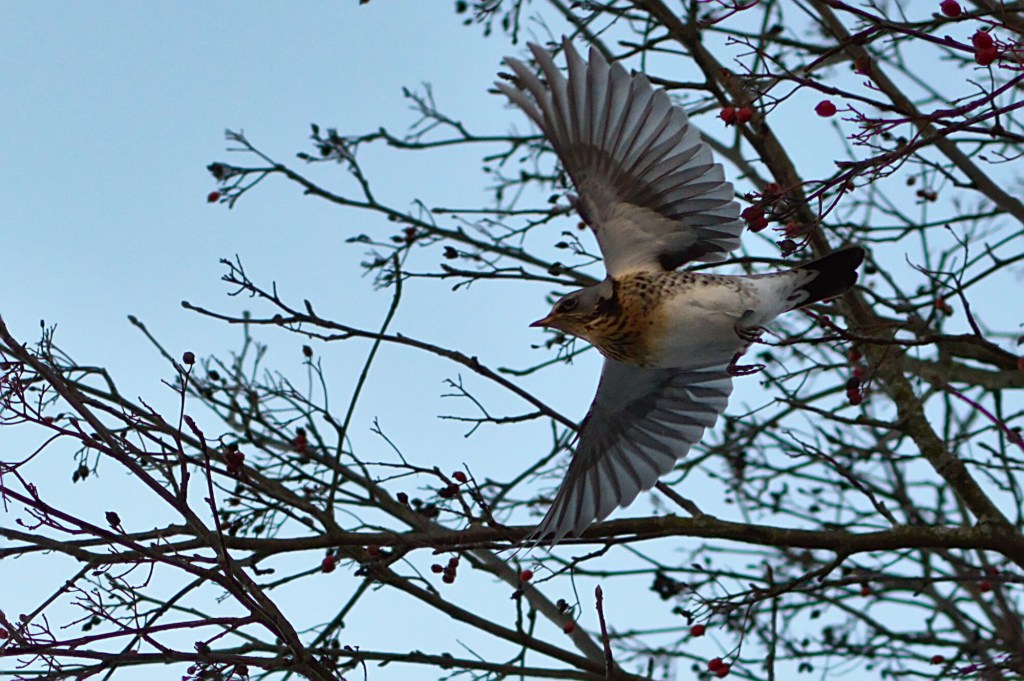
The timing of their arrival in the British Isles has been used for centuries to predict how harsh or mild the forthcoming winter might be. Many bird observatories around the UK’s coast keep annual records of Thrush Migration including Fieldfare which quite often travel with migratory Blackbird, Ring Ouzel and Redwing which have also been spotted arriving here in the past few weeks.
Up flies the bouncing woodcock from the brig
Where a black quagmire quakes beneath the tread
The fieldfare chatter in the whistling thorn
And for the awe round fields and closen rove
And coy bumbarrels twenty in a drove
Flit down the hedgerows in the frozen plain
And hang on little twigs and start again
From ‘Emmensail’s Heath in Winter’, by John Clare (1793-1864)
(‘Bumbarrel’ is a charming old English name for the Long-Tailed Tit, of which I’ll write about soon)
A B-H
 Northwest Nature and History
Great post
LikeLiked by 1 person
Thanks 🙂
LikeLike