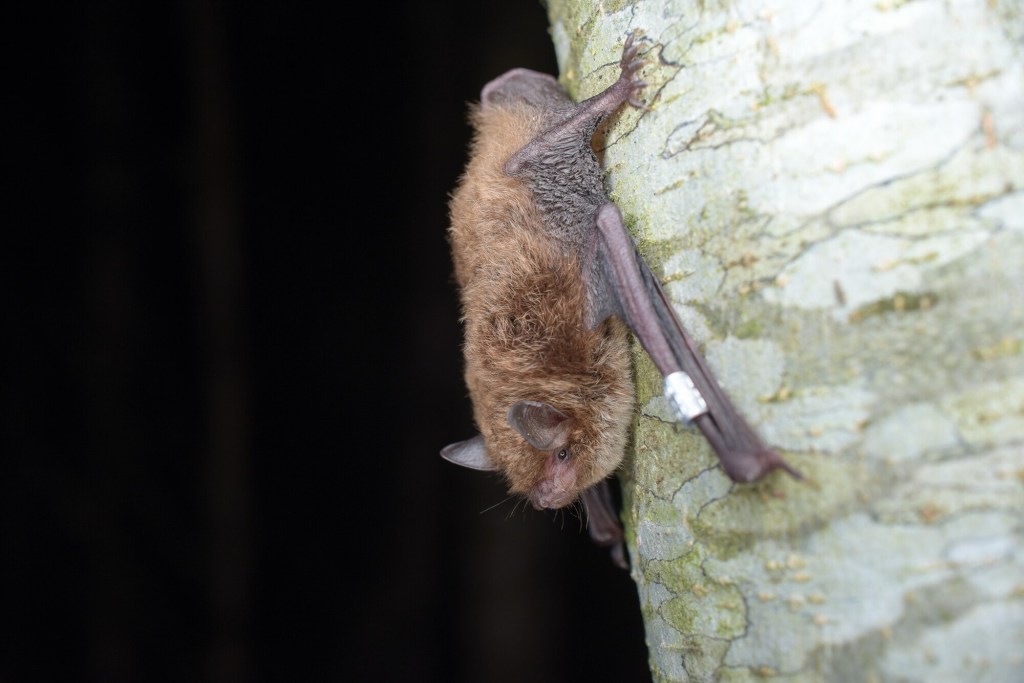
As the nights draw in and the trees begin to lose their leaves some of our countryside’s lesser-seen creatures become more apparent, nocturnal or crepuscular animals like bats for example, which can be seen more readily against the dusk sky as they flit about hunting for moths and midges.
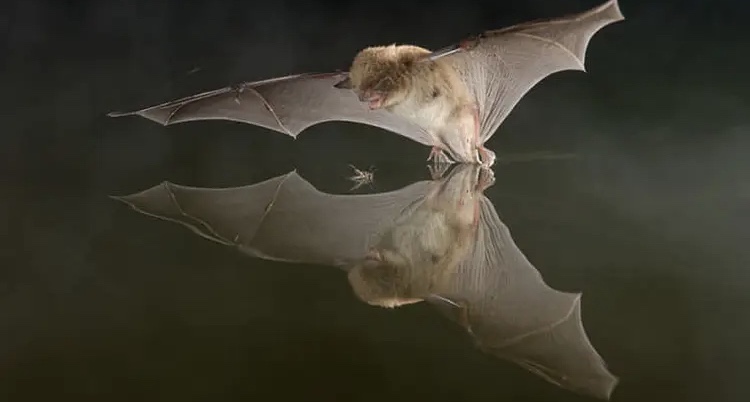
On a country lane the small bats which you might see quartering up and down will quite often be pipistrelles, but over rivers, streams and lakes the bats that can be seen skimming low over the water, flashing their white under-bellies as they turn, may be Daubenton’s, the ‘Water-Bat’.
Hunting
Named after a french naturalist, Louis-Jean Marie-Daubenton, this medium sized bat is found throughout the British isles wherever there are bodies of water with somewhere quiet and dark nearby to roost, they fish by catching insects with their feet and tails, having a particular liking for Caddis flys.
Researchers have found that they avoid water with too many ripples as these interfere with their echo-location and they won’t hunt over water covered with Duckweed, which could prove a problem with our increasingly warmer summers.
Identification
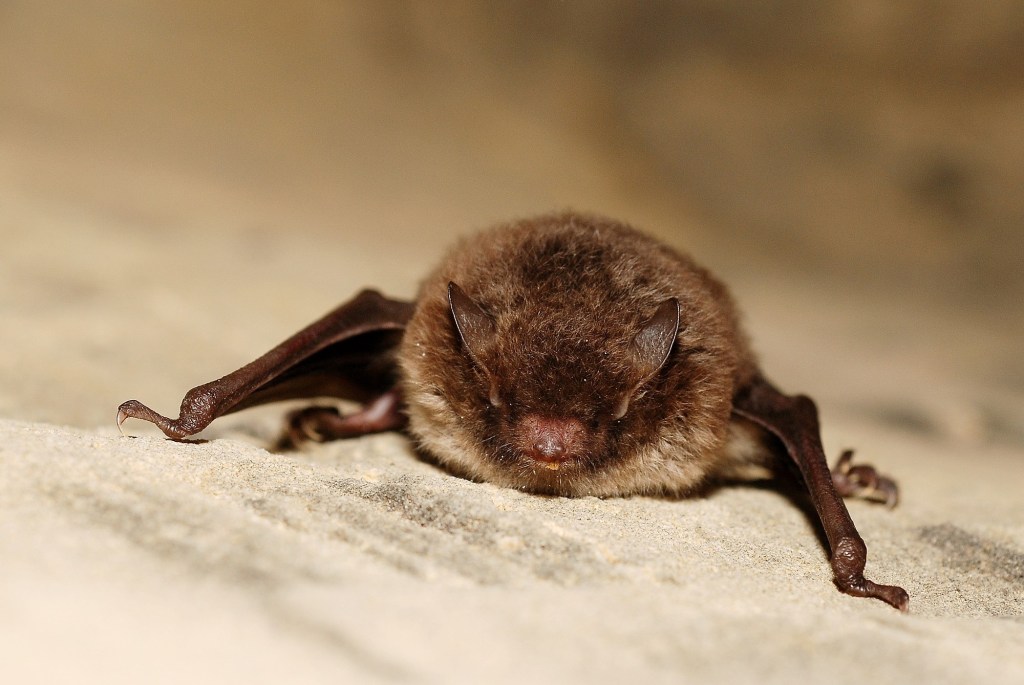
With shiny brown fur, a white front and pink face they are quite handsome as bats go but very hard to get close to, being shy and particular in the places they live. In the Northwest I know of several locations they can quite easily be spotted and where they roost nearby, this time of year is mating season so they are more active now, although they hibernate as it gets colder around the middle of December.
Where to see them
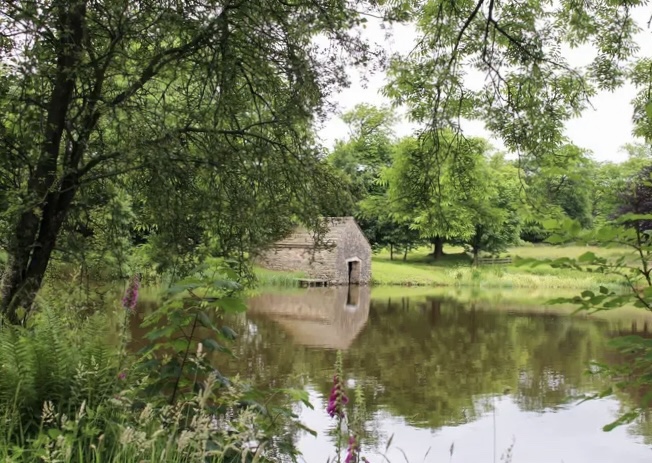
Daubenton’s prefer open woodland near to expanses of calm water, these are the locations i’ve seen this fascinating bat hunting;
One is downstream of the Inn at Whitewell where the trees overflow the stiller pools of the Hodder. Another location i’ve spent many hours watching their antics is at Browsholme estate in the Ribble valley, where they can be seen on the trout lake, here they roost under a nearby bridge where they jam tightly in between the stones.
Recently i’ve seen a couple flitting over the Calder in front of Gawthorpe Hall in Padiham, they roost in the Great Barn at the hall, where, as is common with Daubenton’s, they share the roost with other bat species including Pipistrelle.
Maternity colonies and hibernacula
After Daubentons have mated, from about May to August, they form maternity colonies, numbering anything from 20 up to 50 females, which makes them particularly susceptible to disturbance, as they will not risk rearing their young somewhere they think will be disturbed. Therefore quiet spaces such as caves, tunnels, underneath bridges and occasionally barns which are rarely touched by people are very important to their success.
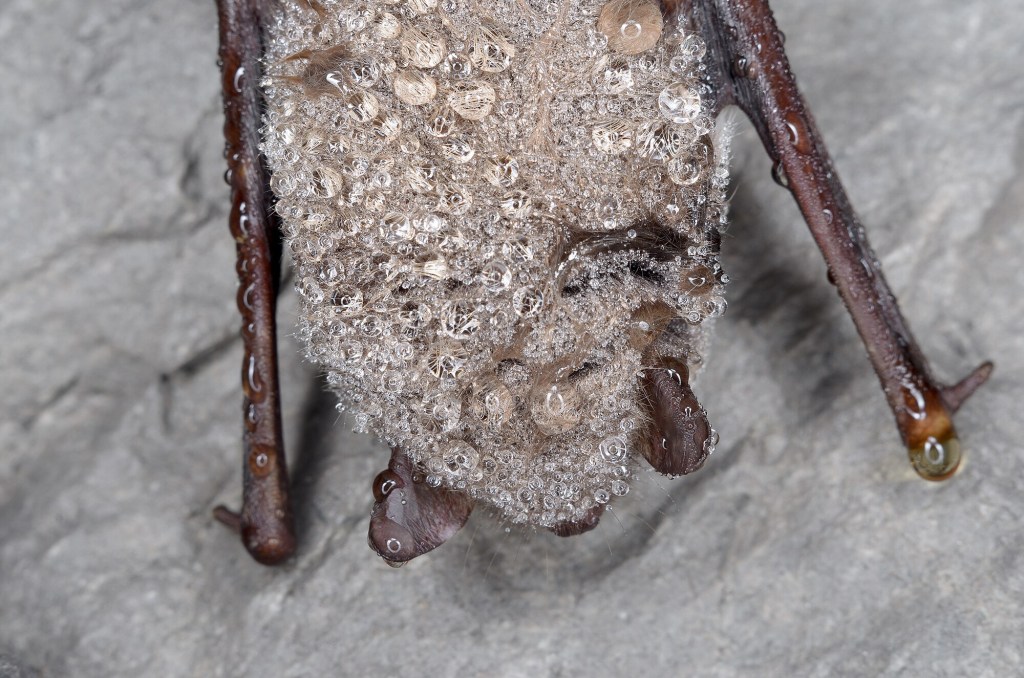
Throughout the winter months they hibernate in solitude, finding a quiet spot, often underground, which is frost-free with a stable temperature and lodging themselves in any nooks and crannies they can find, they will remain there in a torpid state until around April, these places are known as Hibernacula.
How to help bats
There are several things you can do to help your local bat populations, here are a few;
- Build a pond.
- Create large-scale landscape features for them to hunt along, such as hedges and treelines.
- Install Bat Boxes (although Daubenton’s rarely use these.
- Plant night-scented flowers.
- Let your garden get a bit wild and unruly.
- Switch off your outside lighting.
- Keep your cats indoors at night.
A B-H
 Northwest Nature and History
Nice post 🌹
LikeLiked by 1 person
Thanks, wait til you see tomorrow’s one for Halloween, it’s about the Pendle witches!
LikeLike