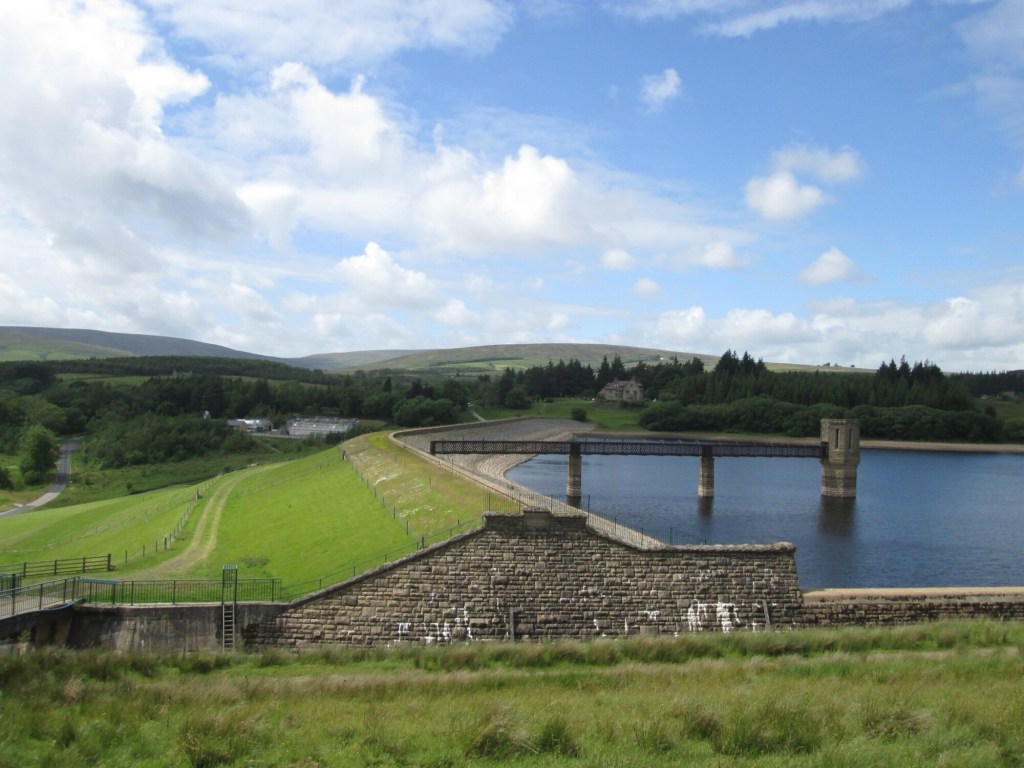
Stocks reservoir sits at the head of the Hodder valley in Lancashire and was constructed over the latter half of the 1920s, opening in July 1932, you can read about the history of the reservoir here;
Sources of Stone
For the construction of the dam and its many associated buildings, culverts, causeways, bridges etc nearby sources of resilient but easily workable stone were required, for this purpose several small quarries were excavated short distances away from the reservoir.
Stone was transported to the construction sites via a network of 3ft gauge railway lines, which linked to a railhead at the village of Tosside, where they connected to a standard gauge line running to the local water board depot at Long Preston.
The reason the line was of 3ft gauge was because most of the engines and wagons used were ex-war department, meaning they might have seen service in the Great War, most of these lines now only exist now as embankments and footings.
The rails themselves, associated quarrying and construction equipment were taken away with the completion of the dam. Yet a few relics of the massive construction project still remain, one is the steam crane which still resides in its quarry in the Upper Hodder valley.
Jumbles Quarry
The quarry itself is locally known as ‘Jumbles quarry’, perhaps because of the jumble of rocks and boulders left there, it was first blasted in 1925, you can approach it along the still visible branch of the water board railway which ran 4.5 miles up the Hodder valley from the dam, crossing the Hodder next to the Cross of Greet bridge.
Walking upstream on the left of the valley you can make out the levelled course of the railway but it is only about halfway up you first come across any actual remnants, these being a few railway sleepers which have been undermined by a small stream, you can find Round-leaved Sundew just here if you look (and tread) very carefully.

Far Costy Clough
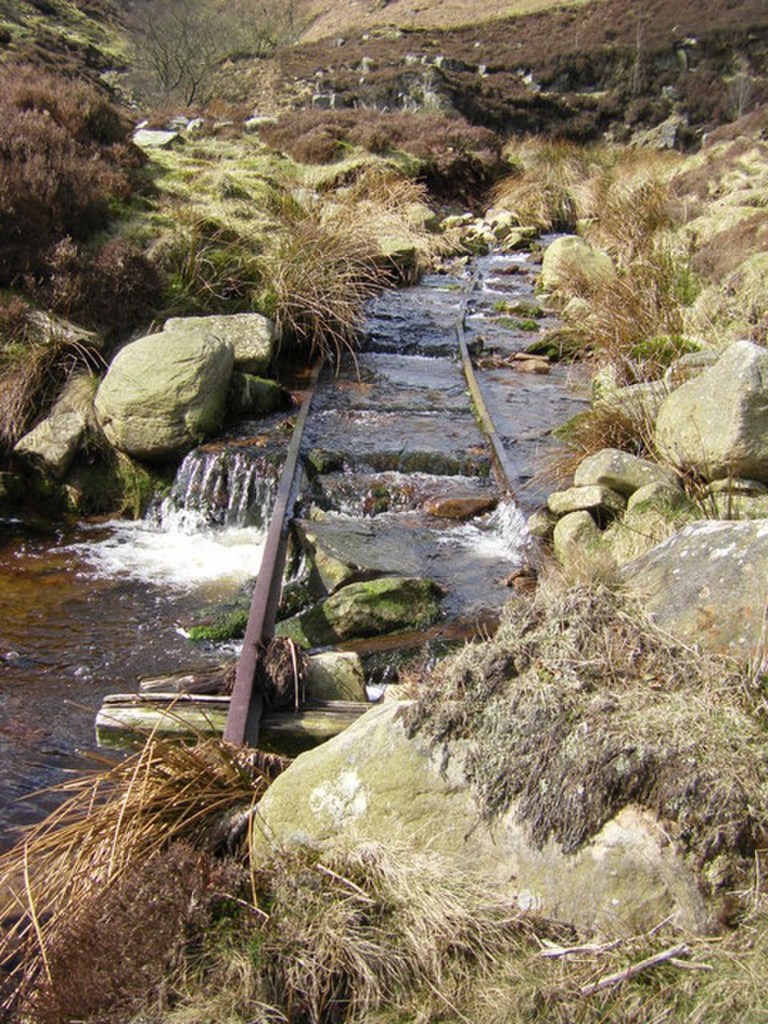
It is only when you are nearing the quarry itself that you can still find any actual rails, this being where they are exposed by the erosion of Far Costy Clough, a steeply gtadiented and rocky stream (clough is a local word for steep-sided valley, pronounced like “cloth” in most of the north of England but like “clue” in the Bowland area).
The name ‘Far Costy’, translates as ‘very rough, or ‘rocky’ in Norse. This clough is renowned as being very wild and is well worth exploring if you are here, although be very careful as it is a bit like something out of Jurassic Park!
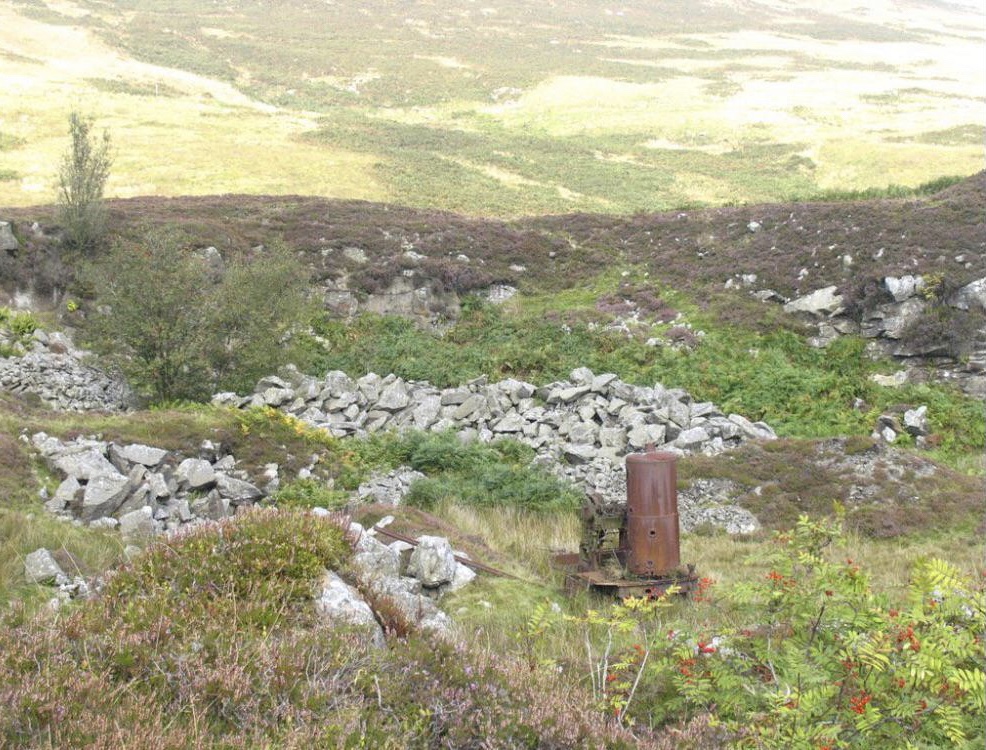
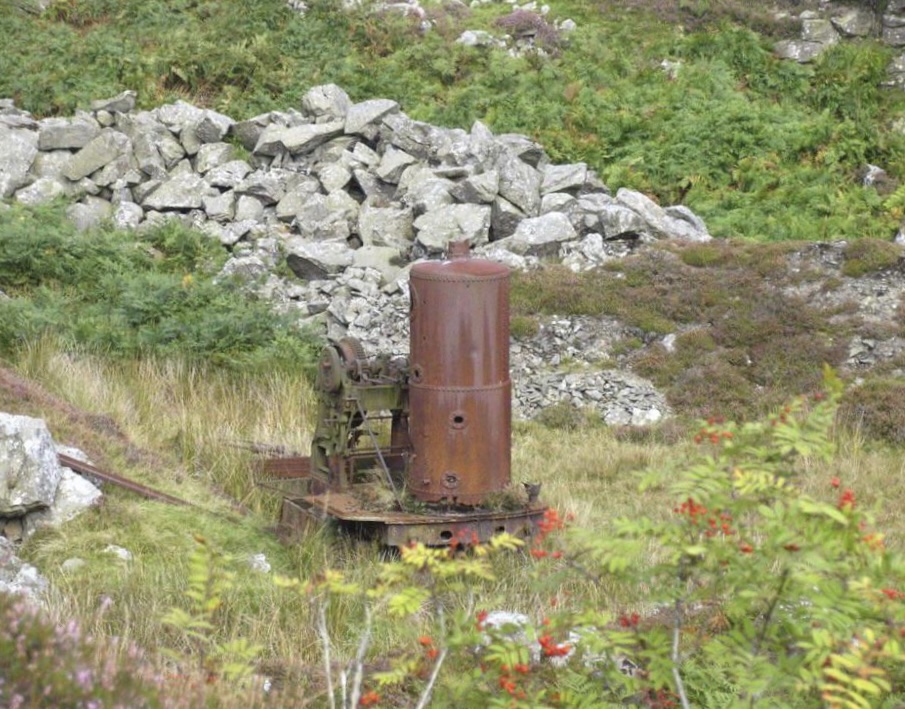
As you cross over the clear waters of the Clough you will round the end of a bank of rubble excavated from the quarry and this is when you first view the steam crane which sits rusting away in the shelter of the surrounding hills, seeming for all the world like a small red dragon slumbering away.

Smith Rodley
Why the steam crane was abandoned here rather than being taken along with the rest of the plant and equipment is a bit of a mystery. It is thought the track was taken up before the crane was moved and then it was too late to move it once this mistake had been realised. It was manufactured by Smith Rodley and was known as a ‘Leeds type’ crane, Thomas Smith and son’s foundry was based between Town Street, in Rodley, near Leeds and the Leeds-Liverpool canal.
The crane was used to load stone onto wagons which each carried about 8 to 10 tons of stone and was only used for about ten years during the 1920’s and early 1930’s. A lot of the quarry workers employed here came from Myrthyr Tydfil in Wales, and reputedly found Bowland to be much colder and wetter than home, leading some to speculate that their haste to get back to the warmer climate of Southern Wales is what led to the crane being abandoned!
Stubbornly staying in its quarry
Various plans have been made over the years to remove the crane and place it in a museum or heritage centre, but the area’s inaccessibility, added to the crane’s weight and unusual shape have proved this nearly impossible. At one time there was, reputedly, a discussion with the army, who were carrying out exercises nearby, as to whether their Chinook helicopter could be requisitioned for the purpose! But one look at the crane and its position led to the answer being a firm but polite “no”.
The crane, stubbornly staying put in its quarry, seems quite at home there and strangely enough has become part of the local scenery, it did play a huge part in shaping it after all, once known only to local farmers and gamekeepers it is now a well-known landmark and becoming a bit of a tourist attraction, there is even a geocache!
A B-H
 Northwest Nature and History
With the steam crane so remote within the quarry, I cannot help but think of the logistics, the man power to get coal to feed the boiler. Amazing.
LikeLiked by 1 person
It is remote, the nearest farms something like 2 miles away, beautiful little valley to explore though
LikeLike