
The Dog Rose, Rosa canina, is a deciduous shrub native to the British isles, it is found in a wide variety of habitats but prefers hedgerows and scrubby patches of woodland, where it grows in a sprawling manner, its stems arching over each other and getting entangled with other briars and shrubs. It usually reaches about 1 to 3 metres in height but if its sharp, curved spines latch onto a tree-trunk or some other form of support it can grow to be quite a bit taller.
Spines and thorns
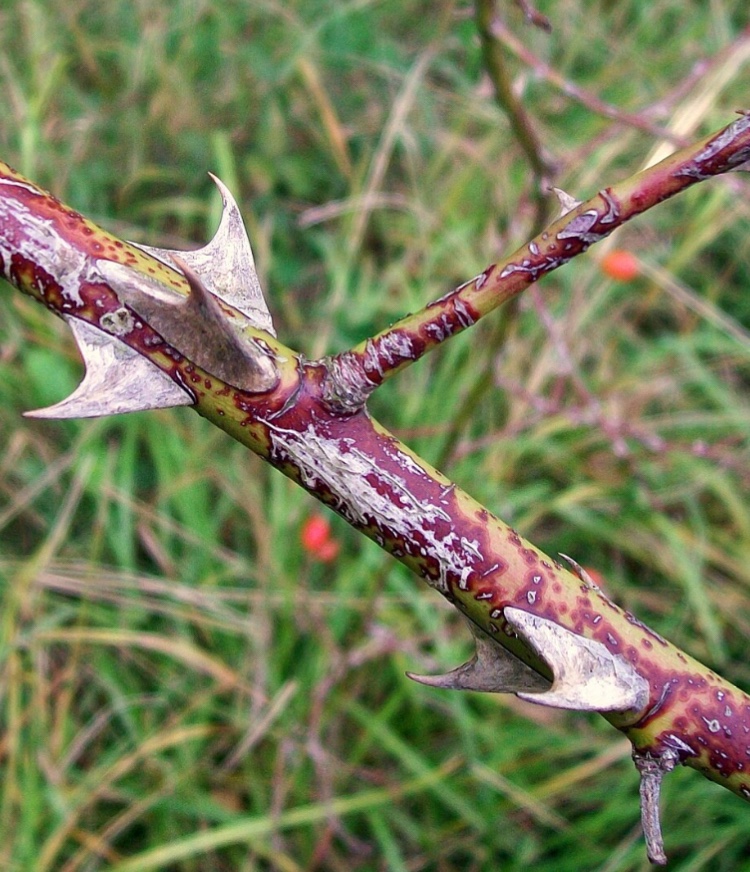
Unlike the other briars of the hedgerow, such as the Bramble, the ‘thorns’ of the Dog Rose are actually spines, or modified leaves, grown from different cells to the stem of the plant, rather than from the same cells as with those of the bramble, they are of a similar construction but serve the same purpose, having sharp ends which curve downwards, aiding the plant in its competitive climb towards sunlight.
Briar or Rose?
The Dog-rose is the most widespread wild rose in the British isles and has many different common-names, you might otherwise know it as Sweet Briar, Hip Rose, Briar Rose, Wild Rose or Witch’s Briar. However it is most commonly known as the Dog Rose, although the reasons for this are lost in the mists of history.
Some people believe this is because the plant was purportedly used to treat dogs that had rabies, up until the disease was finally eradicated from the British isles in 1922. Others think it more likely that ‘dog’ simply means ‘common’, or ‘inferior’, as it grows widely and freely and is thought by some to lack the beauty, fragrance, and sophistication of those varieties of Rose which have been cultivated over the centuries for the gardens of our stately homes.
Beauty and the bees
However common and low the Dog Rose was once considered to be nowadays it is often planted as part of landscaping and conservation projects, this is because of the beauty of its flowers in summer, its fruit in autumn, the speed at which it grows to occupy otherwise barren places left by earth-works and construction work and not least because of its importance for wildlife.
In spring its leaves, consisting of 5 to 8 oval leaflets with toothed edges, which release a sweet scent when crushed, provide food for the larvae of several insect species, including the Sawfly.
From June to July, white or pale pink flowers bloom and their scent, which is sweet, delicate, and much subtler than that of domesticated varieties, attracts pollinating insects from far and wide, with Bumblebees, Hoverflies, Moths, and Butterflies all being fond of the flower’s abundant nectar.
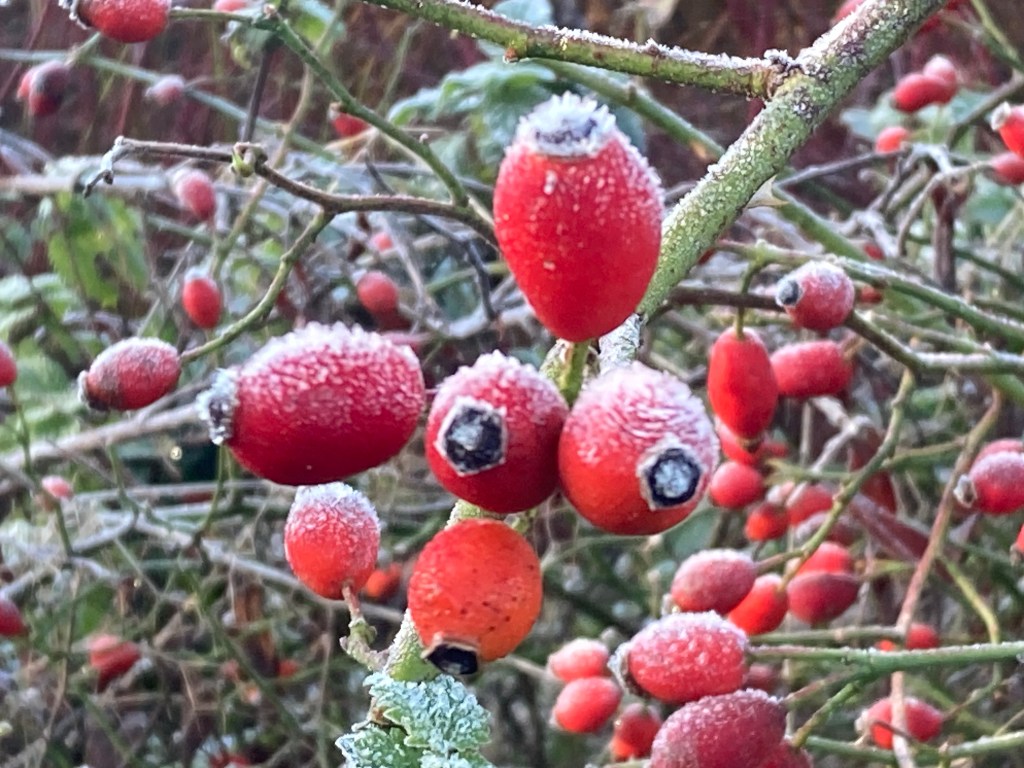
From October to November, even later in the year if the weather is warm, the pollinated flowers fruit into red, egg-shaped ‘hips’, known as ‘Rose-hips’. These provide an essential winter source of food for birds of the Thrush family such as Fieldfare, Mistle Thrush, Ring Ouzel, Redwing and Blackbirds, many of which will have migrated here to overwinter and will be in search of foods high in Carbohydrates. Smaller birds, such as Finches will pick out the seeds when other food sources become scarce, meaning that this plant remains of use for wildlife in one way or another all through the year.

Uses and symbolism
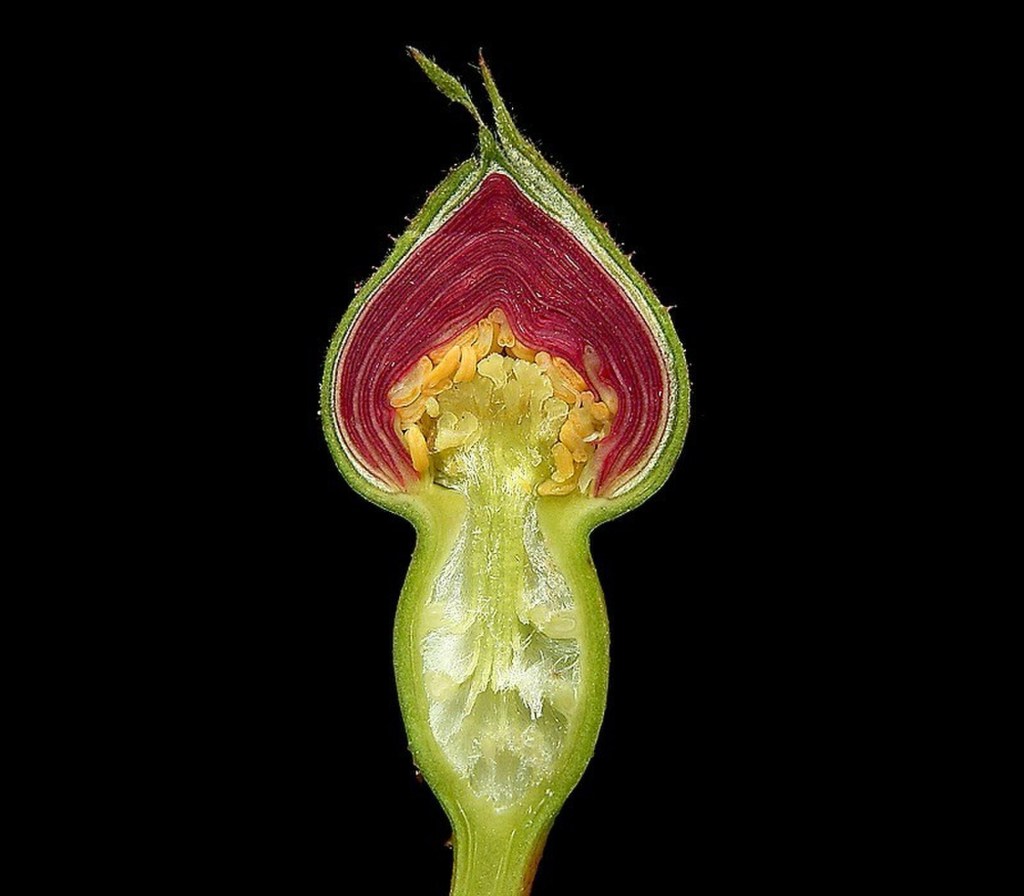
The hips of the Dog Rose are much sought after by humans too, especially as they contain a high percentage of vitamin C. They can be made into various things including teas, syrups, and oils and have several other medicinal properties as well as just being a rich source of vitamin C, so are useful for treating neurological, cardiovascular, gastrointestinal and various other complaints. As the hips and the seeds within contain compounds which are antioxidantal they are useful for treating skin complaints or simply as a beauty product.
The seeds of Rose-hips are also useful in another, much less essential way, as itching powder, for when dried and tipped down someone’s shirt they can provide a small amount of old-fashioned amusement!
England’s Rose
Many people will have heard the often quoted tale of how various plants were used as alternative sources of vitamins such as vitamin C in World War 2, and the Dog Rose is often one of the sources listed, and while it is true that traditional sources of this anti-scorbutic (used for treating scurvy) vitamin, such as Citrus fruits, were in short supply there was a certain degree of propaganda value to these reports.
It was used as a way of convincing the enemy that the reason our RAF pilots were suddenly much deadlier was because they could see better in the dark due to an increase of vitamin C in their diet, disguising the fact that this was actually due to Britain having developed radar technology to the extent that it was useful in battle.
The Dog Rose also featured in another pivotal period of our history, when it was used as the symbol of the monarchists in the War of the Roses, indeed the Red Rose of Lancashire is based on the Field Rose Rosa arvensis, a close relative of the Dog Rose, and is still used as a symbol of the county to this day.

A B-H
 Northwest Nature and History
Beautiful 🌹
LikeLiked by 1 person
hey
cool blog 🙂 will give it a follow and a like !
https://jackrussellterriers.info/
LikeLiked by 1 person