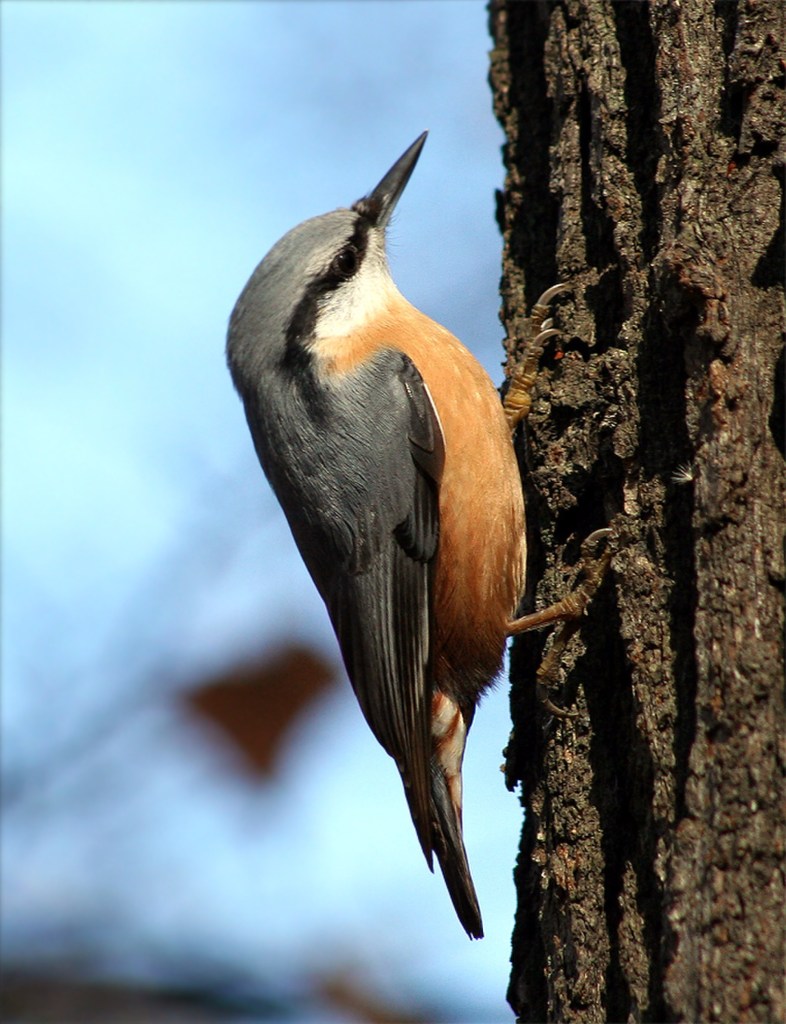
The Nuthatch, Sitta europaea, (sitta meaning ‘seed’), is quite similar to, and often confused with, Woodpeckers and treecreepers but is a member of its own genus and quite unique.
They are very agile and mobile little birds, able to ascend and descend tree trunks upside down or the right way up, they are unique in appearance too having a large head with a prominent black eyestripe, which gives them a bit of a rakish, bandit-like air, a short, stiff, square 12-feathered tail a rust-red front and a grey/blue back.
Fascinating Foragers
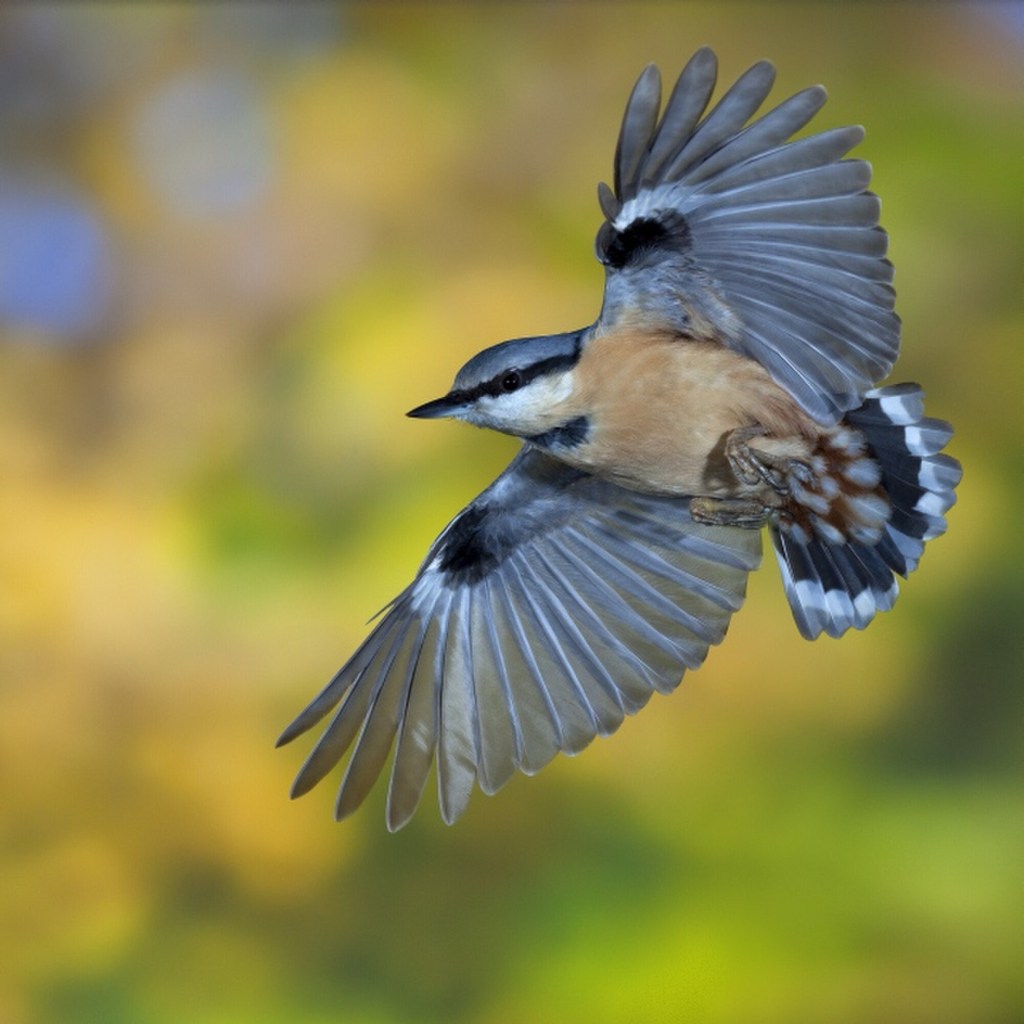
When they are running up and down trees or foraging in the branches they are quite fascinating to watch, being capable of hanging upside down to pick at the underneath of branches for insects and their eggs. They are very fast and aggressive hunters too, occasionally they will chase after flying insects they spy from tree trunks which can be a bit surprising for the observer, and presumably for their prey as well!
As well as hunting for insects with their strong legs and long claws they also, as their name ‘nuthatch’ implies, rely upon seeds and nuts as a main part of their diet. Acorns are a favourite and research has shown that farmland and woods with well established Oak trees are one of its favourite habitats. They have very powerful bills and will wedge an acorn or large seed into the cracks of an Oak tree’s bark and hack or ‘hatch’ at it rather like a Woodpecker, the word ‘hatch’ has origins as old as their scientific name ‘sitta’ and is where ‘hatchet’ is also derived.
Bold and Bolshy
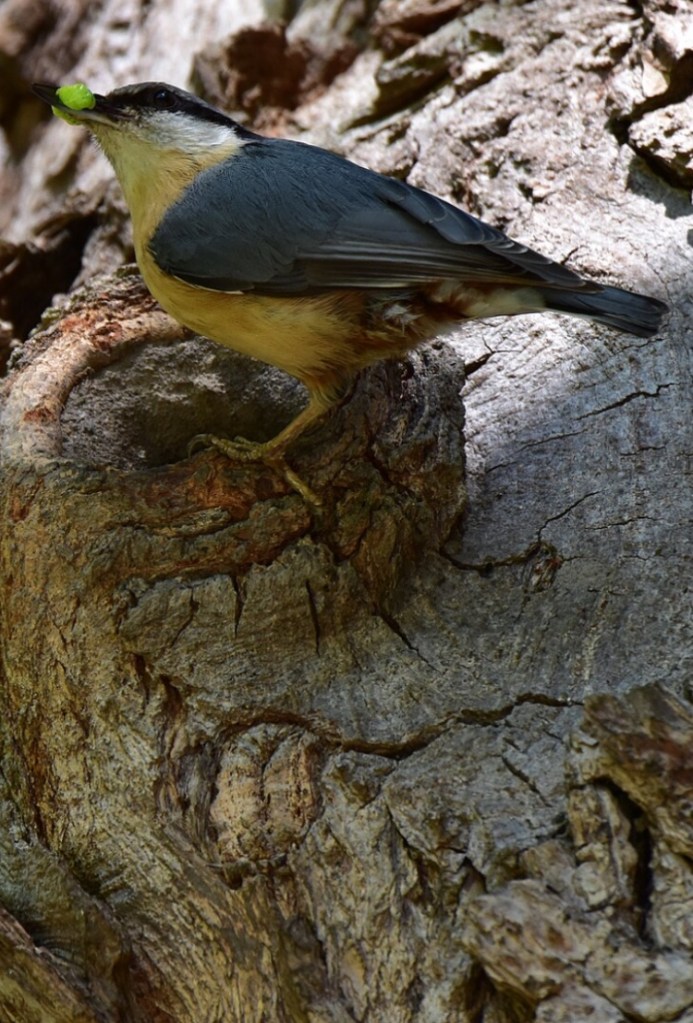
They are increasingly seen on bird feeders, sometimes in winter flocks, and over the past few decades have spread north in the British isles to areas they were previously unknown in, Scotland’s first breeding pair was recorded in 1989 and they have recently become more common there. This is thought to have been due to this new abundant food source and they will aggressively and vocally defend it against all-comers too, being a more than equal match for bigger Blackbirds, squabbling flocks of Sparrows or Bolshy Bluetits.
They are bold and aggressive about defending their territories as well, in the breeding season, which begins in late April, they sing constantly with a loud, simple kind of song evolved to be heard through the acoustically hard and complicated environment of tree trunks and branches. They store their food in their territories too which gives them and extra reason to be defensive, this year’s been a bumper crop year for nuts too so they’ve had a lot to defend!
Breeding Behaviour
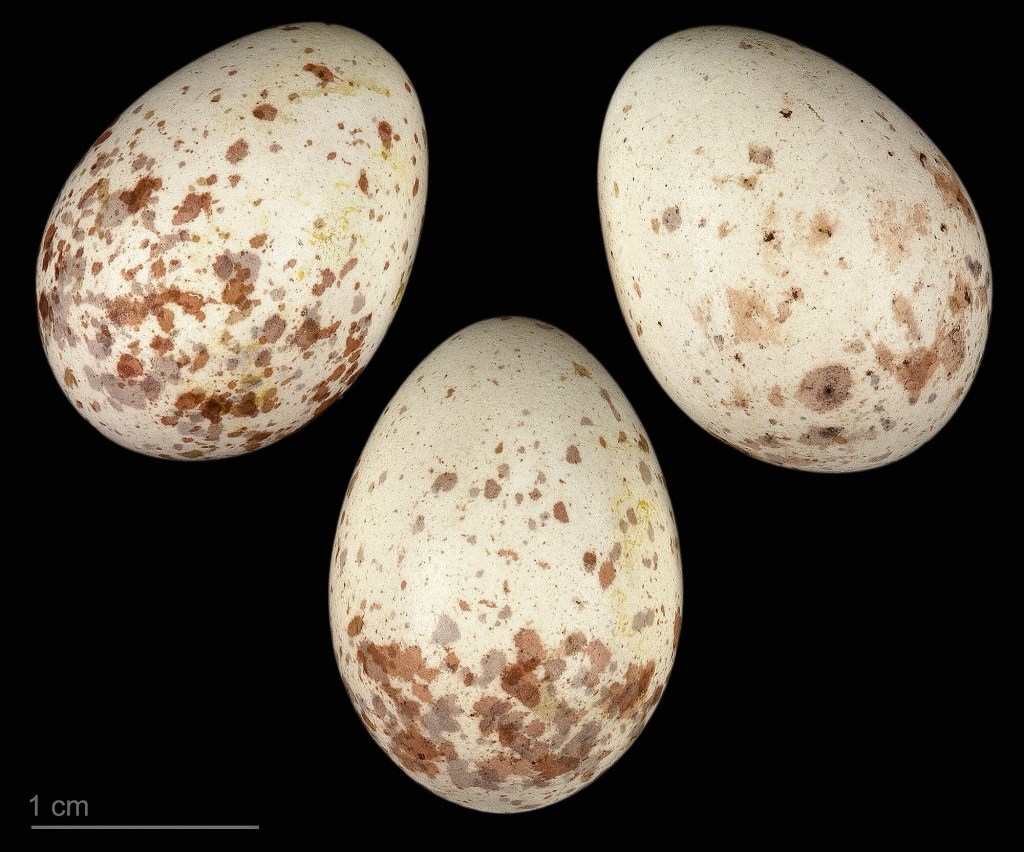
Nuthatch pair up in spring and the female lays a clutch of 4 to 10 tiny round white and red dotted eggs around about the end of April, a breeding pair will stick together and take their duties very seriously, taking turns bringing food back to the nest and repelling any size of intruder who gets too close to the nest.
They will often rear two broods in a year and yet another thing that is unique about them is that they are the only British bird which alters the size of the entrance to its nest by using mud, in fact in some regions they are called ‘mud-daubers for this very reason. The male will gather mud from the ground or puddles much like a Swallow does and daub it around the hole to construct its size, this is habitual as they even unnecessarily do it with man made nest boxes.
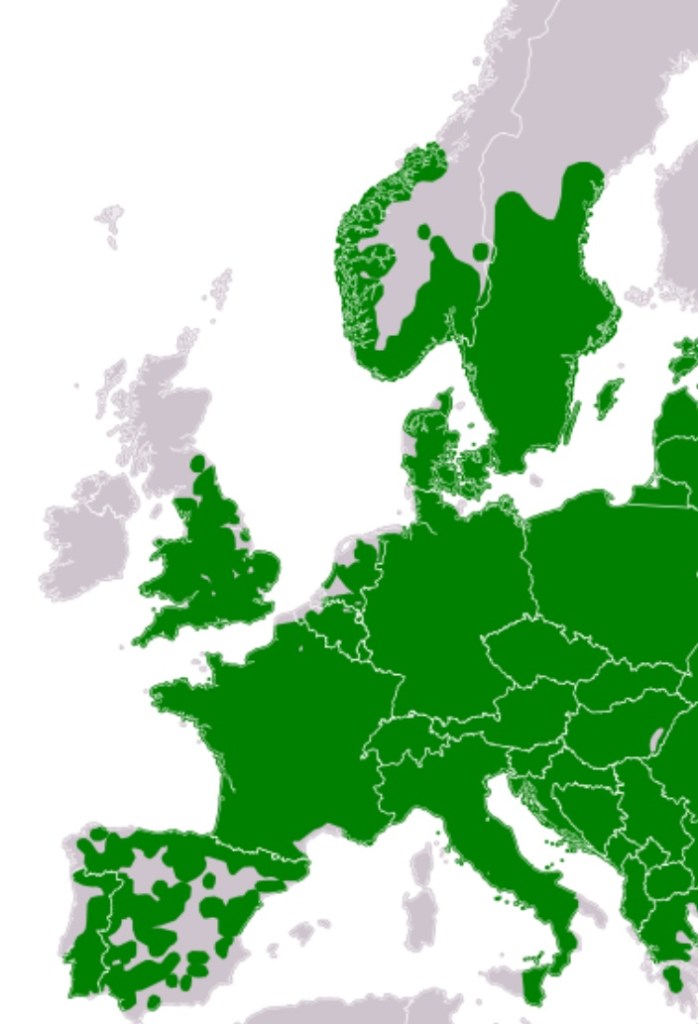
Fully-fledged Nuthatch are nearly identical to the adults and will stay around their birthplace, they are that sedentary that bird-ringing surveys by organisations like the BTO have found the average distance adults stray from their birthplace to be less than a kilometre. No Nuthatch rung in the British isles have been found in Europe and European birds rarely stray across the channel either, the Irish Sea has proved too big a barrier for them too as they are absent from Ireland, however American Nuthatches have somehow made it across the Atlantic on occasion though quite how is a complete mystery!
In the North of England they are fairly common and have been for a few decades, they no doubt find the hedgerows and fields with their stands of mature Oaks and Ashes to be quite suitable. A good place for spotting them locally is on Gawthorpe Estate in Padiham where they can be heard calling from the tree-tops as you’re walking around the grounds, as they are fairly recent arrivals from their southern strong-holds they haven’t been around these parts long enough to earn a colloquial name yet!
A B-H
 Northwest Nature and History