
Bleasdale circle is the prehistoric remains of a ‘henge’ or burial mound situated near the village of Bleasdale, near Garstang, rediscovered in 1898 and thought to date from 2000 to 1500 bc.
There is nothing much to the site now apart from the earthworks and the stumps of 11 concrete posts which mark out where archaeologists think the original wooden posts would have been.
It is still an interesting and beautiful place to visit though, set in between the larger hills of Parlick and Longridge fell and encircled by a ring of trees with expansive views over the valley of the river Brock and the surrounding countryside, the site has a very special, somewhat insulated feel to it, like it is seperate from, yet still connected to the wider world.
The position of the burial mound on the hill and the fact that it is aligned with the sunrise of the summer solstice is thought to mean that the circle had a very important role to play in prehistoric rituals.

Ceremonial Cremations
Two collared burial urns were found there in 1898, these are currently in the collection of the Harris Museum in Preston, they are typical of other cinerary, cremation, urns found in the north of England, and possibly the oldest found. Other artefacts such as the accompanying incense cup and remains of cremated bones show that ritual cremations were probably the ceremonial purpose of the Bronze Age wooden henge. The name Bleasdale comes from the Norse for ‘blaze’ or ‘bare place’, nearby at Quernmore there is a Dark Age burial site and Claughton has been a source of Viking finds too.
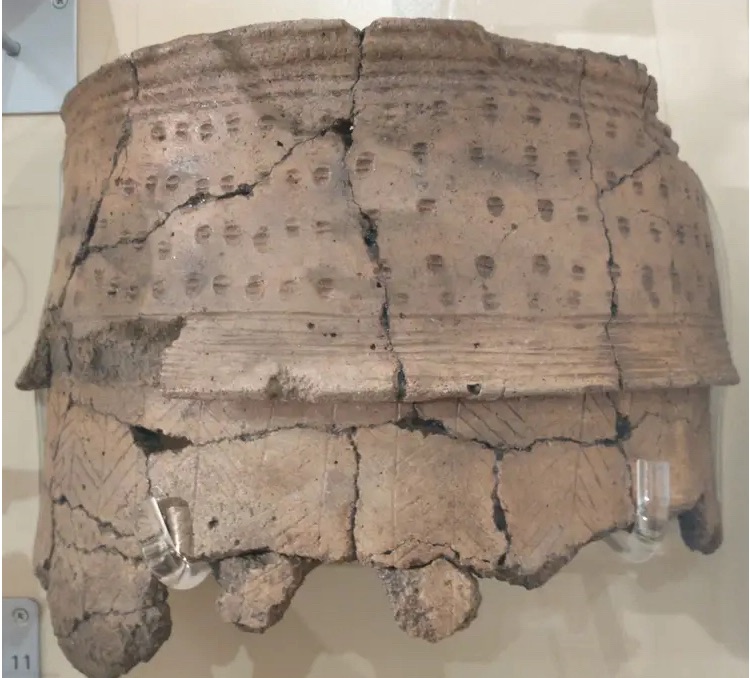
excavated at Pendleton and currently on display in Clitheroe Castle Museum
More information about the settlements long history can be found at Bleasdale heritage centre.
A B-H
 Northwest Nature and History
One thought on “Bleasdale Bronze Age Circle”