
On clear cloudless nights it is always worth chucking your big coat on and popping outside to see what you can spot in our night skies, especially if you are lucky enough to live somewhere clear of light pollution.
Earlier in the year offers the best opportunities to observe the brightest star that is visible in the northern hemisphere, Sirius.
Short video of Sirius taken on my phone, with a proper digital camera you can create ‘light paintings’ by taking a long exposure
Astronomically Close
Sirius is found at the bottom left of the constellation of Orion and appears so bright because it’s very close in astronomical terms, being just 8.6 light years away. Of course we are talking space distances here.
To quote author Douglas Adams;
8.6 light years means over 80 trillion kilometres away, that’s 80,000,000,000,000 kilometres from Earth, so we won’t be visiting there any time soon.
Seirios the Scorcher
Sirius’ modern name comes from the Ancient Greek Seirios, meaning ‘glowing’ or ‘scorching’, being the root of the word ‘searing’ as well. It is actually a binary star system that you see, made up of a white star and a white dwarf, Sirius B, discovered by the astronomer and telescope maker Alvan Graham Clark in 1862.
Clark has a telescope named after him at the Lowell observatory, itself named after astronomer Percival Lowell, famous for imagining that a race of Martians built the giant ‘canals’ that criss-cross the surface of Mars.

(Tom Ruen)
Both Sirius and Sirius B were originally blue/white stars but one burned up its Hydrogen fuel and became a red giant before flaring out as the white dwarf you see now. This white dwarf is slowly stripping the other larger star as they are very dense galactic entities, possessing more gravity for their mass. When the pair reach their closest distance to each other, once every 49.9 years, there are intense magnetic storms as the dwarf, Sirius B, strips material from its brother.
The flickering of Sirius is one of the most mysterious features of the star and descriptions of its colour have changed through the ages, with observers and astronomers perceiving it differently. Some see it as red whereas others will swear it is blue, but the main reason it seems to change colour is atmospheric interference as it is so low in the night sky its light is passing through a greater, and more curved, thickness of atmosphere.
(Till Credner)
Dog Days
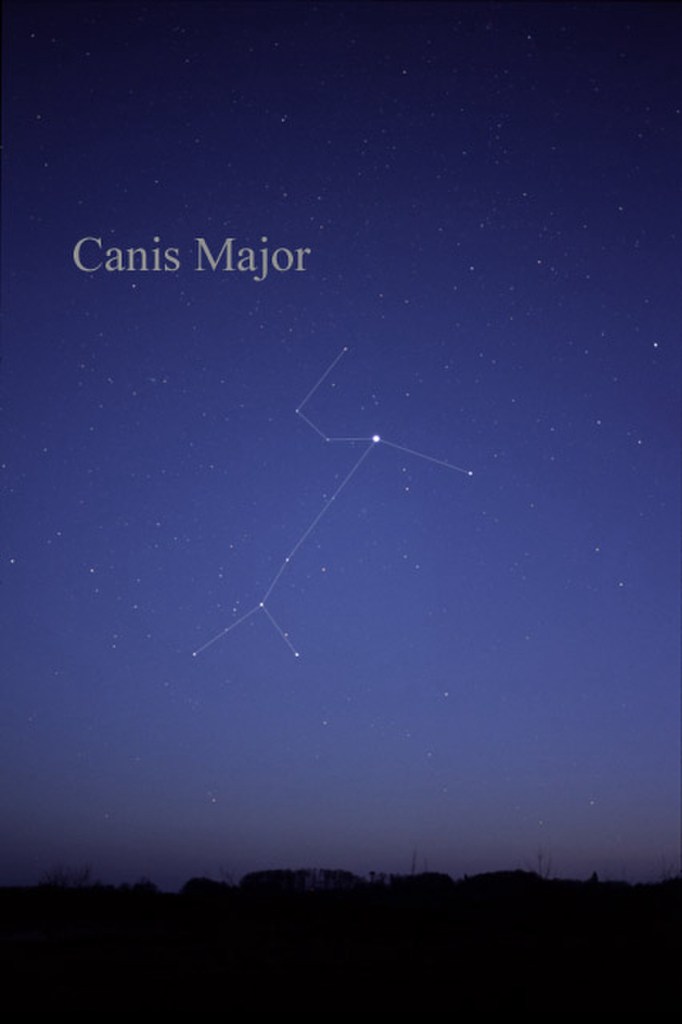
Sirius is also known as Canicula, as it resides in the constellation Canis Major (canis as in canine for dog) and is the origin of many myths and legends such as that of the ‘dog days’.
In years when Sirius ascends in the summer months, called a ‘helical’ ascension, it was thought by the ancient Greeks and Romans to bring hot weather with it, so was known as the ‘scorcher’. The Romans believed that during the ‘dog days’ of July, dies caniculares, the heat drove dogs rabid.
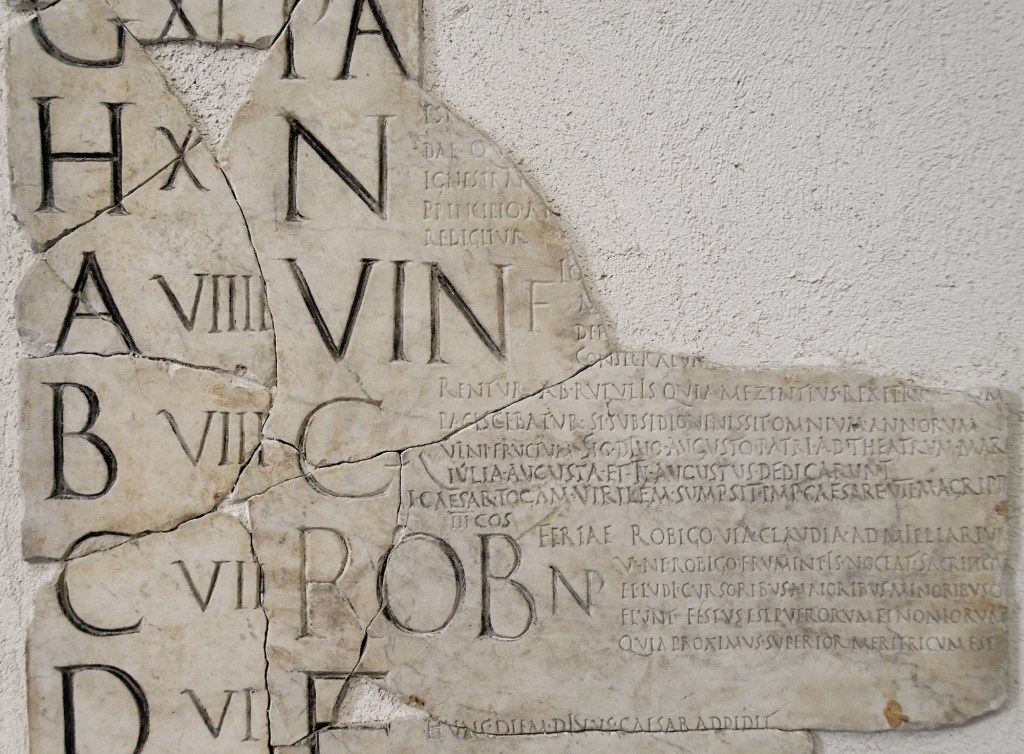
They also sacrificed red dogs to the star during three agricultural festivals. One of these was the ‘Robigalia’, held in May to prevent the red coloured mould ‘rust’ from destroying crops, the others were ‘Floralia’, the festival of flowers and Vinalia, the festival of fruit.
Sopdet and the flooding of the Nile
To the Egyptians, it was and still is, the sign that the fertile season is beginning.
The annual flooding of the Nile, which deposits fertile earth onto the fields surrounding the river, takes place just at the time that Sirius rises before the sun does. As Sirius spends the 70 days before this in a region of the sky too close to the glare of the sun to be visible the Egyptians thought that its reappearance was actually its rebirth, so this time became the start of the ancient Egyptian new year in July.
Because of this they made the star a deity, the goddess ‘Sopdet’, usually portrayed as a woman wearing the crown of Upper Egypt, which was white and cone shaped, with a star above it, her title was ‘the bringer of the new year and the Nile flood’.
Sopdet’s husband was called ‘Sah’ or Orion, and their daughter was called ‘Sopdu’. She was a falcon headed god who had her own star, which is Venus.

I gha lum muhk ti
The Inuit call Sirius “I gha lum muhk ti”, which translates as ‘the Moon’s Dog’, for them the dogs proximity to the moon means that there will be high winds and the ancient Celts saw Sirius as being one of the hounds of Annwn, the Celtic underworld.
The changing colours and brightness of Sirius has also led to various myths and legends. The ancient Iranians gave their god ‘Tishtrya’ the power to change his shape on every tenth day of the month, becoming a cow, a child then a horse, and the Norse called the star ‘Loki’s Brand’ as Loki is the god of shapeshifting, fire and trickery.
If the night skies are clear enough this spring you will be able to see Sirius in all its glittering glory, what deity do you feel it represents though? And what colour is it?

Skywatching Tips:
Night Vision
Allowing your night vision to sharpen by being out in the dark for at least 20 minutes, and avoiding any bright screens, such as phone screens beforehand (set your screen to dark mode) will allow you to appreciate night sky spectacles like Sirius even better!
Dark Skies
Here in the Northwest we are quite heavily built up and light pollution near to our main towns and conurbations can obscure all but our brightest night-time objects, but luckily we have access to areas of countryside with some of the darkest skies in England including the Lake District and the Forest of Bowland Dark Sky Discovery Site.
A B-H
 Northwest Nature and History