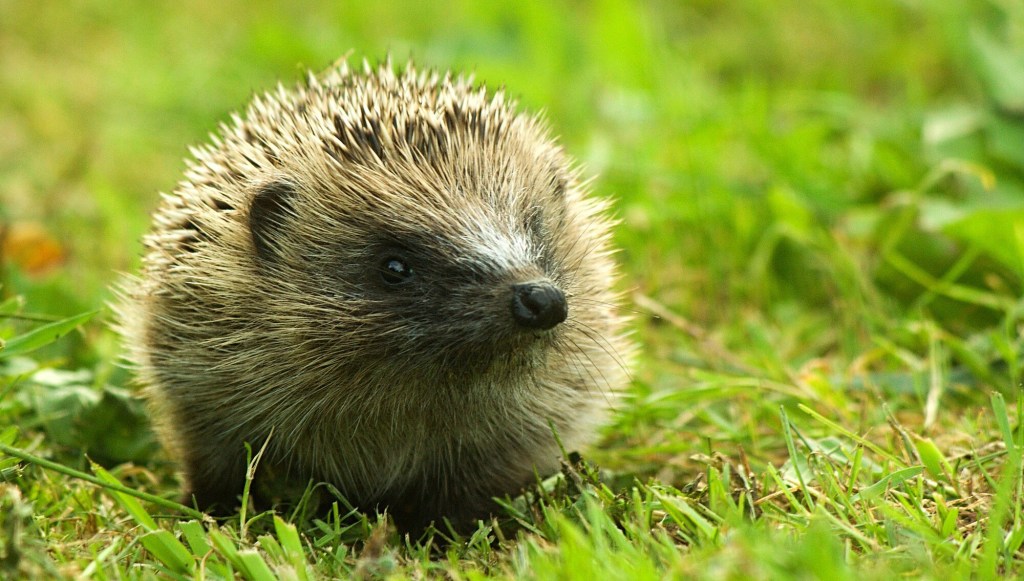
The European Hedgehog, Erinaceous europaeus, is our only spiny mammal and in severe decline at the moment, it is also one of the most widely recognised animals in Britain.
Typically pictured in a rural setting they are surprisingly common in our urban environments too, finding our parks and gardens to be full of the kinds of nooks and crannies they prefer, and like the Fox, Badger and Grey Squirrel, also mammals which have become urbanised, they can find no shortage of food here.
Unfortunately there is a now a trend to pave over gardens with hard-standing and fake plastic lawns so these enticing habitats are rapidly disappearing, soon they might revert to being only a rural species, although they are increasingly under threat there too for various reasons, some of which I’ll cover later in this article.
The British countryside, though much of it is getting smothered by housing and industrial development, still holds plenty of suitable Hedgehog habitat, including, of couse, the animal’s namesake; hedgerows. Along these strips of green they can find a diet more natural than the dog and cat food we put out for them.
Diet
The natural diet of the hedgehog includes snails, beetles, worms, insect larvae and any other invertebrates they can snaffle up, hedgehogs aren’t as fond of slugs as you might think though as the mucus they produce can cause problems for hedgehogs, gunging up their nostrils, mouth and eyes.
So, as you can see in that video, they roll them around before eating them to remove this slime and will chop up larger ones with their sharp teeth, though slugs and snails make up only 5% of their diet.
Hedgehogs will also eat fallen fruit, bird’s eggs and any low-lying blackcurrants or other berries they can reach, which are all plentiful in the luxurious hedges we are lucky to still have here in the Northwest.
They are a creature of lower altitudes as our uplands are not favourable places for Hedgehogs, possibly because there isn’t enough cover or food for them up there, more likely because it’s too damp and boggy, but most road-users will have seen them squashed on surprisingly open roads miles away from trees.
I’ve seen them on the top of Waddington fell and the Cross of greet at the top cattle grid which seems to indicate that they might be more common up there than we realise.
Cattle grids can prove a literal death-trap for them, though most will have a ramp in them to help them climb out, farmers will quite often check these are in place or replace them as, like most British people, they have a fondness for them but also understand their usefulness as controllers of pests.

Helping our Hedgehogs
There are several ways you can help hedgehogs, you can put food out for them in your garden, dog or cat food is usually recommended, even vegetables like carrots! but never bread, as they can get very bunged up and ill from eating too much of this. Recently it’s been found that pumpkins can be dangerous for hedgehogs as eating them upsets their stomachs and can lead to death.
You can also build them a house or bunker to hibernate in, whilst you’re planning this please make sure to build a ramp in any ponds you have so they can get out, as although they might be surprisingly good swimmers they can quickly get tired out trying to escape a steep-sided pond. As a kid I once rescued one from a drain in our back garden that was on the verge of drowning and it nearly didn’t make it.
Bonfires are of course a major threat to them too, if you can build them at the last moment or check them before lighting this might save them from a horrible death, it is said that splashing some paraffin on the wood will repel them, although hedgehogs do like rolling in smelly things so maybe this might not work.
This is because Hedgehogs sometimes anoint themselves, rubbing their faces and bodies in anything pungent they encounter, including tasty food such as the bowl of dog food you’ve put out for them, this seems revolting but is thought to be part of their mating behaviour.
They are rarely seen out in broad daylight, obviously excepting Northern latitudes where there might only be a few hours of darkness during the summer, so there is often a lot of undue concern if one is encountered in daytime.
However it is not necessary to immediately take the Hedgehog to a rescue centre in this case, in fact it could be the worst thing you could do, the animal may simply have been disturbed, in which case it will return to shelter if left in peace. In a worse-case scenario it may be nursing young, which will die a long and drawn-out death from starvation if their mother is taken away.
So no matter how well-intentioned you are unless the animal looks in bad condition or injured it is best to quietly leave it be and avoid drawing any attention to it, and if in doubt please contact an established and registered hedgehog charity.

Breeding Behaviour
The breeding season for hedgehogs is between April and September and if you are lucky enough to have them in your garden you’ll find out the whole courtship process is very noisy! The male and female carry out a sort of mating dance which can last all night. Baby hedgehogs, which are called hoglets , (but until recently didn’t have a name!) are born in June or July and don’t reproduce until they are two.
It is thought there might have been a baby boom during the covid outbreak after less human disturbance.

Badgers and ‘hogs
Apart from humans Hedgehogs have few predators in the UK, one creature that will hunt and eat them is the Badger, Meles meles, which have a horrible habit of prising them open with their strong forearms and eating them from the inside out, there is a video of this below, *please be aware this video makes for unpleasant viewing*.
The empty curled-up skin is a depressing thing to find when you’re out walking and in some areas with high Badger populations this could well be a reason for the scarcity of hedgehogs, although hedgehog numbers are declining in areas without Badgers too.
*Warning, you may find the video below distressing*

The main reason for their troubles is loss of habitat, including in the afore-mentioned urban areas, though there are several ways you can make an area more friendly, one little way you can help is by leaving things wild or even creating a hedgehog highway by putting holes in fences and walls for them to get through.
So please consider the lowly hedgehog when planning a garden, a bonfire or anything that might affect them, they need every bit of help they can get.
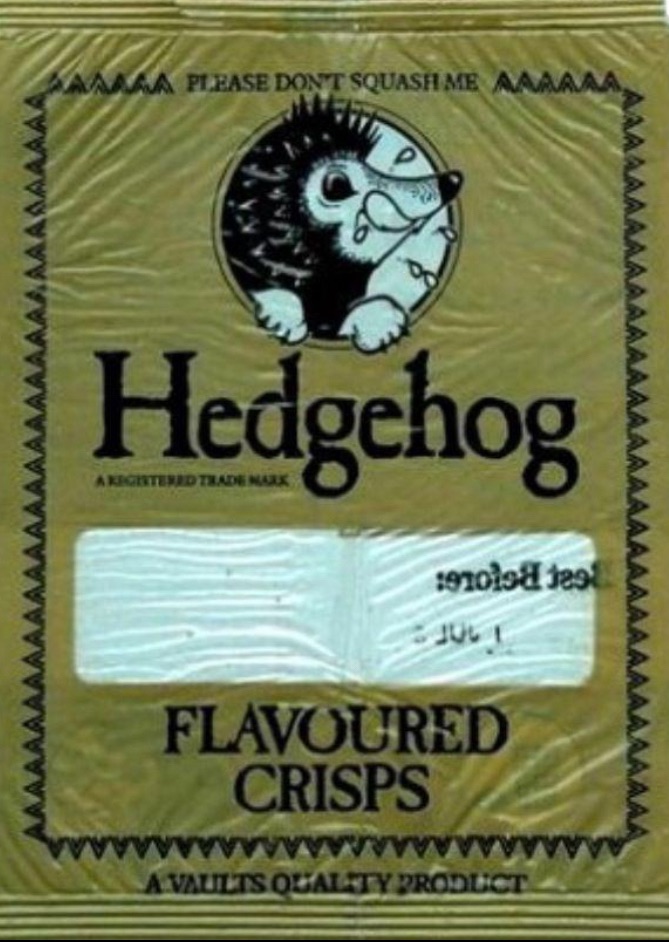
Hedgehog Flavoured Crisps
In the late 70’s the Welsh pub landlord and entrepreneur Phillip Lewis decided that the home-made ‘Hedgehog flavoured’ crisps he sold over the bar of his pub in Welshpool, The Vaults, were so popular that he would go into commercial production with them.
The story goes that he had originally called the crisps ‘Hedgehog flavoured’ as a joke after “gypsies” (as he called them) that visited his pub had said that the crisps tasted like baked hedgehogs, which folklore has it gypsies traditionally bake by wrapping in clay and roasting over an open fire, thus removing the spines.
Phillip registered a company ‘Hedgehog Foods’ in 1981 and they were an instant success, so much that he set up a factory in Welshpool just to manufacture them, unfortunately for him there was one snag with the product, specifically with the way he marketed it, and that was that Hedgehog crisps were made with 0% actual Hedgehog.

Despite the labelling of the packets stating that the crisps were ‘cooked the old-fashioned way without harming a single spike of a real hedgehog’ Hedgehog Foods fell foul of the Office of Fair Trading, which accused them of breaching the Trade Descriptions Act 1968.
That’s right, they got in trouble because the crisps didn’t really contain Hedgehog!
Now we all know that Baby oil isn’t made from babies, anymore than Dove soap isn’t made from Doves, but it wasn’t so much a problem with the contents per se as the wording. All that Phillip had to do was change ‘flavoured’ to ‘flavour’ which he eventually did but not after using the well-publicised case to draw attention to his brand.
Blind tasting of Hedgehog crisps on the BBC show That’s Life in 1984
As part of the publicity campaign Phillip, who it turns out was quite the entrepreneur, interviewed several of the ‘gypsies’ to ascertain whether the crisps (which tasted like roast chicken as I remember from school packed lunches,) indeed tasted like baked hedgehog, which according to them they did.
After striking a deal with the OFT he commissioned a private company to create an artificial hedgehog flavouring and was allowed to start selling the crisps again in 1984 as long as the bag stated clearly that the crisps were artificially flavoured.
The company did very well over the next few years, generating sales of £3.6 million until it was sold in 1991, and was a major donor to the hedgehog conservation charity Tiggywinkles, which of course took its name from Beatrix Potter’s character in “The Tale of Mrs Tiggy-winkle”.

If you’re wondering what Hedgehog does taste like BBC Radio 4 once interviewed a man described as “an Irish tinker” in the 1950’s and the presenter’s opening gambit, in Received Pronunciation, was;
“Mr Kennedy, have you ever eaten a hedgehog?”
To which the ‘tinker’ replied
“Yes”, “yes I have”
“And what did it taste like?”
“Well,” said Kennedy after a pause,
“It’s a little bit like chicken and it’s a little bit like cat…”
(Disclaimer; Hedgehogs are legally protected under Schedule 6 of the Wildlife and Countryside Act 1981 so eating them is unadvised)
Amendments:
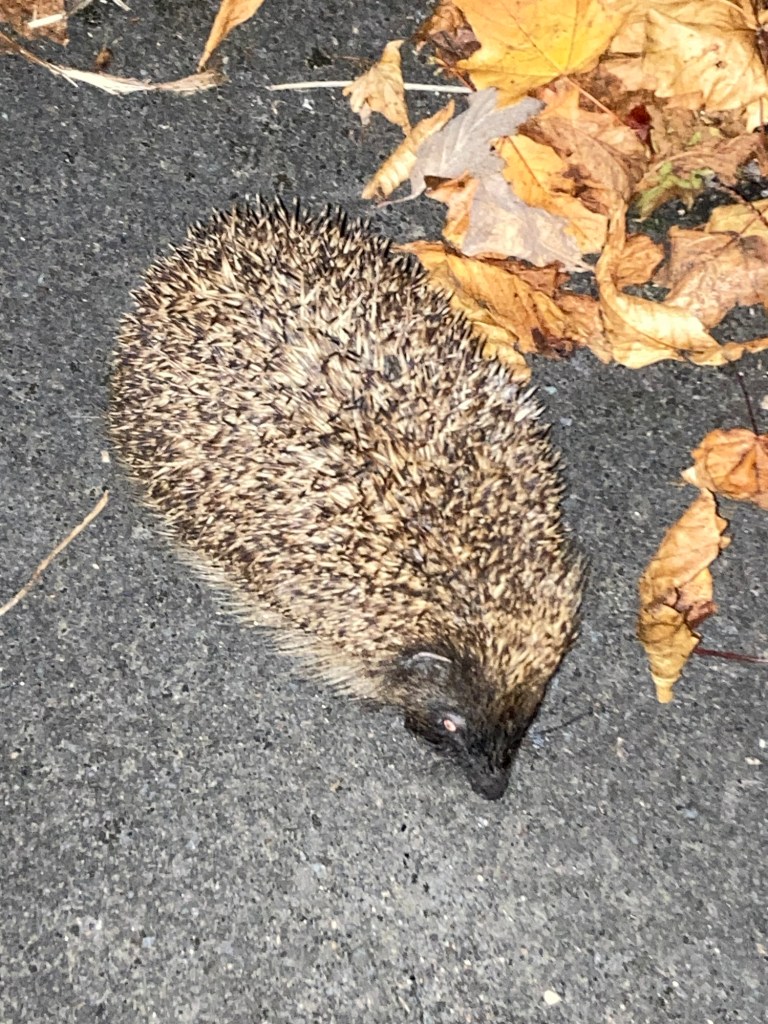
As pointed out by Kate @BeachBonkersHQ Hedgehogs “are nocturnal animals” so I should known better then to have have used images of Hedgehogs in the daytime for this article as “images like these normalise people to seeing hogs out in the day”. So for purposes of clarity here is an image of a Hedgehog at night,;

A B-H
(Aug 2024)
 Northwest Nature and History
One thought on “Hedgehogs”