
The Rowan or Mountain Ash, Sorbus aucuparia, a common tree of the cloughs, woods and hedgerows of the Northwest, is fruiting at the moment, there seem to more berries than in previous years and the bright red fruit will attract flocks of fieldfare, Blackbirds, Ring Ouzel, Long-tailed tits and many other birds over the autumn as they search for food to stock up for winter.
Native to the British isles it is a very significant tree in many ways, its carbohydrate-crammed fruits, or ‘pomes’, are essential to wildlife in the months leading up to winter, especially as it is the highest growing tree in the UK and fruits for a long period, the berries still being on the branches long after the last blackberry or Bilberry on the fells has been eaten. (I’ll post a recipe for Rowan jelly soon)
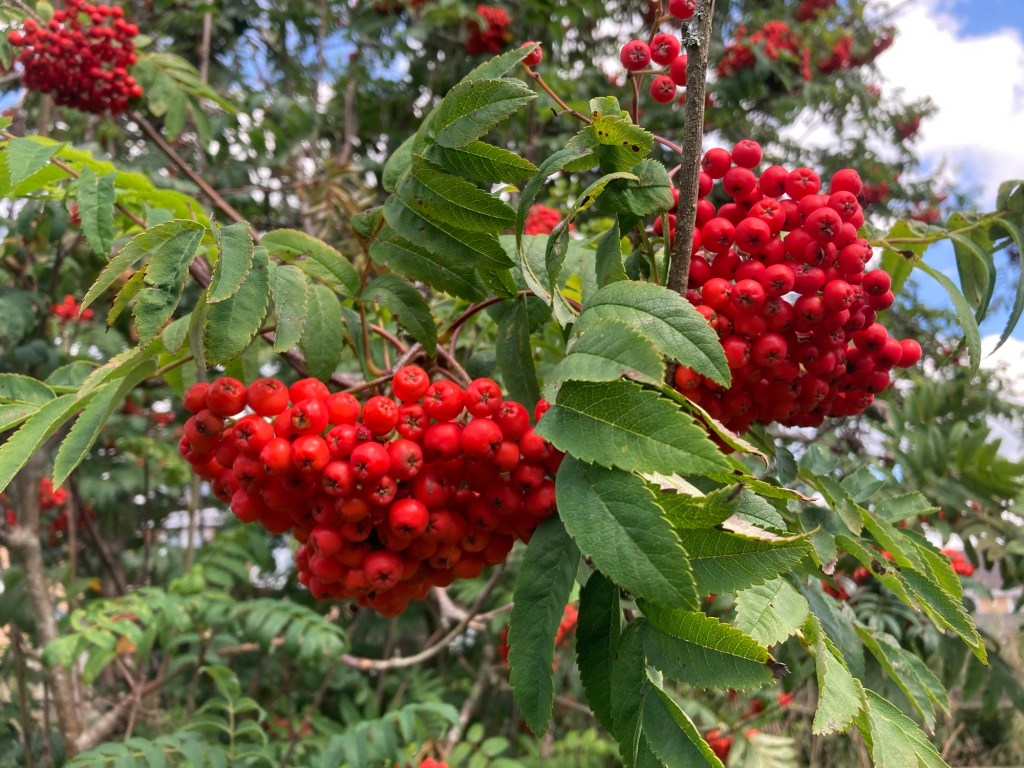
Year-round food source for wildlife
The delicate white flowers of the Rowan grow thickly and become the centre of lots of attention from May through to June when the trees will literally hum with the activity of bees, hoverflies and other insects.
The leaves of the Rowan or ‘roan’ are important too, all the holes and bite marks on them tell you a lot of insect larvae find them tasty! and if you were to stand under a rowan tree with a white table-cloth and get someone to shake it you would find moth caterpillars, shield-bugs and all sorts of insects, meaning that birds will forage in the trees all year round.
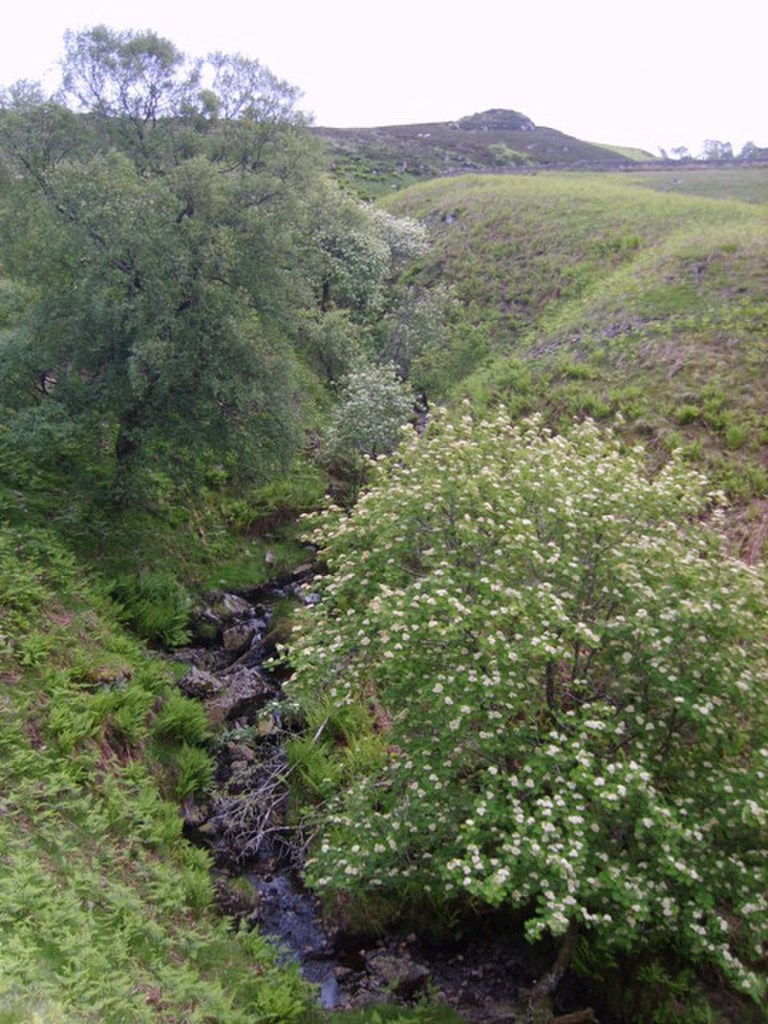
(Michael Graham)
Tough and long-lived
In the steep, dark cloughs and rock strewn crags of the fells the Rowan is quite often the only tree tenacious enough to hold on, if it can grow out of the reach of deer, sheep, hare or other grazing animals that is.
In these steadfasts it can grow to a surprisingly old age, over 200 years, and swept by the northwestern winds and rains can twist and contort into all sorts of wild shapes, perhaps this is why the tree features a lot in the folklore and mythology of Britain.

Mythological
In the North of England the Rowan still has associations with witchcraft, the berries, leaves and wood being repellent to evil spirits and curses. Branches of Rowan with its bright red berries are placed over the hearth in the winter to safeguard the home and shepherds would pass new-born lambs through a woven hoop of rowan.
The leaves of the Rowan, which are amongst the last to fall, are quite magical in the autumn, turning shades of russet and gold which flash in the low autumn sun and lighten up the winter gloom, providing a bit of seasonal illumination that the ancient Romans, Celts and others that came before us must have welcomed in the dark depths of the year.
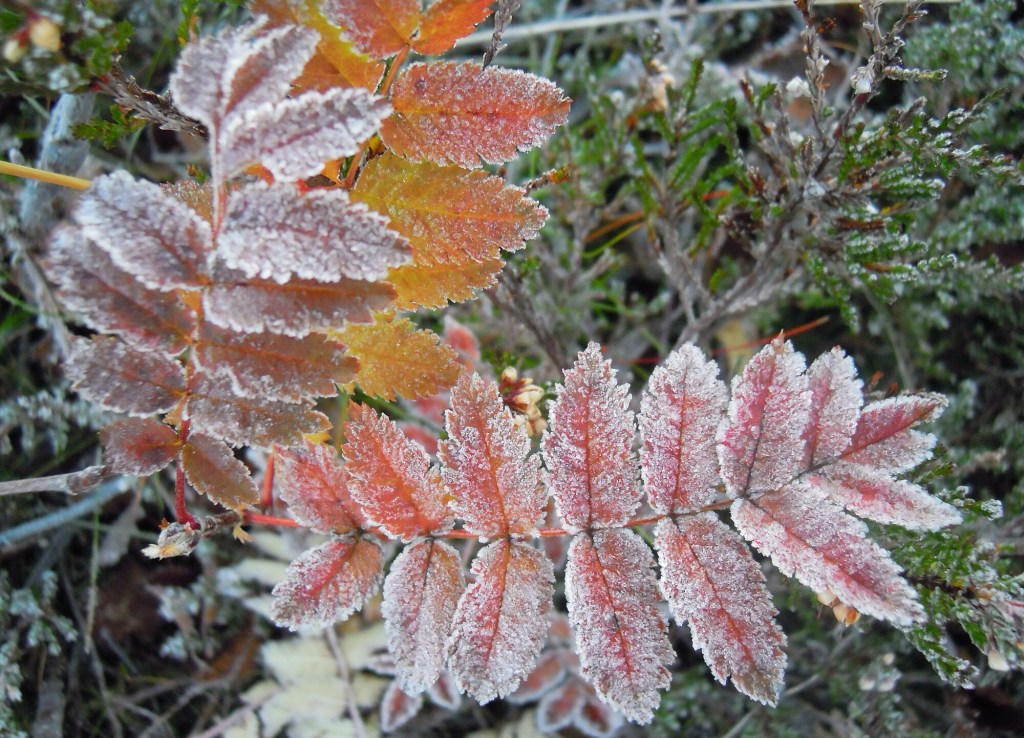
(Arnstein Rønning)
Use as a literary device
The tree has been long been used as a poetic and literary device, in Boris Pasternak’s Dr Zhivago, his epic novel about a man seeking answers, spirituality, and love amid the brutality of the Russian Revolution, the Rowan plays a very important role as a symbol of hope and light in an otherwise very dark world.
The life of the novel’s eponymous protagonist is saved by a Rowan tree which he uses as a waypoint and a means to anchor, to root himself to reality, it helps him escape communist persecution but in his delirium he imagines the tree to be his love, Lara.
“The forest was autumnally bare, so that you could see into it as through an open gate; here a splendid, solitary, rust-colored rowan tree had alone kept its leaves. Growing on a mount that rose above the low, squelchy, hummocky marsh, it reached into the sky holding up the flat round shields of its hard, crimson berries against the leaden, late-autumn sky.”
A B-H
(Sep 2024)
 Northwest Nature and History
3 thoughts on “The Rowan”