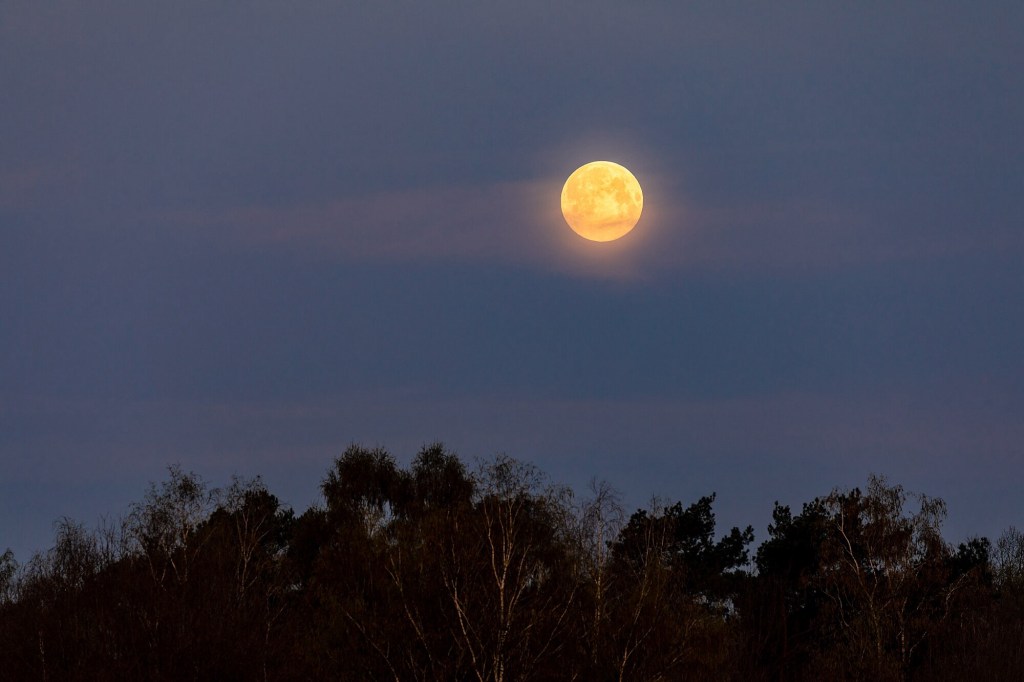
The next few days are very eventful for observers of the sky and its many machinations, to begin with early tomorrow morning (Wed the 18th of September as of writing) a partial eclipse of the moon may be visible from the British Isles. The eclipse will occur from 1.41am to 5.47am with the best time to observe it being between the hours of 3.12am to 4.15am, with the maximum eclipse itself appearing at 3.44am.
As it’s only a partial eclipse you will only see a tiny slice of the moon disappear, 8.4% to be precise, up in the top right quadrant, but as the eclipse coincides with a full moon, being fullest at 3.34am, this means that this bite will be more prominent than it might be otherwise.
This full moon will also be a ‘supermoon’ , which means it will be particularly bright and large as it is nearly at its closest point to Earth and, as if there isn’t enough going on all ready, as it falls in autumn it’s the all-important harvest moon, so-called because the moonlit nights provide illumination for farmers to gather in the last of their crops before the weather changes and brings the first frost of the season.
After tonight’s cosmic excitement we only have to wait until the 22nd of September at 13:44 BST (British Summer Time) to see the autumnal equinox.
(You can watch the eclipse being streamed live on NASA’s youtube channel)
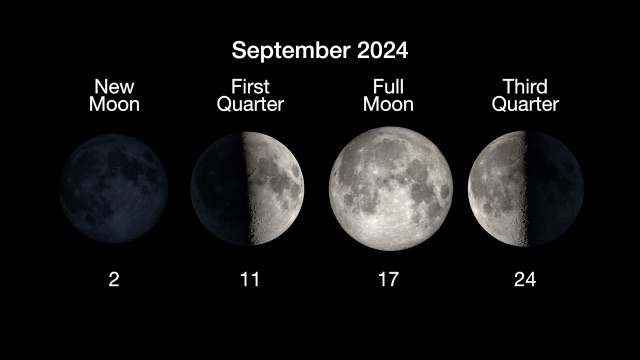
(NASA)
The Autumnal Equinox
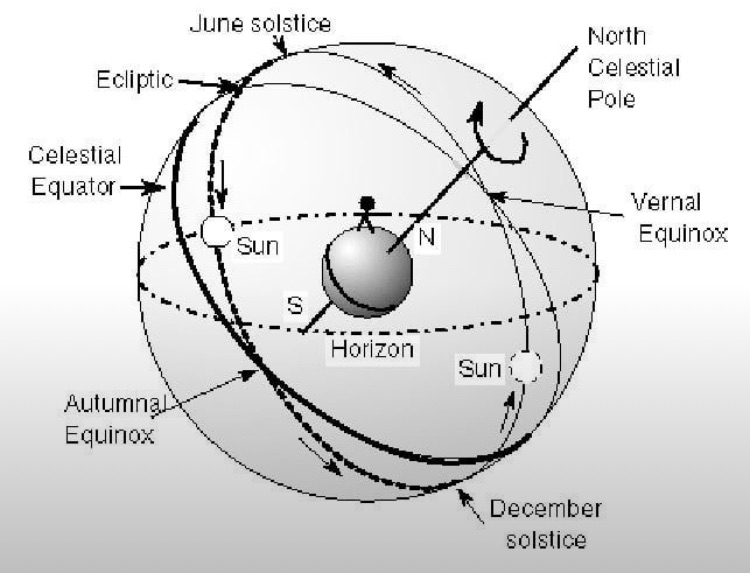
The word equinox derives from the Latin for ‘equal to night’ and the phenomenon occurs twice a year, when the sun rises due east and sets due west and day and night are both equal in length.
At the precise moment of the equinox the sun crosses the earth’s ‘equatorial plane’, this being a projection of the equator out into space, (imagine Saturn’s rings but invisible), as the sun does this in autumn it moves from north to south, and vice-versa in spring. This means that there is the same amount of daylight in both of the Earth’s hemispheres, so on the date of the equinox, at any location in the world, the lengths of day and night are roughly equal.
The autumn equinox always occurs sometime between September the 21st and 24th and on the same day that marks the autumn equinox in the northern hemisphere, it is the spring equinox in the Southern Hemisphere.
Anticipation of winter’s arrival
For most of us, the shorter evenings might bring an early shiver, not so much from the cooler temperatures, but more in anticipation of the darker, shorter days of Winter, and a realisation that autumn has definitely settled in, as the green leaves can be seen to turn various shades of bronze, red and russet and will soon be dropping to form a crunchy carpet underfoot.
All of nature’s denizens can be observed responding to the change in daylight and length, skeins of Geese can be heard passing over as they re-locate to more sheltered climes, butterflies find somewhere warm and dry to hibernate and funghi and hedgerow berries start to appear, just in time for those creatures that need to fatten up for migration or hibernation.
A time of balance
Historically rituals would be held at the time of the equinox, the intention being to close the old season and welcome the new, with the autumn equinox being seen as a time of struggle between light and darkness, life and death.
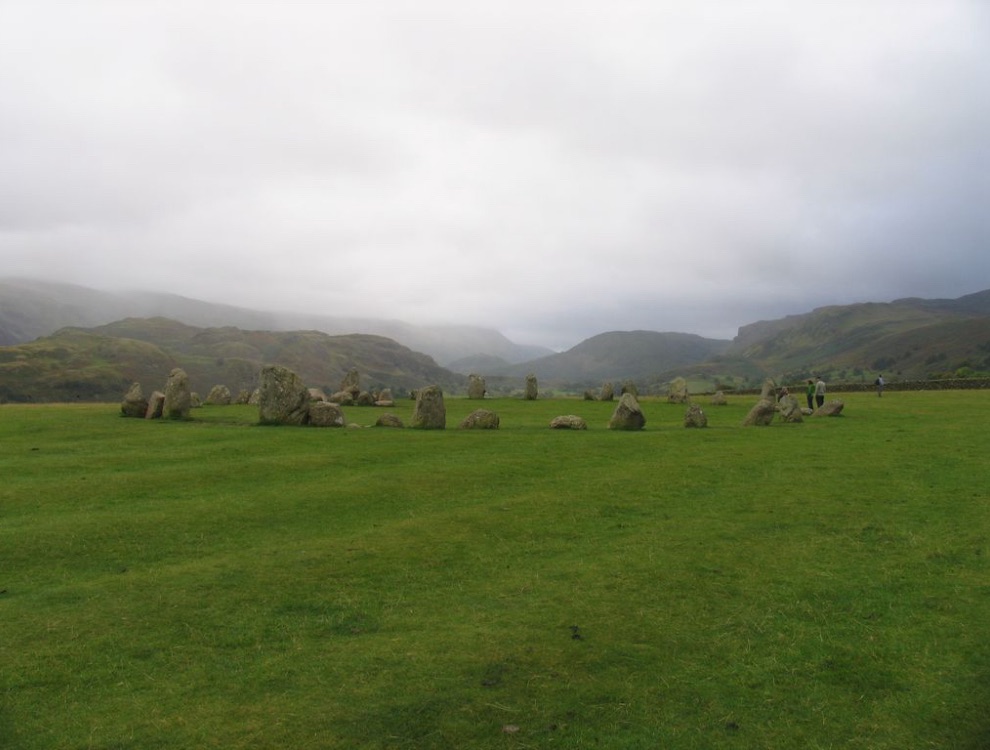
Many of our oldest monuments, such as Stonehenge, Castlerigg near Keswick in Cumbria, and here in Lancashire where i write this from Bleasdale circle, which was of wooden, rather than Stone, construction, were placed and orientated so they would align with the equinox, as well as other important occasions such as the winter and summer solstice.
The ways of modern life mean that most of us do not feel, or notice, these natural cycles as keenly, and we are so disconnected and insulated from the implications of them that we don’t have to care. Only those who work the land, or that farm and fish, still mark the equinox in the calendar with any practical reasoning, however, this doesn’t mean that these occasions are any the less important for those who don’t.
The autumn equinox is considered to be the best time to bring to fruition any projects which were begun earlier in the year, giving us a time to find balance, or harmony, with things, for a farmer this might mean getting in the last of the silage, for others this might mean something more prosaic.
While you don’t need to partake in ancient rituals to do so, you can be inspired by them, venturing outdoors on this Wednesday and connecting with nature in your own way will give you a chance to enjoy the balance of day and night and maybe find some kind of inner balance too.
A B-H
(Sep 2024)
 Northwest Nature and History