
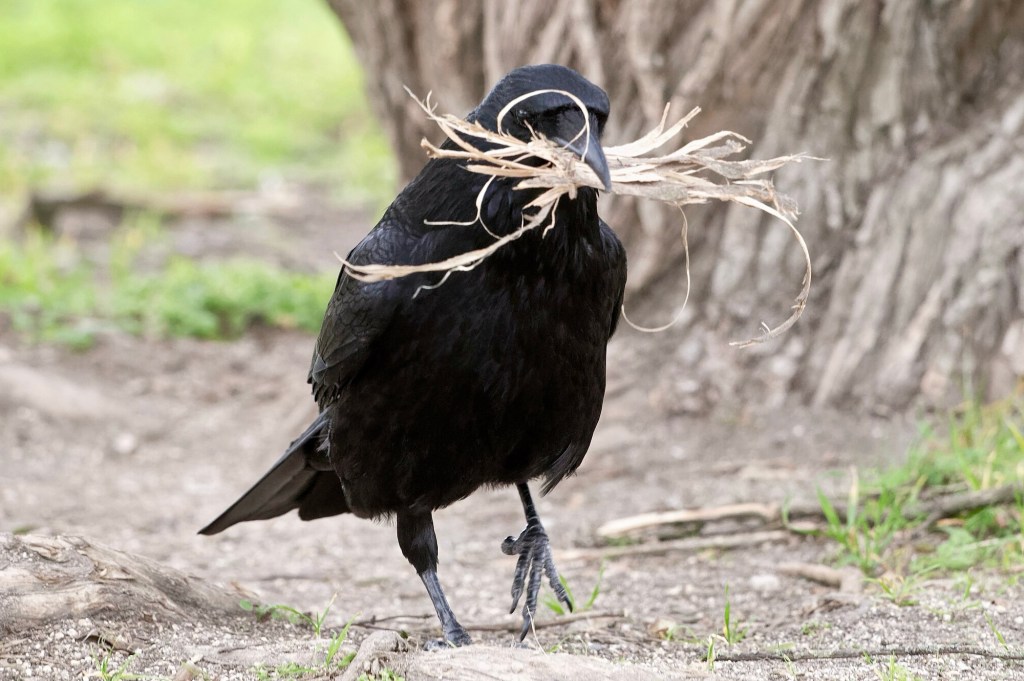
The Crows are building their nests at the moment, high in the canopies of the tallest trees.
As of writing, at the start of April, many have finished construction so will be adding the finishing touches, such as nest linings, and settling in.
Country folklore has it that if they have built their nests low it will be a wet summer.
This is because they want the shelter of the leaves above them to protect the eggs and chicks from the rain.
If they build their nests high this is because they want their nests to be airy and ventilated, so their young don’t get too hot.
Of course there’s no real way of predicting what a summer’s weather will be like, our own forecasts are nothing more than educated guesses, and Crows build new nests each year, often on top of old ones.
Yet, as far as I know, nobody has carried out any research to see whether there is a correlation between nest height and temperature, so can we really say that crows can’t predict whether a summer will be dry or wet?
Nest criteria
Although we don’t whether Carrion Crows Corvus corone can predict the weather there is a lot we do know about their nesting behaviour.
To begin with they almost always build high in trees, often in the upper third or quarter, using sturdy branches near the trunk for stability.
Nest height is primarily influenced by criteria like predator avoidance, wind protection, and access to suitable trees, rather than temperature alone.
Studies, such as those conducted by the British Trust for Ornithology (BTO) and European ornithological surveys, suggest that nest site selection in corvids is driven by structural and safety considerations.
For instance, a 2015 study on Carrion Crows in the UK found nests averaging 10 to 20 meters (33 to 66 feet) off the ground, depending on tree availability, with no mention of seasonal temperature as a direct factor.
That said, crows are highly intelligent and adaptable, in hotter summers, they might seek shadier, cooler microclimates within trees, which could indirectly influence nest placement.
Higher positions in the canopy might offer better airflow or shade from denser foliage, potentially mitigating heat stress for eggs and nestlings.
Research on other bird species, like the Great Tit, shows some adjustment in nest site selection for thermal regulation, but for Carrion Crows, no specific data ties nest height to temperature variations within a single season.
A hotter summer might also affect tree phenology, e.g. leaf density or canopy cover, which could subtly shift where crows find optimal nest sites, though this is speculative without targeted studies.
So, to conclude, we really don’t know whether or not this old nugget of folk wisdom rhymes true, they are highly intelligent birds after all and they will know a lot of things we don’t!
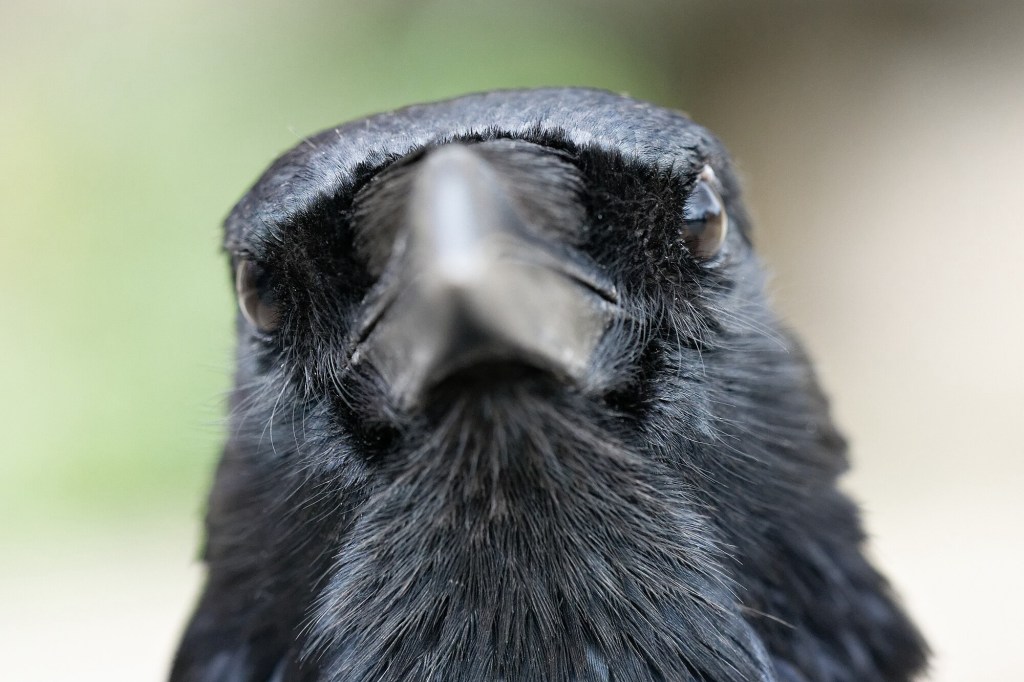
If you have a crow colony, called a ‘murder’, near you please have a look to see how high they are building their nests and report back to us, then we’ll know whether to book our summer holidays abroad or stay here!
Counting Crows
One means anger
Two is mirth
Three a wedding
Four a birth
Five is heaven
Six is hell
Seven is for the bad ol’ devil ‘imself
A B-H
(April 2025)
 Northwest Nature and History