
(Nick Upton)
Blennies are a captivating group of small, often colorful, fish that inhabit marine and brackish waters. Belonging to the suborder Blennioidei, they are known for their quirky behaviors, distinctive appearances, and remarkable adaptability.
They are typically quite small in size, ranging from 3 to 15 centimeters in length, though some species can grow slightly larger, and their elongated, eel-like bodies are often adorned with vibrant colors or intricate patterns, making them a favorite among aquarium enthusiasts.
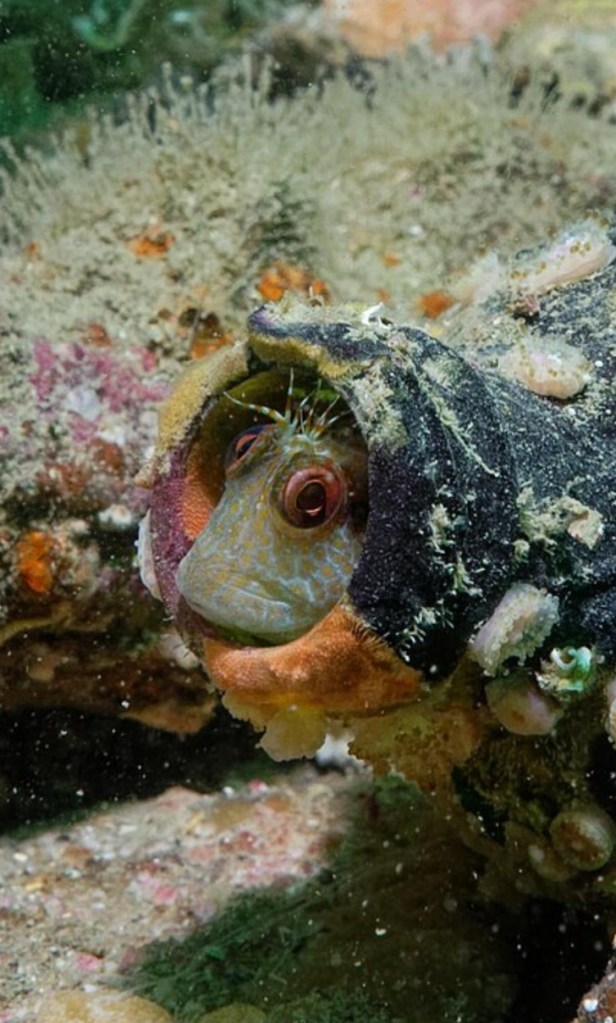
One of their most striking features is their expressive face, complete with large, curious eyes and fleshy appendages, called cirri, above their heads. These cirri, which resemble tiny whiskers or antlers, vary by species and give blennies a comical, almost cartoonish charm.
Unlike many fish, blennies lack swim bladders, meaning they can’t float effortlessly about in the water like other fish, (which is not a good idea in tidal waters anyway!). Instead, they rely on their pectoral fins and a hopping motion to move along the seafloor or perch on rocks and weeds.
This bottom-dwelling lifestyle suits them perfectly, as they often seek shelter in crevices, abandoned shells, or even human-made debris.


Tiny but Fierce
Found in a wide range of environments, from muddy estuaries to rocky shores, they thrive best in shallower coastal waters, in particular rock-pools.
Here they set up territories, fiercely guarding their patch with surprisingly great vigour and boldness for such a tiny fish.
This behavior is especially evident in species like the Combtooth blennies Blenniidae, represented in British waters by the Shanny Lipophrys pholis and the Tompot blenny Parablennius gattorugine, which stake out holes or burrows and defend them against all interlopers.
Their ability to squeeze into tight spaces also makes them masters of evasion, slipping away from predators with ease.
(Oliver Dugornay)
Voracious Omnivores
Most Blennies are omnivorous, feeding on a mix of algae, small invertebrates, and plankton. Their comb-like teeth, a prominent feature in many species, are perfect for scraping algae off rocks or snagging tiny prey.
Watching a Blennie forage is a lesson in persistence; they dart and nibble with relentless energy, often popping their heads out of hiding spots to survey their surroundings before retreating.
These fish play a small but vital role in their ecosystems, by grazing on algae, they help maintain the balance of reef and rocky shore habitats, while serving as prey for larger fish and marine animals.

(Diego Delso)
Two Common Blennies of the Northwest
The Shanny
The shanny, also known as the Common Blennie Lipophrys pholis, is a small and feisty fish, it’s an intertidal species, thriving in rockpools, shallow waters, and rocky shores.
With a streamlined body growing up to 16-17 cm, it has a large head, big eyes, and mottled colouration, usually brown or beige with darker blotches, that provides excellent camouflage against rocks and seaweed.
It is able to survive out of water at low tide by breathing air, often hiding under damp stones or seaweed. They’re territorial and opportunistic feeders, eating whatever morsels they can find; barnacles, shrimps, and algae.
They’re also very widespread, inhabiting rocky coastal areas from the shore to depths of about 8 meters, making them a familiar sight for rockpool explorers. The male guards the eggs in crevices during the breeding season, turning a dark colour with white lips.

(Theo Moder)
Tompot Blennie
The Tompot Blennie Parablennius gattorugine is small, distinctive and found throughout British waters, particularly along western coasts such as Cumbria’s.
Unlike the Shanny, it prefers slightly deeper waters, typically from the lower shore down to about 20 meters, favoring rocky reefs, crevices, and areas with plenty of seaweed or man-made structures like wrecks.
It grows to around 20 to 30 cm and has a robust body with a blunt head, large eyes, and a pair of characteristic frilly tentacles above its eyes (the afore-mentioned cilla), giving it a quirky, expressive look. Its coloration varies from mottled brown to reddish, blending with its surroundings.
Tompots are curious and territorial, often peeking out of holes or crevices where they live and breed, with males guarding eggs laid inside.
They feed on small invertebrates like crabs and worms and are most common from Cornwall up to Scotland’s west coast, less so in the east.

(Holger Krisp)
Best Rockpooling spots in the Northwest
Morecambe Bay
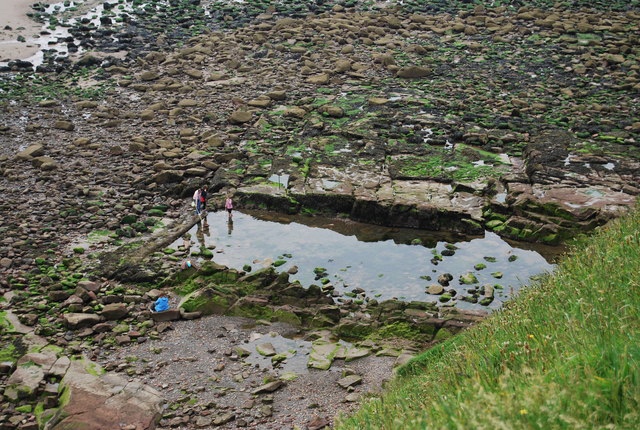
Stretching across Lancashire and Cumbria, Morecambe Bay is a rockpooling paradise. The bay’s rocky foreshore, particularly around Heysham, Silverdale and Arnside, is dotted with pools that harbor shore crabs, blennies, chitons and sea slugs. The limestone cliffs and tidal flats add an extra layer of intrigue, though visitors should always check tide times and avoid the fast-moving channels.
St Bees Head, Cumbria
This dramatic stretch of coastline, with its red sandstone cliffs, is a haven for marine life. As well as Blennies the rockpools here are home to starfish, limpets, and the occasional octopus, if you’re lucky. The nearby RSPB reserve also makes it a great spot for combining rockpooling with birdwatching.
Formby Beach, Merseyside
While Formby is famous for its sand dunes and prehistoric footprints, its rocky sections reveal pools filled with small fish, prawns, and anemones. The beach’s accessibility and nearby pine woods make it a perfect family-friendly destination.
Blackpool’s North Shore
Beyond the bustling promenade, Blackpool’s quieter northern end offers rocky outcrops where rockpooling can be enjoyed. Expect to find periwinkles, mussels, and the occasional stranded jellyfish, it’s a very relaxing way to spend a summer’s evening after an afternoon spent in the resort’s amusement arcades.
Rockpooling Tips
Safety First
The Northwest’s tides can be swift and unpredictable. Keep an eye on the sea, stay aware of your surroundings, and never turn your back on the water.
Timing is Everything
Check tide tables and aim for low tide, ideally during a spring tide when more of the shore is exposed. Apps like the Tide Times app or the Met Office website can help plan your trip.
Gear Up
Sturdy, non-slip shoes are a must for navigating wet rocks. Bring a bucket (preferably clear), a net, and a magnifying glass for closer inspection. A field guide to British marine life can enhance your discoveries.
Tread Lightly
The intertidal zone is fragile. Lift rocks gently and return them to their original position to protect the creatures beneath. Avoid taking anything home, observe and enjoy instead.

The Rock Pool, Edward Shanks (1892-1953)
This is the sea.
in these uneven walls
a wave lies prisoned.
Far and far away
outward to ocean, as the slow tide falls
her sisters through the capes that hold the bay,
dancing in lovely liberty recede.
Yet lovely in captivity she lies,
filled with soft colours, where the wavering weed
moves gently and discloses to our eyes
blurred shining veins of rock and lucent shells
under the light-shot water; and here repose
small quiet fish and dimly glowing bells
of sleeping sea-anemones that close
their tender fronds and will not now awake
til on these rocks the waves returning break
A B-H
(April 2025)
 Northwest Nature and History
4 thoughts on “Northern Shores: Rockpooling for Blennies”