The Remarkable Meteorological Phenomena of Saharan Dust Events

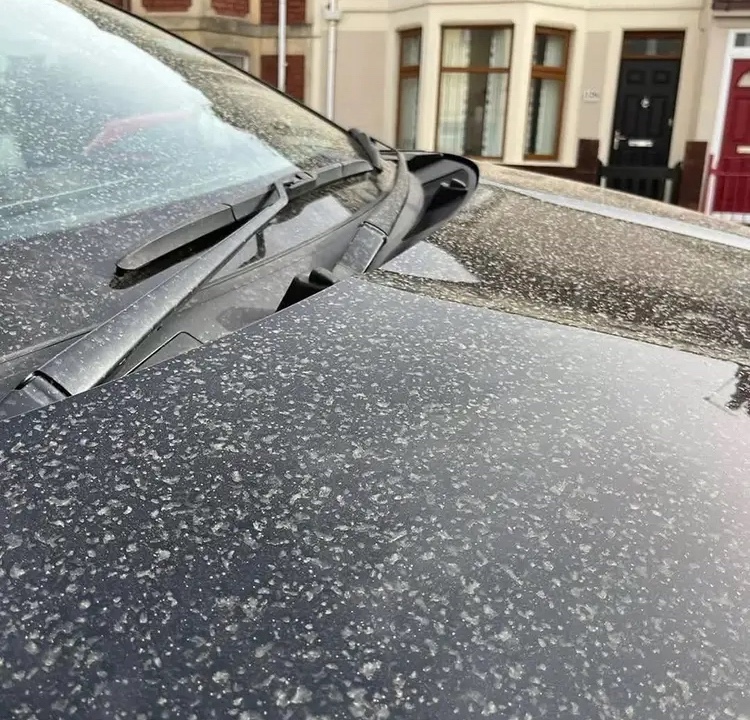
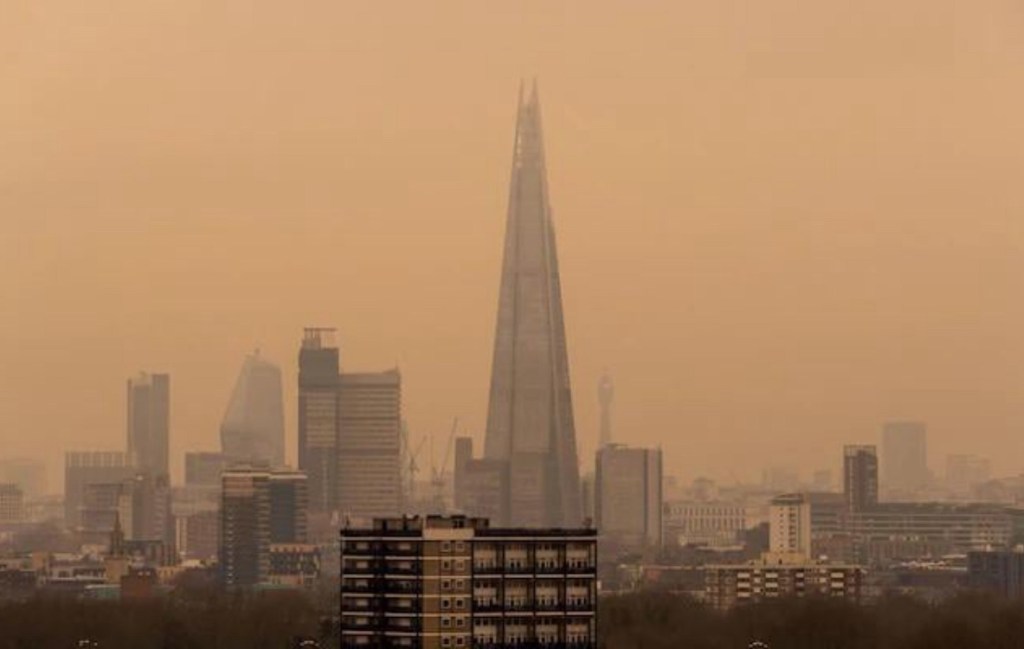
Every so often, the skies over the British Isles take on an eerie, hazy glow, and cars are blanketed with a fine layer of reddish dust. These are the telltale signs of a Saharan dust event, a remarkable meteorological phenomenon where dust from the Sahara Desert travels thousands of miles across the Atlantic to reach British shores.
While these events can create stunning sunsets, they also raise questions about their causes, impacts, and frequency.
Here we look at the science behind Saharan dust events, their effects on the environment and health, and how climate change might influence their occurrence.

What triggers these events?
Saharan dust events begin in the vast expanses of the Saharan Desert, the world’s largest hot desert, spanning over 9 million square kilometers across North Africa.
The desert’s arid conditions and loose, dry soil make it a prime source of dust, which can be whipped up by strong winds. When conditions align, these winds, often associated with storms or low-pressure systems, lift massive quantities of dust into the atmosphere, sometimes reaching altitudes of 3 to 5 kilometers.
The journey to our skies (and our cars and laundry) prelies on specific weather patterns. Typically, a strong jet stream or a storm system, such as those originating in the Atlantic, carries the dust northward. The dust is transported in plumes, often crossing the Mediterranean and western Europe before reaching the UK.
One key player in this process is the Azores High, a semi-permanent high-pressure system that can steer dust-laden air masses toward northwest Europe. The dust may remain suspended for days or even weeks, traveling over 4,000 miles before it eventually settles or is washed out of the atmosphere by rain.
In the British isles, Saharan dust events are most common in spring and summer, when warm, southerly winds are more prevalent. The dust often arrives as a haze, tinting the sky yellow, orange, or red, particularly during sunrise and sunset.
When rain falls through these dust-laden air masses, it can deposit the particles as “blood rain,” leaving a gritty residue on surfaces.
Environmental Effects
Saharan dust events are more than just an atmospherical spectacle, they have tangible effects on the environment, human health, and daily life.
They play a complex role in ecosystems, enriching soils with nutrients like iron and phosphorus, which are vital for plant growth. This is particularly significant in nutrient-poor regions, though our fertile soils benefit less than other areas, like the Amazon rainforest, which, believe it or not, relies heavily on Saharan dust for nutrients.
However, dust can also affect marine ecosystems by triggering algal blooms when it settles in coastal waters, potentially disrupting aquatic life.
Dust in the atmosphere also influences weather and climate. It scatters sunlight, cooling the surface beneath but warming the air where it’s suspended, which can alter cloud formation and rainfall patterns.

Health Impacts
In extreme cases, thick dust plumes can reduce visibility, affecting aviation and transport, and the settled dust, as well as coating our cars, laundry and windows, can severely affect the efficiency of solar panels, so for most people, Saharan dust is a minor nuisance.
Yet for those with respiratory conditions like asthma or bronchitis, it can pose a health risk, as the dust contains fine particulate matter (PM10 and PM2.5), which can irritate the lungs when inhaled.
During significant events, air quality may deteriorate, prompting warnings from health authorities. For example, vulnerable groups may be advised to limit outdoor activities, especially when dust levels peak.
Historical and Recent Events
Saharan dust events are not new to the UK, but their frequency and intensity has varied over time. Records dating back centuries describe red rain, called “blood rain”, and hazy skies, though scientific understanding of these events only developed in the 20th century.
Notable modern events include:
- October 2017: Storm Ophelia, a powerful ex-hurricane, carried an unusually large dust plume to the UK, turning skies a dramatic orange-red. The event captivated the public and led to widespread media coverage.
- February 2021: A dust event coincided with mild southerly winds, leaving cars across southern England coated in fine particles and creating hazy conditions.
- March 2022: A significant plume brought vivid sunsets and measurable dust deposits, with air quality warnings issued in parts of the UK.
The UK Met Office monitors these events using satellite imagery, ground-based sensors, and weather models. Their forecasts often provide advance warning, allowing authorities to issue health advisories or prepare for potential disruptions.
(Met Office)
Changing winds
As our climate changes, questions arise about how Saharan dust events might change. While the exact impacts are uncertain, several factors could influence their frequency and intensity:
- Changing Wind Patterns: Climate change is thought to be altering global atmospheric circulation, including the jet stream and trade winds. Stronger or more frequent southerly winds could increase dust transport to the UK, while shifts in storm tracks might reduce it.
- Desertification: Expanding arid regions in North Africa, driven by rising temperatures and reduced rainfall, could generate more dust. However, changes in vegetation cover or soil moisture might be counteracting this trend in some areas.
- Extreme Weather: More intense storms, a hallmark of climate change, could lift larger dust plumes, but wetter conditions in Europe might wash dust out of the atmosphere before it reaches the UK.
Research into these dynamics is ongoing, with scientists using climate models to predict long-term trends. For now, Saharan dust events remain a natural variability, but their interaction with a warming world adds complexity to the forecast.

Cultural and Scientific Significance
Beyond their practical impacts, Saharan dust events carry significant cultural and scientific weight. They remind us of Earth’s interconnected systems, where a gust of wind in Africa can paint British skies days later.
In folklore, “blood rain” was sometimes seen as an omen, while today, it’s a subject of fascination for meteorologists and citizen scientists alike.
For researchers, these events offer a window into atmospheric dynamics, nutrient cycling, and climate processes. The dust itself is studied for its composition, revealing clues about the geology of the Sahara and even carrying microscopic life, like bacteria or fungi spores, across whole continents.

“Ζεὺς δ’ ἐπὶ κῦμα κελαινὸν ἔτεινε νεφεληγερέτα·”
“Aἷμα δ’ ἔπεμπε κατ’ αἰθέρος, ὡς πολὺν ὄμβρον.”
“Zeus drew an evil storm over the battle and rained down drops stained with blood from the upper air”
From Homer’s Iliad, composed c850 BCE and describing incidents which occurred c1250 BCE
(Translated by Samuel Butler in 1898)
A B-H
(April 2025)
 Northwest Nature and History