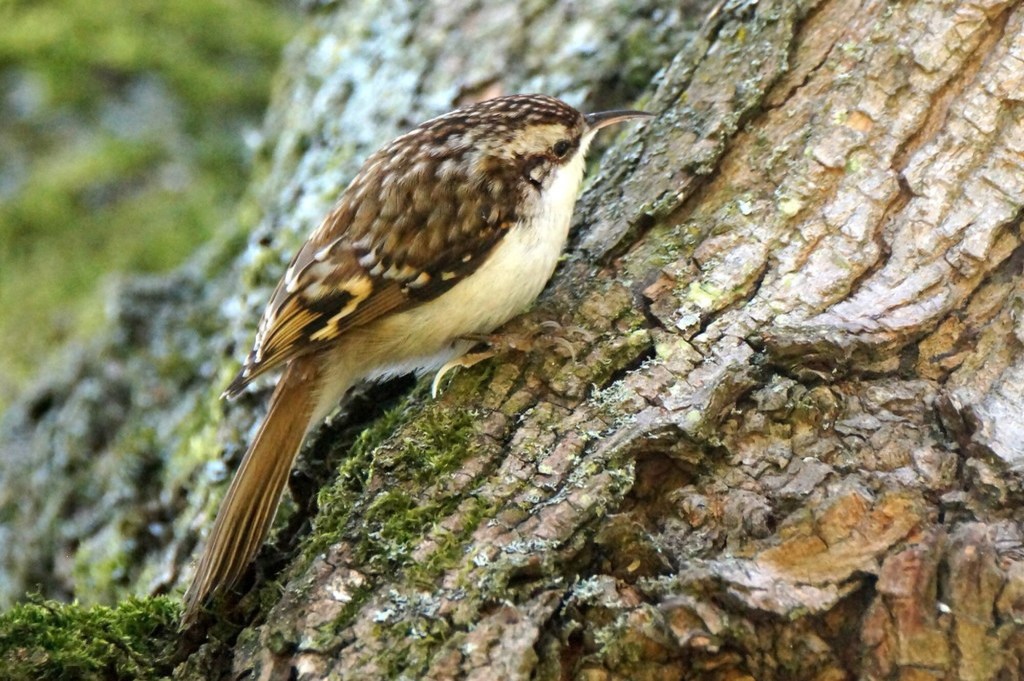
Deep in our woods and gardens, creeping around in the trees, a small unassuming creature quietly goes about its business, unnoticed by the casual observer.
It is known to scientists as Certhia familiaris, but to most of us it is known merely as the Treecreeper, and is, I think, a bird deserving of closer attention.
If Treecreepers feel threatened they may freeze or, rather annoyingly, move around to the other side of the tree
(music: Creep by TLC)
Cryptic Camouflage
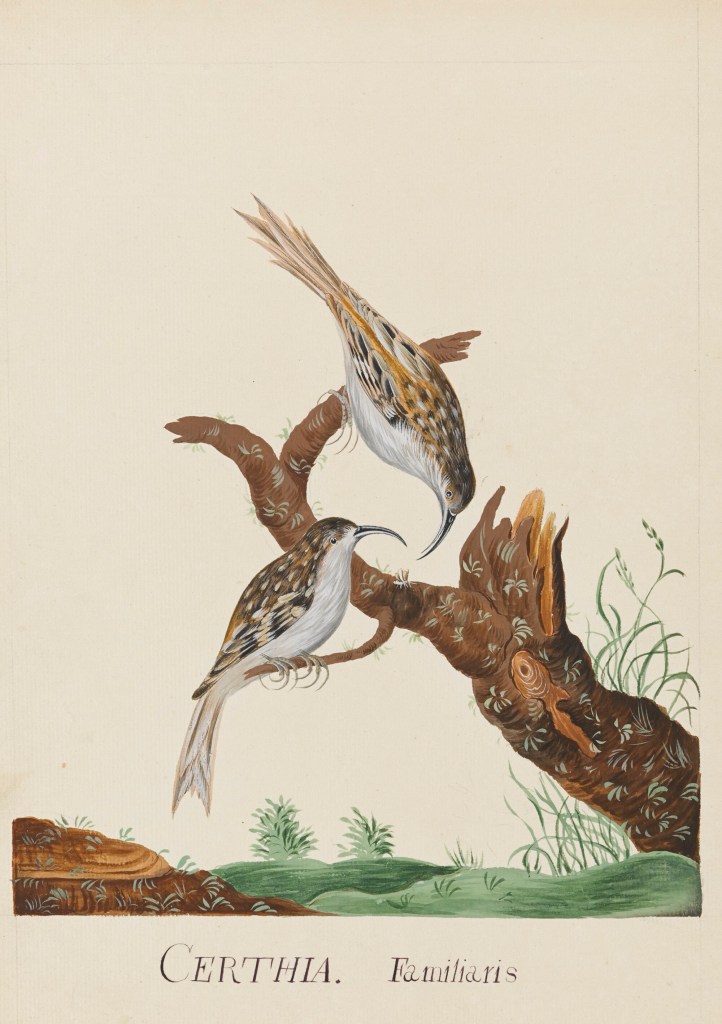
A diminutive bird with a delicate frame, measuring about 12.5 cm in length with a wingspan of 18 to 21 cm, the Treecreeper is a master of camouflage with its cryptic plumage. It is attired in mottled brown above which is streaked with buff and white, blending seamlessly with tree bark, while its underparts are a crisp, silvery white.
The bird’s long, slender, down-curved bill is perfectly adapted for probing crevices in search of insects, and its stiff, pointed tail feathers provide crucial support as it spirals up tree trunks.
Often mistaken for a mouse at a glance due to its scurrying movements, the Treecreeper’s subtle beauty reveals itself upon closer inspection.
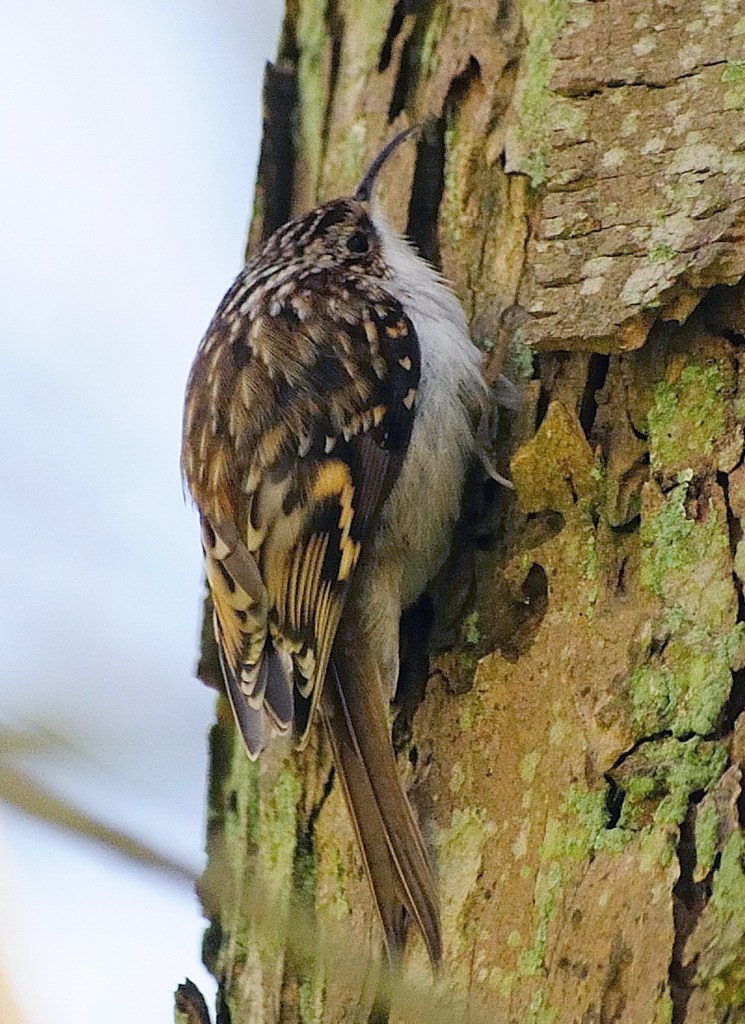
(Peter Mulligan)
Favoured Habitats
In northern England, Certhia familiaris britannica is the most commonly encountered subspecies, this variant is slightly darker than its continental cousins, an adaptation that may enhance its camouflage against the region’s mossy, lichen-covered trees.
Here they thrive in a variety of wooded habitats, from the ancient oak forests of the Yorkshire Dales to the coniferous plantations of Northumberland and the mixed woodlands of Cumbria.
They favour mature trees with rough bark, which provide ample hiding spots for their insect prey and suitable nesting sites. While deciduous woodlands are their stronghold, Treecreepers are also found in parks, gardens, and hedgerows, provided there are enough trees to support their needs.
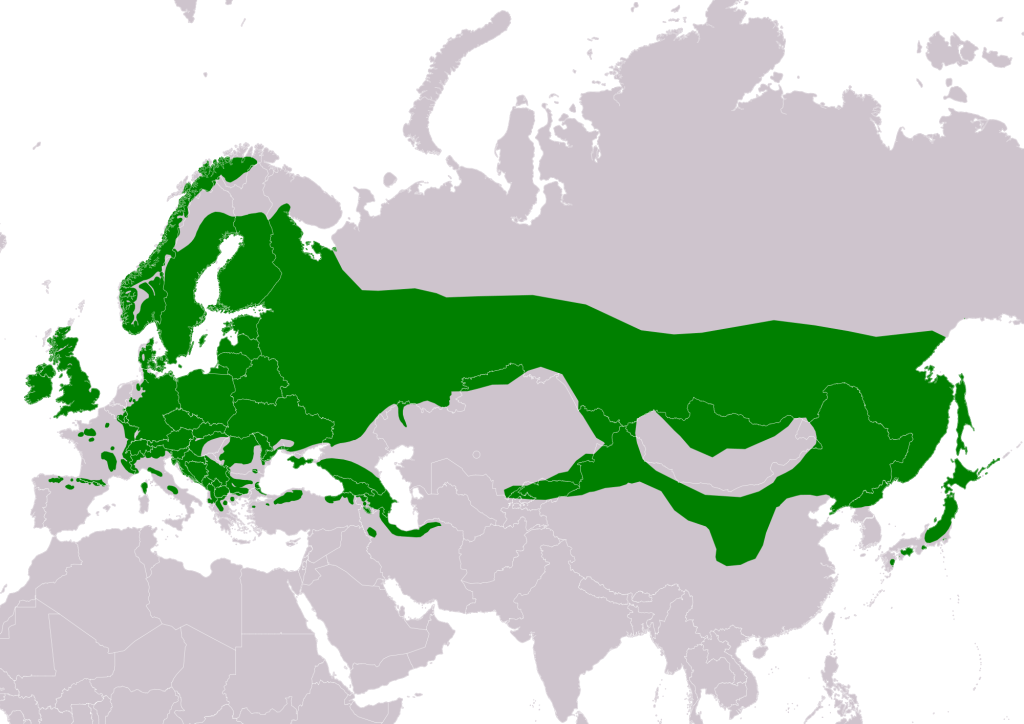
The bird’s distribution is widespread but patchy, influenced by the availability of suitable habitat. Throughout the UK there are an estimated 200,000 pairs, and in northern England populations remain relatively stable despite our harsh winters.

(Jukka A. Lång)
Behaviour and Breeding
Their most characteristic behaviour, which lends them their common name, is its methodical ascent of tree trunks. Starting near the base, it spirals upwards in short, jerky hops, using its tail for balance and its bill to extract spiders, beetles, and other small invertebrates from bark crevices.
Unlike woodpeckers, which can descend trees, Treecreepers are strictly upward climbers, and once they reach the top, they flutter down to the base of another tree and begin all over again, moving through the trees in a rhythmic pattern that is both very efficient and somewhat mesmerising to observe.
Treecreepers are solitary for much of the year, though they may join mixed flocks of tits and other small birds in winter, gaining safety in numbers while foraging. Their high-pitched, piercing calls, often described as a thin “tsee” or a soft, trilling song, are a giveaway of their presence, even when their camouflage renders them invisible.
Breeding season brings a burst of activity, as they build nests in crevices behind loose bark or in specially adapted nest boxes, with females laying 5 to 6 white eggs speckled with red.
Egg-laying typically begins in April, with both parents sharing the task of feeding the chicks, here our relatively mild springs provide ample insect food, supporting healthy fledging rates.

Seeking Treecreepers
While not celebrated as much as more iconic birds like the Puffin or Red kite, Treecreepers hold a quiet place in the hearts of more dedicated birdwatchers, and their elusive nature makes spotting one a rewarding challenge.
Local nature reserves like RSPB Leighton Moss in Lancashire or the North Pennines Area of Outstanding Natural Beauty are perfect locations for sightings and community-led initiatives, such as nest box schemes in Cumbria, have helped bolster Treecreeper populations by providing safe breeding sites.
Conservation-wise, treecreepers face few immediate threats in northern England, thanks to the region’s robust woodland management and abundance of protected areas. However, habitat loss from urban expansion is reducing available foraging and nesting sites. Climate change, too, poses a long-term risk by altering insect hatching times, a critical food source during nesting season.
Encouragingly, efforts to restore native woodlands and maintain mature trees are supporting Treecreeper populations, ensuring their presence for future generations.
For those keen to spot Treecreepers patience and keen observation skills are key. Look for them in mature woodlands during early morning or late afternoon, when they are most active. Listen for their faint calls, and scan tree trunks for movement, binoculars are a must to appreciate their intricate plumage.
Popular sites include:
- Hardcastle Crags, West Yorkshire: A National Trust site with ancient woodlands teeming with Treecreepers and other wildlife, watch out for Northern Hairy Wood Ants though! (yes these are really a thing, I’ll write about them at some point.)
- Kielder Forest, Northumberland: these vast coniferous forests offering ample habitat.
- Dalby Forest, North Yorkshire: A mix of deciduous and evergreen trees, ideal for treecreeper spotting.
- Gisburn Forest, Forest of Bowland: This extensive area of forestry has many miles of trails and paths meandering through its trees, making it perfect place for spotting not only Treecreepers but many other species too.
Avoid disturbing nesting sites, and consider joining local birdwatching groups to learn from experienced enthusiasts. Apps like eBird can help track sightings and contribute to citizen science efforts.
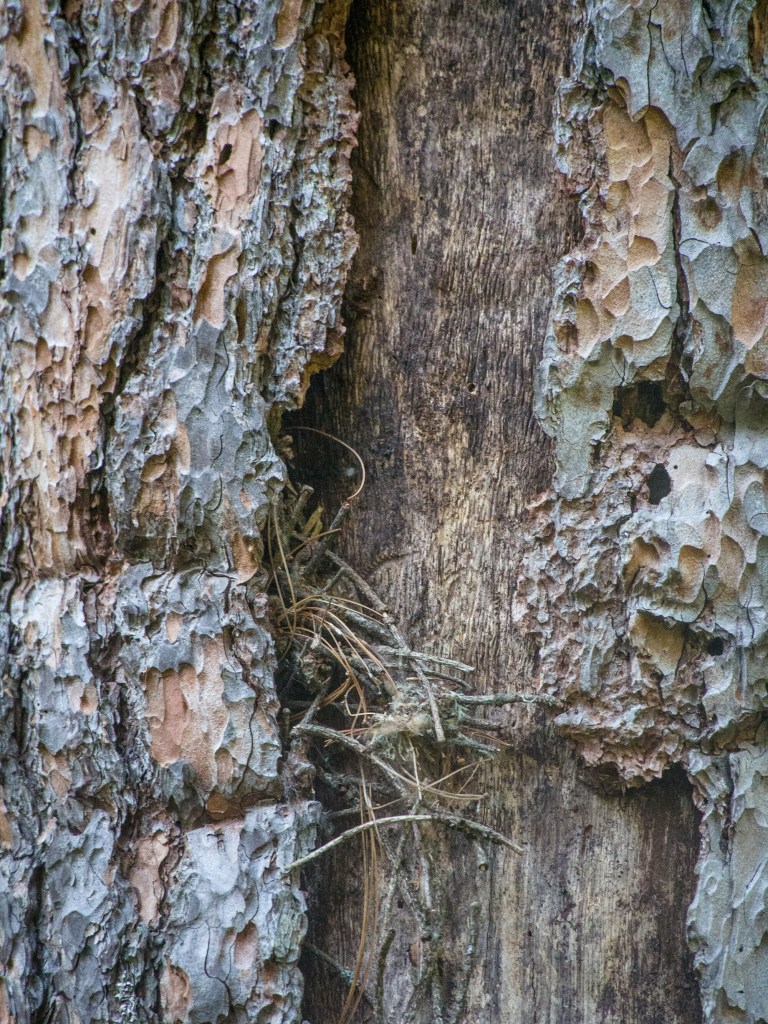
(Mike Prince)
Nest Boxes
If you want to encourage Treecreepers to your neighbourhood you can put up nesting boxes, the BTO has been trialing a nest box design by Dave Francis, which features a tall, narrow cavity with an 18mm slot entrance. In trials, these boxes saw increasing occupancy (e.g., three out of six boxes used by 2013). They encourage monitoring of these boxes to collect data on treecreeper nesting behavior
Design and Installation:
Design: Effective treecreeper nest boxes are wedge-shaped or flat, mimicking crevices, with small side entrances (18 to 50mm) and drainage slots. They are often made from FSC-certified wood or plywood, treated with environmentally friendly preservatives. Some designs include removable roofs or hinged lids for cleaning.
Siting: Boxes should be placed 1.5 to 3 meters high on mature trees with coarse bark, facing north to southeast, in secluded locations with cover like ivy. Trees with a diameter of 25 to 30cm are ideal.
So round and round the tree I go,
Round and round and ever up
And many a secret place I know
Where I may royally dine or sup.
From tree to tree, from dawn to dark,
I sing and search and search and sing,
About the ragged storm-scarred bark
To make a merry banqueting.
Excerpt from The Treecreeper
by C. J. Dennis
A B-H
(April 2025)
 Northwest Nature and History
One thought on “What’s that Creature Creeping in the Trees?”