
We have a shelf in our house with all sorts of knick-knacks and treasures arranged upon it, an eclectic collection of interesting and shiny objects that we’ve chosen in a manner akin to a Magpie, and carefully placed like a Bower bird.
These things include seashells, candles, Mamod steam engines, interesting coins and things I’ve found in the ground, a crystal ball, wooden boxes of yet smaller treasures and fossils.
One of the most precious of these ornaments is a highly polished fossil of a starfish that I bought as a present for my wife when we were first dating years ago.
It’s called a Shepherd’s Crown and, as we shall find out here, is a truly fascinating little item worthy of an article all of its own.
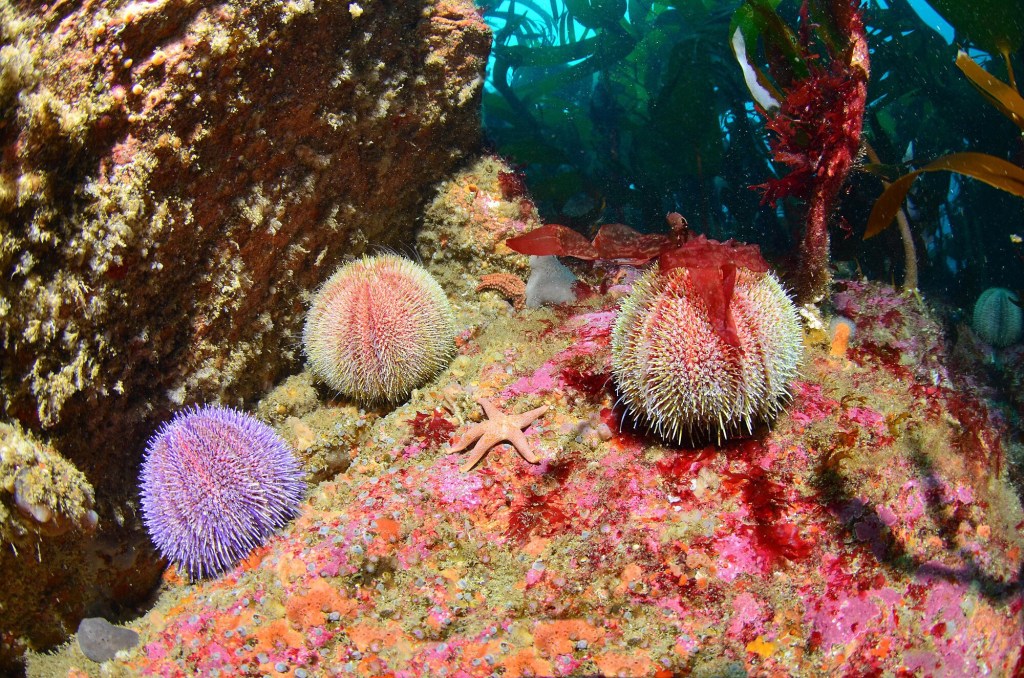
(Image: Xavier Caisey)
Ancient Urchins
Shepherd’s Crown’s are named for their distinctive, crown-like shape with five-fold radial symmetry and are the fossilised remains of Cretaceous era (145 to 66 million years ago) sea-urchins, mainly from the genera Micraster, Echinocorys, and Conulus.
They are collectively known as echinoids and have been found in various parts of the British Isles, most famously in the Cretaceous chalk deposits of southern England; the South Downs National Park, Sussex, Norfolk and Devon, but occasionally here in northern England too.

Eastward to the Ridings
Echinoid fossils are very, very rarely found here in the northwest (where my articles are usually based,) the Pennine region sometimes gives us a specimen like Echinocorys, that has been carried far out of its range by glacial movements, but otherwise you’d be lucky to find one at all.
This is because our area is predominantly Carboniferous, a geological era spanning from 359 to 330 million years ago, which is 185 million too early!
So for this article I’m having to stray out of my normal habitat eastward into Yorkshire, to its coastal fringes, which are the north’s hotspot for Cretaceous fossils like echinoids due to extensive chalk deposits laid down in a geological formation called the ‘Lias’.
Here the cliffs of the East Riding, notably at Flamborough Head and Danes Dyke, are renowned for yielding echinoids like Micraster and Echinocorys. The Speeton Clay and chalk formations along the Yorkshire coast, including sites near Whitby and Bridlington, also produce these fossils.
Coastal erosion continually exposes new specimens, making areas like Danes Dyke particularly fruitful for fossil collectors. and the Holderness coast, the fastest eroding stretch of coastline in europe, occasionally reveals Shepherd’s Crowns embedded in flint or chalk, washed out by the tides.

Fairy Loaves and Thunderstones
Historically these peculiar-looking stones were given names like “fairy loaves” due to their rounded, bread-like appearance and folklore held that they were gifts from fairies, bringing good luck to those who found them.
Farmers and shepherds, who often discovered them while tending fields, placed them on windowsills or mantelpieces to ward off evil spirits or ensure prosperity, and in some parts they were believed to protect against witchcraft or malevolent forces.
Another common name, “thunderstones,” reflects a belief that they were formed by lightning strikes. This myth, widespread across northern Europe, and prevalent in Yorkshire due to its long Norse occupancy, linked them to Thor’s hammer.
Finding a thunderstone was considered a sign of divine favor, and they were often kept as talismans.
The fossils’ association with shepherds and rural life has given them a pastoral mystique too which, as we shall see later, is reflected in modern literature. This is reinforced by other charming names they were given, like “shepherd’s hearts” or “star stones”.
These beliefs were particularly strong in coastal villages, where the landscape itself seems to echo their ancient origins.

Geological composition of the Holderness coast (researchgate)
Seeking a Crown
Fossil hunting requires caution, especially along Yorkshire’s eroding cliffs, where checking the tide times and ensuring cliff stability are both essential.
Guided fossil walks, such as those offered at Danes Dyke or Flamborough Head, provide safe access and expert guidance by knowledgable locals, geological maps can help pinpoint chalk-rich sites and there are plenty of good fossil guidebooks available. They are easy to identify though, as the star-like patterns make them unmistakable.
However the increased popularity of fossil-hunting means that the preservation of sites is a growing concern, particularly in Yorkshire, where coastal erosion both reveals and threatens fossil beds.
Organisations like the Yorkshire Wildlife Trust advocate for responsible fossil collecting to protect these geological treasures and the guidelines they provide are simple and easy to understand.
Of course fossil hunting, like metal-detecting, requires time snd patience, so if you’re lacking in these, or simply fancy having a look at some of the other fascinating fossils and artefacts that the earth has yielded, local museums, like the Rotunda museum in Scarborough, display these fossils alongside educational exhibits about the Cretaceous period.
Fossil festivals, such as the Yorkshire Fossil Festival, are also worth attending, as they attract collectors who will share stories of finding Shepherd’s Crowns in chalk pits or on beaches, often describing their tactile beauty and historical allure.

The Shepherd’s Crown
Shepherd’s Crowns have inspired several modern writers and artists, perhaps most famously the late Sir Terry Pratchett, who gave his final Discworld novel its title from these fossils.
In The Shepherd’s Crown, published in 2015, Terry Pratchett used the fossil as a symbol of legacy, responsibility, and connection to the land, representing Tiffany Aching’s (the lead character) role as a shepherd and protector of the Chalk.
It symbolises her grounding in tradition, her duty to her community, and her growth into a powerful witch. The crown motif also reflects her inherited leadership, particularly as she navigates challenges after Granny Weatherwax’s death (a part of the book I feel was written a long time previously,) emphasising the themes of continuity and stewardship that Terry carried throughout his Discworld series.

“ The surface was grey, like stone, but with a hint of gold beneath the grey. There were five distinct ridges spaced evenly, almost like stripes, rising from a flattish base to it’s top. He had seen things like this before. But this one seemed different – it had almost jumped into his hand.”
(A paragraph from The Shepherds Crown which describes the moment Daniel Aching, Tiffany’s ancestor, finds the titular fossil)
If you enjoyed this article you can show your appreciation by buying me a coffee, every contribution will go towards researching and writing future articles,
Thank-you for visiting my site,
Alex Burton-Hargreaves
(June 2025)
 Northwest Nature and History