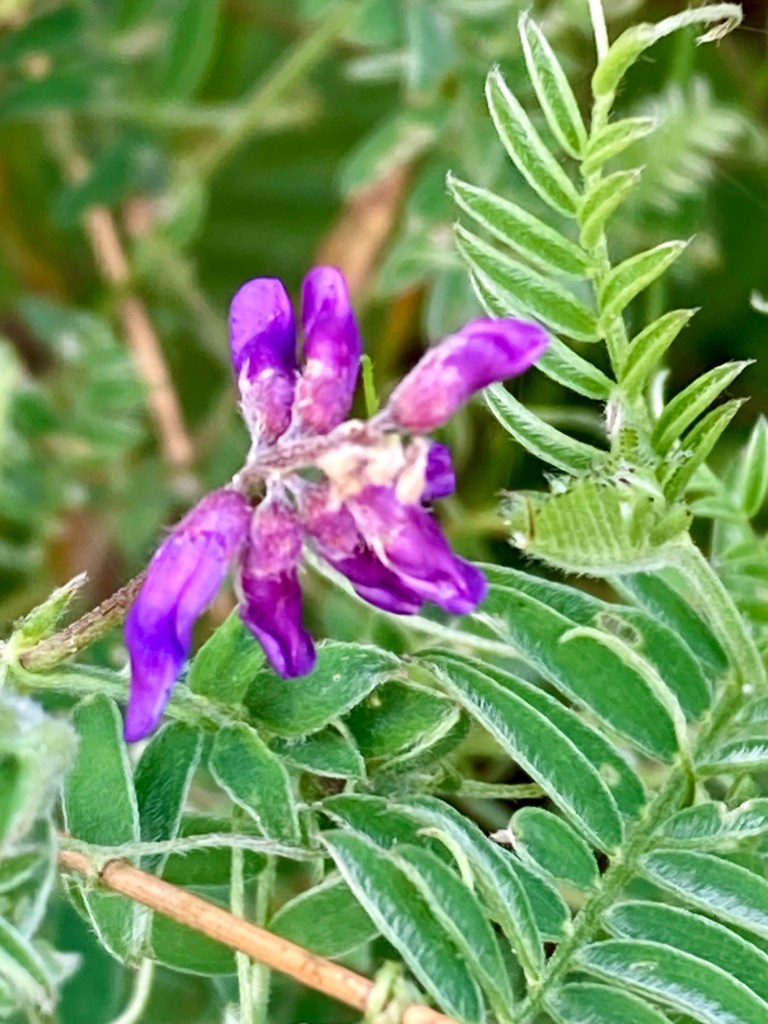
Hairy vetch, Vicia villosa, commonly known as Fodder vetch, is a vibrantly coloured and highly adaptable wildflower belonging to the Fabaceae family, which includes peas, beans, and other legumes.
Native to the British isles and found in a wide array of habitats the plant typically grows as a climbing or scrambling herbaceous perennial, reaching heights of 3 to 6 feet when supported by other vegetation or structures.
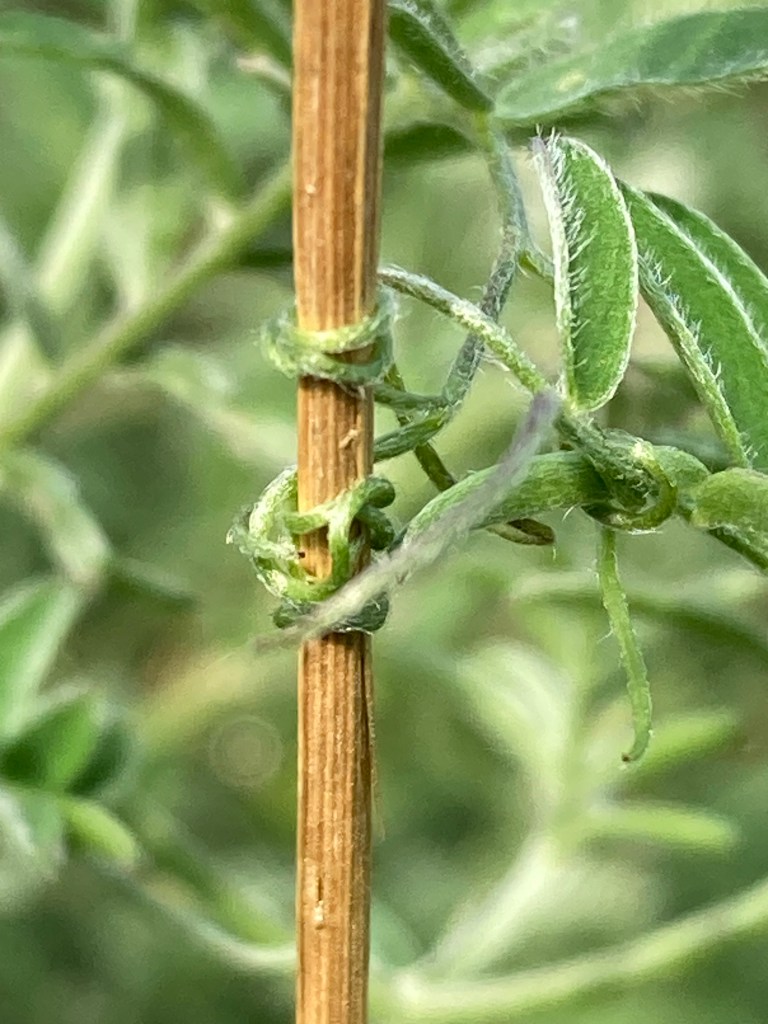
Its leaves are compound, consisting of 8 to 12 pairs of narrow, lance-shaped leaflets, often ending in a tendril that helps the plant cling to nearby supports. From early summer to late autumn, it produces dense, one-sided clusters (called racemes) of small, pea-like flowers.
These blooms, ranging from violet to blue, attract pollinators from a wide area. The plant later forms small, flat pods containing seeds, which can persist in the soil for several years.

Enriching Rhizobium
Vetch plays a vital role in ecosystems through its nitrogen-fixing capabilities. Like other legumes, it hosts symbiotic bacteria, Rhizobium, in its rhizomes (root nodules), which convert atmospheric nitrogen into a form usable by plants.
This process enriches the soil, benefiting neighboring plants and improving soil fertility in degraded areas.
As such, Vetch is often listed by ecologists as a ‘Secondary Succession’ species (see diagram below), arriving after simpler species like mosses and lichens have colonised the ground and paving the way for shrubs and eventually trees.
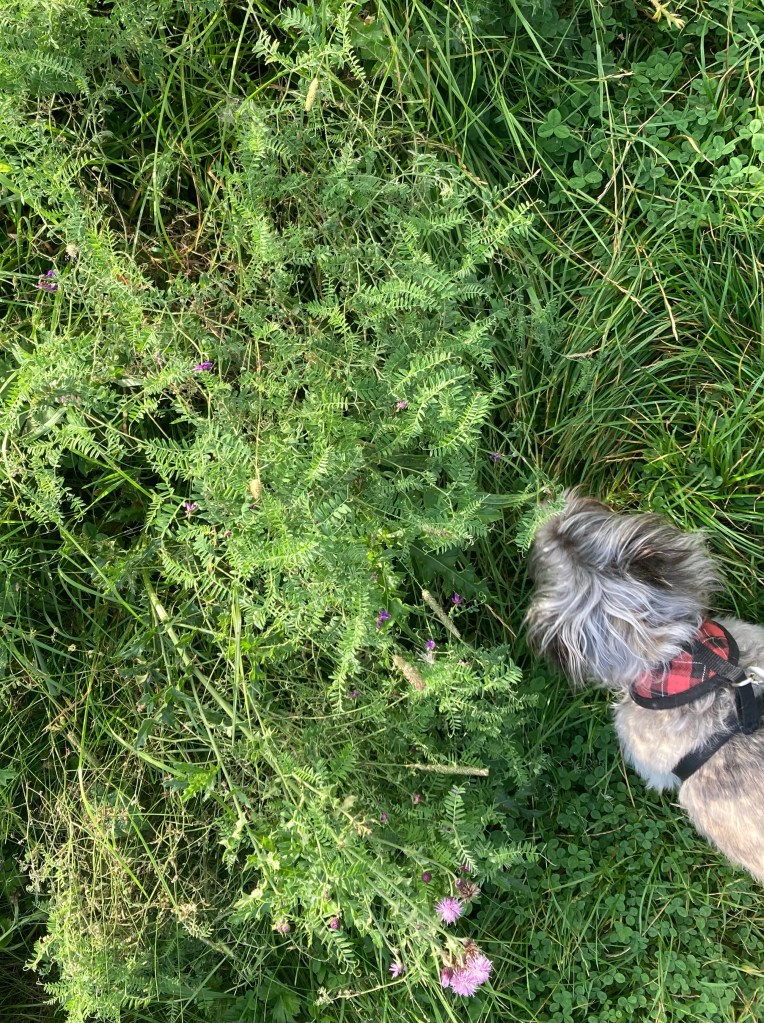
You will commonly find this plant under hedgerows, on roadside verges, field margins and where soil has been disturbed by natural processes, (i.e: floods, wildfires, landslides) or man-made (construction, farming etc), in these locations it may be the first and most abundant food source for pollinators settling in the area.
Its nectar-rich flowers attract Bumblebees, Honeybees and butterflies, additionally, its seeds and foliage provide sustenance for birds and small mammals, while its dense growth offers cover, all-in-all making it a very useful plant for wildlife.
Practical Uses
Historically, Vetch has been valued for both practical and ornamental purposes.
In agriculture, it has long been used as a forage crop for livestock due to its high protein content and palatability when young. Its ability to improve soil fertility also makes it a popular choice in cover cropping and green manure systems, where it is grown to suppress weeds, prevent erosion, and enrich the soil before being tilled under.
It is sometimes grown in mixtures with cereals like rye to produce a silage crop, with trials showing that rye/vetch mixtures (e.g., 60% rye + 40% vetch) yielded higher silage biomass (up to 4000lbs more per acre) and protein content than sole rye crops, offering a more sustainable option for livestock feed.

However overgrazing can cause health issues in livestock, such as colic or gastric torsion, also known known as gastric dilatation-volvulus or GDV for short, a serious condition where the stomach fills with gas and can twist on itself, cutting off blood supply.
In traditional herbal medicine, vetch has been used sparingly, though it is less prominent than other medicinal plants. Some cultures have employed its leaves or seeds for their purported diuretic or anti-inflammatory properties, but scientific evidence supporting these uses is limited, and caution is advised due to potential toxicity in large quantities.
Ornamentally, some species of Vetch, such as Bird vetch, are prized in wildflower gardens and naturalistic landscapes, their cascading growth and vivid flowers adding a touch of wild beauty to borders, meadows, or trellises. However, its vigorous spreading habit means it requires careful management to prevent it from taking over completely.
Reproductive Process
Vetch seedpods are typically flat, elongated, and slightly curved, resembling small pea pods. They develop from the plant’s purple flowers after pollination and each pod contains multiple seeds, which are usually round and vary in color from black through to green depending on the species.
Some species are self-pollinating, while others rely on cross-pollination and after fertilisation the ovary of the flower develops into a seedpod. The pod matures over weeks, turning from green to brown or black as it dries.
When mature, the pods often split open (called ‘dehiscing’) explosively, scattering seeds away from the parent plant. This mechanism, called ballistic dispersal, helps spread seeds over a wider area.
Seeds germinate in favorable conditions, when the soil is moist soil and the temperature is suitable, often in spring or fall, depending on the species. Vetch seeds can remain viable in the soil for years.

Cultivation and Care
Growing Vetch is relatively straightforward, making it an excellent choice for gardeners seeking low-maintenance, wildlife-friendly plants. Here are some tips for cultivating it:
- Site Selection: Vetch thrives in full sun to partial shade and prefers well-drained soils, though it tolerates a range of soil types, including poor or sandy soils.
- Planting: Sow seeds in spring or autumn, either directly in the ground or in pots for later transplanting. Scarifying the seeds (lightly nicking or soaking them) can improve germination rates.
- Support: Provide a trellis, fence, or companion plants for support, as Vetch’s tendrils will climb or sprawl over any nearby structure or vegetation.
- Maintenance: Water moderately until established; the plant is very drought-tolerant once mature. Prune or cut back after flowering to control its spread, especially in areas where it may become invasive.
- Pest and Disease Management: Vetch is generally hardy but may attract aphids or be susceptible to powdery mildew in humid conditions. Monitor for pests and ensure good air circulation around plants.

Common Species of Vetch
Here are some other common species of Vetch native to the British Isles;
Common Vetch Vicia sativa
Widespread in grasslands and arable fields, with purple-pink flowers and slender pods. Often used as a forage crop or green manure. Much favoured by ants as they have tiny glands, called ‘extrafloral nectaries’, which produce a nectar solution which the ants imbibe. The plants provide the ants with food and in return the ants protect the plant from being eaten by other insects.

Bush Vetch Vicia sepium
Common in hedges and woodlands, with small purple flowers and hairy stems. It’s a scrambling perennial, often found in shaded areas. Its flowers are mostly superfluous as it spreads by means of underground runners. This species also develops extrafloral nectaries.
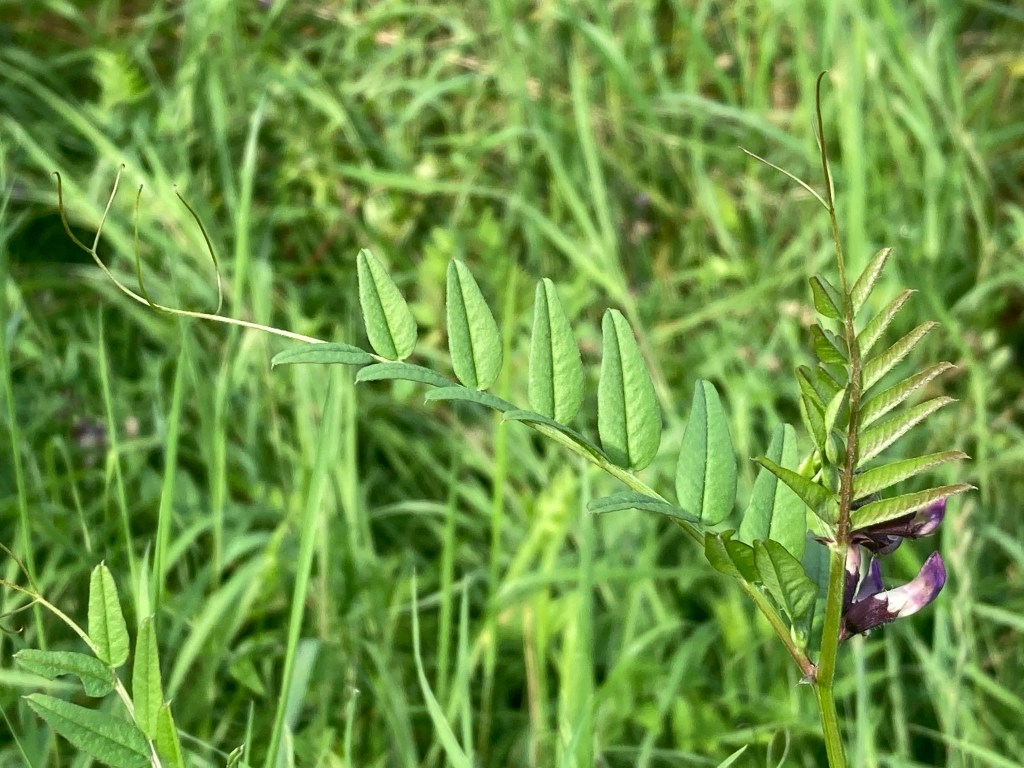

Tufted, or Bird Vetch Vicia cracca
Notable for dense clusters of blue-purple flowers, found in grassy areas and roadsides. It’s a climbing perennial, popular with pollinators.

Wood Vetch Vicia sylvatica
Rare, found in woodlands and rocky areas, with white to pale lilac flowers. It’s a climbing perennial, often in upland regions.

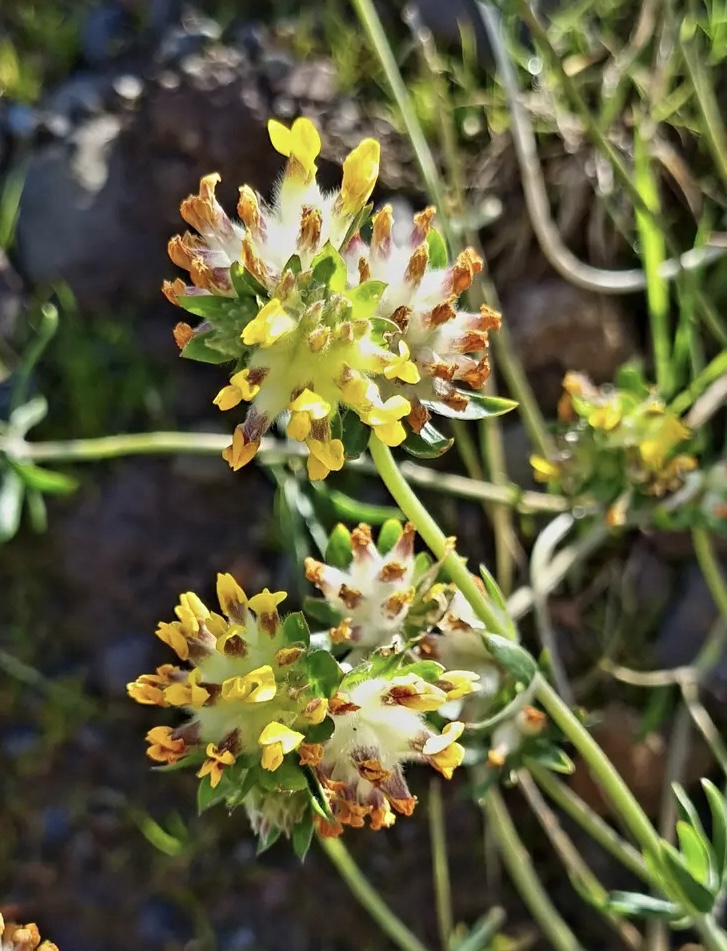
Kidney vetch Anthyllis vulneraria
Commonly found in grasslands, rocky slopes, and coastal areas. Known for its clusters of bright yellow, orange, or pink flowers that bloom from late spring to summer. The plant has soft, hairy leaves and a low, spreading growth habit, typically reaching 10 to 40 cm in height.
It is the sole food-source for the larvae of the Small Blue butterfly Cupido minimus. Historically, it has been used in traditional medicine for its wound-healing and anti-inflammatory properties, earning the name vulneraria from Latin, meaning ‘wound-healer’.
Th’ habitual scene of hill and dale,
The rural herds, the vernal gale,
The tangled vetch’s purple bloom,
The fragrance of the bean’s perfume
(From Rural Elegance, by William Shenstone 1714-1763)
If you enjoyed this article please consider showing your appreciation by buying me a coffee, every contribution will go towards researching and writing future articles,
Thank-you for visiting,
Alex Burton-Hargreaves
(Aug 2025)
 Northwest Nature and History