Part of a Collection of Articles looking at the Communities of the Hodder Valley

The story of Dunnow Hall begins in the late 11th century, when the Manor of Slaidburn became part of the Lordship of Bowland, a vast Royal Forest and Liberty spanning nearly 300 square miles across the historic borders of Lancashire and Yorkshire.
The Lordship comprised ten mesne* manors, including Slaidburn, Knowlmere, Waddington, Easington, Bashall, Mitton, Withgill, Leagram, Hammerton, and Dunnow (originally known as Battersby).
The manor of Battersby, later renamed Dunnow, was one of two manors within the township of Newton that did not fall under the demesne** of Slaidburn after a significant manorial reorganisation in the 14th century, likely influenced by the Black Death (1348 to 1350) and the absorption of much of Bowland into the Duchy of Lancaster.
Records of the hall being called ‘Dunnow’ emerged in the late 16th century when the manor was acquired by a branch of the Shireburne family of Stonyhurst. Originally held by the Battersby family, the manor remained in Shireburne possession until the English Civil Wars (1642 to 1651).
The Shireburnes were prominent landowners in the region, with Sir Richard Shireburne serving as Master Forester of Bowland until 1594. Their ownership marked a pivotal moment in the manor’s history, transitioning it from a mere medieval holding to a named estate with enduring historical significance.
Post-Civil War Transitions
The turmoil of the English Civil Wars disrupted many landholdings in Bowland, including Dunnow. By the late 17th century, the manor passed to the Slinger family, who acquired the remnant of the estate. The Slingers held Dunnow until 1728, a period that saw the birth of Tempest Slinger (1683 to 1728), a prominent lawyer and the son of Nicholas Slinger, at Dunnow Hall.
Tempest Slinger’s legal career laid the foundation for the esteemed law firm Farrer & Co, which later served as solicitors to the British royal family.
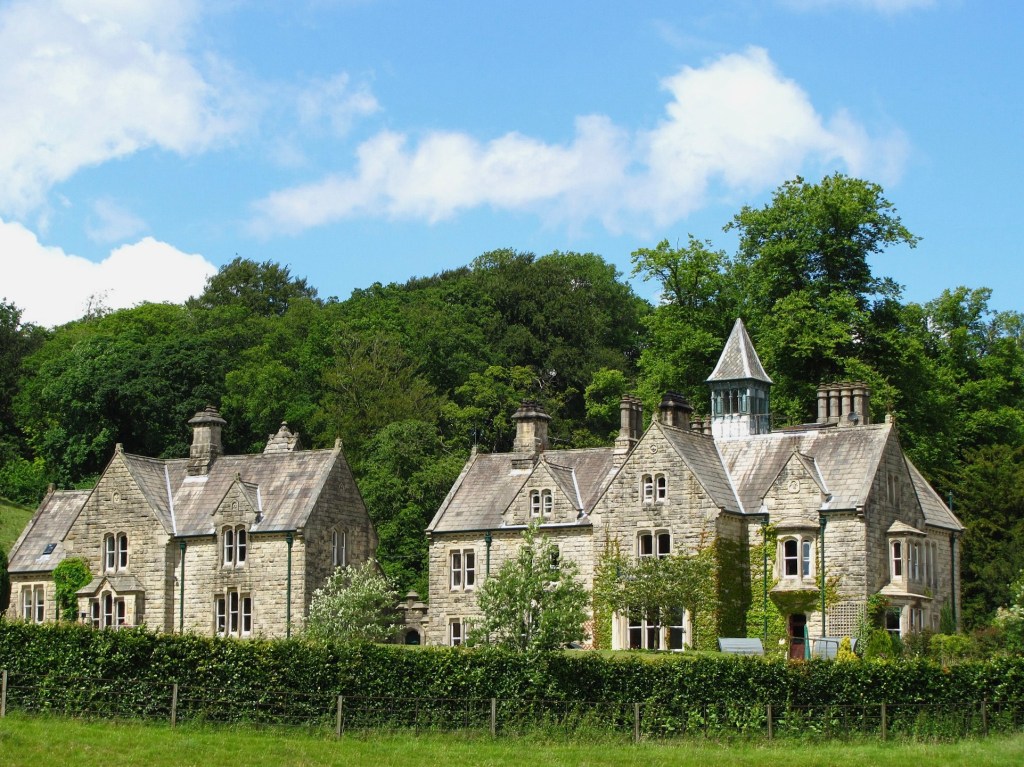
In the early 19th century, the manor was sold by Robert Parker (see here to learn more about the Parker family), a relative of the Slingers, to the Wilkinson family. This transition marked a new chapter for Dunnow, culminating in the construction of the current Dunnow Hall in the 19th century for Leonard Wilkinson, who worked as a solicitor in Blackburn.
The last so-called “Squire of Slaidburn,” John King-Wilkinson, died in May 2011, ending a long lineage of ownership tied to the Wilkinson family. The 19th-century hall stands as a physical embodiment of the estate’s evolution from medieval manor, through gentleman’s residence, to the modern-day residential property and business that stands now.

The Forest of Bowland; A Royal Hunting Ground
Dunnow Halls history cannot be separated from the broader context of the Forest of Bowland, which was not a woodland expanse but rather a Royal Hunting Ground established in the medieval period. The term ‘forest’ referred to hunting rights, primarily for deer and wild boar, rather than its modern-day meaning of a landscape dominated by trees.
The Lordship of Bowland, created by William Rufus after the Norman Conquest, was granted to Roger de Poitou, possibly as a reward for his role in defeating the Scots in 1091 to 92. By the 14th century, Bowland was a significant royal forest administered by the Duchy of Lancaster (1351 to 1661), with its manors, including Dunnow, playing a key role in the region’s feudal structure.
The manor of Dunnow, located near the River Hodder, benefited from its position in the productive pastures of the Hodder Valley, a region characterised by its meandering rivers and streams. The name ‘Bowland’ itself is thought by some to derive from the Old Norse boga or bogi, meaning ‘a bend in a river,’ which is a fitting description of the Hodder valley where Dunnow is situated.
Dunnow Hall Today
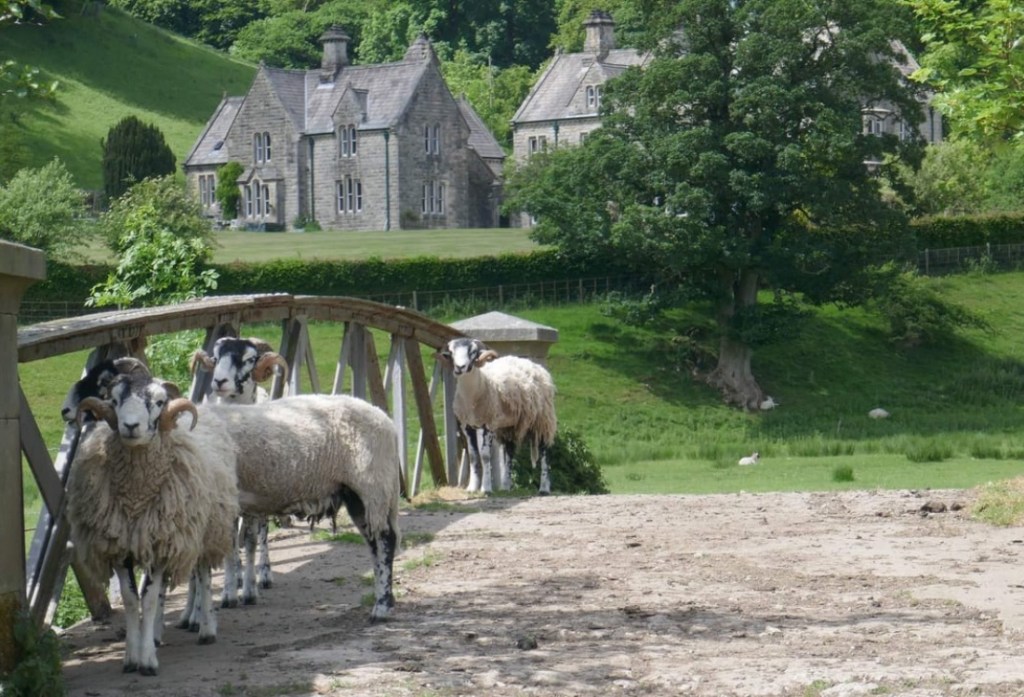
Today Dunnow Hall remains a private residence, its grounds closed to the public, it is home to the clinic of Northern Lymphology, an internationally acclaimed treatment centre for lymphoedema offering residential options.
You can see the lodge clearly from a public footpath which leads from Slaidburn to Newton-in-bowland along the river Hodder. It’s a very pleasant walk, which I’ll write about at some point, but be warned that the field downstream of the hall (towards Newton) has a tendency to flood heavily in wet weather.
This part of the path is also (reputedly) haunted, and one day I’ll tell a ghost story that I’ve written about this, but I’ll save it for nearer to Halloween!

Notes
*Mesne is an ancient Anglo-Saxon word meaning ‘middle’, it’s where the mathematical term ‘mean‘ comes from. A Mesne Lord is a landlord who collects rent from tenants yet pays rent to a greater landlord himself.
**Demesne refers to the part of a lord’s land that he kept for his own use, it was originally used to distinguish land totally controlled by a lord from areas that were turned over to tenants, it is the origin of the modern-day word ‘domain’.

The Story of Dunnow Hall
A poem by A B-H
In the valley of the tranquil river,
Stands a house between two hills,
A stately hall, yet of small stature,
Grandly built, with no superfluous frills.
Its story is long and complex,
For it’s been through many hands,
And its character sits rightly,
It belongs in these green-treed lands.
First it belonged to the Battersby’s,
But we know not how it appeared,
For it’s long been rebuilt in its entirety,
Since those pre-English civil war years.
The next owners; Shireburns of Stonyhurst,
Kept it until those times,
And then the Slingers acquired it,
And after the Wilkinson clan,
Who constructed the present-day manor,
In such a suitable style,
Fitting for its location,
In this old forest of Bow-land.
If you enjoyed this article please consider showing your appreciation by buying me a coffee, every contribution will go towards researching and writing future articles,
Thank-you for visiting,
Alex Burton-Hargreaves
(Aug 2025)
 Northwest Nature and History