Regarding the Redshank, Tringa totanus, its Ecology, Conservation and Occurrence on the Coasts of Northwest England

(Stephan Sprinz)
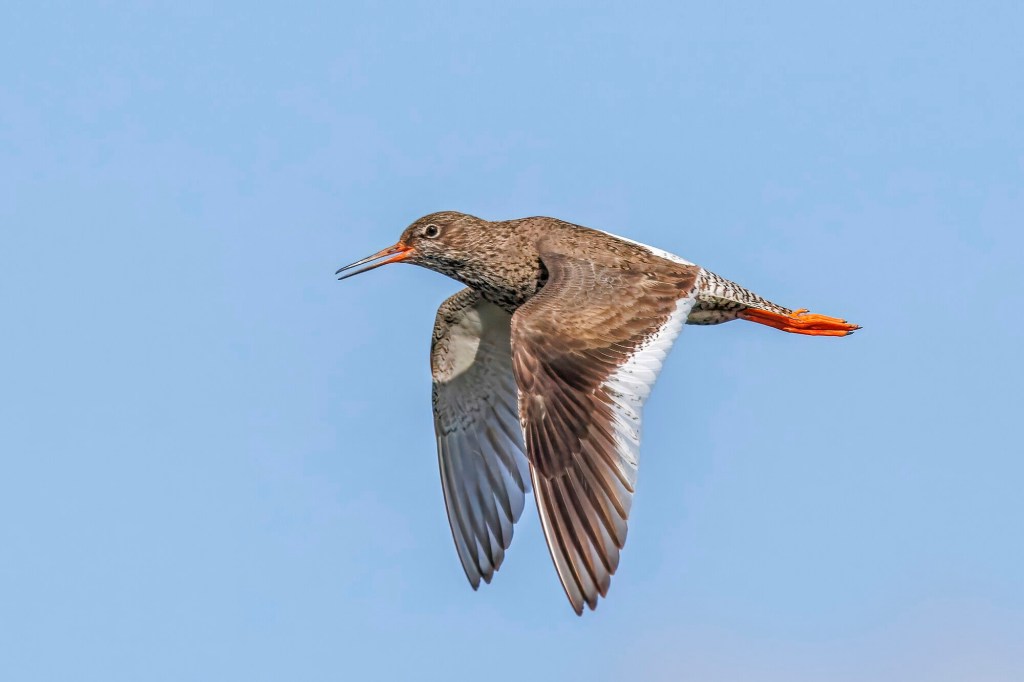
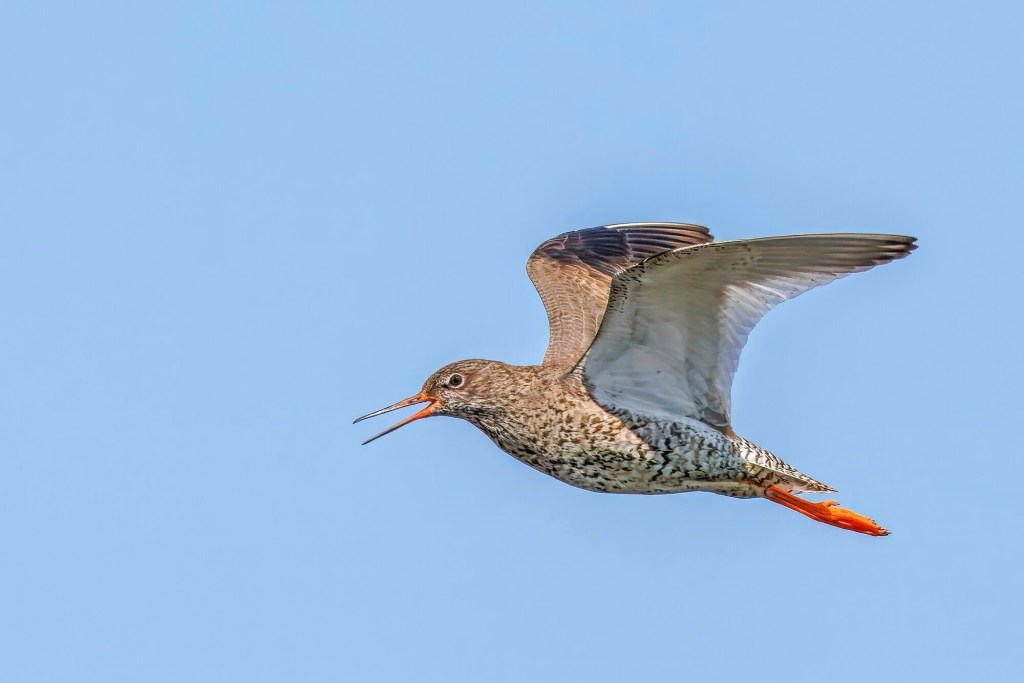
The Common Redshank, Tringa totanus, is a striking wader that graces shores all around the British Isles. Known for its vibrant orange-red legs that give it its common-name, this medium-sized sandpiper is a familiar sight on mudflats, saltmarshes, and estuaries.
It belongs to the Scolopacidae family, a group of shorebirds adapted to probing for food in shallow waters. In non-breeding plumage, the Redshank appears a mottled grey-brown above with a white underbelly, while in breeding season, it develops a more speckled appearance. Its medium-length bill, orange at the base and black at the tip, is perfect for hunting invertebrates like worms, crustaceans, and molluscs in the intertidal zones.
These birds are highly vocal, often alerting other wildlife with their loud, fluty whistles, earning them a reputation as the “sentinels of the marsh.” They are very wary creatures, quick to take flight if disturbed, which makes observing them a rewarding challenge for birdwatchers.
The Redshank’s presence is a key indicator of healthy coastal ecosystems, where it plays a role in controlling invertebrate populations and contributing to the biodiversity of wetland habitats.
What’s in a Wader’s Name?
As always I like to take a look at the scientific names of all the flora and fauna I write about, mainly because it can prove fascinating but also as it gives us a better idea of the nature, the character, of the species in question.
The Redshank’s scientific name, Tringa totanus, has roots in classical languages, the genus name Tringa deriving from New Latin, based on the Ancient Greek word ‘trungas’ (τρύγγας) which was used by Aristotle to describe a thrush-sized, white-rumped, tail-bobbing wading bird, likely referring to a similar species like the Wood sandpiper, which is called ‘Laspotryngas’ (Λασπότρυγγας) in Modern Greek. This term was first applied in an official sense by the Italian naturalist Ulisse Aldrovandi in 1599.
The specific epithet (second name) totanus comes from Tótano, the Italian name for the bird, which may echo onomatopoeic calls or local dialects from the time. Together, the name encapsulates the Redshank’s identity as a classic wader, tying it to centuries-old ornithological traditions.

(Charles J. Sharpe)
Habitat and Occurrence in the Northwest
Here in the Northwest our hundreds of miles of coastline offer ideal habitats for the Common Redshank, with their expansive mudflats, salt-marshes, and estuaries providing ample foraging grounds.
The region features dynamic intertidal zones influenced by the Irish Sea, where the bird thrives year-round. While the Redshank is a widespread breeder across temperate Eurasia and migrates to winter on Mediterranean coasts, significant populations remain or pass through the British Isles, especially in coastal areas like these.
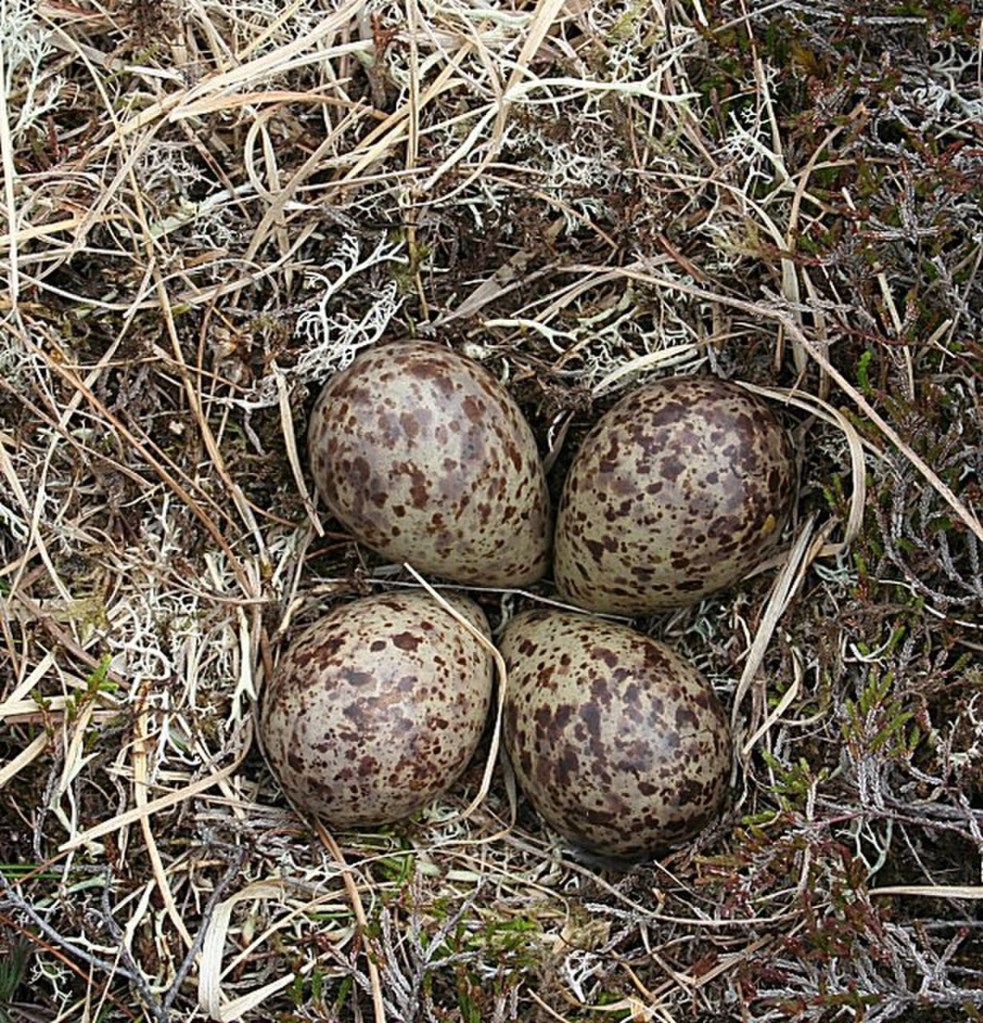
In their breeding season (April to July), Redshank nest in coastal saltmarshes and wet grasslands, laying eggs in shallow scrapes lined with vegetation. The Lancashire and Cumbrian coasts, including areas around Morecambe bay and the Duddon estuary, support nesting pairs, though numbers have declined due to habitat loss and predation. During winter, migratory birds from Scandinavia and Iceland join local residents, forming larger flocks that probe the mud for food at low tide.
Conservation efforts are crucial here, as the Redshank is classified as ‘Amber’ on the UK Birds of Conservation Concern list, indicating moderate decline. Initiatives by organisations like the RSPB and Wildlife Trusts focus on managing wetlands to protect these birds from threats like sea-level rise and agricultural intensification.

(Birds of Conservation Concern)
Redshank in Morecambe Bay
Morecambe Bay is one of the bests sites for observing Common Redshank in the British Isles, attracting birdwatchers from all across the country. This vast estuary, covering over 300 square kilometers, is one of Europe’s largest intertidal areas and a Ramsar site of international importance for wetlands. Its mudflats and saltmarshes teem with invertebrates, making it a vital feeding ground for waders like Redshank, Curlew, Oystercatcher and Knot.
During migration peaks in autumn and spring, thousands of Redshank can be seen here, often mixed with other species like Dunlins and Knot. Breeding occurs in the surrounding grasslands, with the bay’s channels and sands providing safe roosting spots at high tides.
This abundance of life, and the bay’s panoramic views add to its allure for enthusiasts of the natural world, however, Morecambe Bay faces challenges from human activities, including disturbance from recreational users, (in particular dog walkers during breeding season,) cockle fishers and coastal development, which can disrupt feeding patterns.
Conservation projects aim to balance these with wildlife needs, ensuring the Redshank continues to thrive in this iconic location for future generations.

(Andy Vernon)
A Compelling Conservation Story
One compelling story emerged when I was researching this article, which explains to some degree the complex issues conservationists face when trying to improve the prospects of species like the Redshank.
When RSPB surveys in 2011 highlighted their decline, it lead to studies on the double-edged sword of cattle grazing; on one hand it’s vital for creating the short, tussocky vegetation Redshank prefer for nesting, but cattle often trample nests, especially near landward edges where both livestock and birds concentrate. Grazing also pushes nests into shorter grass, increasing predation risks.
(Anne Burgess)
To solve this conundrum the RSPB and Natural England carried out extensive studies and trials on the salt marshes of the Ribble estuary, where populations have plummeted by over 50% since 1985. As a result of these studies they recommended strategies like rotational grazing or delaying it until mid-July (after chicks fledge) to protect nests from mid-April onward, while preventing overgrowth that could deter breeding or attract more predators.
Recent surveys and reports indicate that Redshank populations in northwest England are not yet showing clear increases attributable to these conservation efforts, and that long-term breeding population trends across England remain downward, with a 44% decline from 1995 to 2023 and an 18% decline over the most recent 10-year period (2013 to 2023).
However non-breeding (wintering) populations in England have stabilised somewhat, with a 16% decline over 25 years (1997/98 to 2022/23) but a slight 2% increase over the last 10 years (2012/13 to 2022/23).
This demonstrates that, as well as being vastly complex, conservation projects often work over timescales measured in decades, and as such we should not give up if the fruit of our labours is not immediately obvious to us.
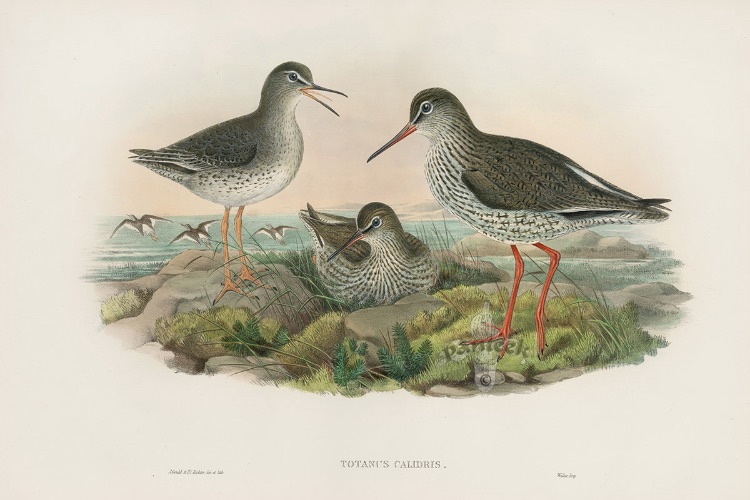
Redshank stutters through shallows,
red legs flickering in evening light
like sparks along the edge of tide
each step quick and alive.
It whistles a thin, urgent note –
startling the naked silence
as if the sea needs reminding
that an ebbing tide can leave danger
and danger can be beautiful.
(Excerpt from Shorebirds By Liverpudlian poet Lea Knowles)
If you enjoyed this article please consider showing your appreciation by buying me a coffee, every contribution will go towards researching and writing future articles,
Thank-you for visiting,
Alex Burton-Hargreaves
(Oct 2025)
 Northwest Nature and History