As the autumn rains soak our countryside, the fruiting bodies of fungi sprout forth, bewitching us with their bewildering multitude of forms.
They come in all shapes and sizes, from the shapeless, gelatinous lumps of Witches’ butter, the bleeding, slab-like shelves of Beefsteak fungus to the smooth, skull-like spheres known as Puffballs the limits of their shape and structure know no bounds.
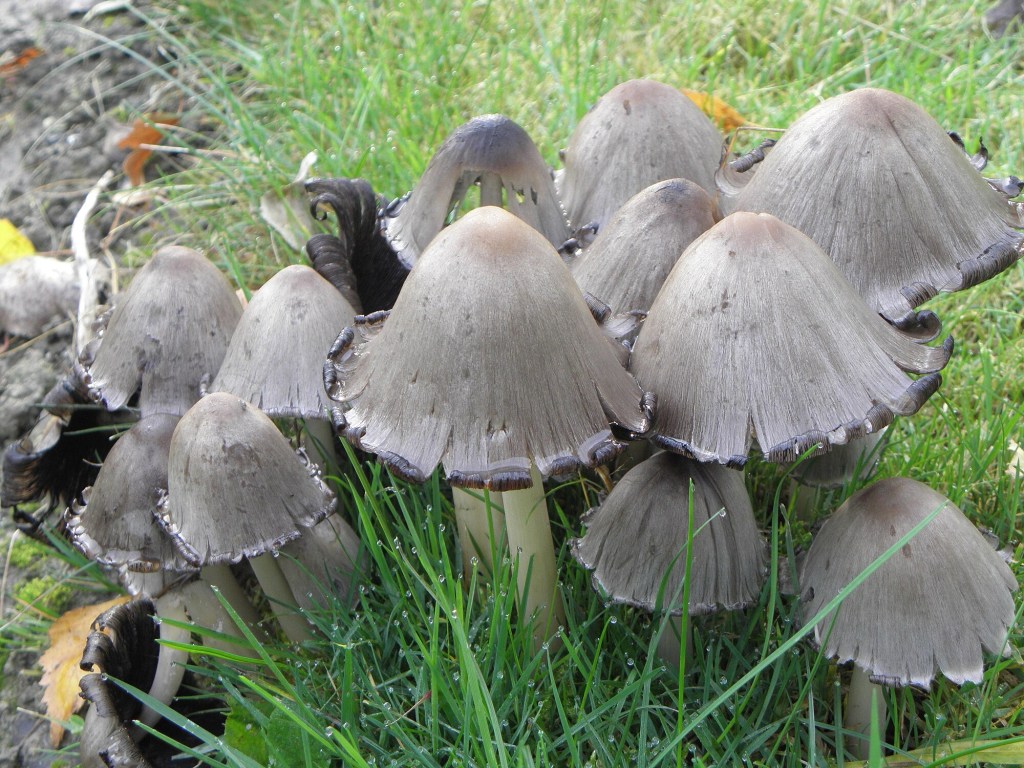
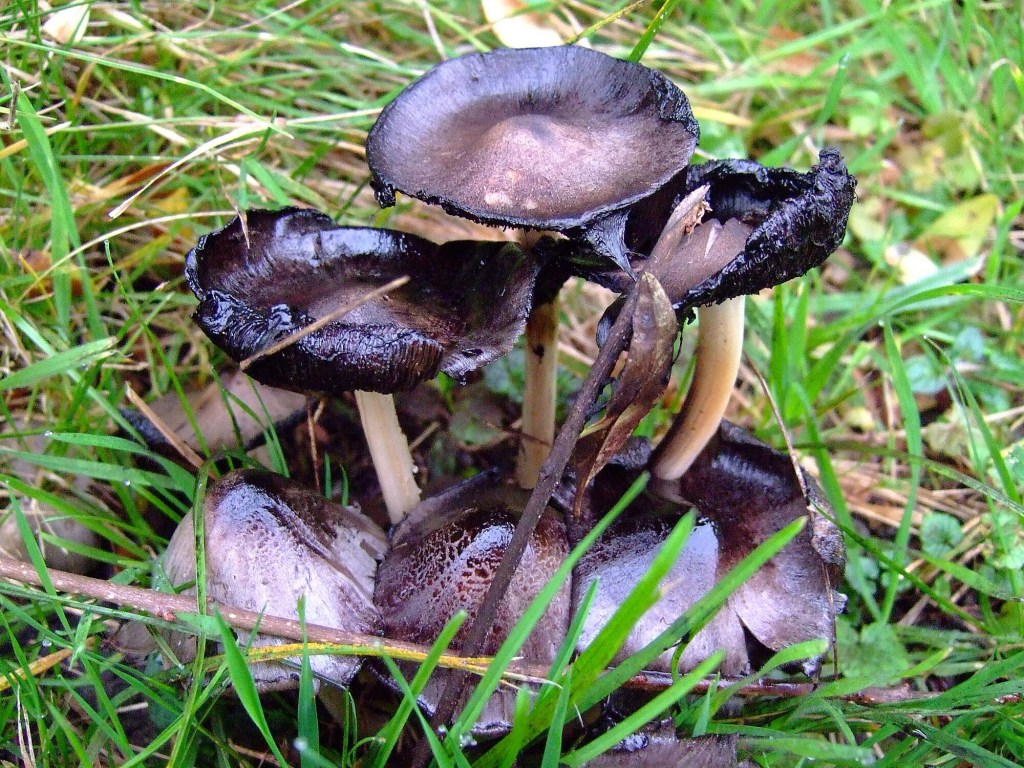
One of the most bizarre of these fungal forms is the Common Inkcap, Coprinopsis atramentaria, which begins as a small, innocuous-looking, egg-shaped cap, pushing its way through the leaf-litter, metamorphoses into a tall, eerie-looking cap, and then decomposes into an unearthly, viscous black ooze.
Description
Coprinopsis atramentaria is related to the Shaggy Inkcap (Coprinus comatus,) Magpie Inkcap (Coprinopsis picacea) and Glistening Inkcap (Coprinellus micaceous) and starts life as a conical or egg-shaped cap, typically 3 to 7cm tall when young, expanding to a bell-like form up to 10cm across as it matures. The cap is smooth but grooved with radial lines, coloured in shades of grey to brownish-grey, often paler at the edges.
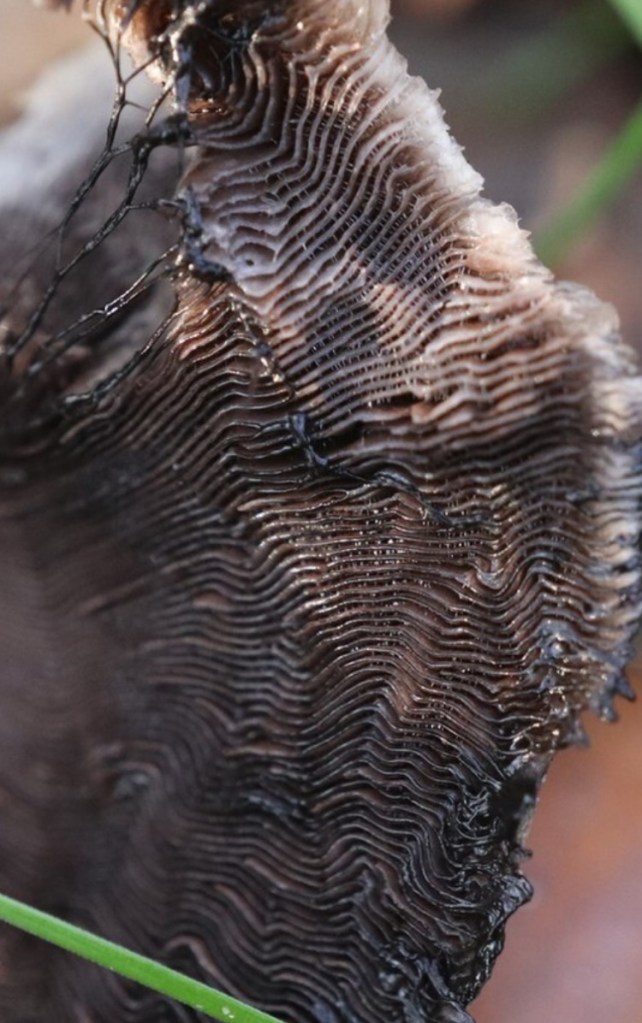
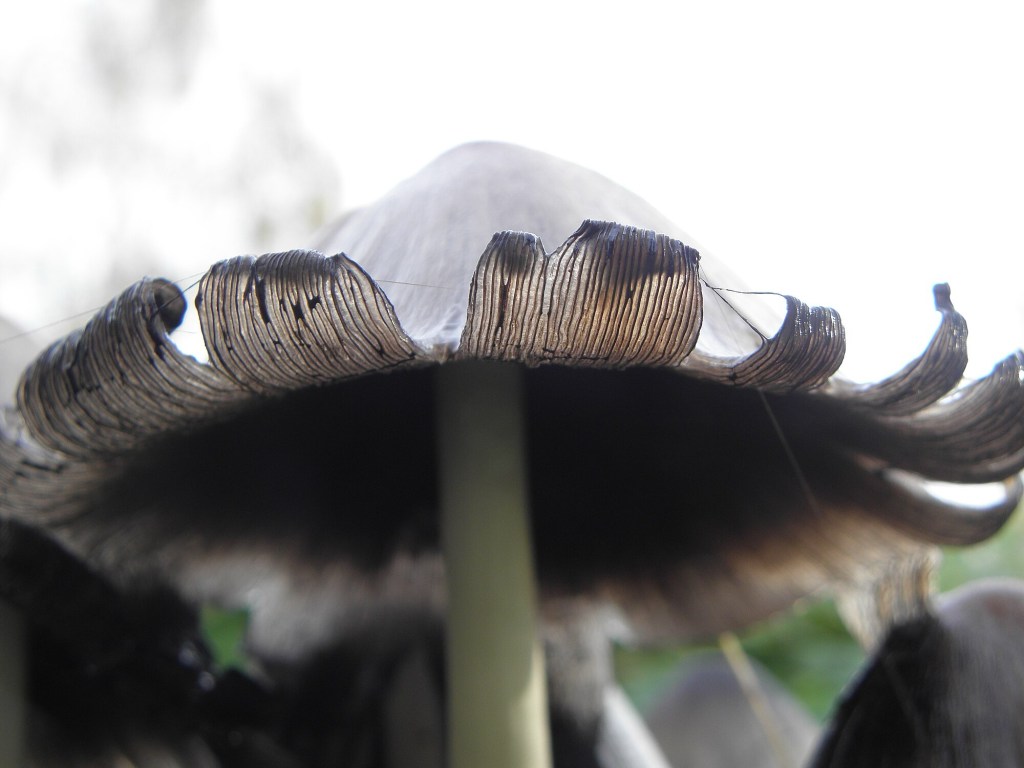
Underneath, the gills are crowded and initially whitish, turning grey then black as they age. What sets Inkcaps apart from other fungi, and gives them their collective name, are their dramatic deliquescence, as the gills and cap quickly auto-digest into a black, ink-like liquid, a process that can happen within hours of picking.
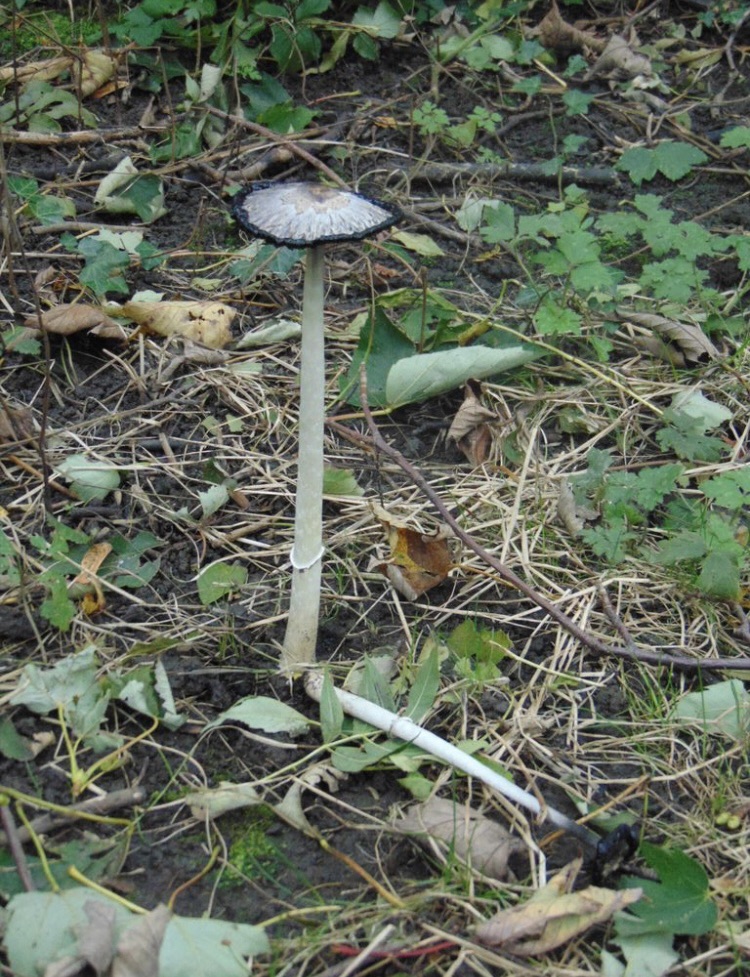
The stem of C. atramentaria is white, slender, and up to 17cm long, with a slightly bulbous base and sometimes a movable ring remnant.
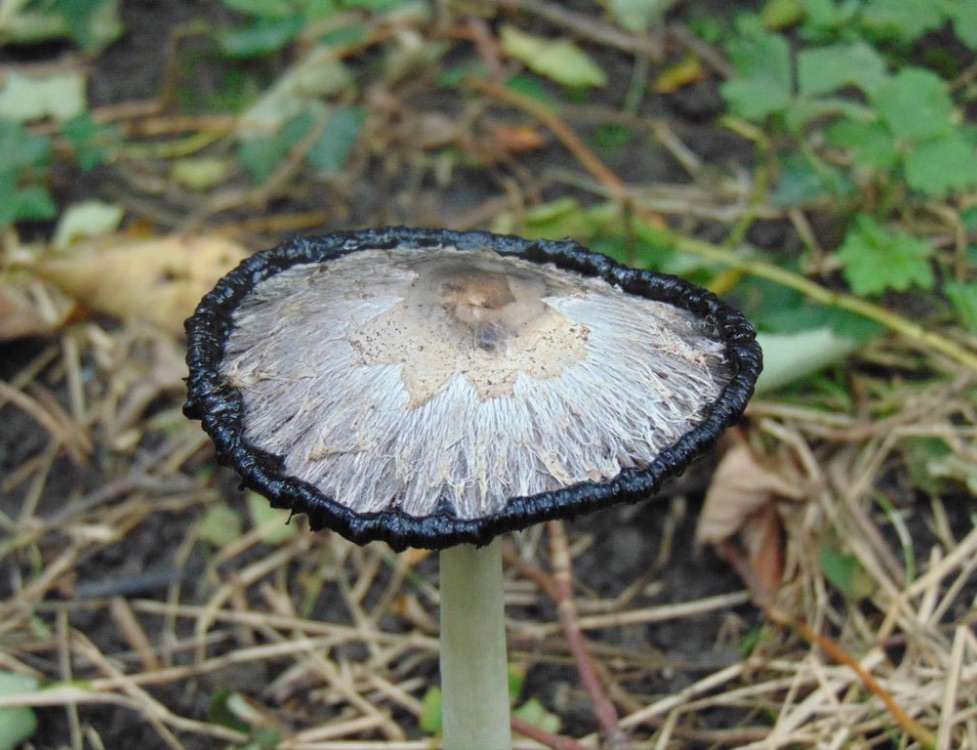
It is easy to confuse it with the similar Shaggy Inkcap, which has a scalier cap, or the potentially toxic Magpie Inkcap, which has a darker, spotted appearance.
Habitat and Distribution
You may encounter the Common Inkcap in a wide variety of spots, from ancient woodlands to urban parks it thrives wherever there are nutrient-rich, disturbed soils. Being a saprobic fungus it specialises in breaking down organic matter and most often appears in tufts on or near decaying hardwood stumps and buried wood.
Widespread across most of the Northern Hemisphere, it’s particularly common from spring through to late autumn, especially after wet weather, emerging almost overnight, and disintegrating just as fast.
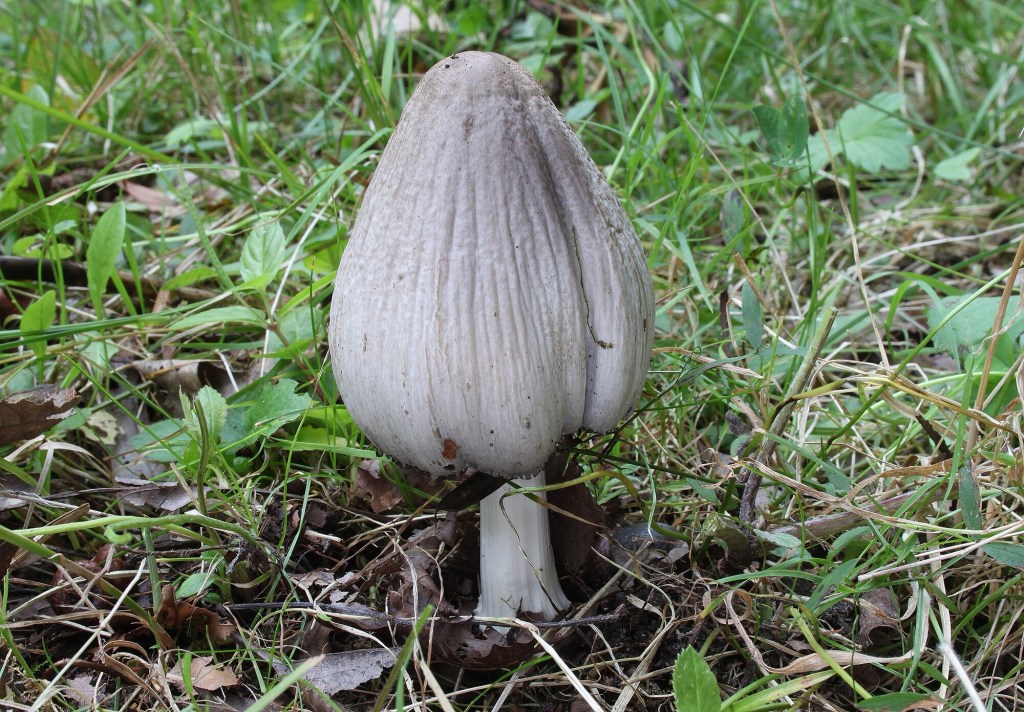
(Holger Krisp)
Life Cycle
As a saprotroph, the Common Inkcap plays a vital role in ecosystems by decomposing dead wood and returning nutrients to the soil, its mycelium spreads underground, feeding on lignin and cellulose in buried timber, which explains why it so often seems to sprout from bare ground.
The ephemeral fruiting bodies of Inkcaps only last a day or two before deliquescing because this is all the time they need to carry out their purpose, which is to disperse spores efficiently in humid conditions.
Edibility and Uses
For foragers, the young bodies of the Common Inkcap are edible when cooked properly, with a mild, earthy flavour that’s been enjoyed in soups and stews for millennia.
However, this comes with a serious caveat; it contains coprine, a compound that interferes with alcohol metabolism, causing nausea, flushing, and headaches if consumed with booze, hence the lesser-used common-name “Tippler’s Bane,” this antabuse-like effect can last up to 72 hours, so only teetotallers should pick this fungi!
Beyond the kitchen, its inky residue was once used to make writing ink through various methods like boiling with water and spices like cloves, or, in the middle ages, mixing with urine (they really did like recycling their pee back then!)
As always, if you decide to go picking Inkcaps please forage responsibly and confirm identification with a guidebook or expert.
Origins of the Scientific Name
The scientific name Coprinopsis atramentaria has roots that perfectly capture the essence and history of the species.
The genus Coprinopsis was established in 2001 by mycologists Scott Redhead and colleagues, and derives from the older genus Coprinus which comes from the Greek ‘kopros’ (κόπρος) meaning ‘dung’, reflecting the dung-associated habits of many related species, combined with the suffix opsis, meaning ‘resembling’.
This reclassification came from molecular studies showing that not all “inkcaps” were closely related.
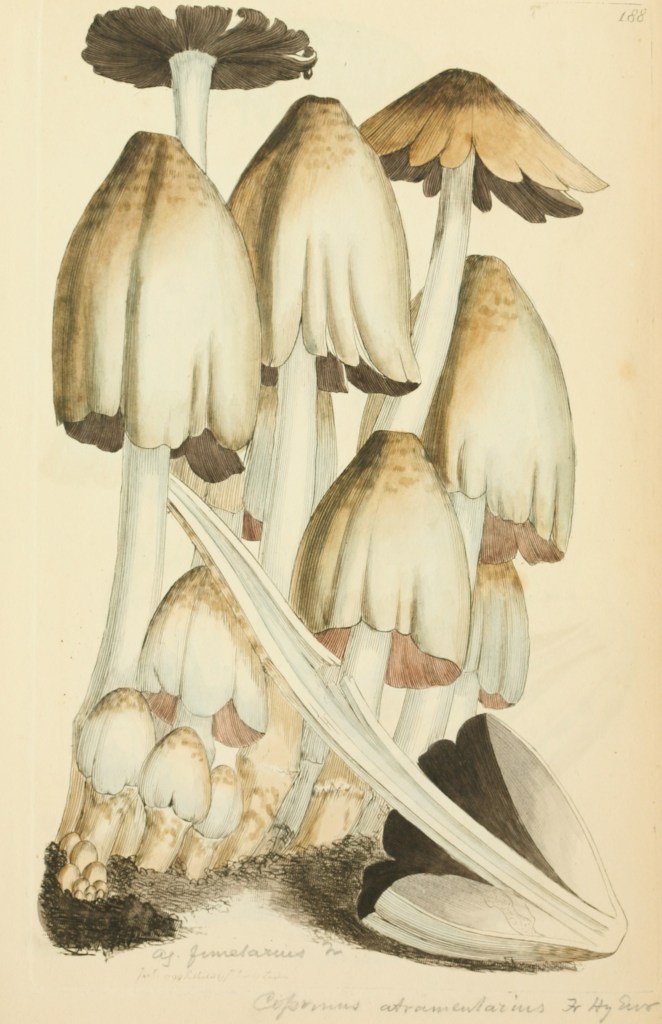
The species epithet atramentaria stems from the Latin atramentum translating to ‘ink’ or ‘black liquid’, refering to the fungus’s signature deliquescence into an inky goo. It was first described in 1786 by French botanist Jean Baptiste Francois Pierre Bulliard as Agaricus atramentarius, it was later moved to Coprinus before its current placement.
Their mass rotted off them flake by flake
Til the thick stalk stuck like a murderer’s stake,
Where rags of loose flesh yet tremble on high
Infecting the winds that wander by.
(From ‘The Sensitive Plant’ by Percy Bysshe Shelley)
If you enjoyed this article please consider showing your appreciation by buying me a coffee, every contribution will go towards researching and writing future articles,
Thank-you for visiting,
Alex Burton-Hargreaves
(Oct 2025)
 Northwest Nature and History