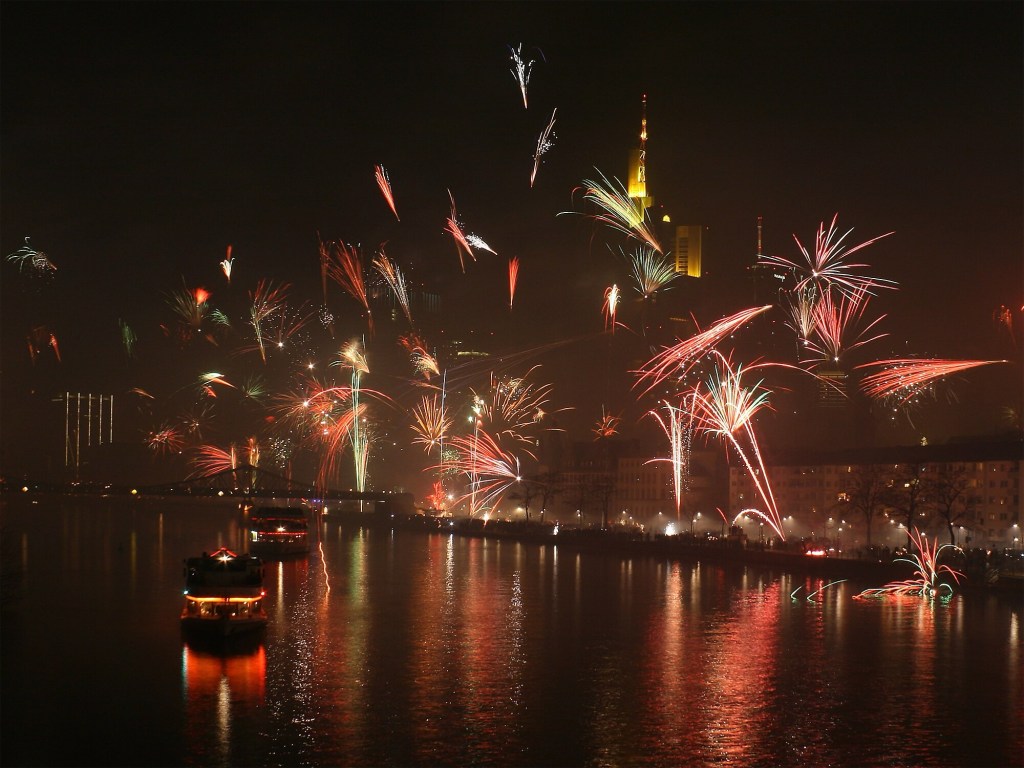
Fireworks, while a staple of celebrations around the world, from New Year’s Eve to national holidays like Diwali and Bonfire Night, are increasingly coming under scrutiny for their enormous environmental impacts.
Beyond the visual spectacle and auditory booms that we enjoy, these pyrotechnic displays release noise, light, and chemical pollutants that can profoundly affect, and even lead to mass deaths of, wildlife.
Among the most vulnerable are migrating bird species, which rely on precise navigation, energy conservation, and undisturbed rest during their arduous journeys.
Two weather radars detect the mass take-off of birds following the lighting of fireworks just after midnight on January 1st, 2018. In the study area (surrounded by the red arcs), no less than 384,000 birds immediately flee from fireworks. This video is part of a publication in Frontiers in Ecology and the Environment titled ‘Fireworks disturbance across bird communities’
Panic, Flight, and Disorientation
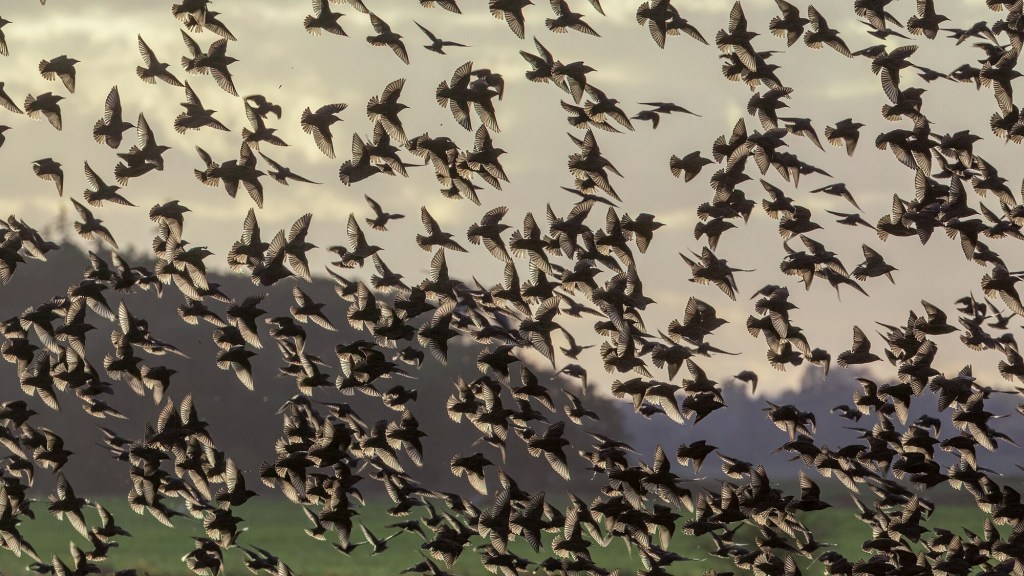
The primary effects of fireworks on birds stem from their intense noise and bright flashes, which can trigger panic responses. Migrating birds, which often travel at night to avoid predators and conserve energy, are particularly susceptible. Studies show that fireworks cause birds to abandon roosts en masse, leading to erratic flight patterns and increased altitude to escape the disturbance.
For example research using GPS tracking on Arctic migratory geese in Western Europe revealed that on New Year’s Eve, birds flew an average of 5 to 16 kilometers farther and 40 to 150 meters higher than on typical nights. Some individuals even undertook non-stop flights of up to 500 kilometers, distances usually reserved for full migratory legs.
Species like White-fronted geese Anser albifrons, Barnacle geese Branta leucopsis, and Pink-footed geese Anser brachyrhynchus, exhibited reduced rest periods, sleeping about two hours less due to the chaos. This energy expenditure is critical for migrants, as wintering periods are meant for recovery rather than exertion.
In urban settings, radar-based studies in Birmingham during events like Diwali and Bonfire Night, quantified similar surges in bird activity. Bird flight tracks increased dramatically, with peaks correlating to firework discharges and spikes in particulate matter (PM10) pollution. Birds flew at significantly higher altitudes, up to 283 meters above ground on average during Bonfire Night, indicating attempts to evade the ground-level disturbances.
While the study focused on urban bird communities, it noted potential impacts on nocturnal migrants like thrushes, including Redwing Turdus iliacus, which were active during the autumn migration season.
Additionally, fireworks release particulate matter (PM), with levels near bird roosts rising by up to 650% during displays. This pollution prompts birds to relocate to less contaminated areas, further disrupting their established routes and increasing the risk of collisions with structures or exhaustion.
Nabil Brent at KXAN news
Energy Drain, Behavioural Shifts, and Population Impacts
The effects of fireworks extend far beyond the night of the display, influencing bird behavior for days or even weeks afterward. Migratory species, which must balance energy intake and expenditure over vast distances, face compounded risks from these prolonged disturbances.
In the Goose study, behavioural changes persisted for up to 12 days post-fireworks. Geese spent 10% more time foraging to compensate for lost energy and frequently switched roosting sites, avoiding their original locations near human settlements. This shift not only increases energy demands but can lead to human-wildlife conflicts, such as geese raiding farmlands for food. Even during a COVID-19-induced fireworks ban in 2020/2021, some species still showed heightened flight activity, suggesting that minimal or illegal fireworks can trigger lasting responses.
Broader research indicates physiological stress, with elevated heart rates and cortisol levels observed in affected birds. Repeated exposure may result in nest abandonment, reduced reproductive success, and lower juvenile survival rates. For example, house sparrows exposed to fireworks in Spain showed drops in reproductive output. For migrants, these stressors could delay arrivals at breeding grounds, reduce fitness, or increase mortality during harsh winters.
Migration patterns themselves may be altered, with disorientation from noise and light pollution leading to navigational errors. Autumn fireworks, coinciding with peak migration for many species, exacerbate this, and may potentially affect population dynamics over time.
(Thomas Wolf)
Research Highlights and Methodologies
The insights above draw from innovative tracking technologies. The multi-year GPS study on geese analysed data from 347 birds across Germany, Denmark, and the Netherlands, providing granular details on movement and energy use.
Similarly, the Birmingham radar study used L-band radar to monitor thousands of flight tracks, offering the first urban quantification of firework-induced disturbances. These methods demonstrated the scale of the impact, from individual behavioral shifts to community-wide responses.
Other observations from hundreds of fireworks events (see ‘broader research’,) confirm reactions across 272 bird species, emphasising the need for more protection during migration seasons.

Italian Organisation for the Protection of Animals (IOPA))
Alternatives for Wildlife-Friendly Celebrations
Given these findings, and the obvious damage fireworks cause to other species, environmental campaigners are advocating for restrictions on public use, or at the very least controls on use near protected areas, bird sanctuaries, and migration corridors.
Alternatives like drone light shows or laser displays offer spectacles just as, if not more impressive, without the noise and pollution.
In conclusion, while fireworks provide momentary and fleeting joy, their effects on wildlife pose serious and long-lasting conservation challenges.
Hopefully the hard work of campaigners will bring to light the urgency of balancing human traditions with wildlife protection to ensure nature can live undisturbed, and our avian travellers can continue their vital journeys unhindered without us waging pyrotechnical warfare on them.

(Wes Davies)
Firework Night, by Enid Blyton
(By your dog and mine)
BANG!
What’s that?
Bang-Bang! Oh, Hark,
The guns are shooting in the dark!
Little guns and big ones too,
Bang–bang-bang!
What shall I do?
Mistress, Master, hear me yelp,
I’m out-of-doors, I want your help.
Let me in-oh, LET ME IN
Before those fireworks begin
To shoot again-I can’t bear that;
My tail is down, my ears are flat,
I’m trembling here outside the door,
Oh, don’t you love me anymore?
BANG!
I think I’ll die with fright
Unless you let me in to-night.
(Shall we let him in, children?)
Ah, now the door is opened wide,
I’m rushing through, I’m safe inside,
The lights are on, it’s warm and grand-
Mistress, let me lick your hand
Before I slip behind the couch.
There I’ll hide myself and crouch
In safety till the BANGS are done-
Then to my kennel I will run
And guard you safely all the night
Because you understood my fright.
Alex Burton-Hargreaves
(Oct 2025
 Northwest Nature and History
A timely article, and well researched.
Yet another reason to restrict the sale of fireworks to the general public.
LikeLiked by 1 person
Thank-you, yes I’ve had the idea and a few notes for a while now but then I saw the fireworks campaigner on X and thought I’d tie them together in time for the 5th so it might help draw some light on the matter, it’s been in the news a lot recently too, who knows, hopefully it might help?
LikeLiked by 1 person