A brief look at the group of fungi known as Earthtongues and some of the most common species found in northwest England, including a glossary of mycological terms
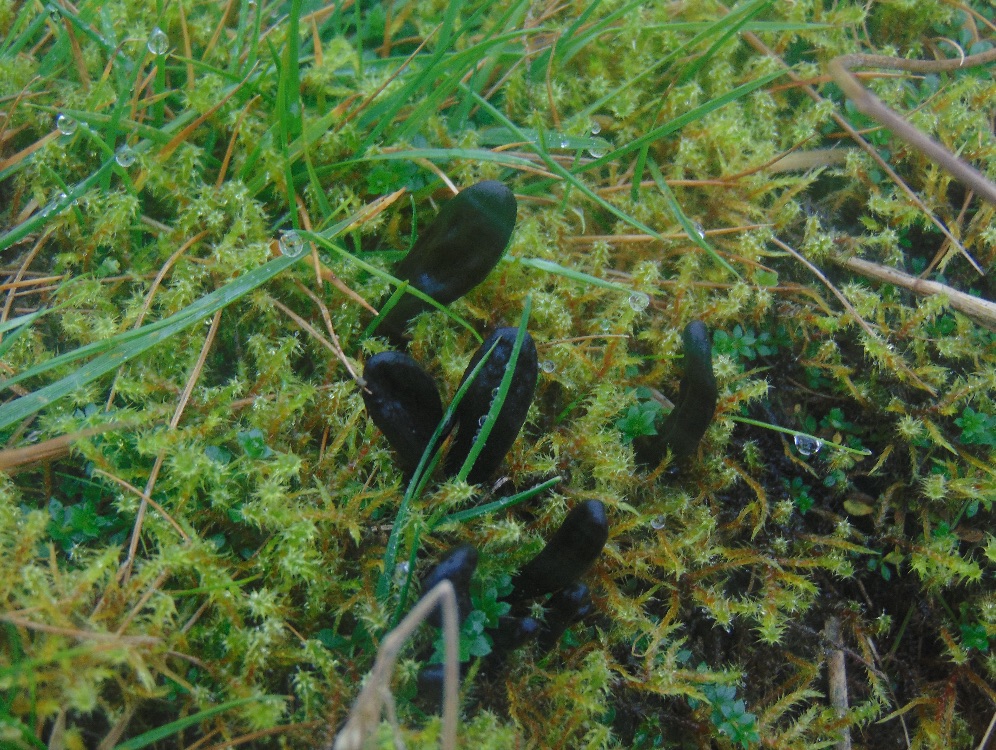
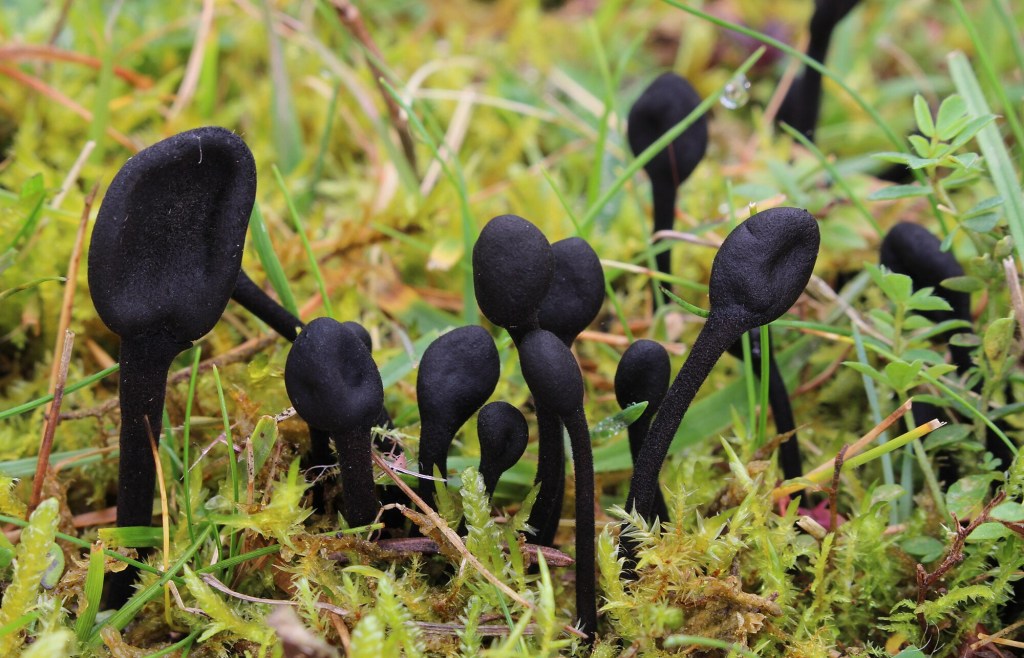
Earthtongue fungi, belonging primarily to the family Geoglossaceae, are a fascinating group known for their distinctive tongue- or club-shaped fruiting bodies that emerge from the soil in eerie-looking black or dark protrusions.
Their scientific name is formed from geo- (from Greek gē (γῆ)), meaning earth, ground, or soil, and glossum, from the Greek glōssa (γλῶσσα), meaning tongue.
These fungi are saprotrophic, meaning they derive nutrients from decaying organic matter, and they play a subtle but vital role in ecosystems by breaking down plant debris. They are most often found in nutrient-poor habitats such as unimproved grasslands, dunes, mossy areas, and woodlands, particularly during late autumn.
They are part of the CHEGD group of fungi, a collection of species restricted to ancient grassland so used to calculate the ecological value of this rare habitat, you can read more about CHEGD here.
Northwest England, with its diverse landscapes; the acid grasslands of Cumbria, sandy dunes along the Lancashire coast, and upland pastures of the Pennines, provides ideal conditions for several species, here we look at some of the most common.
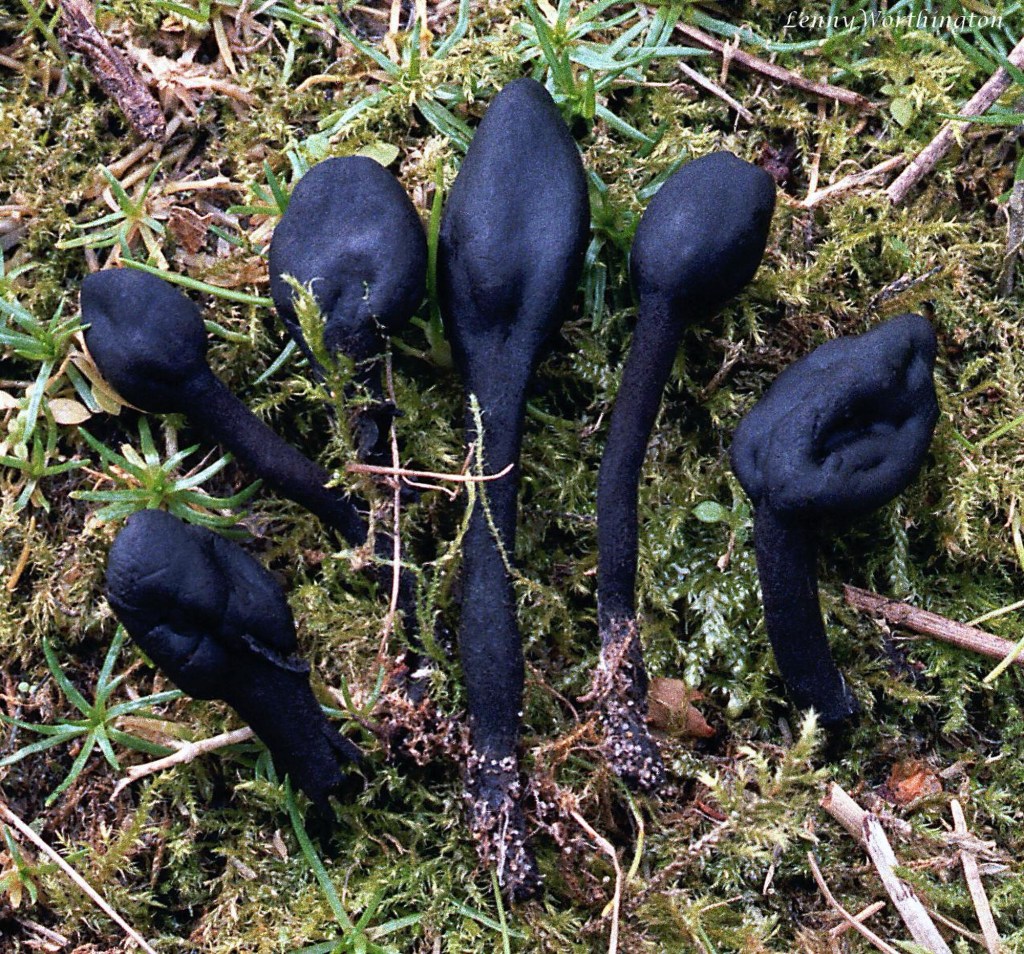
Ainsdale, Lancashire
(Len Worthington)
Trichoglossum hirsutum: The Hairy Earthtongue
One of the most frequently encountered earthtongues in northwest England is Trichoglossum hirsutum, often referred to as the hairy earthtongue due to its bristly appearance.
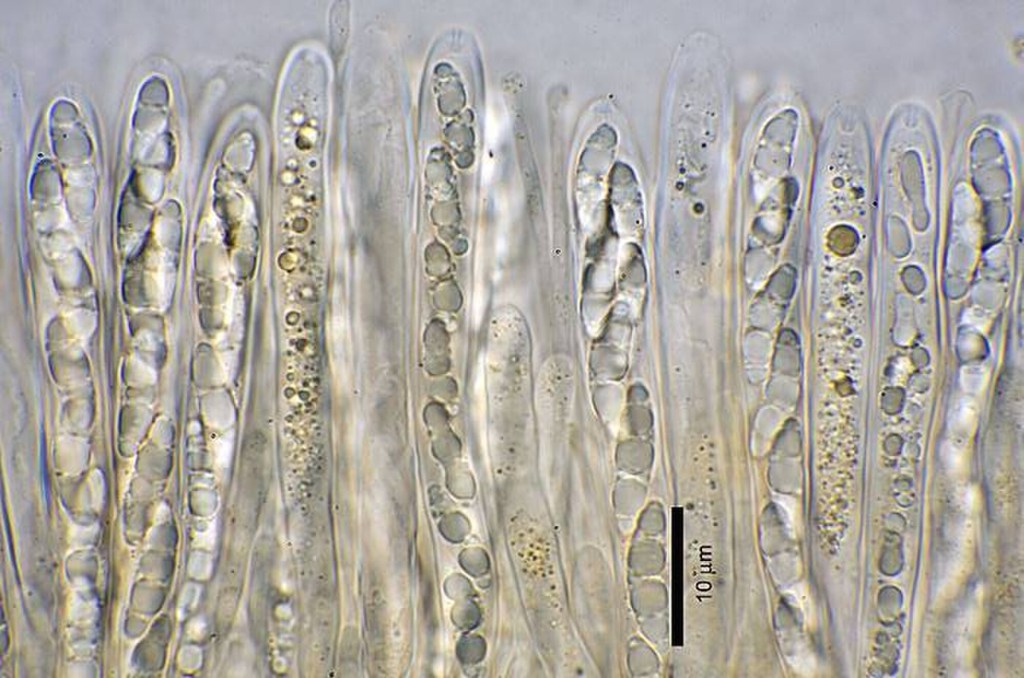
This species produces black fruiting bodies that can reach 2.5 to 9 cm in height, with a flattened, swollen head resembling a lollipop atop a stem covered in stiff, visible hairs. Under the microscope, its spores are long and slender, measuring 113 to 140 μm with 15 septa, and it features opaque black setae (bristles, please see glossary for description of terms) up to 180 μm long.
It thrives in neutral or acid grasslands, both in lowlands and uplands, as well as on dunes, all habitats plentiful in this part of the world, and as the most common species in its genus it’s a reliable find for mycologists, most often appearing around autumn clustered in short, closely grazed swards or moss.
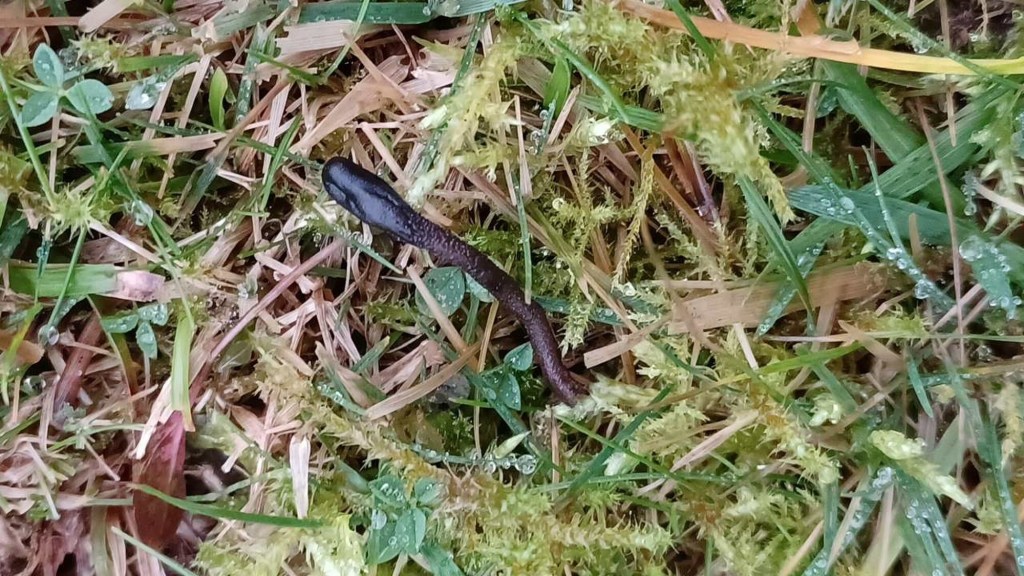
Near Holme Chapel, Lancashire
(Sarah Steeles-Yates)
Geoglossum fallax: The Deceptive Earthtongue
Another prevalent species in the region is Geoglossum fallax, characterised by its slender, 3 to 6.5cm tall fruiting bodies with a black, felty head that becomes smooth or pitted with age, and a brownish, rugose stem often adorned with tufts of fine hairs.
Microscopically, it has long spores (82 to 115 μm) that are septate (up to 13 septa) and paraphyses that may be agglutinated in a brown matrix. This fungus prefers disturbed sites in lowland acid pastures or upland acid grasslands, where bare soil, lichens, and mosses are present, conditions which are especially common on our moorlands and grazed hillsides.
(Liz Young)
Geoglossum cookeanum: Cooke’s Earthtongue
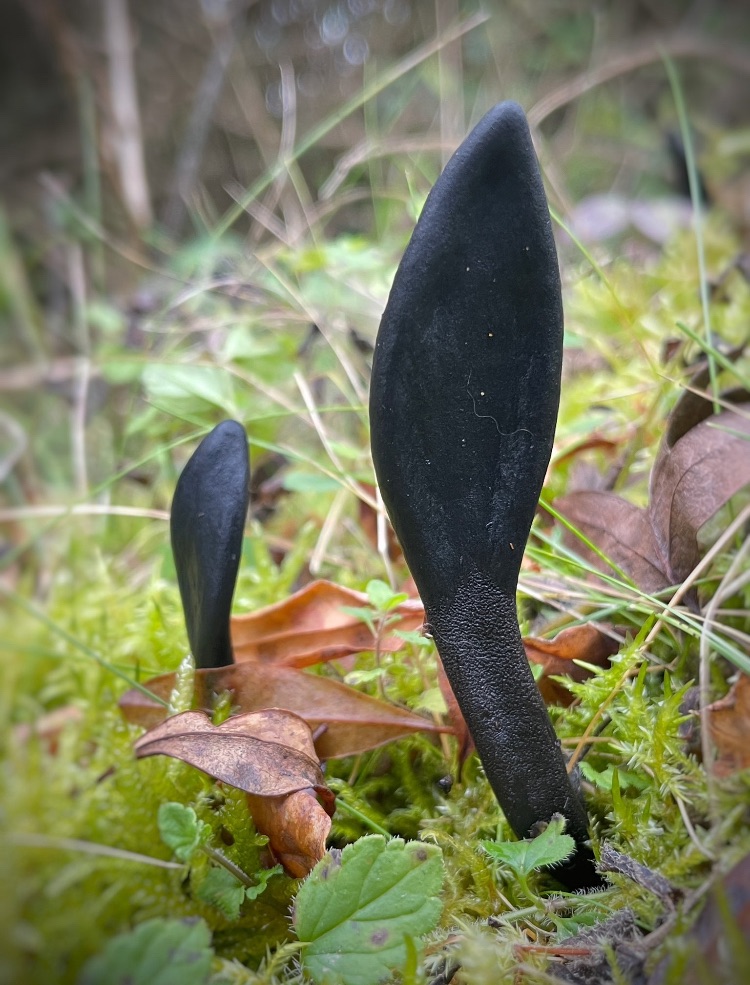
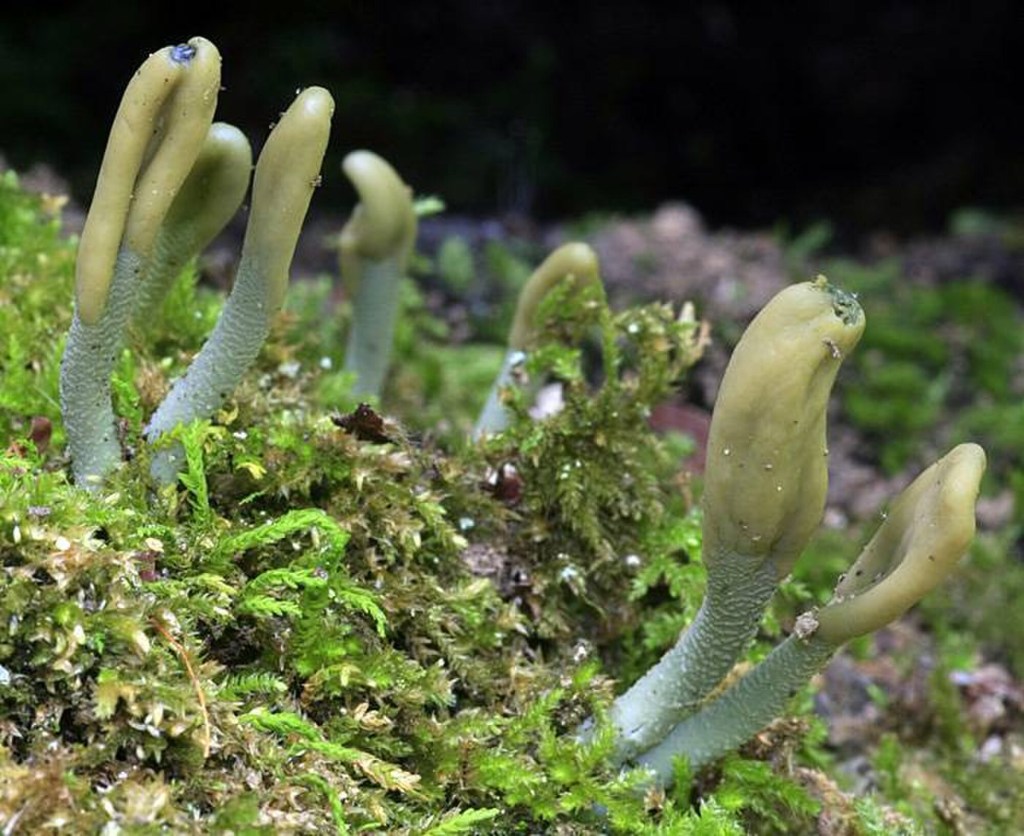
Geoglossum cookeanum stands out from the rest of the earthtongue pack with sturdy, blackish fruiting bodies 2 to 9 cm tall and a fertile head occupying half or more of the length and merging gradually into a scurfy, often brownish stem.
Its banana-shaped spores measure 52 to 71 μm, turning dark brown with 7 septa early on, and paraphyses feature a chain of swollen, pear-shaped cells at the tip.
This species is commonly found in short acid grasslands and fixed sandy dunes and is particularly abundant on sandy soils, preferring the well-drained, nutrient-poor soil.
(Linas Kudzme)
Microglossum viride: The Green Earthtongue
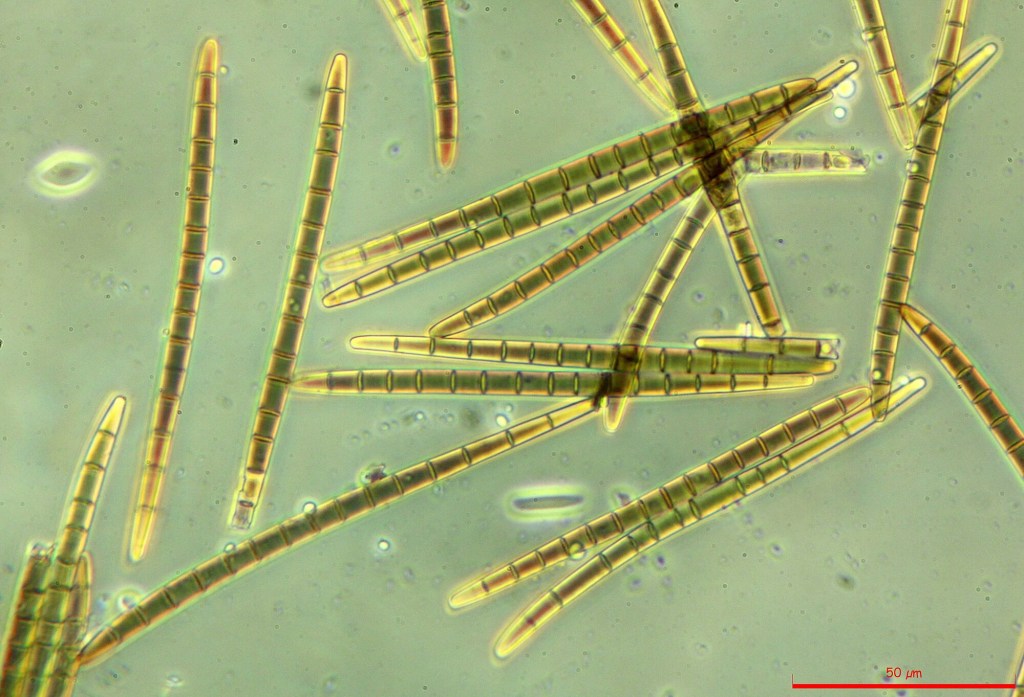
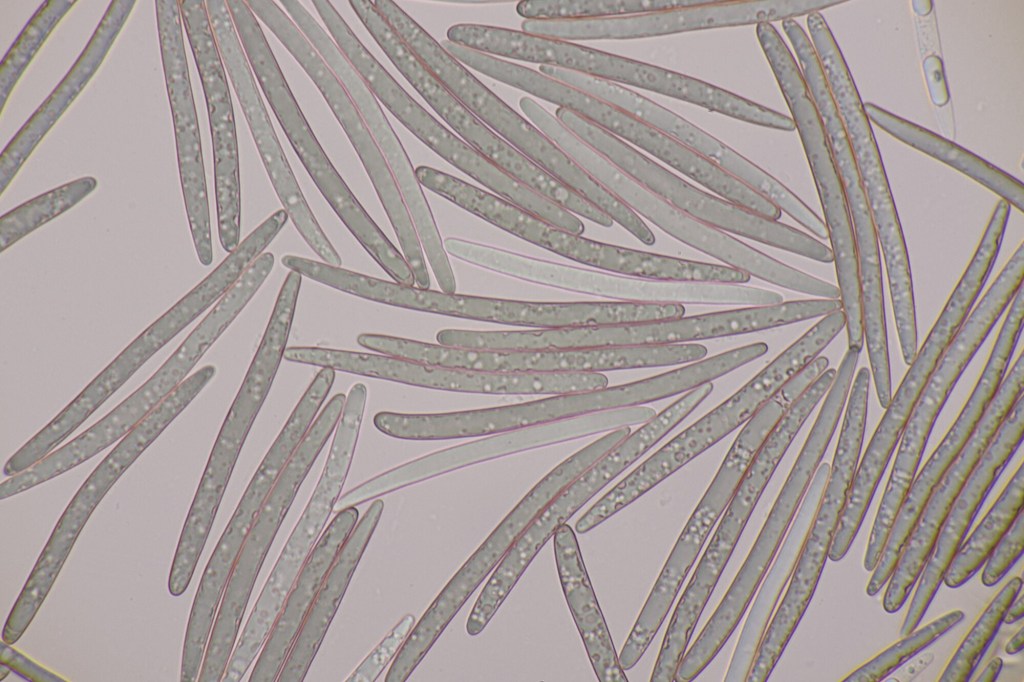
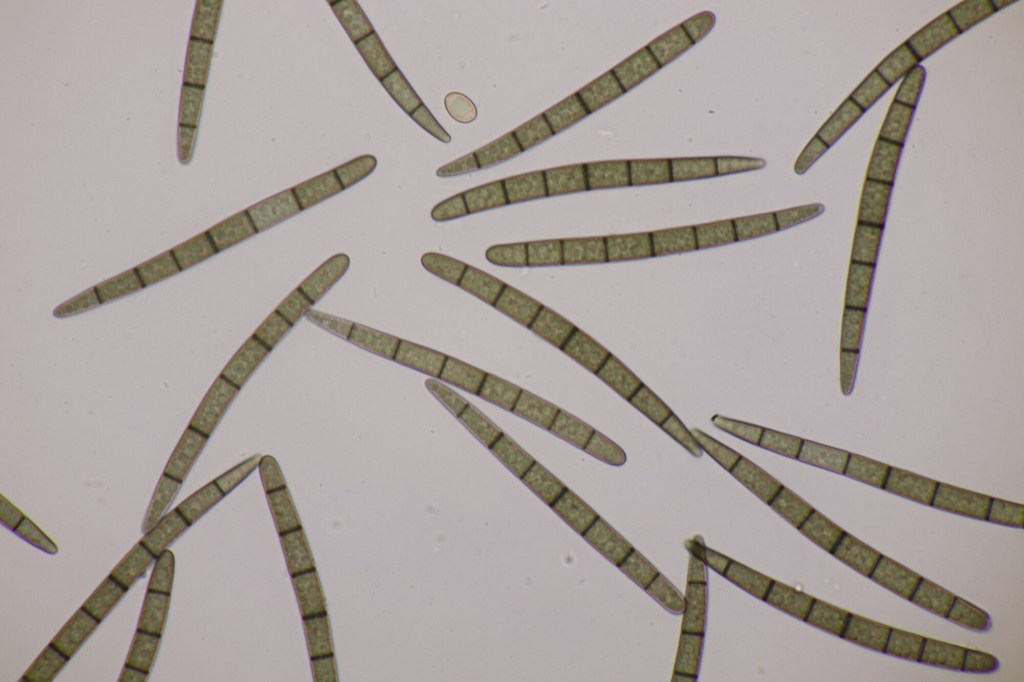
Adding a splash of colour to the typically dark earthtongue tribe is Microglossum viride, with its olive-green fertile head and a rough, scaly stem that can be brownish.
Reaching up to similar heights as its relatives, it has smaller ascospores (15 to 21 μm) with up to four septa and filiform paraphyses that may branch. Unlike many earthtongues that favor open grasslands, this one is more woodland-oriented, appearing in mossy forest floors or among leaf litter in deciduous or coniferous woods.
In northwest England, it’s commonly found in areas like the ancient Atlantic forest of the Lake District, where damp, shaded conditions prevail.
Threats facing Earthtongue fungi
Earthtongue fungi are increasingly rare and face a myriad of threats, here are some of the main ones:
Agricultural Intensification
This is the primary driver of their decline, as the application of phosphorus and other fertilisers to grasslands alters the soil nutrient balance, making it unsuitable for fungi which rely on nutrient-poor conditions.
Habitat Loss and Land Conversion
The destruction or conversion of old, semi-natural grasslands for agriculture, development, or re-seeding eliminates the specific habitats where these fungi grow.
Habitat Neglect / Rewilding
When grassland management, such as grazing or mowing, is abandoned, the vegetation becomes “rank” (too thick / tall), which causes earthtongues to disappear from an area.
Environmental Changes
Climate change, including global warming and increased droughts, poses a risk to the damp habitats they prefer.
Pollution
Atmospheric and land pollution can negatively impact the delicate ecological balance these fungi require.
Lack of Awareness
Because they are small, easily overlooked, and often require microscopic examination for identification, they are frequently not considered in conservation efforts.
For identification, a hand lens or microscope is invaluable, as macroscopic features alone can be misleading. Joining local groups like the North West Fungus Group can provide guided forays and expert insights.
Glossary of Geoglossaceae
Agglutinated
Firmly stuck together to form a mass.
Ascomycete
A member of the fungal phylum Ascomycota, characterised by producing spores (ascospores) inside sac-like structures called asci.
Ascospores
The sexual spores of ascomycete fungi, produced inside asci.
Asci
Microscopic sac-like structures in which ascospores are formed in ascomycetes.
Fertile head
The upper part of the earthtongue fruiting body where the asci and spores are produced (also called the hymenium or cap).
Filiform
Threadlike.
Fruiting body
The visible, spore-producing structure of a fungus (in earthtongues, the tongue- or club-like structure that emerges from the soil).
Geoglossaceae
The family of fungi that includes most earthtongues (also known as earth tongues or earth clubs).
Hirsute / Hairy
Covered with conspicuous, stiff hairs (setae).
Hyphae
Plural of Hypha, each of the branching filaments that make up the mycelium of a fungus.
Microscopic features
Characters visible only under a microscope, such as spore size and shape, septa (cross-walls), paraphyses, and setae.
Mycelium
The root-like structure of a fungus, consisting of a mass of branching, thread-like hyphae.
Paraphyses
Sterile, hair-like filaments that grow among the asci in the fertile head; their shape, colour, and arrangement are important for identification.
Rugose
Having a wrinkled or roughened surface.
Saprotrophic
Deriving nutrition from dead organic matter (e.g., decaying plant material); earthtongues are saprotrophs.
Scurfy
Covered with small, loose scales or flakes.
Septa (plural of septum)
Cross-walls that divide fungal spores or hyphae into compartments. Many earthtongue spores are multiseptate (have several cross-walls).
Setae
Stiff, bristle-like hairs, often pigmented and visible on the surface of the fruiting body.
Tardily septate
Spores that develop cross-walls (septa) late in their development, rather than immediately.
μm
Symbol for micron, a metric unit of measurement where one micron is equivalent to one one-thousandth of a millimetre [1 micron (1μ) = 1/1000 mm] or 1 micron (micrometer) = 1/1,000,000 of a metre.
Unimproved grassland
Grassland that has not been heavily fertilised, ploughed, or reseeded, and therefore retains a high diversity of plants and fungi.
Upland acid grassland
Grassland on higher ground with acidic, nutrient-poor soils, typical of many areas in northwest England such as the Pennines and Lake District.
Septate spores
Spores that have one or more cross-walls (septa), often used as a key identification feature in earthtongues.
(Holger Krisp)
Speaking in Tongues
By the author
From the damp green sphagnum and rush,
they rise like small black tongues,
licking the air after the rain.
Whispering secrets the soil won’t tell aloud,
speaking in spores,
we know not what they say,
silent sermons on decay?
Recycling the fallen into new life
If you enjoyed this you can show your appreciation by buying me a coffee, every contribution will go towards researching and writing future articles,
Thank-you for visiting,
Alex Burton-Hargreaves
(Jan 2026)
 Northwest Nature and History