The Ecology and Biology of the White-Striped Darwin Wasp, Including a Broader Look at Parasitoid Wasps and their Beneficial Nature as Biological Pest Control Agents
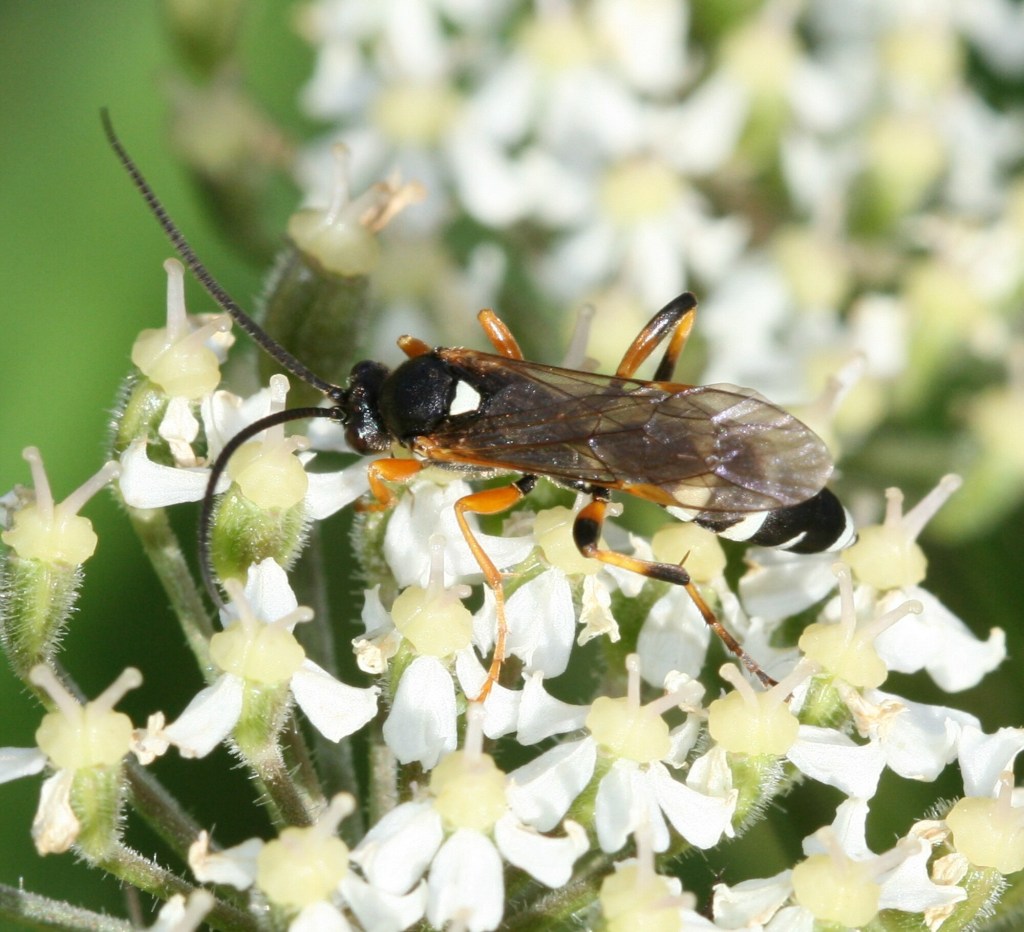
Ichneumon sarcitorius is a common and strikingly patterned parasitic wasp belonging to the vast Ichneumonidae family.
Often referred to as a ‘Darwin wasp’ this species is a vital component of its ecosystem, serving as a specialised natural predator that helps manage moth populations in a wide variety of habitats throughout the British Isles.
The Story Behind the Name
Ichneumon sarcitorius’ name reflects both its ancient history and its specific biological role. The genus name, Ichneumon, is derived from the Ancient Greek word ikhneúmōn, (ἰχνεύμων) which translates to ‘tracker’ or ‘searcher’. This term was famously used by Aristotle as early as 343 BCE to describe wasps that hunt and track down their prey. In medieval legends, the ‘ichneumon’ was even described as a mythical enemy of dragons, in the modern scientific context it perfectly describes the female’s relentless search for host caterpillars.
The specific epithet, sarcitorius, was officially assigned by Carl Linnaeus in 1758 and is derived from the Greek sarx ‘flesh’ and the Latin sartor ‘tailor’ referring to its flesh-piercing, needle-like ovipositor, or “stinger” as it is often presumed to be.
Commonly, this insect is known as the ‘White-striped Darwin Wasp’. The ‘white-striped’ portion of the name referring to the distinctive white band found on the abdomen of the female, while ‘Darwin wasp’ is a broader vernacular term proposed by scientists to honour Charles Darwin. As described in this fascinating article by Michael Roberts (which inspired me to write this) Darwin famously used the Ichneumonidae family as an example in his writings, noting that the “misery” of their parasitic life cycle made it difficult for him to believe in a world designed by a purely benevolent creator.

Identification
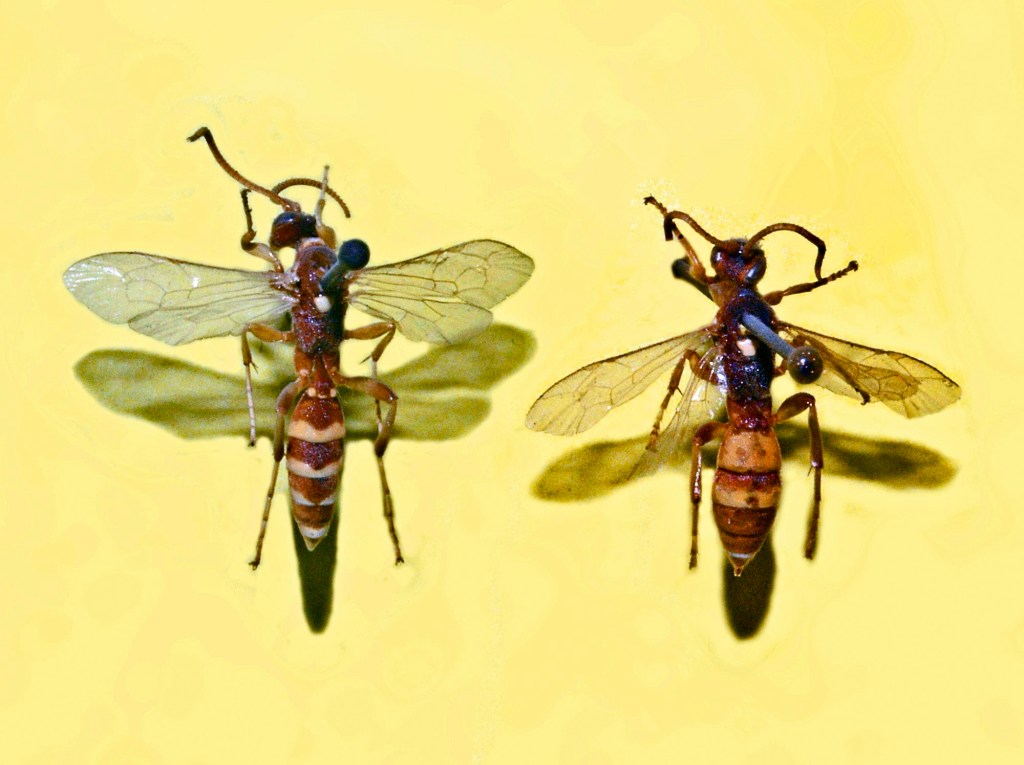
One of the most notable characteristics of I. sarcitorius is its significant sexual dimorphism. Females, which typically reach lengths of 10 to 13mm, are easily recognised by their white-striped appearance and feature a black abdomen marked with two bold red-orange bands and a distinct white band near the tip, complemented by red legs and tricolored antennae.
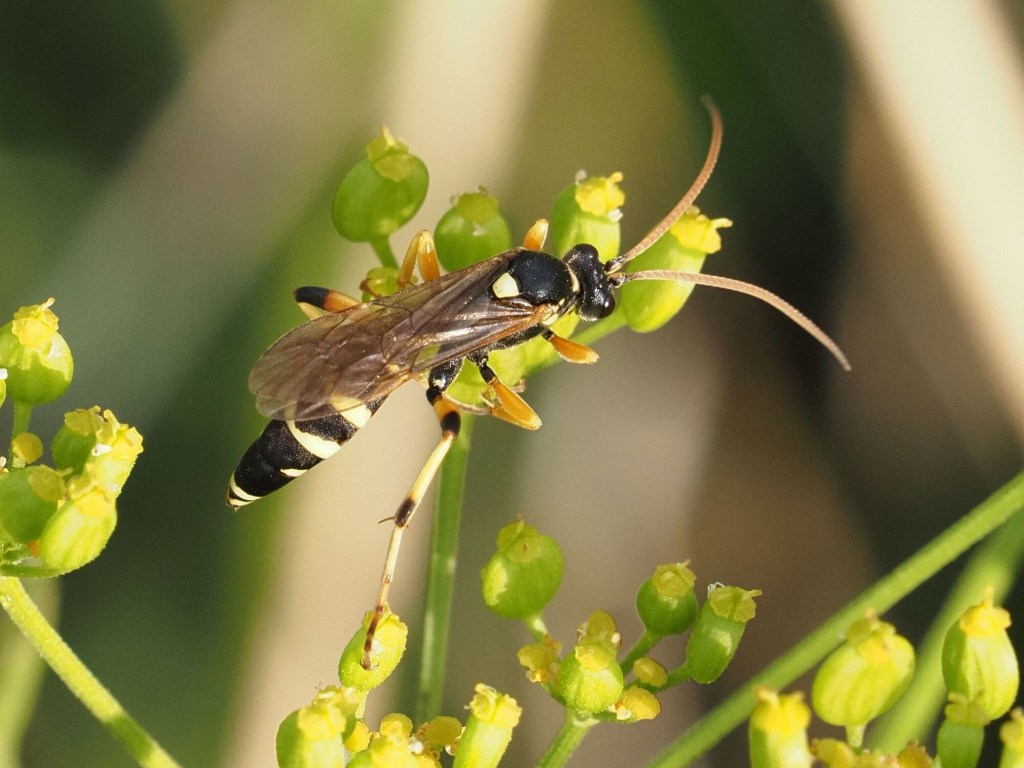
In contrast, the males are generally longer, reaching up to 15 millimeters, and present a different color palette, appearing black with yellow or white banding on their abdomen and legs. Both sexes possess the characteristic ‘wasp-waist’; a narrow constriction between the thorax and abdomen, though the female’s ovipositor is relatively short and is often tucked away.
Life Cycle and Ecology
This wasp’s life cycle is a fascinating example of specialised parasitism. Fittingly for a tracker the female hunts for the larvae or pupae of noctuid moths, and once a host is located, she deposits an egg inside it.
The developing larva then feeds on the internal tissues of the host, eventually leading to its death before the adult wasp emerges. Unlike many other insects that overwinter as eggs or larvae, the female I. sarcitorius overwinters as an adult, allowing her to emerge early in the spring to begin the search for new hosts before they are eaten by somebody else.
In the northwest these wasps are frequently spotted from May through to October, often frequenting the flowerheads of umbellifers like Hogweed or Cow parsley in woodlands, hedgerows, and gardens.
Despite their somewhat formidable appearance, they are entirely harmless to humans and pets, for they lack a true stinger and cannot sting people, indeed for gardeners and farmers they are actually highly beneficial allies because, by naturally culling the populations of leaf-munching caterpillars that can devastate crops and vegetable patches, they act as an efficient, chemical-free biological control agent.
To further understand this species, it’s helpful to look at the specific hosts it manages and how you can encourage its presence in your own environment.
Target Moth Species
As a specialised parasitoid, Ichneumon sarcitorius primarily targets moths from the Noctuidae, Erebidae, and Notodontidae families. These families include many species that gardeners and farmers often consider significant pests due to their voracious appetites during the caterpillar stage.
Specific hosts documented for this wasp include:
Turnip Moth, Agrotis segetum, a member of the Noctuidae family, its larvae (called cutworms) are notorious for damaging the roots and lower stems of various vegetables.
Gypsy Moth, Lymantria dispar, belonging to the Erebidae family, these caterpillars are known for massive defoliation of trees in both woodland and urban settings.
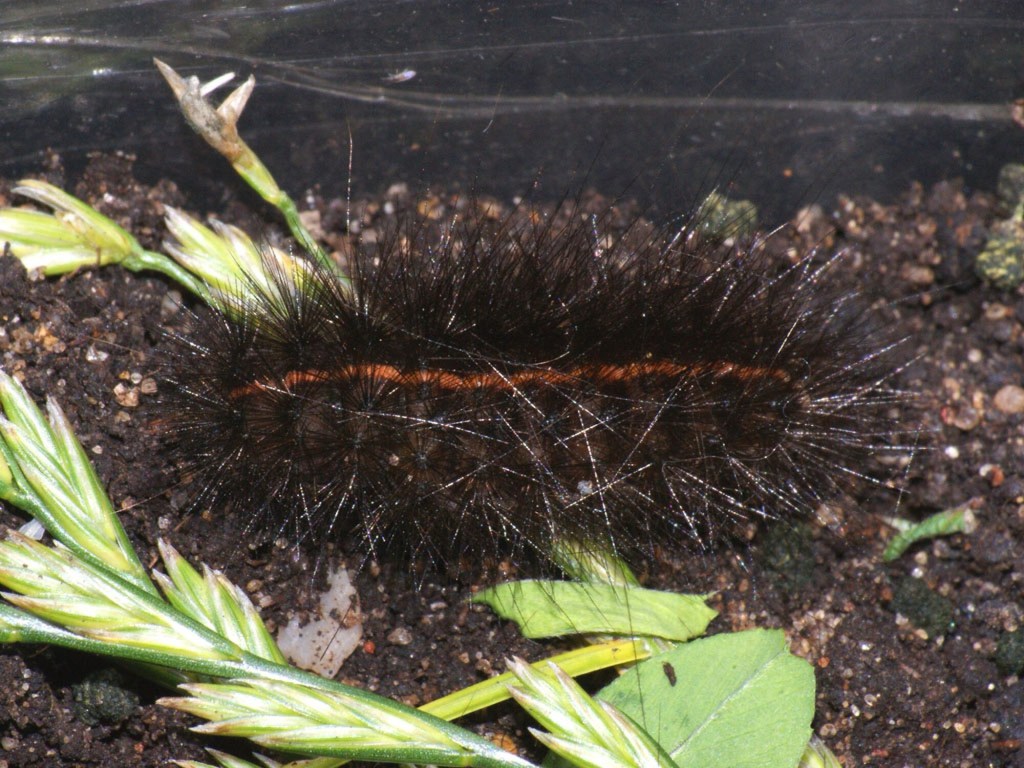
White Ermine, Spilosoma lubricipeda, a member of the Arctiidae subfamily (within Etrbidae), these ‘woolly bear’ caterpillars are common garden sights.
By focusing on these leaf-munching pests, the wasp acts as a natural stabiliser for local plant life.
Attracting Darwin Wasps to Your Garden
You can make your garden a safe haven for these beneficial wasps by providing the specific resources they need as adults. Since they do not build nests, their presence depends entirely on the availability of food and suitable hosts.
Planting for Nectar
Adult I. sarcitorius feed primarily on nectar and pollen, having a strong preference for flowers in the Umbellifer (Carrot) family, which have flat, open flowerheads that make nectar easily accessible to their relatively short mouthparts.
Consider planting;
- Herbs: Dill, Fennel, Parsley and Coriander.
- Wildflowers: Hogweed (Heracleum sphondylium), Cow parsley, and Yarrow.
- Late-Season Blooms: Since adults are active until October, plants like Asters and Goldenrods provide vital energy for overwintering females.
Habitat Management
To keep these wasps around, avoid using broad-spectrum insecticides, which kill both the ‘pests’ and the beneficial predators that control them. Providing a shallow water source, such as a birdbath filled with pebbles so they can land and drink without drowning, is also highly effective. Finally, leaving some wild corners with native vegetation or leaf mulch provides the necessary shelter for females to overwinter successfully.
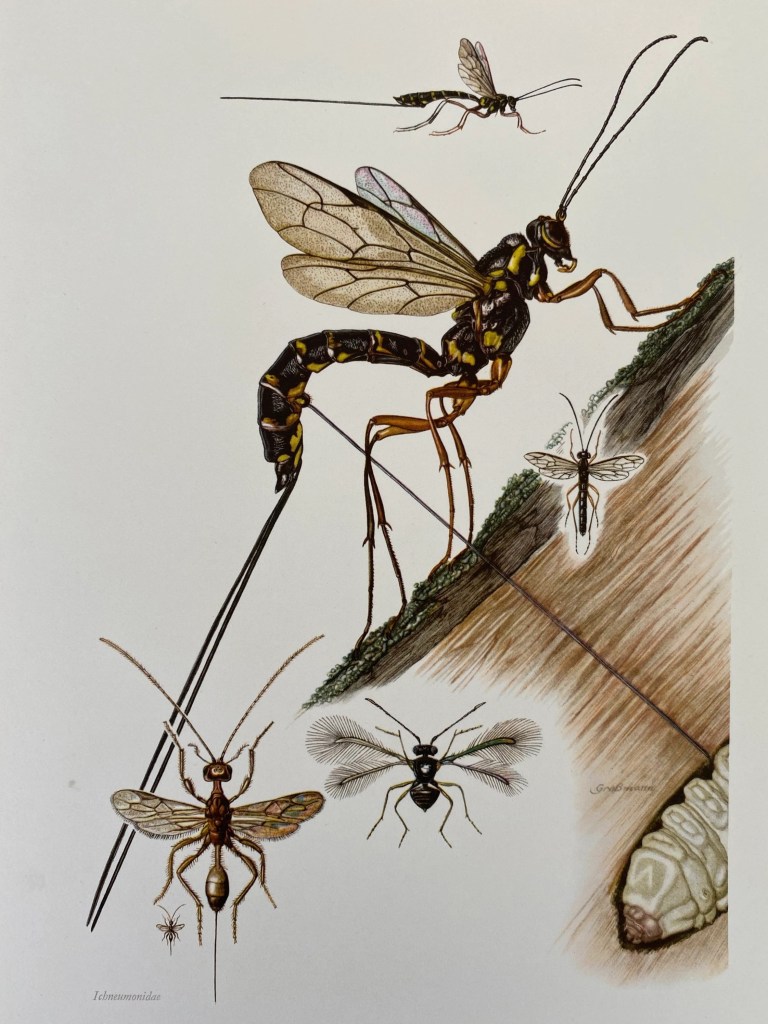
Twas the Night Before Waspmas
By Hannah Davis & Sloan Tomlinson
Twas the night before Waspmas,
and all through their nests,
wasp larvae were munching on paralysed guests.
Eggs were stabbed into young insects with care,
In the hopes that wasp larvae soon would be there.
Soon larvae were nestled all snug in their host,
eating round vital organs, or else they’d be toast.
And each caterpillar, beetle, spider, and bug,
had a wasp larva giving it a nice friendly hug.
Arose from the pupa, NO butterfly,
but instead a nice orange wasp, nimble and spry.
Away to the new host she flew in a flash,
a caterpillar in which to lay her new egg cache.
Some beetle’s insides will help wasp larvae grow,
whilst munching their innards, the beetles won’t know.
Oh, what wondrous parasitoids these wasps tend to be,
their hosts cannot hide, there’ll be no place to flee.
They’ll use mind control and viruses, all packed in their venom,
their abilities are astounding, they’re the ultimate phenom.
No spider too scary, no insect too tough,
they’ll paralyse them all with barely a scuff.
Now, BLACUS! now, BAEUS! now, MIRAX and SCOLID!
On, CHARMON! on BRACON! on, GELIS and CHALCID!
From the top of the trees, to the soil down below,
the wasp moms are coming, now go go go,
Happy Waspmas to all, and to all a good night!
If you enjoyed this you can show your appreciation by buying me a coffee, every contribution will go towards researching and writing future articles,
Thank-you for visiting,
Alex Burton-Hargreaves
(March 2026)
 Northwest Nature and History
Fantastic
LikeLiked by 1 person