The Ice Age and Glacial Erratics
The Ice Age
As with all parts of the British isles the Northwest of England owes the current shape and form of its landscape to the geological processes of many hundreds of millions of years, some of which we‘ll look at in this series of articles. The most obvious geological influence on this landscape must be the last ice age.
Glacial action
Most recently, (although geological processes can take such a long time that ‘recently’ is subjective!) the greatest changes to this landscape were created by the action of glaciers during the last ice age.
The last period of glaciation, which ended around 12,000 years ago, left scarcely any of these parts unscathed, with only higher areas like Pendle, some of the hills around Rossendale, and the peaks of Furness untouched. All the rest of this vast area was held in a firm, icy grasp of a incredulously huge ice cap.
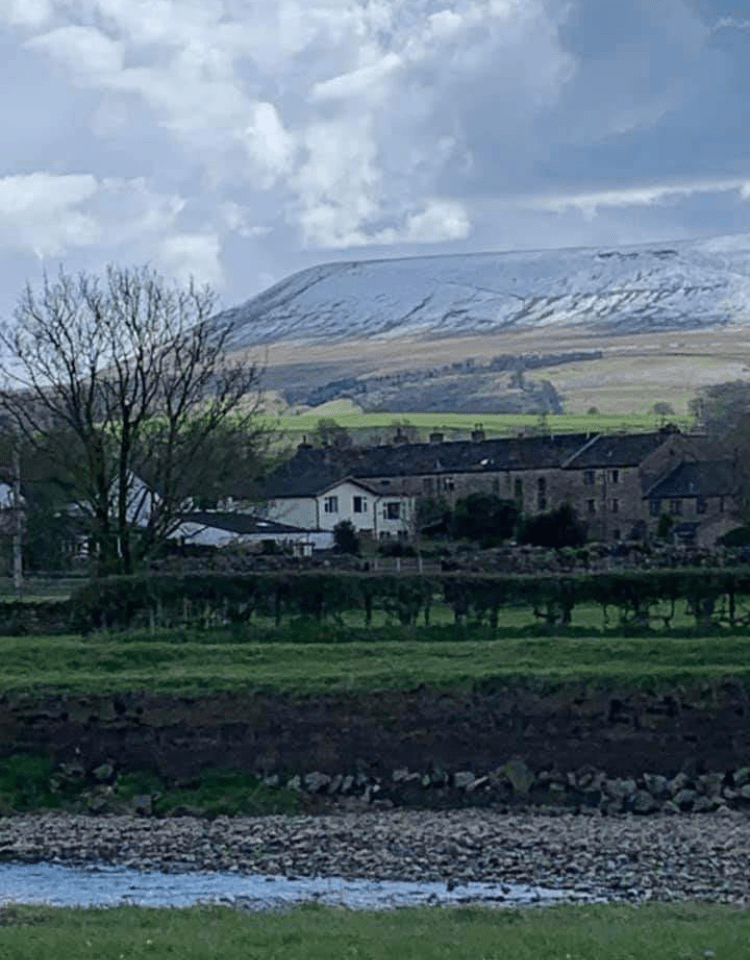
This ice cap was not stationary, but gradually on the move, grinding and gouging the land beneath much like a millstone will grind grain into flour.
Deep, wide valleys were carved, where before had been none, smaller hills were erased from the surface of the planet entirely, it was as if the gods of ice and snow were playing with sand, reshaping the earth to their whims and desires.
The slow, yet inexorable movement of these ice sheets, some of them hundreds of metres deep, scoured clear billions and trillions of tons of rock, earth, and indeed everything in their path, and deposited this in the valleys and across the coastal plains as a thick layer of clay, specifically called ‘boulder clay’ by geologists.
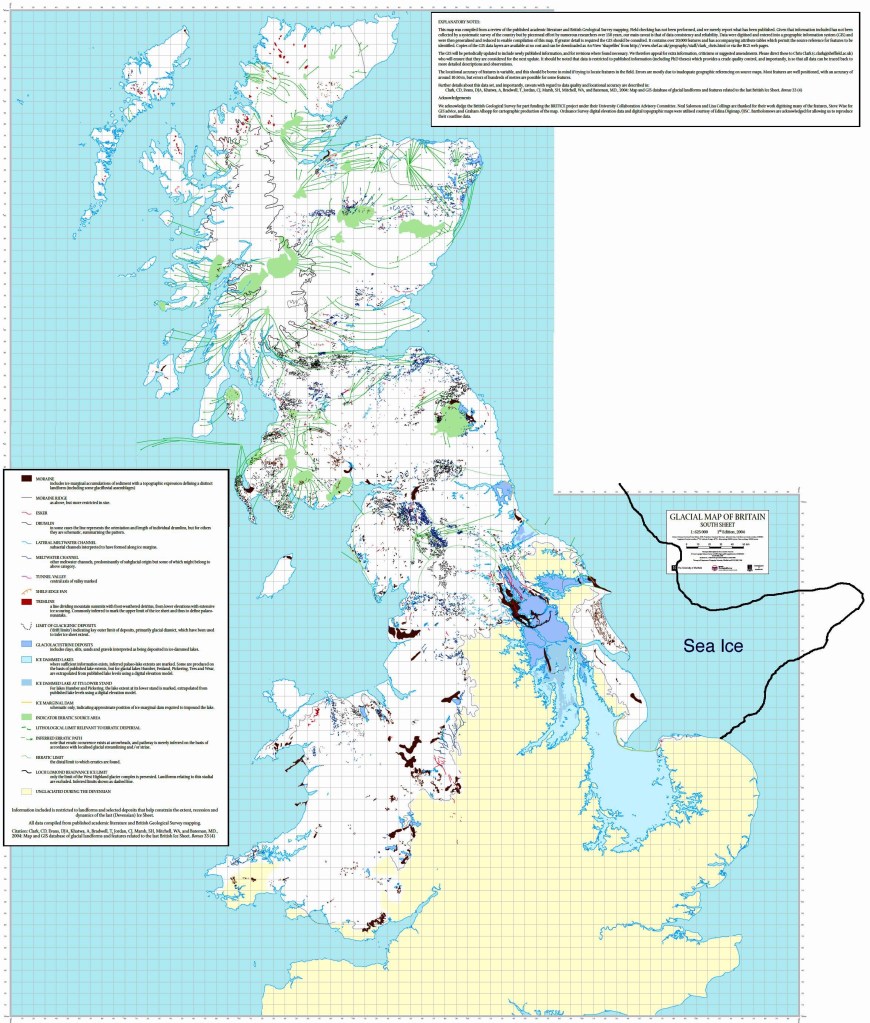
These ice sheets also left behind larger fragments of rock, called ‘glacial erratics’
Glacial erratics
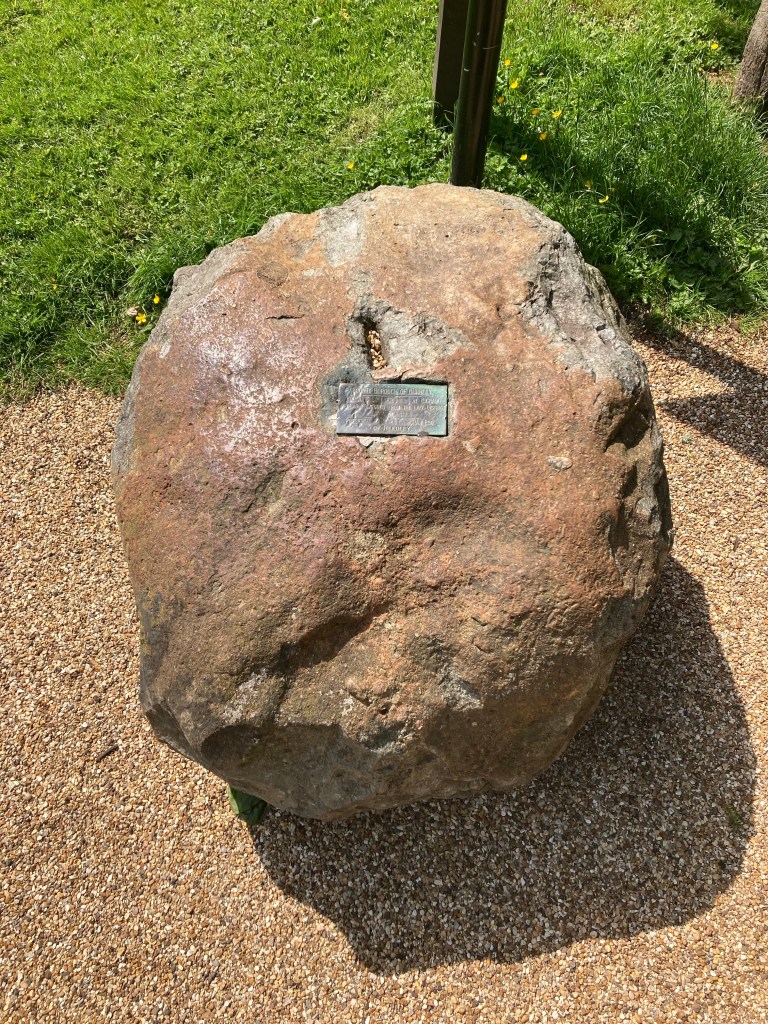
Called ‘erratics’ after the irregular nature of their placement these larger fragments were dropped by the glacial ice sheets after they had become too thin, and therefore weary, to lug about such heavy loads. They can be found dotted all about the land and are often conspicuous not just by their haphazard location, but also by the rock they are made from, which will match that of their birthplace and not of their current place of residence.
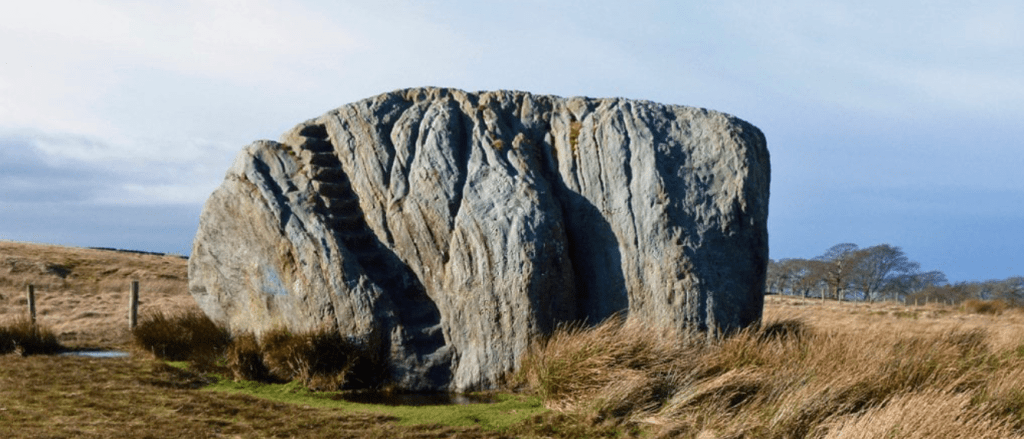
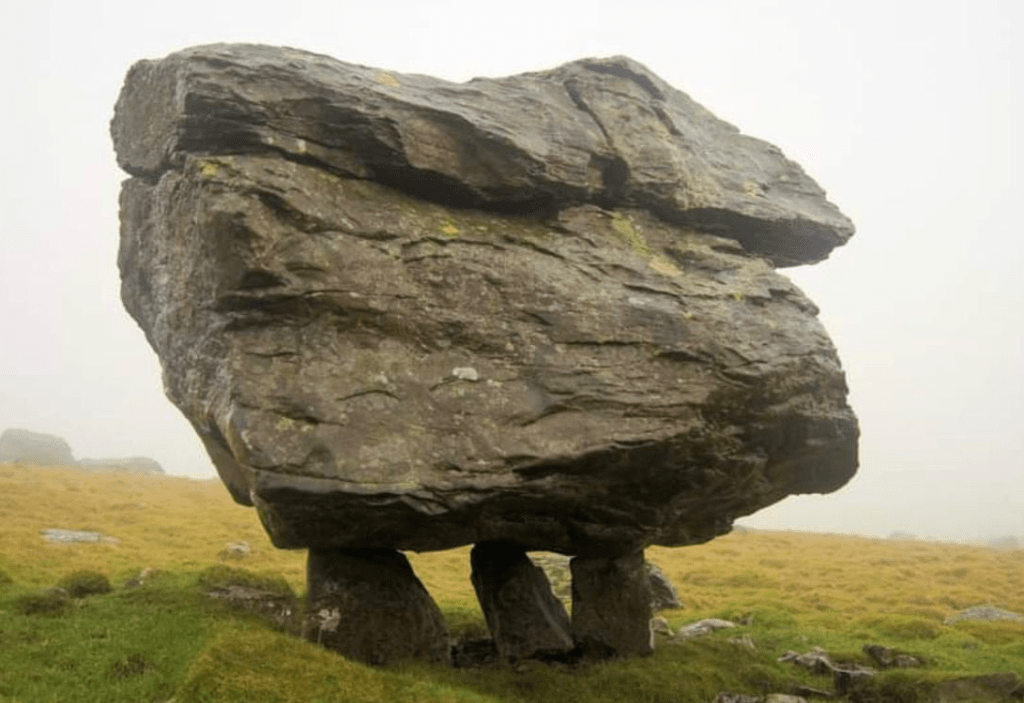
Some have travelled long distances indeed, one large boulder, found near Burscough Junction, originated in Scotland. Another erratic, the Greatstone of Fourstones (see image at head of article) jumbled and tumbled about in the belly of a glacier all the down way from the Lake District, to Lowgill, on the Yorkshire border, a few miles east of Lancaster, ending up with its strata facing 90° from where it should be! And near the Yorkshire Dales town of Clapham can be found a whole field of erratics called the Norber Erratics.
Further afield can be found a glacial erratic in the grounds of Towneley park, Burnley, and near Southport the ‘Criffel Stone’, which was discovered five metres below ground level during the construction of a pumping station in 1959. Geologists recognised this erratic as being made from a type of granite, a volcanic stone, which is only found the Dalbeattie area of Dumfriesshire, where it is still quarried today.
It goes without saying that if it were not for the actions of millions of years of glaciers, the British isles, and the Northwest of England in particular, would certainly look very different to the landscape we know and live in today.
A B-H

