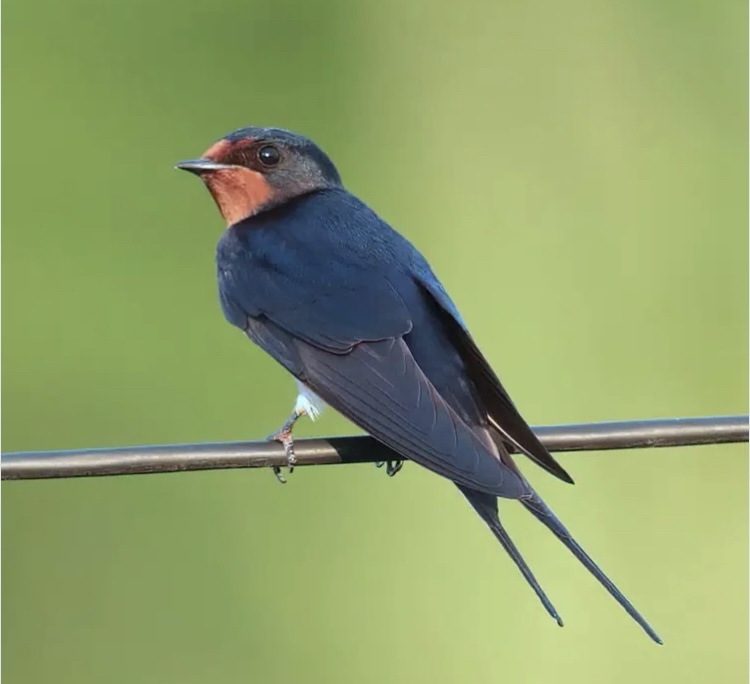
The Swallows are back in the British isles and although the saying goes “Two Swallows do not make a summer” quite a few have been seen around the country so I think we can safely say that summers on its way!
I always like to tip my hat, (so to speak as I don’t usually wear one!) and welcome them home from their winter holiday as it is good to see them back to enjoy summer with us and the sound and sight of them twittering and swooping over the fields does seem to mark a transition between seasons.
We usually spot the first Swallows here in the Northwest somewhere between the 6th and the 16th of April but this year I saw my first on the 1st, they have been recorded as arriving earlier each year though.
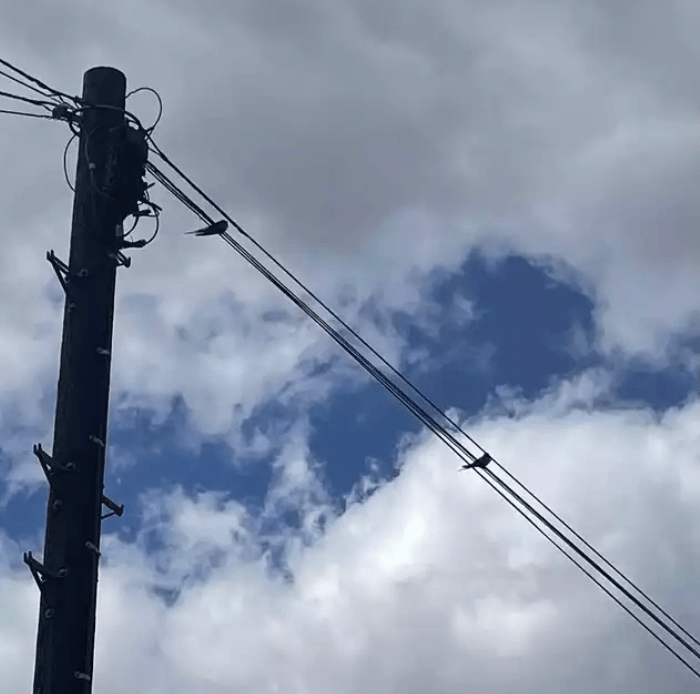
Migration
Hirundines, which is the name for the family which contains Swallows, Swifts and Martins, and comes from the Latin for Swallow hirundo, travel in families when they migrate, with the youngest birds following their parents but, rather incredibly, young swallows are still able to make the journey themselves, even if their parents have died or got lost before they had a chance to show them how to navigate.
No one is exactly sure how they manage this but it is thought that instinct plays a big part, as well as some ability to sense and utilise the earth’s magnet fields. Most animals, including humans, have the mineral Magnetite in their skulls and one theory is that this gives birds a form of internal compass. It is quite astounding when you realise the kind of journeys they do make as on their way they pass over deserts and seas and may have to cope with all sorts of inclement weather too, and when you see the tiny size of them, you can fit two in the palm of your hand, it’s a wonder how they can achieve this at all!
It takes weeks for the birds to make their journey here for the summer and their arrival back in the British isles is good news for us on the weather front as they only decide to return when they feel like it will be warm enough for them to be able to find a plenty of food here, as bad weather on the way or when they arrive here can be fatal for these little birds.
Protected
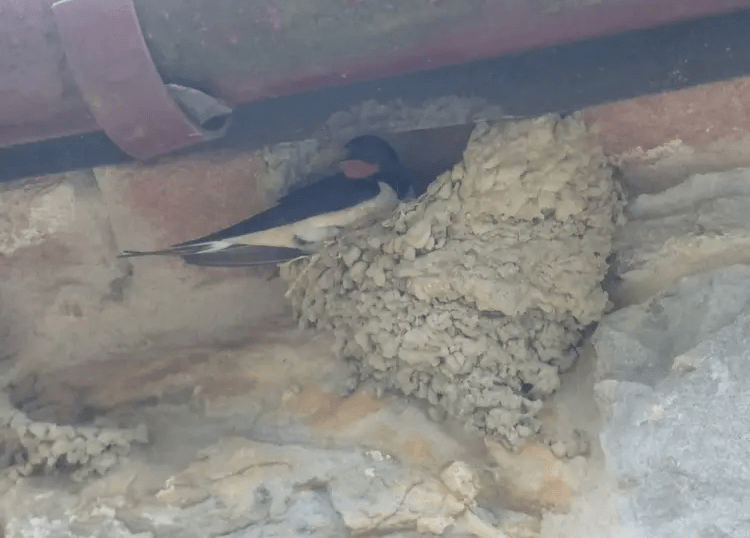
Swallows and their nests are fully protected under U.K. law so it is illegal to remove their nests, in 2018 there was a petition to grant legal protection to their nests and parliament’s response was this:
‘The primary legislation protecting wild birds and their nests in England and Wales is the Wildlife and Countryside Act 1981. All wild birds’ nests, with some limited exceptions in extraordinary circumstances, are fully protected and it is an offence to destroy them while they are in use or being built.
In 2015 a woman from Essex was fined for destroying Swallow nests on her house and, surprisingly, there are still companies that sell equipment for removing their nests but most people will tolerate a bit of bird crap on their car or laundry just for the sake of seeing them make their home alongside ours.
Encouraging Swallows
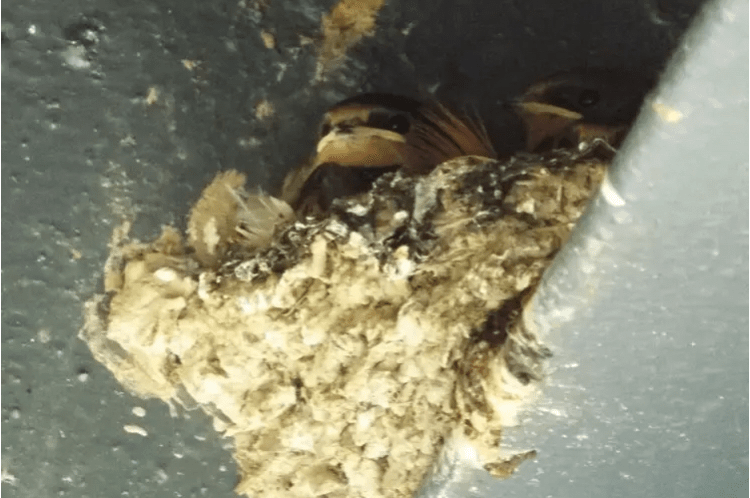
If you want to encourage Swallows to nest on your house, outbuilding, shed etc, which is worth doing just to have them around for their pleasant twittering and aerial antics, let alone the fact that they are expert predators of flying insects such as midges, than there are several ways of doing this. One way is to build artificial nests or even buy and place them in suitable places. They usually nest under the eaves of buildings in conditions that replicate the caves and cliffs they nested in before humans started constructing large buildings and they have several requirements, these are;
Shelter from rain
Swallows build their open-topped nests out of mud so obviously try to avoid them getting soaked by any showers, they also need mud available to construct these intricate structures so, unless there’s a hosepipe ban this summer, it will help them to splash a bit of water about here and there.
Windproof
They will avoid building nests on exposed gable ends which may face the brunt of any prevailing winds, not only do gusts of wind make it hard for them to fly in and out but they will chill the chicks too.
Out of direct sunlight
Overheating is of as much of a risk for Swallow chicks as chilling so all birds, including Swallows, avoid building nests in places which face directly south or in places which are in the sunlight all day.
Disturbance
Swallows can be surprisingly tolerant of human activity, they have been living with us for thousands of years after all so have got used to our coming and going, they can get stressed out if too much changes around the immediate vicinity of their nest though and will abandon their chicks if the disturbance is too persistent for them.
Cats
Cats are adept predators and are fully capable of ambushing Swallows mid flight, especially when they are coming and going from the nest, I know from this from bitter experience when we parked our car underneath a couple of low nests in an outbuilding and our cat used the car roof as a perch to leap and catch a female swallow as it was flying in to feed its nestlings.
They couldn’t be saved in time as we only found the dead Swallow after a day, they have also been known to jump from open windows after passing Swallows so it’s a good idea, for the cat’s sake at least, to keep nearby windows shut.
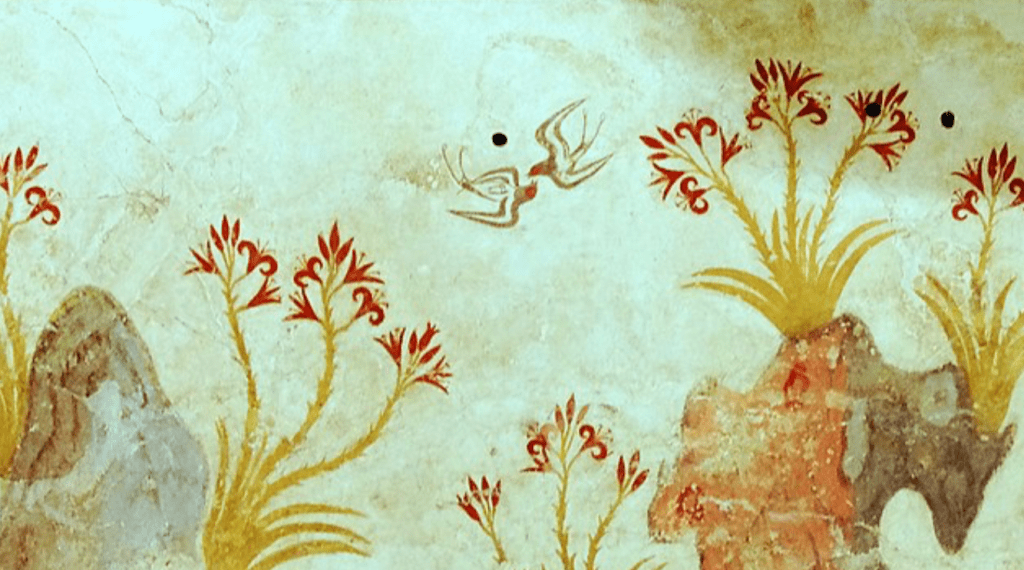
’The Swallow’ by American naturalist and poet John Burroughs (April 3rd 1837 to March 29th 1921)
At play in April skies that spread
Their azure depths above my head,
As onward to the woods I sped,
I heard the swallow twitter;
Oh, skater in the fields of air,
On steely wings that sweep and dare,
To gain these scenes thy only care,
Nor fear the winds are bitter.
This call from thee is tidings dear,
The news that crowns the vernal year,
‘Tis true, ’tis true, the swallow’s here,
The south wind brings her greeting;
Thy voice is neither call nor song,
And yet it starts a varied throng
Of fancies sweet and memories long, —
It sounds like lovers meeting.
I know thou dost not kiss on wing,
I know thou dost not pipe or sing,
Or bill or coo, or any such thing,
And yet these sounds ecstatic;
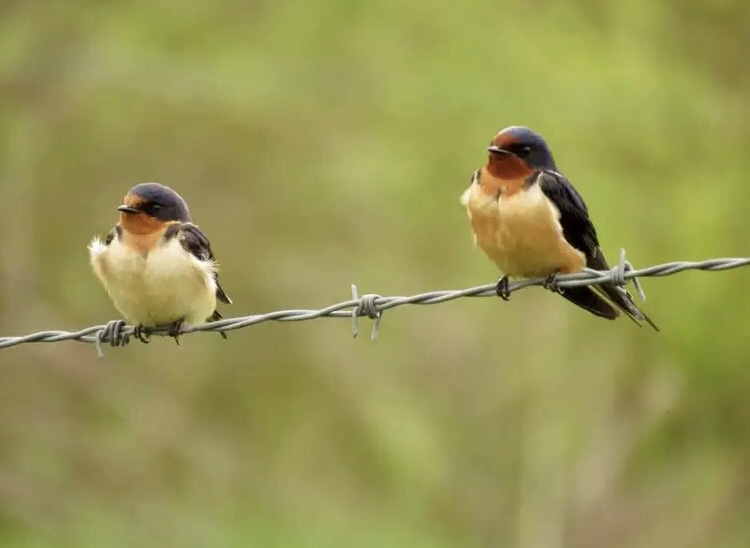
Thy ruddy breast from over seas,
Like embers quickened by the breeze,
Now feels the warmth of love’s decrees
That make thy needs emphatic.
Ah, well i know thy deep-dyed vest,
Thy burnished wing, thy feathered nest,
Thy lyric flight at love’s behest,
And all thy ways so airy.
Thou art a nursling of the air,
No earthly food makes up thy fare,
But soaring things both frail and rare, —
Fit diet of a fairy.
I see thee sit upon the ground
And stoop and stare and hobble round,
As if thy silly legs were bound,
Or it were freezing weather;
Thou hast but little need of feet, —
To gather mortar for thy seat,
To perch on wires above the street,
Or pick up straw or feather.
Kind nature gave thee power of flight,
And sheen of plume and iris bright,
And everything that was thy right,
And thou art well contented;
In August days thy young are grown,
Then southward turn to warmer zone,
And follow where thy mates have flown,
But leave our love cemented.
Soon I shall be publishing an article about another of our summer visitors, the Screaming, Soaring Swift, once known as the ‘Devil’s Bird’, including the famous poem by Ted Hughes ‘Swifts’.
Dedicated to my lovely wife Louise on our 2nd wedding anniversary.
A B-H
(First published April 2023)
 Northwest Nature and History