The Bluebell
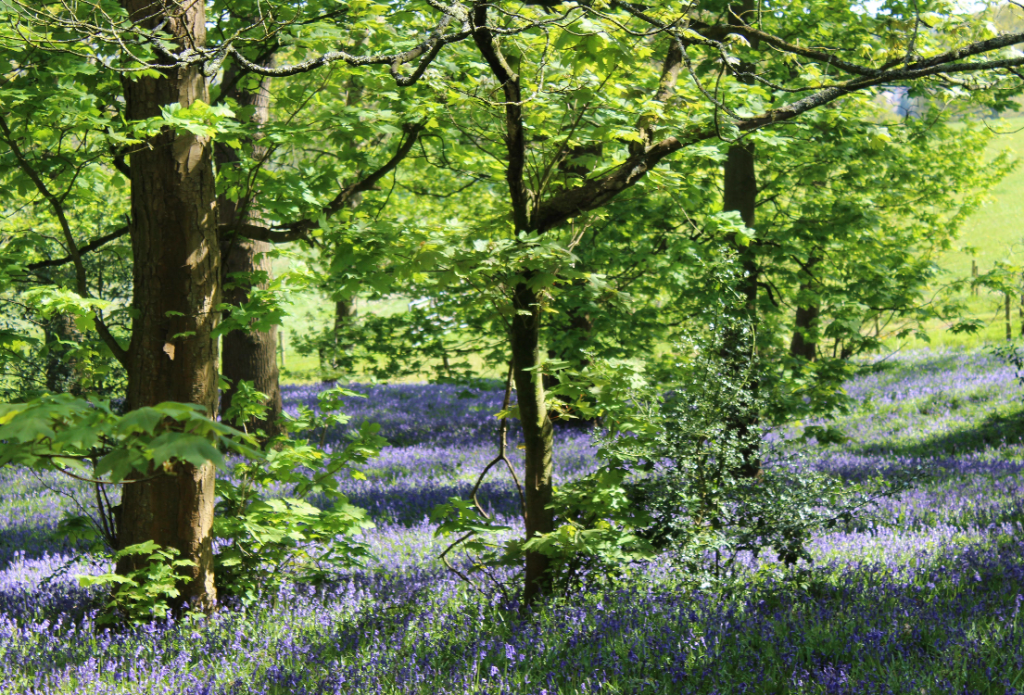
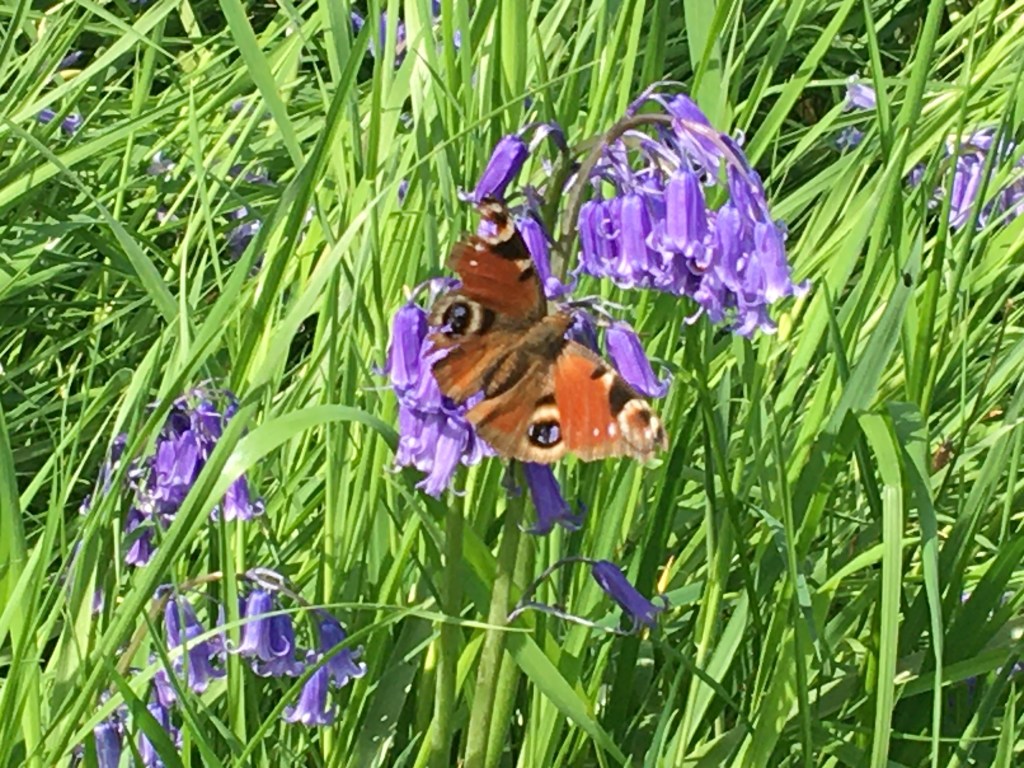
The flowering of the native British Bluebell, Hyacinthoides non-scripta, is one of the surest signs that summer is just around the corner. Along with the blooming of the Snowdrop and Daffodil it is one of the three events which mark the flow of spring from the cold of winter through to the heat of summer, from white, through yellow and eventually to blue.
Hyacinthus
The seemingly magical appearance of carpets of its deep blue flowers across the woodland floors occurs from April to May, just as the canopy of the trees is closing over and shrouding the floor in darkness, the name of the flower itself is somewhat moody and blue in origin too.
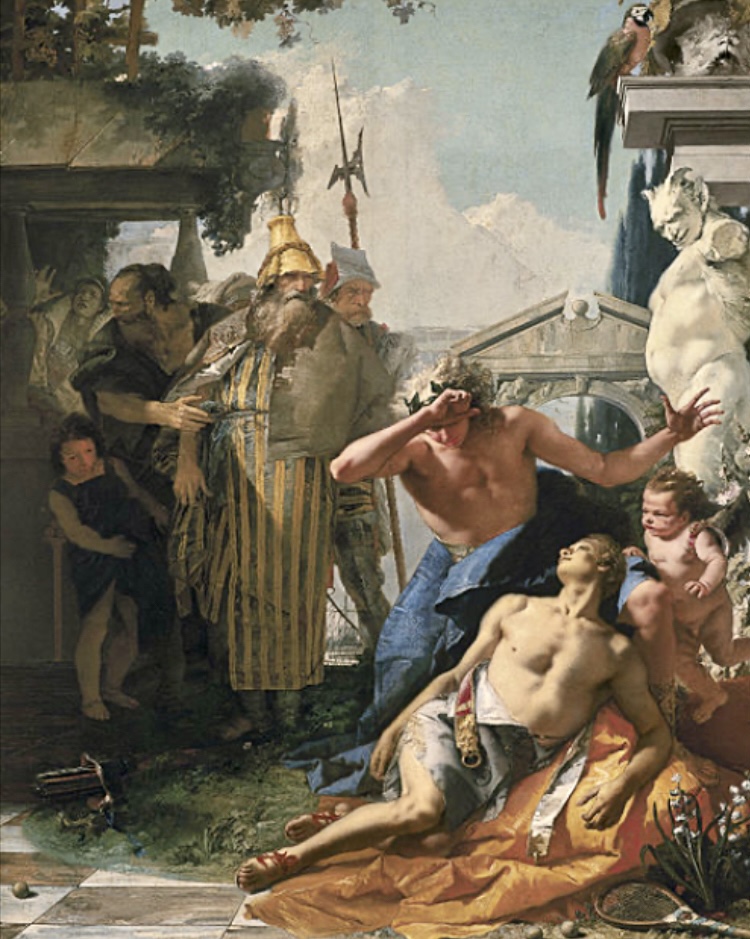
The non-scripta part of its name means ‘unlettered’ and is used to distinguish the British Wild Hyacinth (another name for the Bluebell) from the classical Hyacinth, which is a mythical flower which sprang from the blood of the dying prince Hyacinthus, and upon whose petals Apollo is said to have inscribed the letters Al Al; ‘alas alas’, to express his grief.
For most people its flowering is something to be joyful about though rather than gloomy, and the beautiful form and colour of the Bluebell is appreciated by many who will travel far to visit the places it is known to spread and colour the shade dappled woodland floor.
Where to see
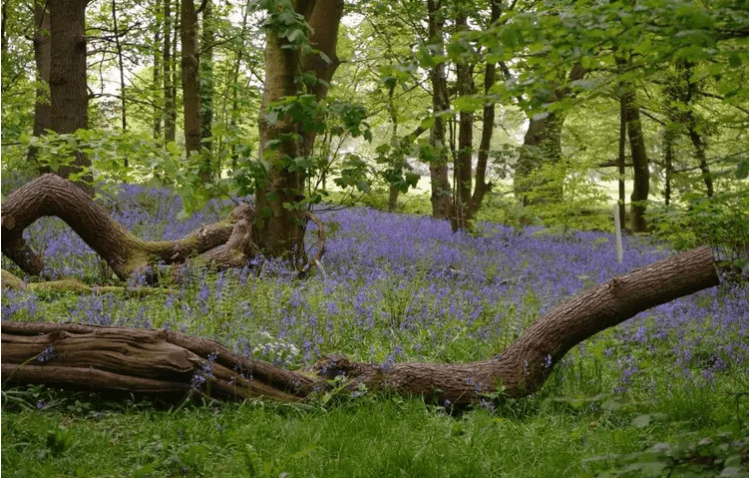
As with many of our wildflowers, such as Celandine and the Wood Anemone, both of which I have written about here before, it is now blooming earlier each year and the first flowering of the Bluebell is estimated to have advanced by at least 17 days since 2001 as summer becomes longer each year. In the Northwest there are many different places it grows and a lot of people will have their own favourite locations which they’ll travel to each spring as soon as they have heard it is blooming.
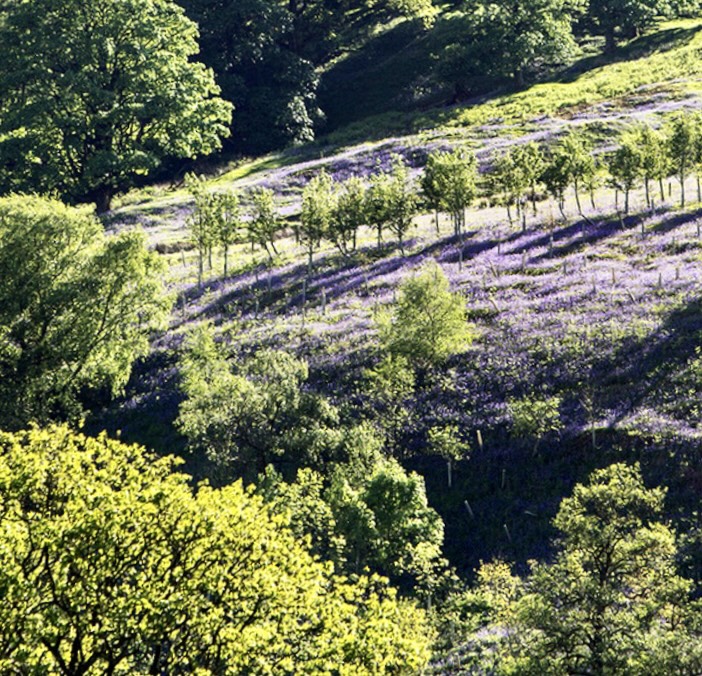
I have several favourite places for enjoying their beguiling blue carpet, one is at Spring Wood which sits above the town of Whalley in the Ribble valley and is so named as it has been a favourite place to view the spring flowers for many generations, another is on Hapton commons above Padiham. In a few places it grows in the open rather than under the shade of trees and one of these sites is on the side of Mellor Knoll, above Dunsop bridge.
‘Ghost woods’
Here the side of the fell was once covered in a swathe of native, deciduous woodland which swept all the way round to the foot of Langden valley and the Bluebells would have originally have spread under these trees, but over past decades the fences and walls surrounding this woodland grew dilapidated and allowed sheep and deer to gain access to the trees. Eventually the older trees grew mature and died off but the grazing of the animals prevented any new saplings from replacing them.
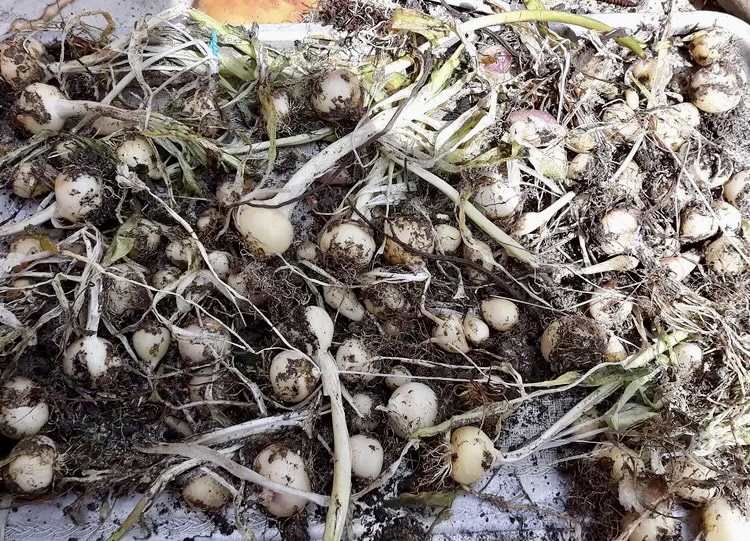
The bulbs of the Bluebells, which sheep and deer find unpalatable, remained though and still show the original extent of the woodland and recently, as part of an overall tree planting scheme across the whole of the Forest of Bowland, dozens of saplings have been planted here to bring this long lost wood back to life again.
This phenomenon of ‘ghost woods’, where woodland species of plants have remained and show evidence of ancient woodland, can be found in many places throughout the British isles and sometimes only becomes obvious when plants like the Bluebell are in bloom.
In Part Two we’ll look at the biology of the Bluebell and the problem of invasive Spanish Bluebells.
A B-H


One thought on “The Blooming of the Bluebell, Part One; When and Where”