
Types of farm machinery
This is a basic and non-exhaustive guide to some of the various bits of agricultural machinery you might see in use in the fields, trundling in front of you on a narrow country lane, or rusting away in a farmyard around the countryside of Northern England.

Balers, little, square, and round
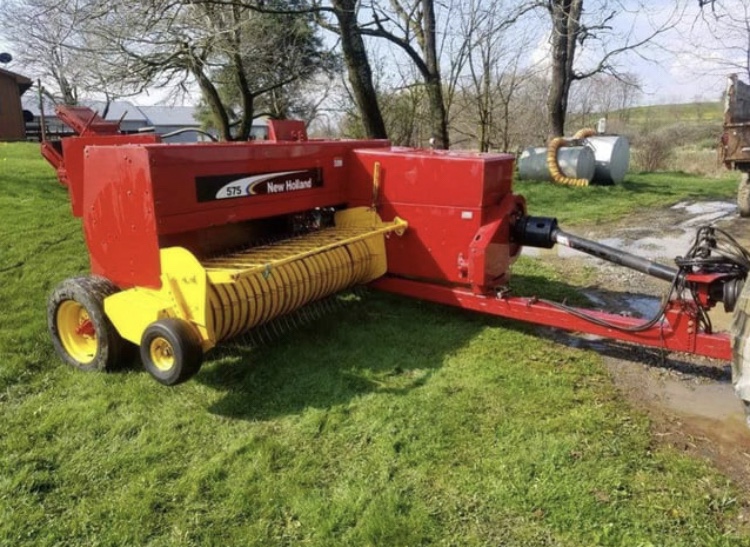
A baler, as the name suggests, is used to gather up hay or silage, squeeze it into a compact bale, and tie it up with baling twine for ease of handling and storage. About 20 odd years ago ‘small’ or rectangular bales, the type you visualise when you think of a hay bale, were the most common type, but these have since been succeeded by ‘round’ or ‘big’ bales, which are the most common type found now. This is simply because farm labourers were cheaper and more plentiful then, and machinery more expensive, but that situation has since reversed.

Small bales have since come back into fashion for various reasons including the increase in low-budget hobby farmers and use in ‘rustic style’ events and functions such as weddings, their portability means they won’t entirely disappear, although manufacturers don’t seem to have cottoned on to this so anybody that’s still got a working little baler finds they can charge a premium for hiring it out now!
Bale Wrappers
Again it does what its name suggests, (farmers are fairly straight forward, no-messing about kind of people and so are most of the names of farming machinery), bale wrappers are used when making silage and wrap bales in plastic to keep in moisture, the aim is to wrap the bales as soon as possible to minimise exposure to air and evaporation, there are 3 main types each with their own pros and cons;

Satellite wrapper
These have an arm and rollers which work together to revolve the bale and pull the plastic from its roll and tight around the bale, expensive ones have two arms which make wrapping the bales twice as fast, as they pull the plastic tight they make a better seal and can deal with unevenly shaped bales.
Turntable wrapper
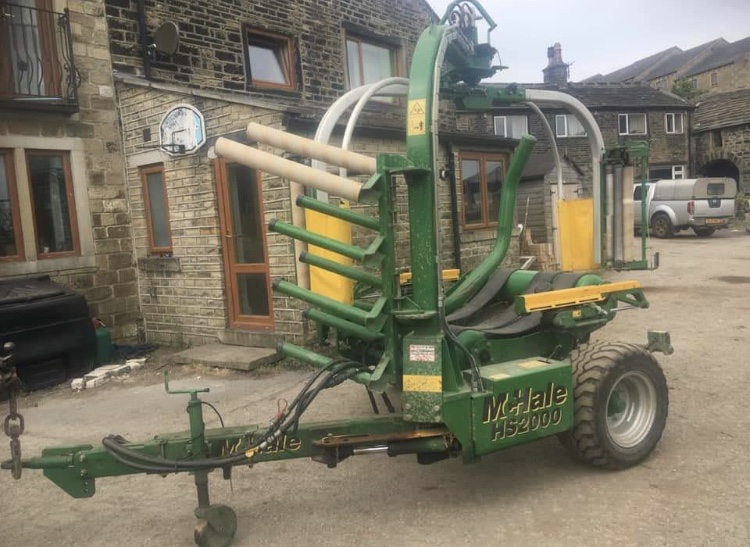
This type of wrapper picks up bales as it is towed along and places them on a wrapping table, this has rollers and/or belts on it which turn the bale at the same time as the table itself revolves, after over a dozen revolutions the wrapped bale is flipped off the bale and it should have scooped up another one by then, this type uses lots of plastic.

In-line wrapper
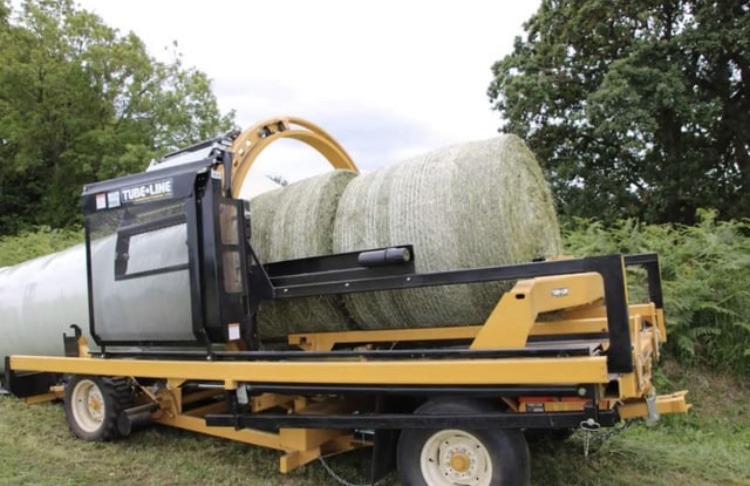
The most commonly used type, mainly because they are quick and can deal with high volumes, so the contractors are finished earlier, costing the farmer less, and they can get to another job faster, which makes both parties happy! This type works by placing the bales on a platform and then pushing them forward so the plastic can be wrapped around them in one long tube, they then drop off in a neat line, so this method is neat and organised as well as being cheap and quick.
Bale spikes and lifters
Bale prongs, spikes, lifters etc are simply devices connected to a tractor, usually by way of a 3 point linkage, for picking up bales. Spikes penetrate the plastic on silage bales so are more likely to be used on hay bales, whereas prongs can be inserted underneath silage bales to carefully pick them up, there are single or double lifters but they are all versions along the same basic premise, manufacturers are always advertising some new model of lifter, and farmers eagerly buy them, but as with a lot of agricultural machinery it’s just a case of re-inventing the wheel for the sake of sales.


Harrows
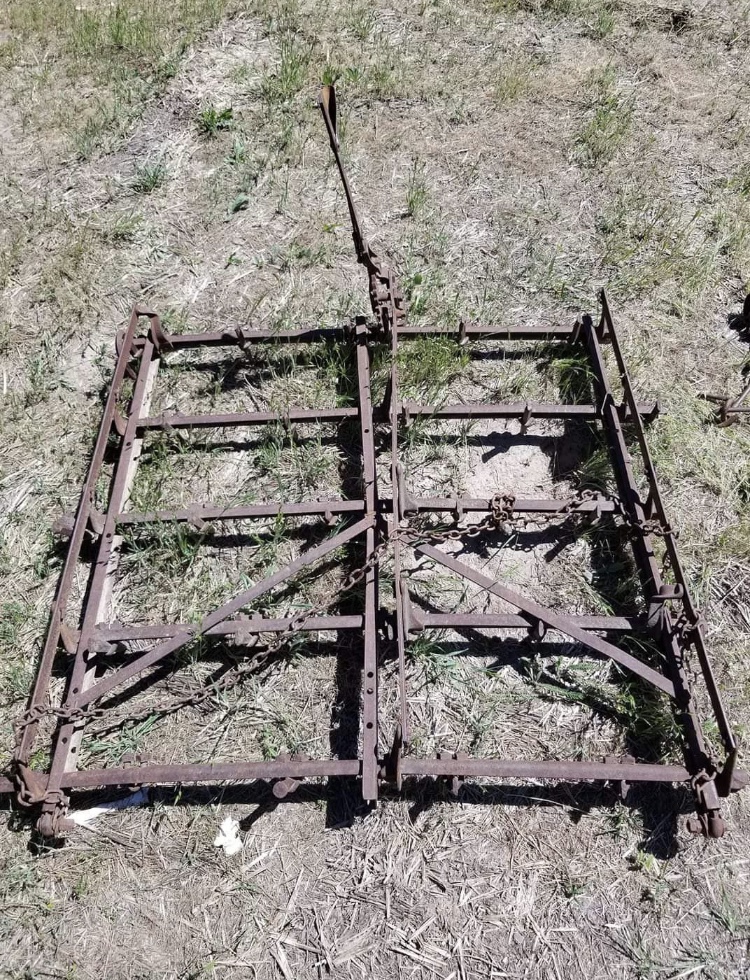
Harrows are tools for breaking up and cultivating soil after ploughing has turned it in order to produce a more suitable seed bed for planting grass and crops. Again there are various types along the same basic theme, drag harrows are an old type and were an assembly with 3 rows of flexible iron teeth which smoothed the ground as well as loosening it after ploughing. Chain harrows, consisting of links of chains with spikes attached are used to break up compacted soil, nowadays disc harrows have largely replaced these, they have vertically placed steel discs which revolve, turning the soil over, there are other versions too.
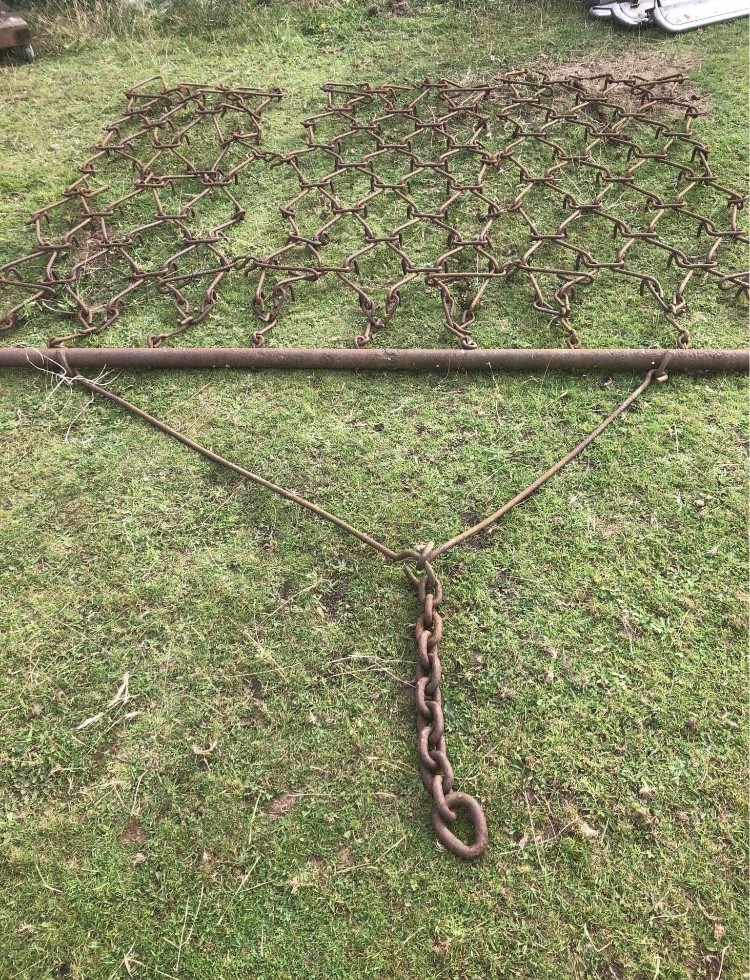

Hay rake or ‘gatherer-upper’
A hay rake simply gathers up the hay into lines after it’s been cut, the lines of raked up hay are traditionally called ‘wind-rows’ or ‘wynds’ and are left to dry out during the day, they may be used again later in the day to turn over, or ‘fluff-up’ hay to protect it from morning dew, or the hay might be gathered the next day by a baler if it’s been sunny enough to dry it out. Sometimes the farmer might decide to run over the hay with a device called a ‘tedder’ to spread it out again if he feels it needs drying out further.
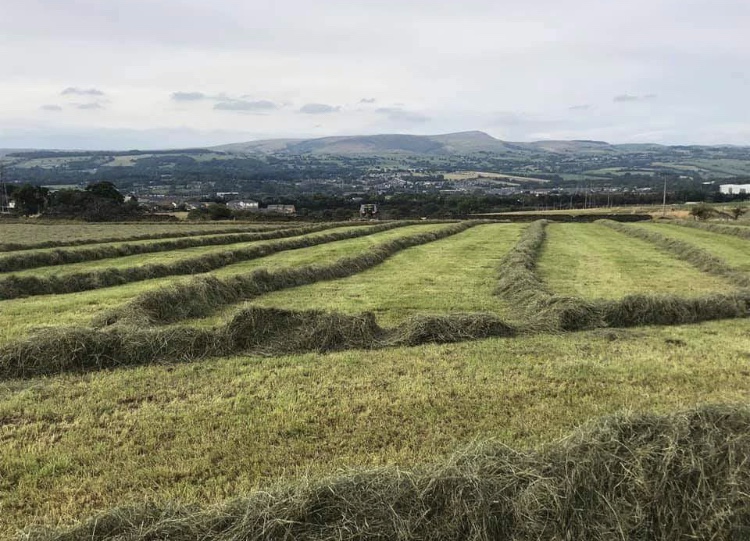
Tedders
A tedder is a machine usually used after mowing and before gathering up, it uses forks to spread out the hay, (sometimes called ‘fluffing’, ‘wuffling’or ‘scaling out’), introducing air into it which makes it dry out, or ‘cure’ better, perfectly dried hay has one of the best aromas in the world!

A B-H
 Northwest Nature and History
2 thoughts on “A rough guide to some of the various bits of farm machinery you might see around the countryside of Northern England”