
Beefsteak Fungus, Fistulina hepatica (Fistulina coming from the Latin Fistulosus, meaning ‘full of pipes’, and hepatica coming from the Greek word hepatikos, meaning ‘of the liver’) is also sometimes known as the Beefsteak Polypore, Ox Tongue Fungus and Liver Fungus. It is very common in some areas and highly regarded by connoisseurs of funghi, appearing from late summer to late autumn and predominantly found on dead or dying Oaks or occasionally Sweet Chestnuts.
Parasitic of Oaks
Fistulina hepatica is a parasitic species that infects sick or injured trees and the fruiting bodies, the ‘beefsteaks’, are usually found lower down on a tree trunk within a few feet of the ground, although sometimes they may fruit from the underground roots of infected trees. Unlike other species of funghi it is rare to find large numbers of beefsteak mushrooms in the same spot, usually you will just see the one although you may find two or three growing together if you are lucky.
The effect the fungus has on the timber of infected Oaks makes it very sought after by cabinet makers, as the timber develops beautiful, chocolate-brown streaks and silver medullary rays, radiating from the centre, this is unique to English Oaks and is known as ‘English Brown Oak Timber’.

Identification
One way of identifying this fungus is by looking at its spores, all of the fruiting bodies of funghi that we see and know as ‘mushrooms’ exist solely for the purpose of spreading their spores, with some species producing spores via gills on the underside of their fruiting bodies, and others, called ‘polypores’, producing spores via thousands of tiny tubes on their undersides.
The beefsteak fungus is one of these polypores, shaped in a way that has the collective common name of ‘bracket’ fungi its genus name, Fistulina, pays homage to this feature, roughly translating as ‘having many small tubes’. This pore surface is a creamy white in colour, darkening with age, and when it becomes bruised or damaged it turns a deep red, the spores themselves are pink-yellow in colour, if you are uncertain about the identification of a fungus looking at its spores is always a good way of telling what it is, spore printing is one method of doing this.
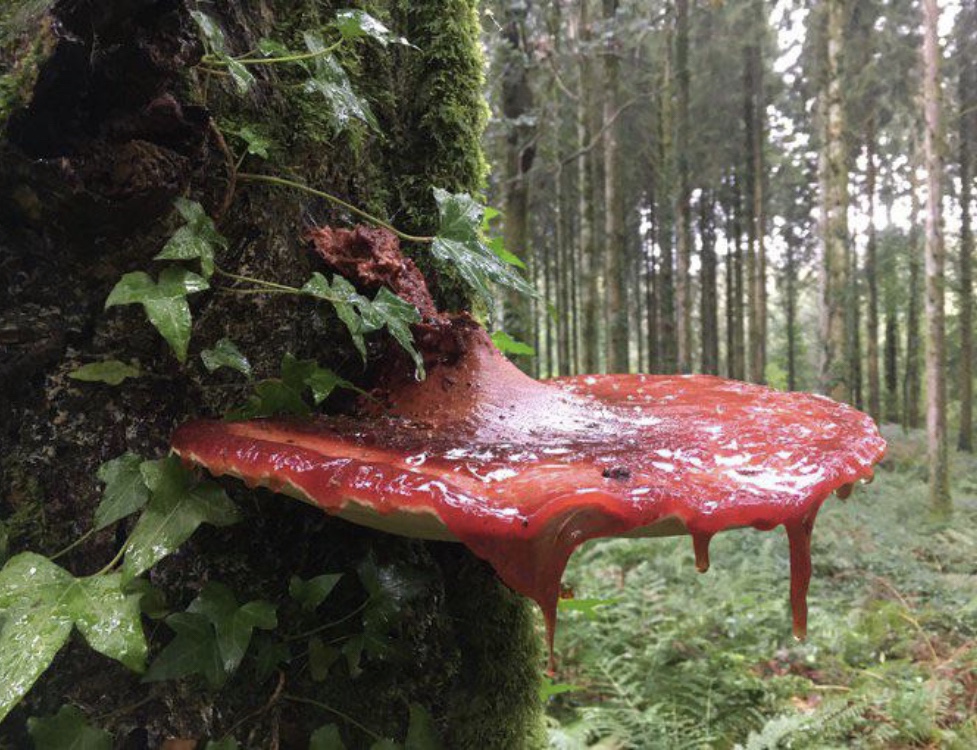
The topside of the fungus is what gives this species its common name, resembling raw meat in both color and texture, this red colouration deepens with age, like the red of a maturing steak does, and when the flesh is cut it is a yellow-pink colour streaked through with red, they also exude a gooey liquid that stains red, sometimes appearing quite gory, as with these specimens found by mycologist Rachel Harries.

Culinary uses
Most bracket funghi are so dense and fibrous that they are very difficult to cut with a knife, the beefsteak fungus, however, is firm yet tender, and easily cut with a suitably sharp knife, although they get tougher with age. This makes them a bit like over, or under-cooked steaks, but the analogy ends there as beefsteak funghi don’t taste anything remotely like beef, instead they have their own unique, distinct, flavour, with two notes that stand out in particular, these being a tangy, citrus flavour, similar to that of Wood Sorrel, but not quite as sour, balanced by an earthy, slightly mushroomy flavour, although they are nothing like the palid white specimens you get from the supermarket.
You might notice that beefsteak funghi aren’t as maggoty as other edible fungi often are, this is because they contain a concoction of several chemicals which repel hungry insect larvae and molluscs such as slugs and snails, these chemicals include ascorbic, ellagic, fumaric, citric and oxalic acids, the last one, oxalic acid, being present in wood sorrel and giving this funghi a pleasant hint of bitter apples.

In fact beefsteak funghi goes very well with wood sorrel and is versatile enough to be used in many other recipes, it is peculiar in that it is best eaten raw, unlike most edible funghi where it is strongly advised to cook them, in order to break down the tough lignin fibres and kill any nasty pathogens they might be hiding. Another thing that is peculiar to the beefsteak funghi is that they keep in the fridge very well, without going soft and squishy like other types, so you can keep one in your veggie drawer with a damp bit of kitchen roll to keep it moist and it should be alright for a few days.
As always with any fungi make sure you have identified it correctly and double checked it, there are several apps you can install on your phone and guides as well, I often use wild food uk’s mushroom guide and an old observers book of mushrooms or a Mitchell Beasley guide book and there are many other reputable guidebooks available. If you are in any way unsure about it just leave it for the woodland creatures to eat, also, although this species isn’t poisonous it is still best with all funghi to taste test a very tiny bit first, just to make sure you don’t have some kind of allergy to it, if you find any, or know any decent recipes, why not share them here?
Happy foraging!
A B-H


💯
LikeLiked by 1 person
👋 I started following your blog. I hope you follow mine and we exchange impressions in our posts.
This is how we grow. Thank you so much Greetings from the south of
Spain 🇪🇸💯
LikeLiked by 1 person