
Traditional Field Barns of the Northwest
The North of England is famous for its ancient, man-made landscape of rolling fields crossed with drystone walls and dotted, seemingly haphazardly, with stone barns which are so integral to the countryside here that it would look empty without them.
Many of these barns are made from the very stone upon which the hills are made of so blend in, appearing to have been there since the ice-age glaciers retreated and the landscape was formed, but many of them aren’t as old as they appear to be.
Most of the ‘Cow-uses’ or ‘Laithes’, as field barns are sometimes called in this part of the world, were constructed in the 15th and 16th centuries when the ancient forests and deer parks were cleared and sheep and cattle farms expanded across the countryside. They were built out of the Gritstone, Limestone and Sandstone of the area, often from a farm quarry which would also supply the stone for walls and the farmhouses themselves, some have been built as recently as the 19th century and they are often maintained, and used, in the way they have been since their foundations were laid.
Features and characteristics
There are many different features and characteristics to these barns which are constructed in what is known as a ‘vernacular’ style, meaning “architecture concerned with domestic and functional purposes rather than public or monumental buildings”. This article briefly looks at some of these (in no particular order).
Low Ceilings and haylofts

The low ceiling to the ground floor below a hayloft is one almost universal feature of the smaller barns in more upland areas, these barns are called ‘shippons’ or ‘hoggs’, this was simply to create a warmer, snugger place for keeping sheep in over winter but also because farmers famously like to save money on building costs.
The first floor is called a hayloft and is simply where hay and/or straw is kept, this can then be forked down to the livestock below, if there are roof lights (windows in the roof) they will face north, not south, to avoid the hay catching fire in the sun!.
Kennels under stairs
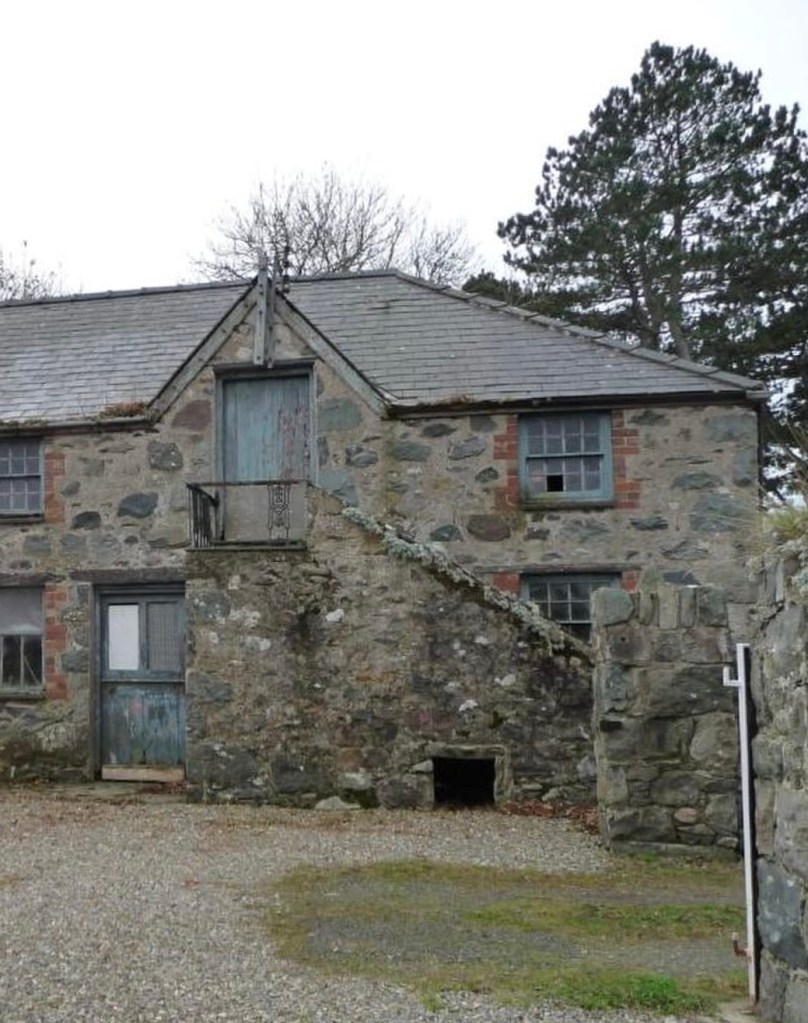
Why build a kennel for your sheepdog when it can live under the steps going up to the hayloft and be within chains length of any intruders?
Lean-tos and out-shots

As a farms use and a barns purpose changes over the centuries, so does the size and shape of a barn, additional room may be required for a tool store, because the original hayloft was too small or for farmhands to make a brew in.
More recently a building for housing milking machinery, a generator or water pump might have been required, some barns have had to have toilet buildings added in to keep prudish landowners satisfied that hedges weren’t being used! Of course some of these buildings fall out of favour so often there will be a tumble down shack at one end overgrown with nettles and brambles.
Evidence of previous rooflines on gable ends

Many barns would traditionally have been thatched, some of the ones on the moors would even have been thatched with thick layers of heather. This use of thatch meant that the pitch of the roof had to be steeper as the weight was heavier, less timber was also required to hold this load as it would be conveyed straight into the load bearing walls. Stone tiles are used now which means the pitch isn’t required to be as steep and of course stone tiles don’t soak up rain like thatch does.
Watershot Masonry

This was a mason’s technique developed sometime in the 18th century. Dressed, meaning cut, stones, usually sandstone as it is the easiest to shape, (dressed sandstone is called ashlar) are laid at slight angles to shed rainwater outwards from the pointing, if you look closely you can see that the faces of the stones actually slope inwards towards the base, not outwards as you’d think, as this keeps the pointing dry and stops rainwater gathering and seeping in through the joints.
Decorated lintels

A lintel is a horizontal stone across an opening such as a window or doorway. The one over the main doorway or entrance to the barn would quite often be carved with the date of the barns completion, the initials of the mason, or the initials and crest of the landowners. Different regions and estates would traditionally have different styles, for instance quite a few barns around the Hornby, Wray and Lowgill areas feature a castle design.
Very often farmers will reuse a carved lintel in a completely different building, or use a particularly attractive one that they bought as part of a job-lot somewhere else in the country which came from a demolished barn, so it can sometimes be hard for historians to determine exactly what, or to who, the carvings originally referred.
One local and ornate style in the Bowland area which has been proudly kept on many barns is a style of carving called a ‘hood mould’, partly designed to shelter the door itself from this area’s incessant rainfall and partly to respectfully shield a family crest from erosion.
Masonry was an expensive trade to learn and good masons could be few and far between or all occupied on a contract for a church, cathedral or other big project. The expected date of completion could be carved when a travelling mason was present in the area and the stone with this date on could sometimes end up waiting a few years until the barn had actually been finished!
Through Stones
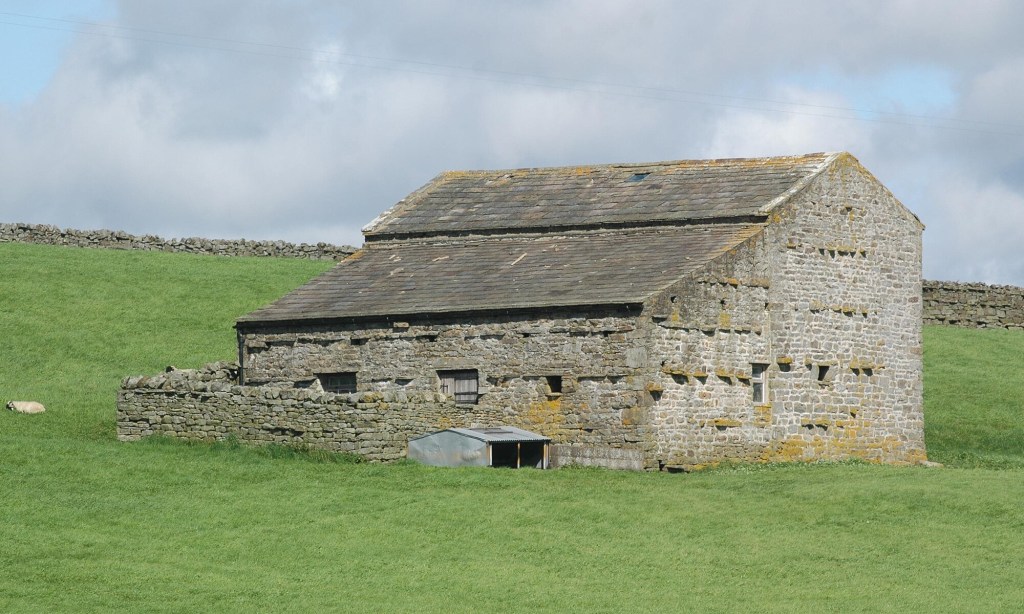
These are found in dry stone walls too and are long stones tying together the inner and outer skins of the wall. Barns can sometimes be constructed of two faces of stones with a rubble core, through stones tie these together and may project, usually in parallel lines, on the outside of the barn. This is more common in barns built of Limestone and is typical of barns in the Yorkshire Dales.
Quoins

Quoins are the larger stones found on the corners of most buildings to help strengthen the walls, they are usually made of a higher quality stone than the face of the structure and dressed to a better degree in order to frame the masons work and withstand wear and tear, especially with a barn which is essentially an industrial building. They may vary in size but often get smaller towards the roof, this is a trick architects still use to make a building look taller and grander.
Putlog holes

This word originally had the simple and self explanatory meaning of holes where logs would be put in a wall, they can be seen in the walls of castles like Clitheroe Castle and Greenhalgh Castle near Garstang, scaffolding was secured in these holes when the building was under construction.
They were only really needed in a barn when it had high enough walls to require scaffolding, quite often the wood would be sawn through at the wall when the builders finished and these roughly cut chocks of wood can often still be visible in buildings hundreds of years after they were finished.
Ventilation Holes

One end of a barn will usually be where the hayloft is situated, the ‘mew’ end, quite often the southern end or opposite end from the prevailing wind and rain, in the northwest of England this is from the west. As damp hay rots and becomes useless as fodder, not to mention unhealthy to livestock and the farmer, causing diseases like ‘farmers lung’, ventilation holes have to be put in to allow air to circulate, these will be near the top and often in an appealing triangle or diamond pattern.
Kickstone

A Kickstone is a solid piece of stone, usually rounded as in the image, installed at the corner of a structure to ‘kick’ out cartwheels away from the building so as to avoid damage.
Coping Stones

As on a drystone wall where they are the large stones on the top of the wall, the stones which face, or ‘cope’ with the harshest wind and rain on the top of a barns gable end wall are called ‘coping stones’, they are made of tougher and higher quality stone and flat, like a thicker roof tile, they might sometimes just be at one end of a barn, the one that faces the wind, to stop the roof being blown off.
Muckholes

A muck hole is simply a hole through the wall where muck could be thrown out, usually a sign that a barn has a ‘Byre’, a part used for keeping cattle in, this would then be spread on the field to improve it.
Forking or lifting holes
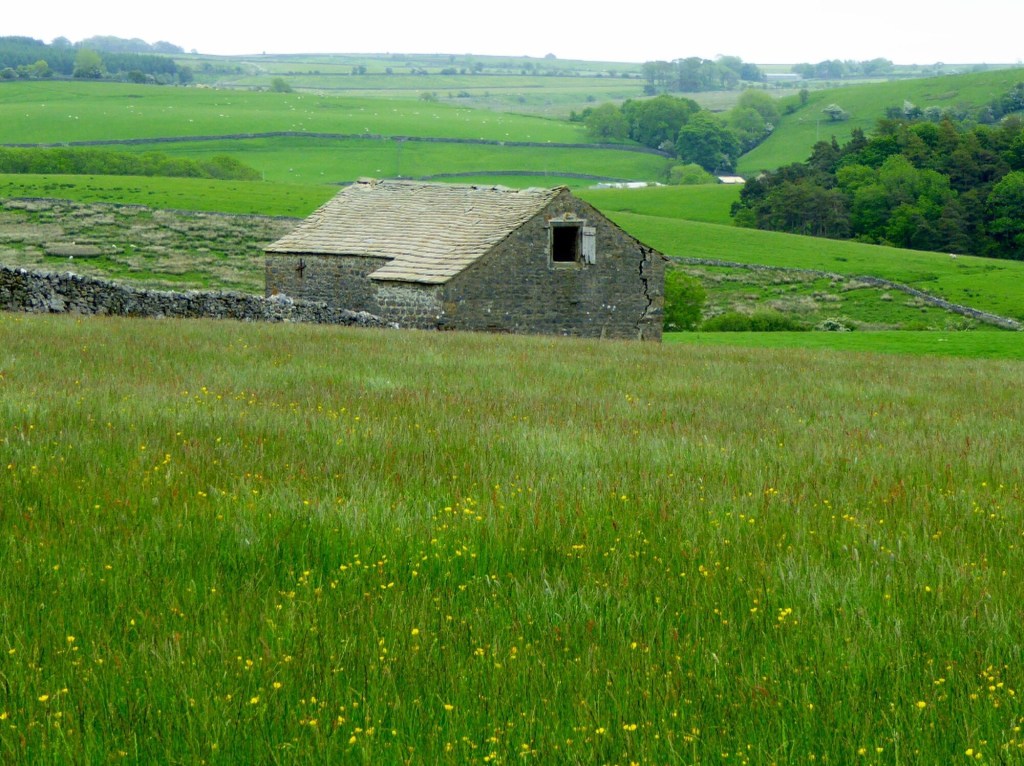
These are on the first floor wall, the hayloft, and should have a door, this is where hay is passed through the wall from a wagon at haymaking time.
Fodder gang

This is a little corridor, a ‘gangway’ through the barn where feed, or ‘fodder’ is taken to the pens where the sheep or cattle are kept.
Drinkers

Of course livestock need water, so there will be drinkers or water troughs, they come in various forms, the one pictured is a self-watering one, livestock learn to push the metal tongue in the middle down to release more water (this is an old one I’ve got in my back yard which I’m going to turn into a bird bath)
Booses and Boskins

A boose is the individual stall in a shippen, or area of a barn where livestock is kept. A boskin is the division between each boose, they are made from sturdy timber boards, slabs of stone or concrete, in Cumbria they are often slate.
Rudstick

This is a pole in the middle of a boskin used for tying livestock up to.
Bee Boles
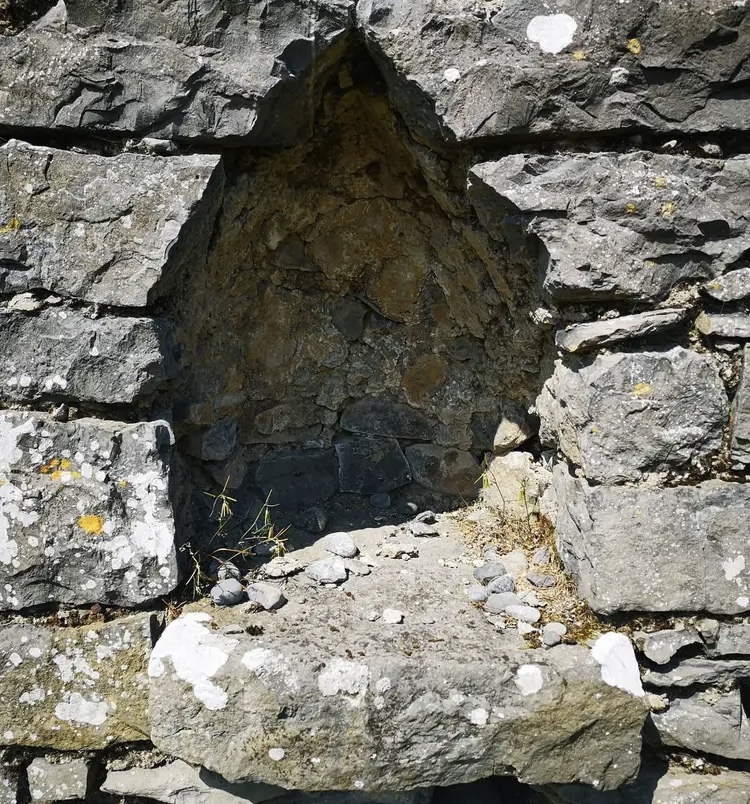
A Bee bole is a recess in a wall built specifically for keeping a bee hive in, these would been cylindrical wicker constructions, called ‘skeps’, unlike the rectangular wooden structures you and I are familiar with, they are carefully situated on the wall so the hives will not be too cold, hot, damp or exposed to wind.
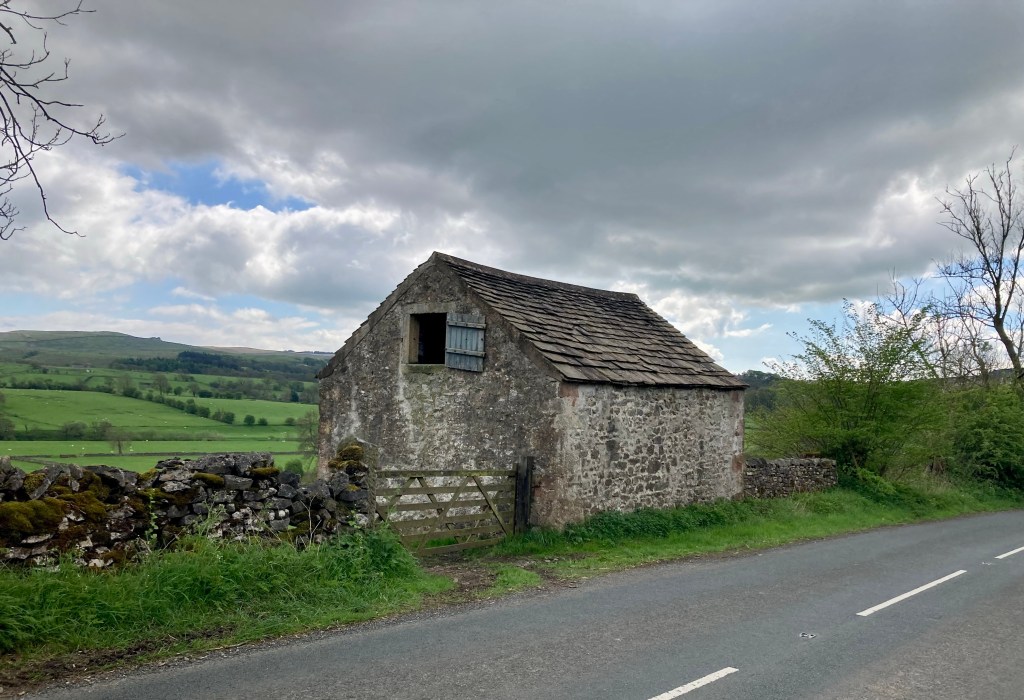
Sometimes a barn will incorporate other features according to the whims and fancies of the farmer, landowner or even the builders and masons, such as dove holes and owl holes to accommodate birds, Bee boles or even just ornate architectural features to fit in with surrounding architecture, but these are for you to discover!
Each barn is unique and has its own special character developed over the centuries and seasons of playing its central role in the life of the farming community, so it is always worth-while stopping and paying attention to these unique bits of our heritage in order to get a better feel of the place.
A B-H
 Northwest Nature and History
Nice post
LikeLiked by 1 person
Thanks, glad you like it 🙂
LikeLike
I really enjoyed your post, images of farms were worked then
LikeLiked by 1 person
The detail you go into is impressive and makes for an interesting post altogether.
LikeLiked by 2 people
Thanks, I really appreciate that 🙂
LikeLike
Really informative, thank you. Currently in the Dales where we noticed many barn features. Some of our speculation on their purpose was spot on, but you have opened up wider possibilities.
LikeLiked by 1 person
Thank-you, I always really appreciate feedback on my articles but it’s when they’ve been useful and inspired thought that I’m happiest!
LikeLike