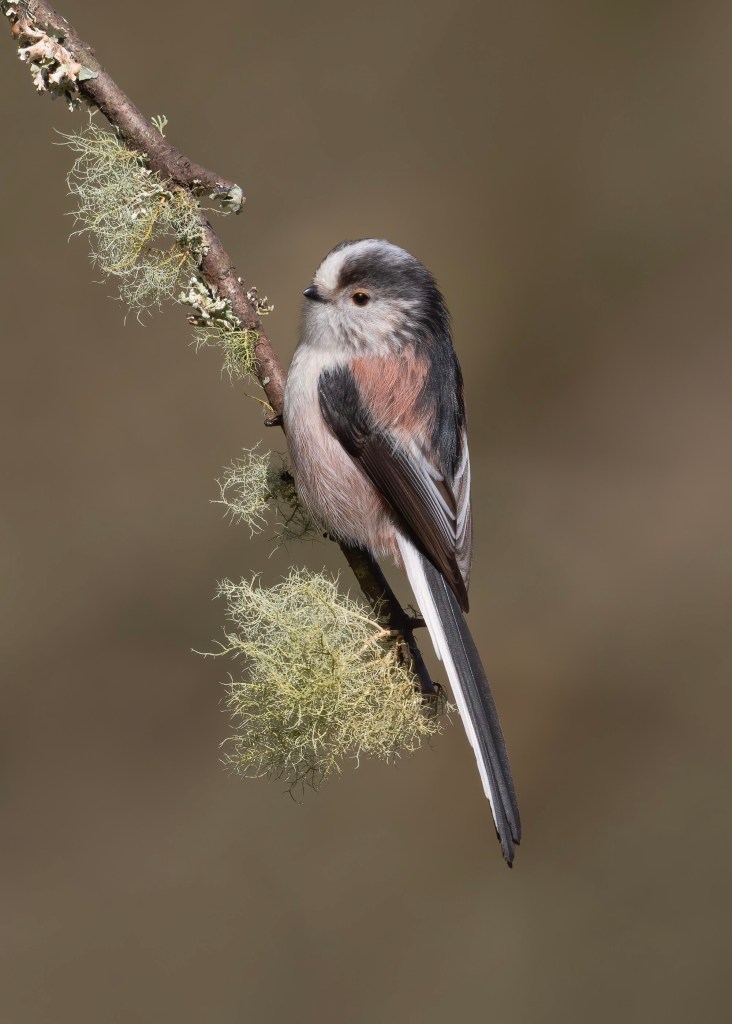
Long Tailed Tits, Aegithalos caudatus, have formed winter flocks now and are roaming the countryside in twittering bands, hunting hedgerows, treetops and gardens.
Our smallest bird
One of the UK’s smallest birds the Long-tailed tit or ‘titmouse’ as it is also affectionately known, is one of Britain’s favourite birds, and it does have some very endearing habits. As it so small it is very vulnerable to cold weather and at night flocks, which are usually around 10 to 20, will huddle closely together to keep warm, some estimates place mortality rates at 80% in a cold winter which means that they are one species that would benefit from a warming climate in Northern Europe.
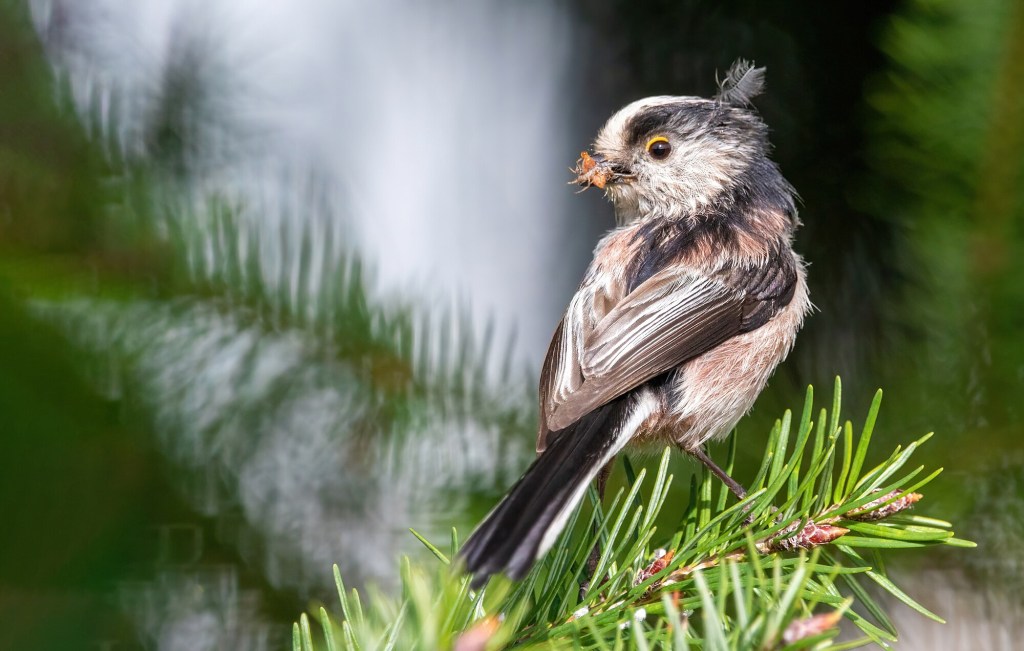
Energetic acrobat
Any help they can get from us at this time of year is quite welcome, bird tables with suet balls being a particular favourite, they will crowd out other birds and take over a bird feeder but will quickly move on leaving the resident garden birds to carry on as they were before!
Their entertainingly energetic acrobatics and boisterous character make them instantly endearing to observe as does their attractive song as they constantly chatter to each other, they are also curious about everything they encounter, for some reason they are attracted to car wing mirrors (they can be quite aggressive for their size!)

Meticulously constructed nests
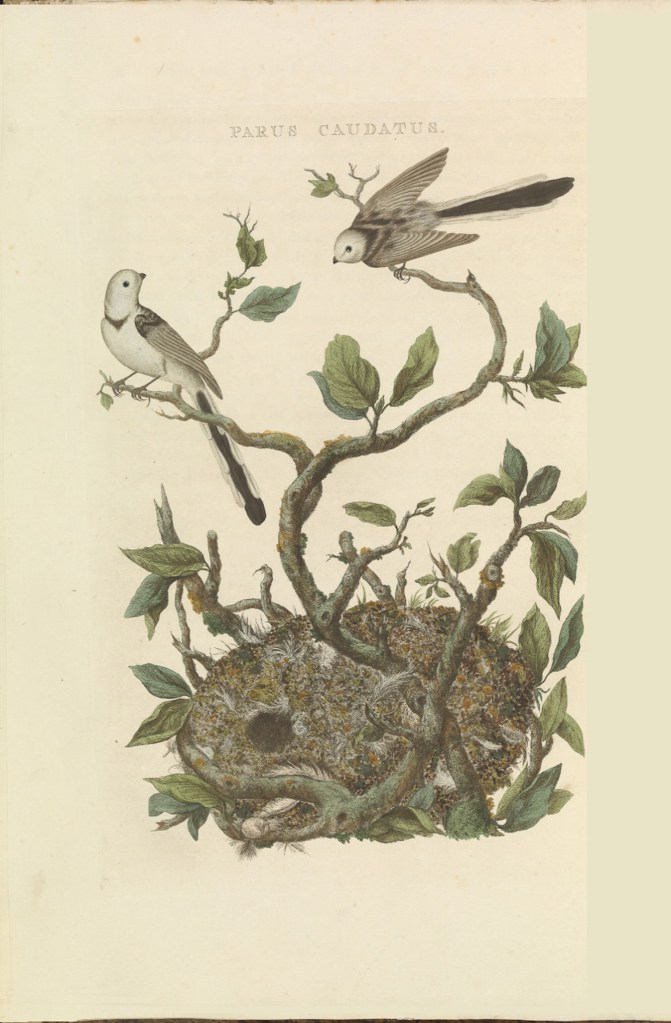
Long-tailed tits will usually lay a clutch of 6 to 8 eggs in a dense hedge or tree, meticulously building, over the course of about 15 to 20 days, a very compact, dome-shaped nest, lined with feathers and woven from moss, lichen and spider webs to keep them safe in.
These nests are works of art and perfectly camouflaged, they have to be as the bird is so small they need all the protection they can get, the level of nest predation for this species being at least 70%. Spider webs are used to give the nest a degree of elasticity so it can hold the growing brood nice and snug.
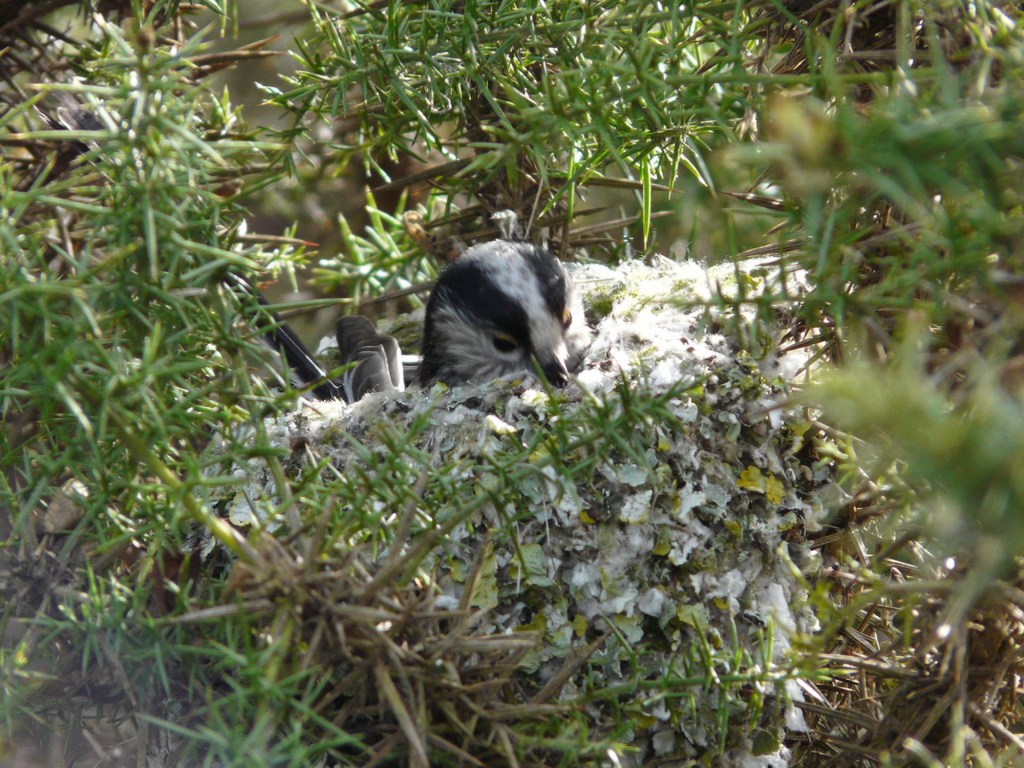
One way of finding out if a female Long-tailed tit is brooding is to look at its normally splendid tail, which can be up to 65% of the bird’s length, if it seems a bit unkempt or bent this is simply because there isn’t enough room for it in the nest! Both adults take turns to feed their brood, hunting for Caterpillars and other invertebrates, the young will fledge around the end of April and soon move on.

Extensive range
Their range is quite extensive, they can be found throughout Northern Europe wherever there is woodland, although they rarely stay put in one place for long outside the breeding season, constantly searching for new feeding grounds, in winter complementing their diet with seeds and berries.
I have seen flocks passing over whilst on the highest Bowland fells as they flit between the wooded Cloughs to search for food, they can be found in nearly part of the British Isles except the tallest peaks of the Scottish highlands.
They are quite a common bird with numbers on the increase and the many woodland planting and regeneration schemes happening around the country happily means that future generations will see more of their playful shenanigans.
A B-H


Beautiful post
LikeLiked by 1 person
Thanks, they are very cute birds!
LikeLike