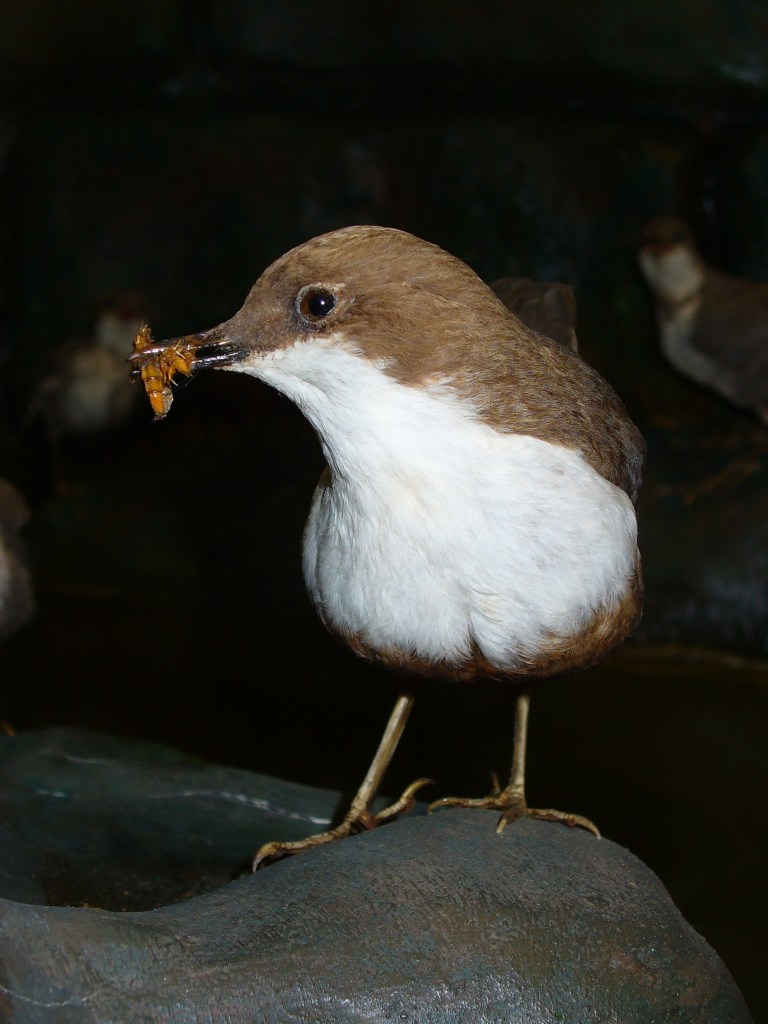
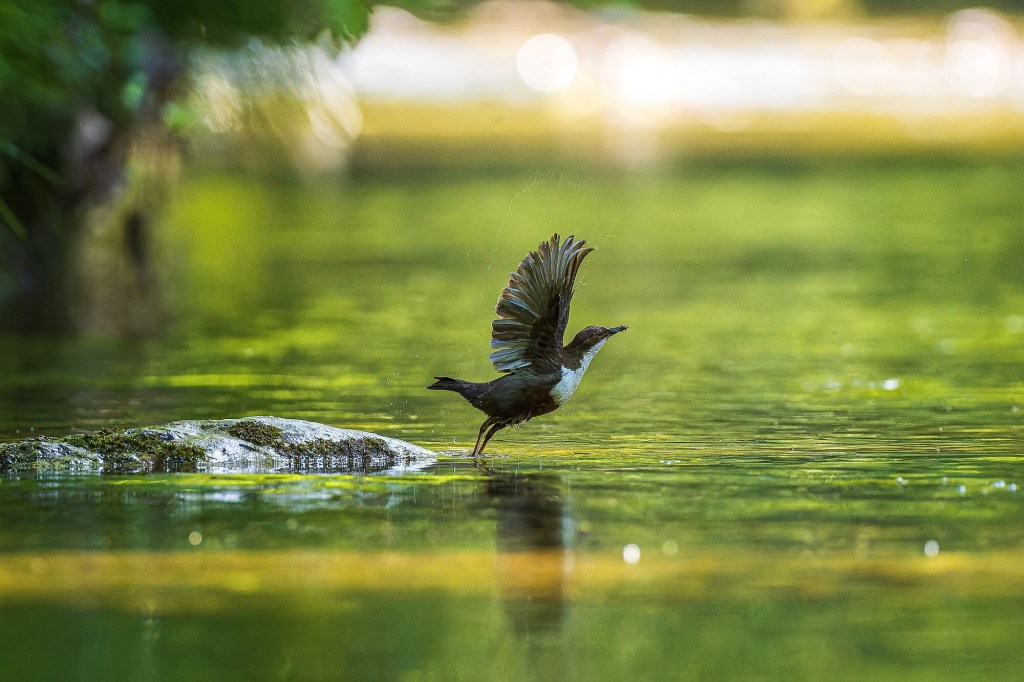
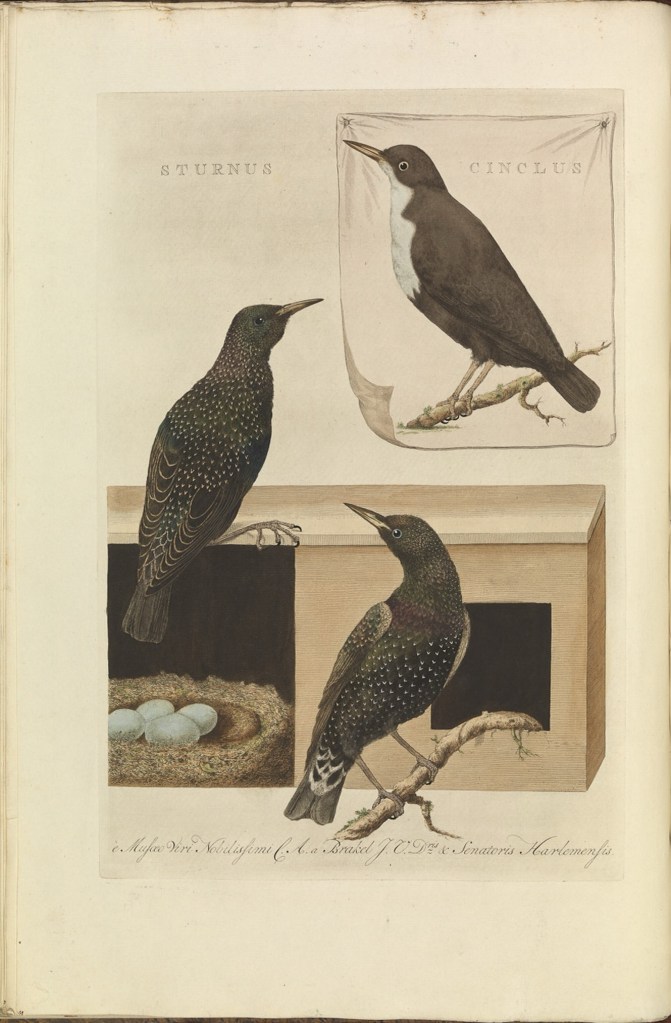
The Dipper, or Water Ouzel Cinclus cinclus, (cinclus originating from a Greek word ‘kinklos’, meaning ‘small’) is the British isle’s only aquatic song-bird, it is sleek yet dumpy at the same time with beautifully dark, chestnut coloured plumage and one of the finest swimmers you will ever witness.

Aquatically Adept
An expert swimmer the Dipper has evolved several adaptions to live in its riverine habitat, these include
- Dense, waterproof plumage, which it keeps oiled like a wax jacket from a special preening gland
- Powerful wing muscles with which it rows against the waterflow
- A special pair of flaps which close tight over its nostrils when it dives, like those an Olympic diver might wear
- An additional, white pair of eyelids, called a nictitating membrane, which, unusually for birds, are feathered and act as goggles, these can be seen when they blink, which they do slowly to clear water from their eyes.
They fish for anything they can find in the water, on the water or even underneath the river bed, flipping over stones to poke and pry for insect larvae or eggs, Caddis nymphs, Mayfly, Stone fly and Alder fly making up the bulk of their diet , they can also swim after fish fry quite adeptly.
Dippers, along with the adaptations for living in the water have developed a very melodious song , rarely heard and tuned perfectly (4 to 6 MHz), to overcome the loud splash and burble of the stream (around 2MHz), they will sit on a favourite rock or perch for ages warbling away to tell any other dippers that this is their patch.
Breeding Behaviour

They are very territorial birds, displaying
constantly, one of the reasons they are called Dippers is because they habitually bob up and down all the time. They do this to flash their bright white breast so it will show against the twilit darkness of the valley bottom communicating their presence, a pair will defend a stretch of river up to a kilometre long and as they are monogamous will not tolerate any other Dipper in this territory.
The courtship display of the Dipper is fascinating to watch, the male will run, singing, towards the female, bobbing up and down and fluffing up his breast feathers.
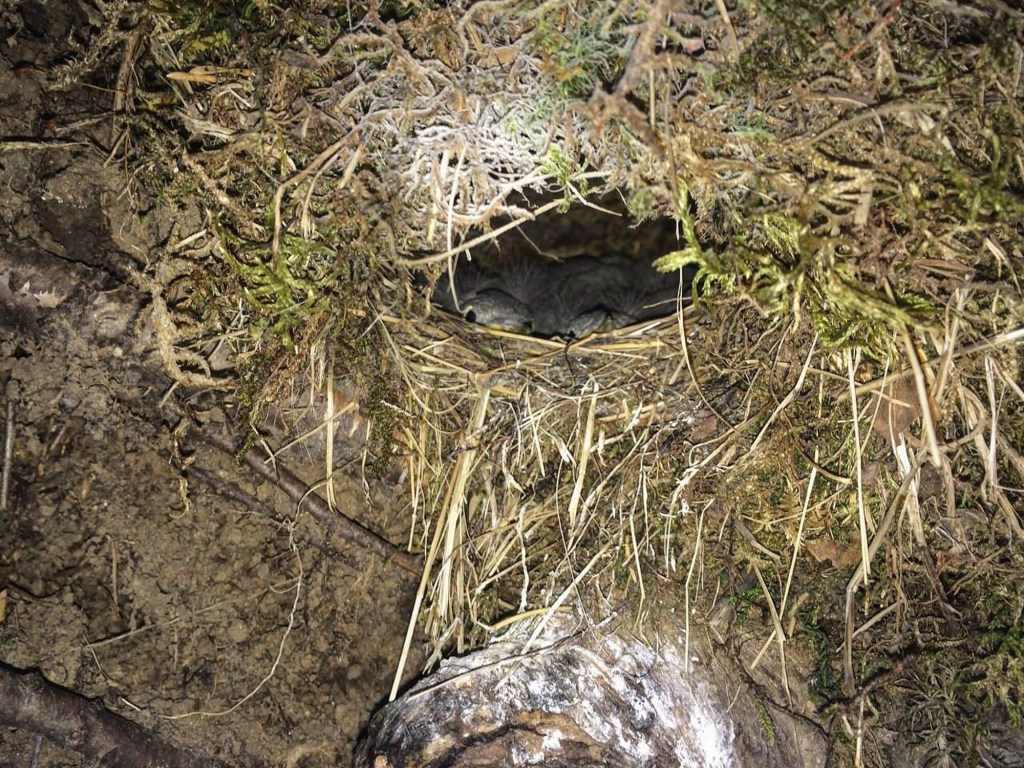
The pair will build a very well camouflaged, dome-shaped nest somewhere on the river bank above flood levels, in a hole amongst rocks or branches, they construct this out of moss and will use the exact same place over the generations.
In this nest they lay a clutch of 4 to 5 eggs around about March, and the young fledge about 20 days later, they will try to have two broods in a good year, and the young will stay with the adults for another two weeks learning to fish .
The Future for the Fisher
In the Northwest Dippers, or Water Ouzels as they are also known, are quite common and have territories on almost all of the areas rivers and streams, they struggle a bit on the more acidic upland streams though,where they will have larger territories, breed later and have smaller clutches. This is possibly because of weakening of their egg shells and of the shells of the invertebrates they eat due to the lower ph of the water and could be a problem with projected climate warming leading to acidification of watercourses.
Numbers of breeding pairs of Dippers, classed by ecologists as a ‘bio-indicator’, indicative of the overall health of an ecosystem, have been steadily decreasing in recent decades all across the British Isles and theories for this decline are myriad.
Possible reasons for decline
The species is highly sensitive to low water quality, especially heavy metal pollution, and a leading theory is that pollution is largely responsible for population decline. In some of our moorland areas which are downwind from industrial areas peat was highly contaminated during the industrial revolution and this historical pollution is still leaching out to effect watercourses,
Agricultural runoff is also highly significant, pesticides, herbicides and in particular nitrogen fertilisers completely alter the biochemistry of a watercourse and harm the Dipper’s invertebrate prey, as does domestic pollution from wastewater facilities which also contributes pharmaceuticals with poorly understood results.
Something as seemingly innocuous as pet ownership can be detrimental to the Dipper too, cats are a real threat to many of our native bird species and urbanisation of our countryside increasingly brings cats and Dippers in proximity. Dog owners are unwittingly to blame as well, loose dogs splashing about in rivers can completely ruin a Dipper’s morning as can the flea treatment we so liberally apply to their coats, which gets into the water and kills of any invertebrates it comes into contact with.
The Dipper, by Kathleen Jamie
It was winter, near freezing,
I’d walked through a forest of firs
when I saw issue out of the waterfall
a solitary bird.
It lit on a damp rock,
and, as water swept stupidly on
wrung from its own throat
supple, undammable song.
It isn’t mine to give.
I can’t coax this bird to my hand
that knows the depth of the river
yet sings of it on land.
A B-H


Beautiful post 🌹
LikeLiked by 1 person
Thanks, they’re beautiful birds!
LikeLiked by 1 person
Yes 👍 freinds please visit my website
LikeLike