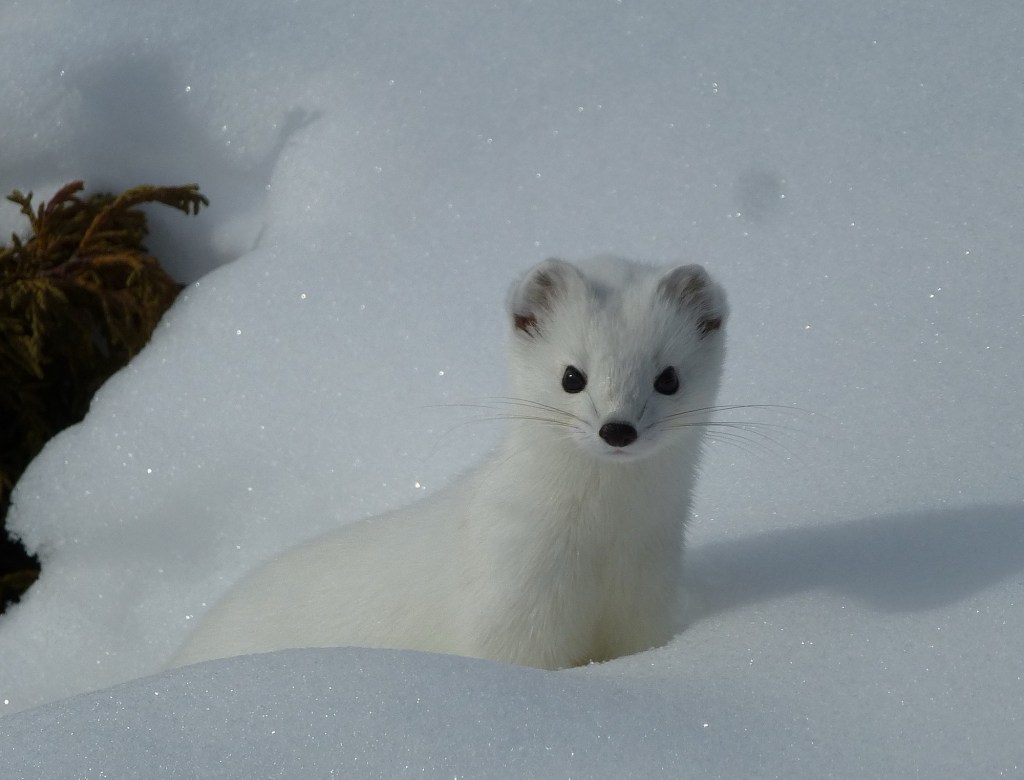
The Stoat, Mustela erminea, is a Mustelid, related to the Weasel and Otter, the first part of its scientific name; Mustela, relates to the species’ musty smell, and the second part; erminea, is the name given to a Stoat when it is wearing its winter coat.
Handsome predator
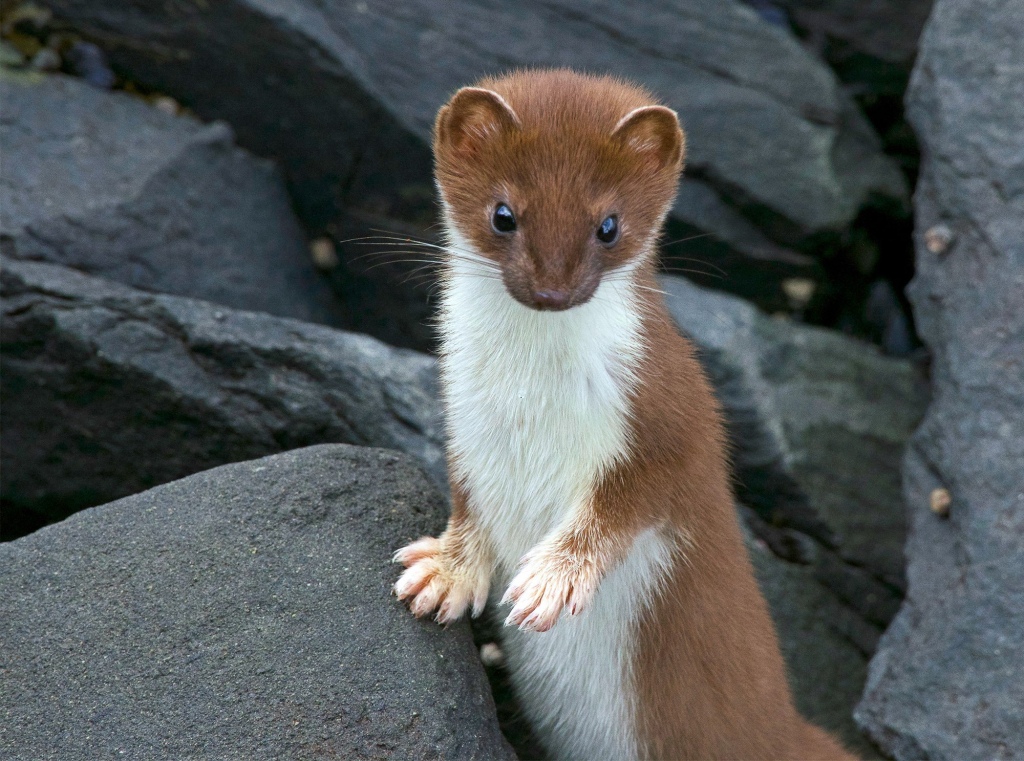
In winter the Stoat’s fur changes colour from a rich chestnut brown to the purest white, with the exception of the tip of its tail, which always remains black. Already a handsome animal it then becomes very beautiful with its shining black eyes and svelt white body.
Ermine has for a long time been the preferred fur for royalty, worn for portraits and court presentations, as the white winter fur of the stoat is a purer white than any other fur, so signifying the purity of royalty.

The seasonal change to white is to camouflage the animal in the ice and snow as it hunts. The Stoat being a small creature needs to eat constantly and can’t build up the fat reserves larger animals can to hibernate over the winter, Mustelids as a species have a very high metabolism and the Stoat is particularly hyperactive.
They prey on a wide variety of creatures; Voles, Mice and Shrews that they hunt for in burrows and walls, beetles and insects they will crunch up, young Hares, called leverets, that they find laying up hidden in the grass, Rabbits, adult and young birds and eggs too, which they have a particular liking for. They can bring down animals much larger than themselves as well, being very persistent and tenacious predators.
Stoats love hunting in Drystone walls
Sanguinivorous bloodsuckers
It used to be thought that the Stoat was ‘sanguinivorous’; drinking blood, a belief probably brought about by their habit of bringing down large prey like adult rabbits by gripping them by their throat until they succumb to panic and exhaustion. They prefer younger rabbits though, cornering them in their burrows or even performing a sort of dance to transfix them.
I’ve witnessed one of the Stoat’s famous dervishes, or dances, and they are quite hypnotic to watch, they will twist and wriggle their enormously flexible bodies about in front of the young rabbits, seemingly having some sort of fit, until they get close enough. By this stage the rabbits for some reason are unable to move, and the stoat will suddenly jump at the rabbit which doesn’t seem to be able to defend itself at all, it’s very strange to see.
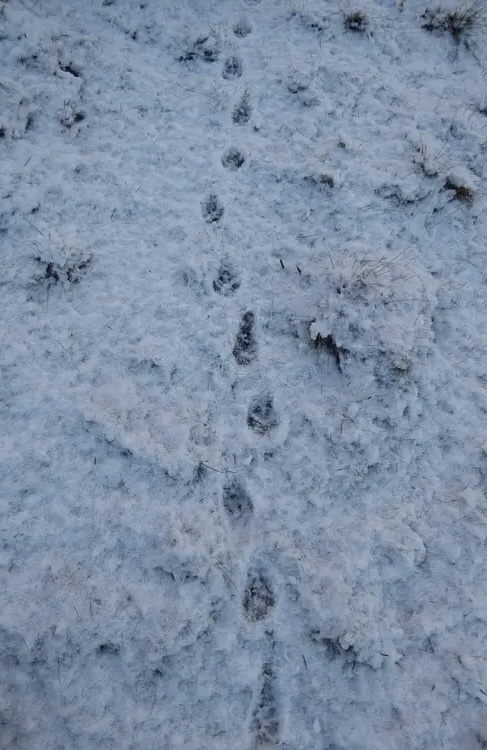
The track of the stoat is very like that of a young rabbit and may be easily mistaken for it, they travel over an amazing extent of ground in their nocturnal rambles, as their marks in the snow can testify, the edges of rivers and brooks being their favourite hunting grounds.
Sworn enemy of the gamekeeper
One of the favourite things a Stoat likes to eat, much to the conservationists, gamekeepers and poultry farmers annoyance, are birds eggs. In spring, when ducks and wildfowl are nesting on the waters edge, they can lose their whole clutch to one marauding Stoat.
Pheasants, Grouse and other gamebirds can lose their nests too, shoots that rely upon wild Pheasants will have a trap line around the boundaries to keep Stoat numbers from getting too high. On the edges of a Grouse moor keepers will maintain traps too, although the traps you might see on planks of wood crossing streams on a Grouse moor will often be for Mink, as Stoats will not venture out into the open, preferring cover and tunnels.
(Since 2020 Stoats can only be trapped under general license)
As real ermine is no longer fashionable amongst royalty, so there’s no value in its fur, and the Stoat is admired more than reviled nowadays, trapping is becoming an outdated pest control method, also traps are at risk of being destroyed by well intentioned ramblers and walkers with out any knowledge of the gamekeeper’s work . So keepers, always resourceful, have had to move with the times and find proactive ways of looking after their birds.
Habitat management, accepting the Stoat’s role as an important pest controller in its own right, has been found to be a lot more productive, Stoats are predated on by larger birds of prey too so keepers are quickly coming around to the idea that the presence of birds of prey such as the Hen Harrier on a shoot isn’t necessarily a problem, and that it may in fact be better to encourage them.

Studies have also been carried out into increases and decreases in Stoat populations and found there to be a correlation with increases in Voles and Mice. Stoats rear more young in ‘vole years’, which occur in a 5 year cycle, where food is abundant, but then that generation of Stoats find Voles to be scarce the subsequent years, so have to diversify into other prey, such as a keepers birds! Now that this phenomenon is better understood, keepers can prepare for it rather than having to find the time to manage a line of dozens of fenn traps, which is a very time consuming job.
All this means that you are more likely than ever to spot a Stoat, like the one you can see on the Yorkshire tea box, out and about hunting the hedgerows and countryside nowadays, especially in winter before it’s snowed, when their white coat makes them stick out to owl, harrier and human alike.

A few tips for spotting Stoats;
They hate the smell of tobacco smoke.
They hate dogs.
They are shortsighted so might not see you if you are still, sometimes cautiously approaching to determine whether you are Friend, Foe or Food.
You can tell where one is from the alarm calls of birds.
An old countrymans trick; they are attracted to squeaking, if you can make a noise with your lips or hand that sounds a bit like the squeak of polystyrene on glass, they will slowly come to investigate, thinking it’s the squeak of a rodent or young rabbit in distress.
A B-H


Nice 👌
LikeLiked by 1 person