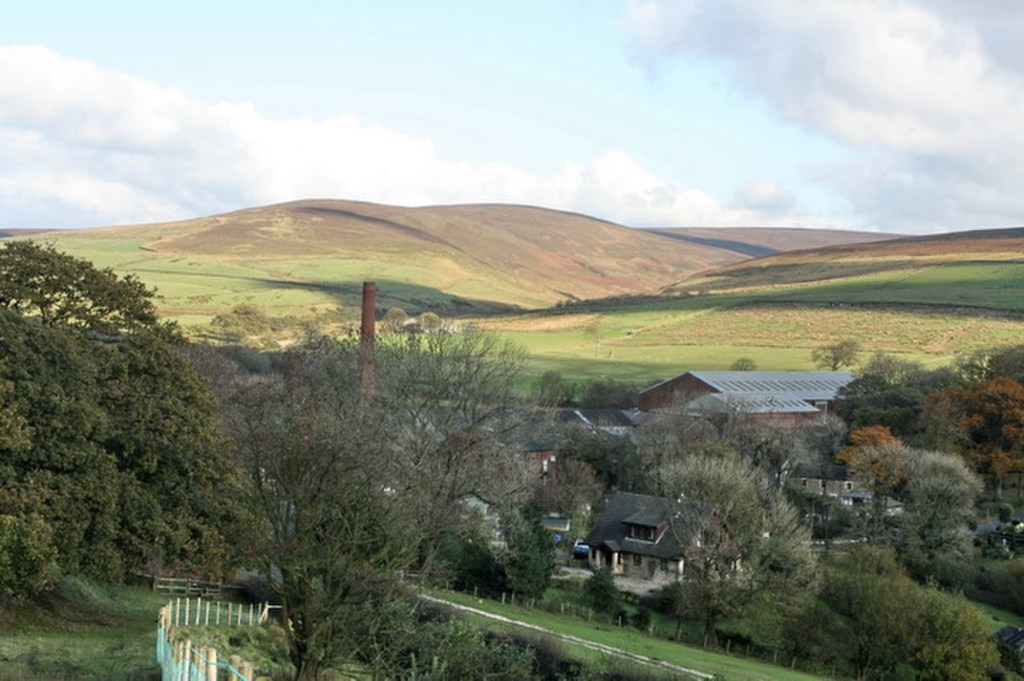
Oakenclough paper mill sits below Oakenclough fell by the river Calder on the Western edge of the Forest of Bowland.
Built in 1775 as a paper mill, powered by a water wheel in the river Calder, Oakenclough mill provided employment for many in an area that was entirely agricultural before the industrial revolution. The villages of Oakenclough and neighbouring Calder Vale developed around the mill into the pretty little hamlets that exist today.
‘1652’ country
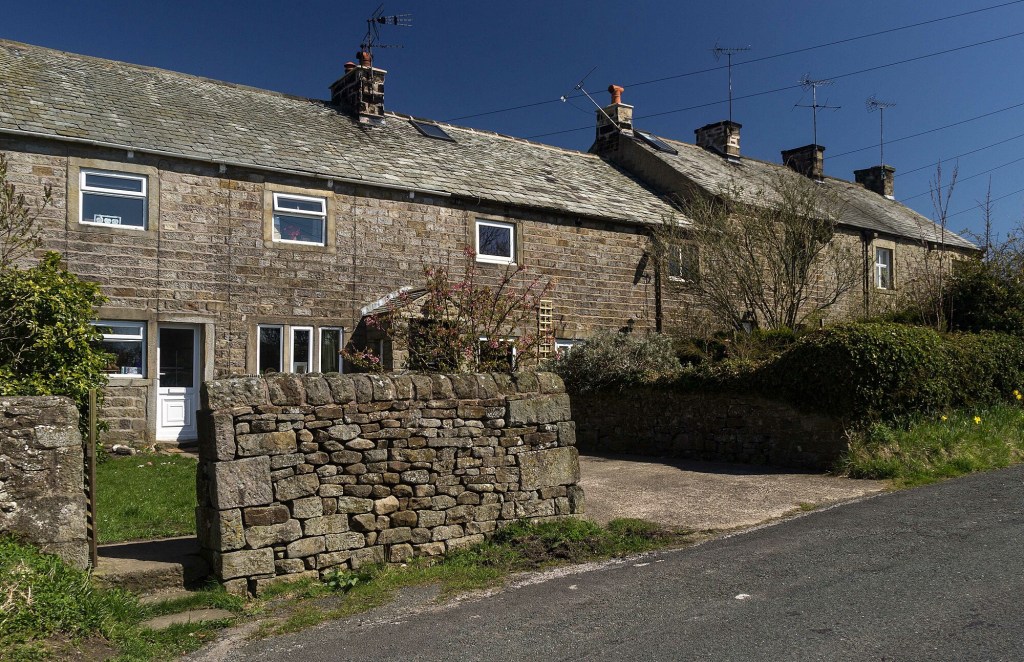
In 1827, the owner of the mill, Richard Curtis, a paper manufacturer and farmer, filed for bankruptcy. Prominent Quaker John Jackson bought the mill and built a meeting house next door, Calder bank, the area of Wyresdale and Garstang being in the heart of ‘1652’ country, the stronghold of the movement which begun in the northwest of England with the famous proclamations of George Fox on Pendle hill.
John’s sons, Johnathan and Richard lived in Calder Bank next to the mill and founded the nearby village of Calder Vale in 1853 which housed workers for a cotton mill they also built there, that mill was also water powered and like Oakenclough mill not much of the original water wheel remains except the weir and millrace.
The Mill now
Oakenclough paper mill closed in 1971 and nowadays little of the original mill remains except for the chimney which can be seen in this drone footage, the site is now home to a agricultural fuel and and feed merchant.
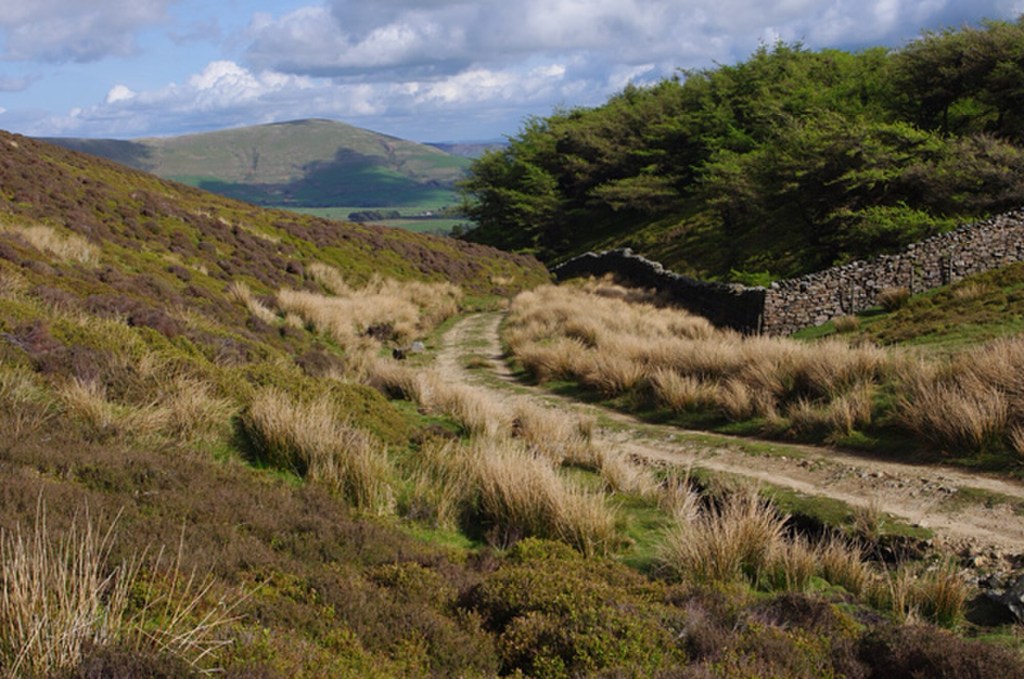
It’s a very quiet bit of Lancashire usually passed by most people but it’s well worth a detour, especially in the evening when the views over the Lancashire plains can be spectacular.
A B-H
 Northwest Nature and History
Nice post ✍️
LikeLiked by 1 person
Thanks!
LikeLike
Interesting read, with a potential link to Cornwall, George Fox, G.C Fox and Company, the date ties in. if one of the same. A Quaker family which have historic links here, see Fox family Cornwall (Falmouth), with further ref – “kresenkernow.org”.
LikeLiked by 1 person
Thank you, I might write about the Quakers a bit more this year as their history is fascinating, thanks for the link i’ll have a look
LikeLiked by 1 person
I was employed at Ray lane paper converting factory from 1965 until its closure approx 1969. My roll as Engineering plant supervisor was to improve the reliability and efficiency of the machinery involved in producing a quality finished product. My name is Jim Newsham and I remember David Budge. Eric ? QC. The Hutton family, Miles Irvine ( maint ) I was transferred to take on a similar roll at the Oughtibridge plant , but then emigrated to New Zealand in Feb. 73. now retired, enjoying yacht racing on Lake Taupo. Hope all those I worked with are keeping well. Jim.
LikeLiked by 1 person
It’s amazing to know that an employee of the mill has read this, it must have been a lovely place to travel to for work
LikeLike
my Dad Ken Lowthion worked their 1965 to 1971, closure. We lived at Bay Horse. He enjoyed his time there. Mr Jackson was good to work for. On closure Dad, Harold Bowker, Raymond Stirzaker, Jimmy Dewhurst, Reg Snelling all went to Ramsbottom to start a paper mill up.
LikeLiked by 1 person
It’s quite nice around bay horse and forton, I’ve always liked the countryside around there, nice to hear a bit more of the mill’s history
LikeLike