
Bumblebees are often confused with Honeybees but are larger, furrier, and generally black with either white, yellow or red bands across the end of their tails. There are 24 different species of bumblebees to be found in the British isles, many of which can be seen in the Northwest of England including two which I’ve featured here before; the Bilberry bumblebee and the Red-tailed bumblebee.
They are social insects and live in colonies of 50 to 500 workers, depending on the species. The Queens hibernate during the winter and emerge in spring to find suitable nesting sites such as in a shed or in abandoned mouse holes, with some species emerging as early as February and being active all year until late autumn. Each queen will build a nest of dried grass, moss, and other material and then lay about a dozen eggs that then hatch into workers and a few sterile females.
The workers job is to gather pollen and nectar to feed the grubs which will grow into the next generation of queens and males, these mature at the end of the season and mate. The males, workers and old queens then die off and only the new queens are left which then hibernate.
Bumblebees are not aggressive and will only sting if they feel threatened, they are also important pollinators of many wild plants, crops and fruit trees so there is every reason to admire and help them and not treat them as pests.
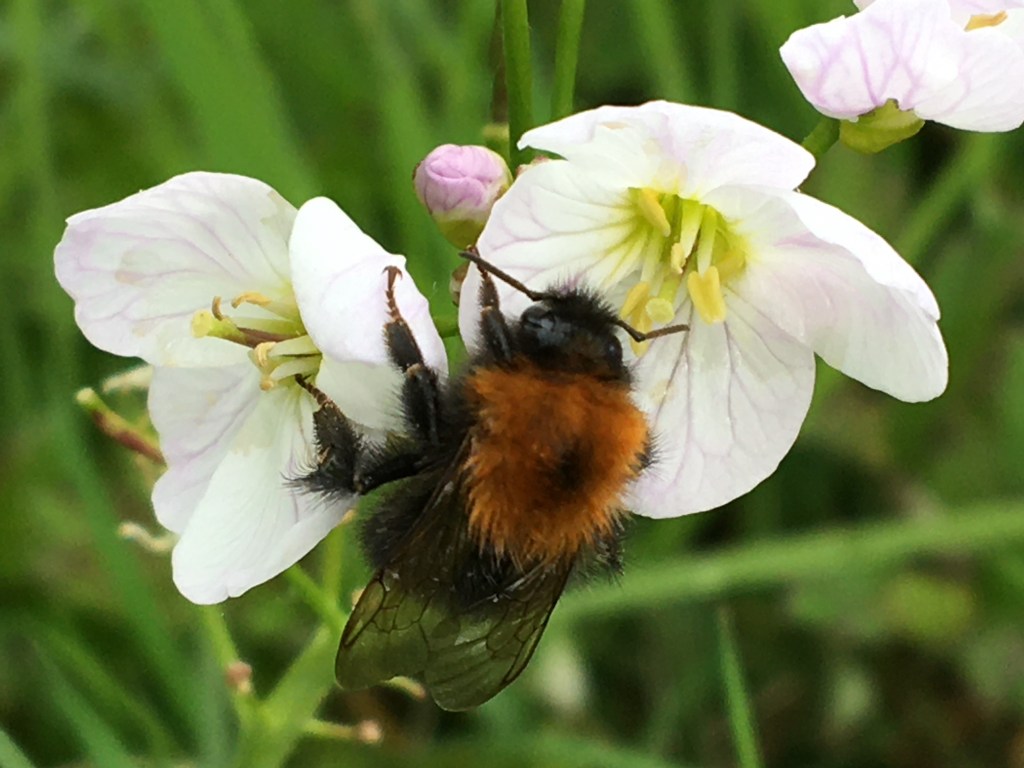
on Cuckooflower
The Life Cycle of the Bumble Bee
In the first warm days of spring you will see the large queens flying about and visiting the early flowers, they are searching for nectar and pollen to turn into food for their newly hatching brood.
Whilst travelling about the queen will try to locate a suitable place to build her nest, preferring places such as the leaf litter in a compost heap, old mouse holes, inside drystone walls and underneath the wooden floors of garden sheds.

you can just make out the ‘honey pots’
(Graham Charles)
When the queen has found a place she is happy with she begins to build a nest, into this she lays just a few eggs at a time, usually around 6. When the eggs hatch into worker bees they will begin work to support the colony and their queen. The Queen continues to lay eggs but as it takes more and more of her time to feed the growing colony she will delegate the jobs of pollen and nectar collection to the workers. Eventually the queen ends up spending all of her time in the nest.
Later on in the summer the queen lays eggs which are destined to become next year’s queen bees as well as the drones, or male bees. These drone’s only purpose in life is to mate with the young queens to ensure the survival of the species. Unlike honey bees the young Bumblebee queens will continue to live and work in the mother colony for the remaining weeks of summer and autumn.
by L B-H
As the first sharp drop in temperature and frosts arrive in autumn the old queen, her workers and the drones will die, leaving only the newly mated queens which will hibernate and emerge the next spring to begin the whole cycle again.
Because they live in such small colonies Bumble bees never swarm, this means you can encourage a nest or two in the garden without fear of this happening, however, Bumblebees do not produce enough honey for commercial use, just a few grams at a time to feed their young, so you’ll never start up your own business enterprise selling jars of Bumblebee honey!

What to do if you find a Nest
If it’s in an awkward place try not to disturb it and put up with it for a few weeks, they are great fun to watch as they bimble about the garden and the nests are usually gone by about end of July.
If they are nesting under a wooden building they often seem to enter and exit at the most inconvenient spot, if you leave another exit open, such as a window, and leave it for a few days for the bees to find, then block up the old way in they will use the new entrance instead.
If it’s a nest in the ground try to avoid mowing or disturbing that patch of lawn or garden, they will appreciate the shelter and it will protect them from predators, also try to avoid flooding it when you are watering plants, what might be a trickle of water to us is a tsunami to something the size of a Bumblebee!
Lastly, you can encourage more Bumblebees and other flying insects like honeybees, hoverflies and butterflies to your garden by planting wildflowers, the Bumblebee Conservation Trust has a comprehensive list of flowers you can plant which will encourage Bumblebees.
One plant that I’ve always found to be very popular with all kinds of insects, and which is very attractive to have in the garden too is Borage, in fact a lot of plants which are attractive to bees look good and if you are going for the english country cottage garden look then a few Bumblebees are all you need to complete it!
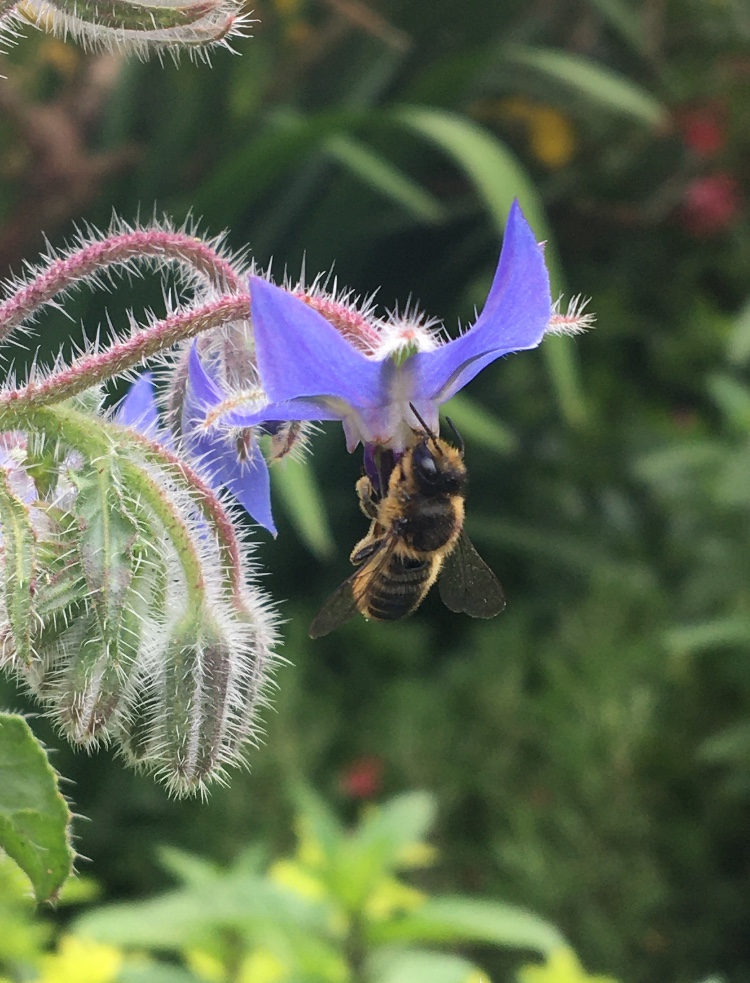
A B-H


Great post 👍
LikeLiked by 2 people