
The fragrant Juniper, Juniperis communis, (Communis being latin for ‘common’, which is unusual as vulgaris is more commonly used to convey this meaning) is the plant from which gin gets its name and flavour, and along with the Yew and the Scots pine, is one of the three species of conifer that remained native to the British isles after the retreat of the glaciers in the last ice age.
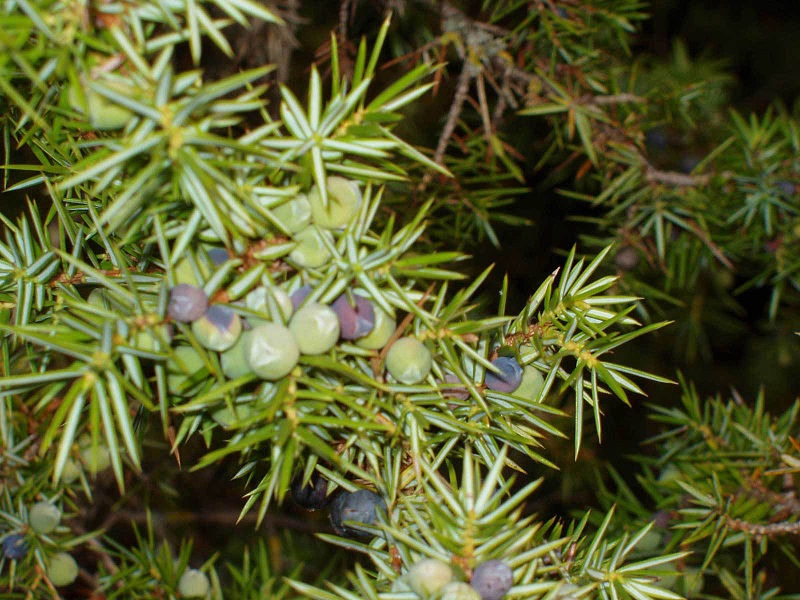
They are very long-lived plants, growing for over 200 years and have a red/grey bark which grows greyer and peels with age, green needles with silver bands underneath which remain on the bush all year round, and round blue fruit which look a little bit like blueberries.
These fruit can take more than a year to mature so often you can find both unripe green and the ripe blue berries on the same bush, only the females bear the berries though as Juniper is dioecious, meaning that there are both male and female Junipers, the male plants bearing rather peculiar looking ‘pollen cones’ instead as in the image below;

Mountain Yew
Also known as the Mountain Yew, Juniper is found throughout the British isles, from the chalk down-lands of the south, where it grows particularly well, to the Scottish highlands, but numbers of the evergreen are declining throughout its range, it is classified as threatened and the reasons for this are uncertain and complex.
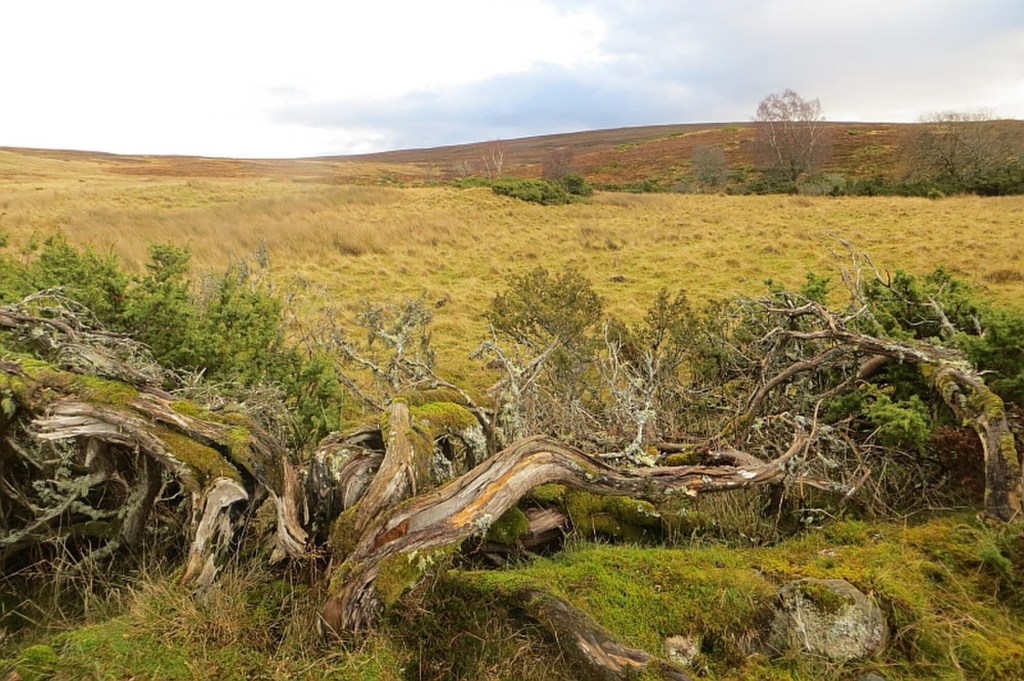
In Bowland there are three known locations where Juniper shrubs can be found, totalling about eight plants, all of which are old and not producing seeds or new seedlings, this lack of reproduction is a problem throughout the British isle’s Juniper population. These colonies are all on the northern-most fells of Bowland and protected as a priority species, with efforts currently underway to help the colonies expand, including propagation of seeds and improvement of their habitat.

in Great Britain and Ireland
from the National Biodiversity Network Gateway (NBN Gateway: data.nbn.org.uk)
Threats
The threats to the plant are thought to include drought, possibly from drainage of the fells or climate change, damage to the roots from burrowing animals such as rabbits, diseases such as Phytopthera which affects the roots and pressure from grazing animals such as Deer, Hare, Rabbits and Sheep, which eat the seedlings before they have a chance to establish themselves.
The seeds of the Juniper are mildly dormant, which means they can survive in the ground for quite a while before germinating, and are spread by birds. Species of birds which eat the berries include Black Grouse, Red grouse, Ring Ouzel, thrushes, Redwing and Fieldfare, the dense evergreen foliage also provides much needed nesting cover on the open fellsides.
The Black Grouse in particular subsists on Juniper berries in areas where they are common such as the Scottish highlands and it used to be a common bird in Bowland but the last ones were seen in the 90s, in recent years the game and wildlife conservation trust have looked into the feasibility of reintroducing the Black Grouse to Bowland. If the Juniper is to thrive in Bowland again then the birds which spread its seeds need to thrive as well.
Present and historical uses
Juniper oil is of course used to flavour gin but the rest of the plant has uses as well, the white sapwood was burnt in the past in pagan ceremonies, as it was believed to deter evil spirits and cleanse a house, it was also believed to prevent plague.
In some parts of Europe it was hung from the lintel on May Day and Halloween and in Mediterranean areas the belief is that a witch encountering a branch of juniper would be compelled to stop and count the needles. In Scotland it would be burned once a year to cleanse houses of evil spirits every year (and fumigate them at the same time).
The Juniper is biblically important, as when Joseph, Mary and the baby Jesus were on the run from Herod’s soldiers, they and their donkey were hidden by a Juniper bush, thus making it the original Christmas tree, for this reason it is traditionally hung in Italian stables, barns and cattle byres to protect the animals within, and probably for its fumigatory purposes too.
The wood is commonly burnt to smoke game, in particular venison and grouse which it works very well with and, as well as being the main ingredient in gin, it is used in brewing beer to recipes which have been traditional in Nordic countries for millennia, the resulting beverage is more bitter than that made with hops but has a unique fragrance.
An ancient Finnish beer brewed with Juniper, called Sahti, thought to be one of the oldest styles of beer in the world, tastes surprisingly like bananas though, due to the type of yeast used in the brewing process to counteract this bitterness.

Hopefully, with the hard work of conservationists and land managers, the future of Bowland’s fells will be Juniper scented and echo again with the bubbling sound of Black cock leks and one day its berries may be plentiful enough to pick and use in brewing Juniper beer to an ancient English recipe to celebrate.
A B-H
(Sep 2024)
 Northwest Nature and History
Nice post 🌹🌹
LikeLiked by 1 person
Thanks 🙂
LikeLike
Welcome dear friend 🌹🌹
LikeLiked by 1 person