
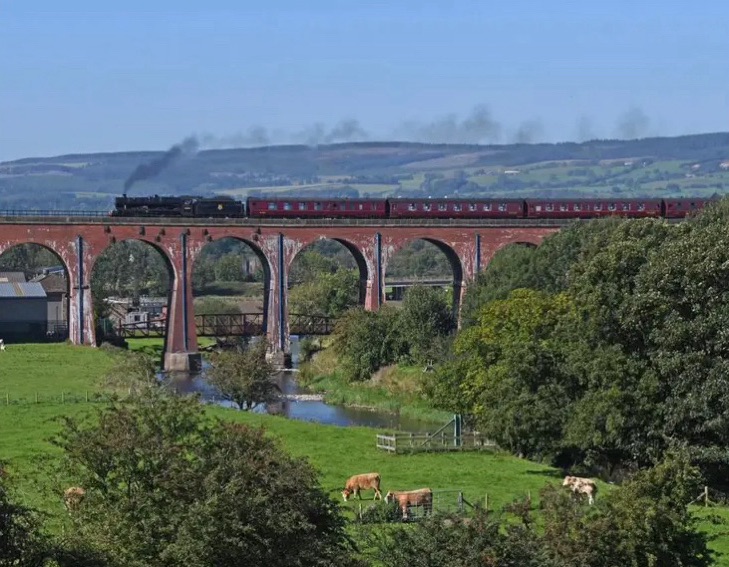
Whalley viaduct soars over the small town of Whalley in the Ribble valley and has been a familiar and well-loved landmark for many generations. Construction began in 1846 and was completed in 1850, its architectural style reflecting that of the nearby 14th century Cistercian abbey.
(Eddie Bobrowski)
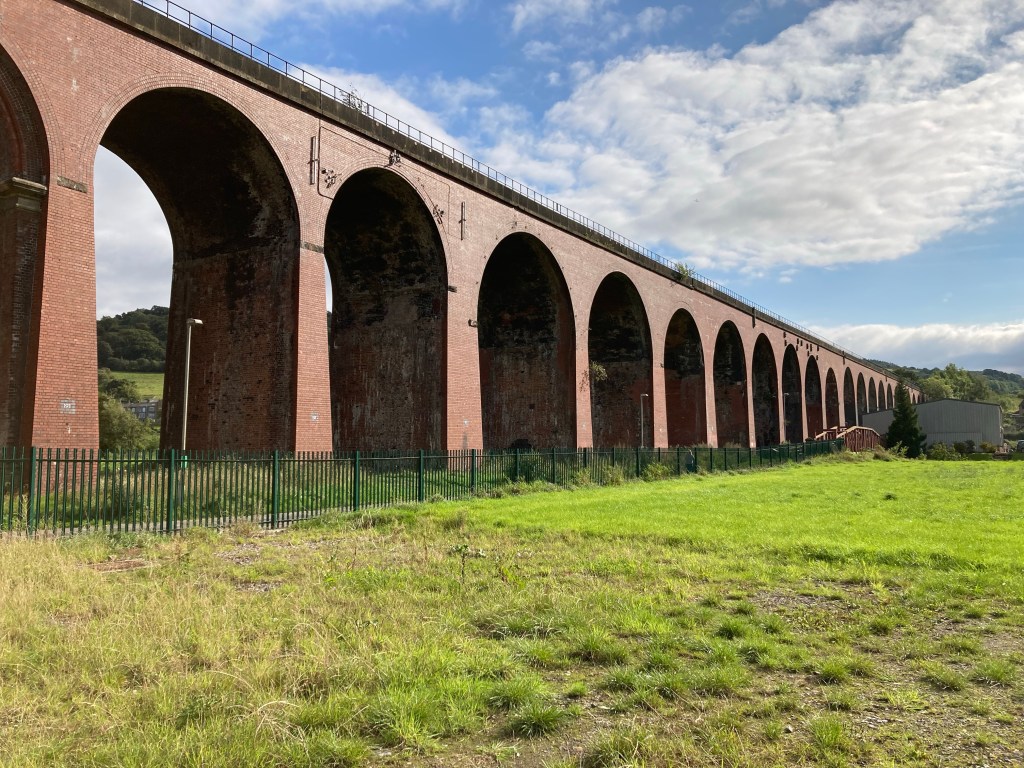
The 679 yard-long viaduct is 70ft tall at its highest point and comprised of 48 arches, overall it took nearly 7 million bricks to build, these were manufactured in Whalley itself from clay taken from nearby Hardley Common.

Longest in Lancashire
The red-and-blue brick arches of the viaduct, the longest of its kind in Lancashire, were designed by Civil Engineer Terence Woulfe Flannagan, resident engineer of the Blackburn and Preston Railway Company at the time, Terence later went on to design the railway between Antwerp and Rotterdam and several other famous lines.
The company spent £40,000 on the viaduct with the aim of connecting the industry and businesses of the Ribble valley to the larger towns of the county and the wider world.

340 men were involved in the massive project and on Saturday the 22nd of June in 1850, to celebrate its official opening, a party was held in their honour followed by a ride across the viaduct in a brand new 15-coach train.
Sadly three men lost their lives building the viaduct, Thomas Keefe, Johnny Forsythe and Charles Harrison, when the two arches they were working on, numbers twelve and thirteen, collapsed during construction on the 6th of October 1849 after the footings of their scaffolding were undermined by flood-waters, something this part of the Calder valley is very prone to even to this day.
Blind Lancets
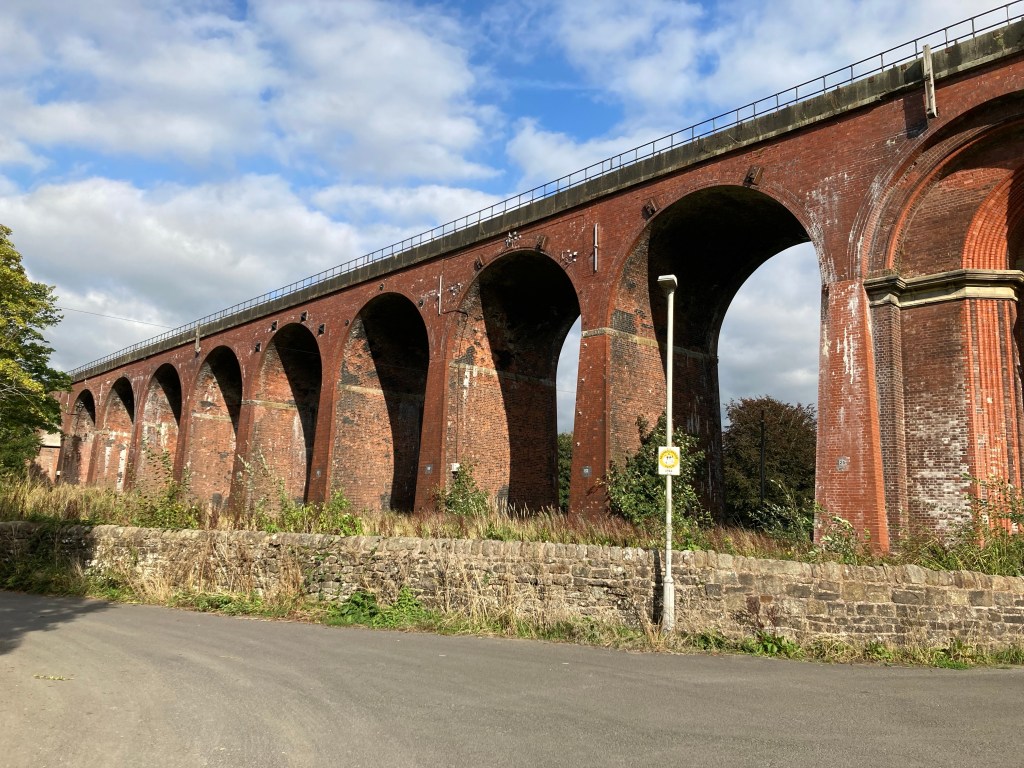
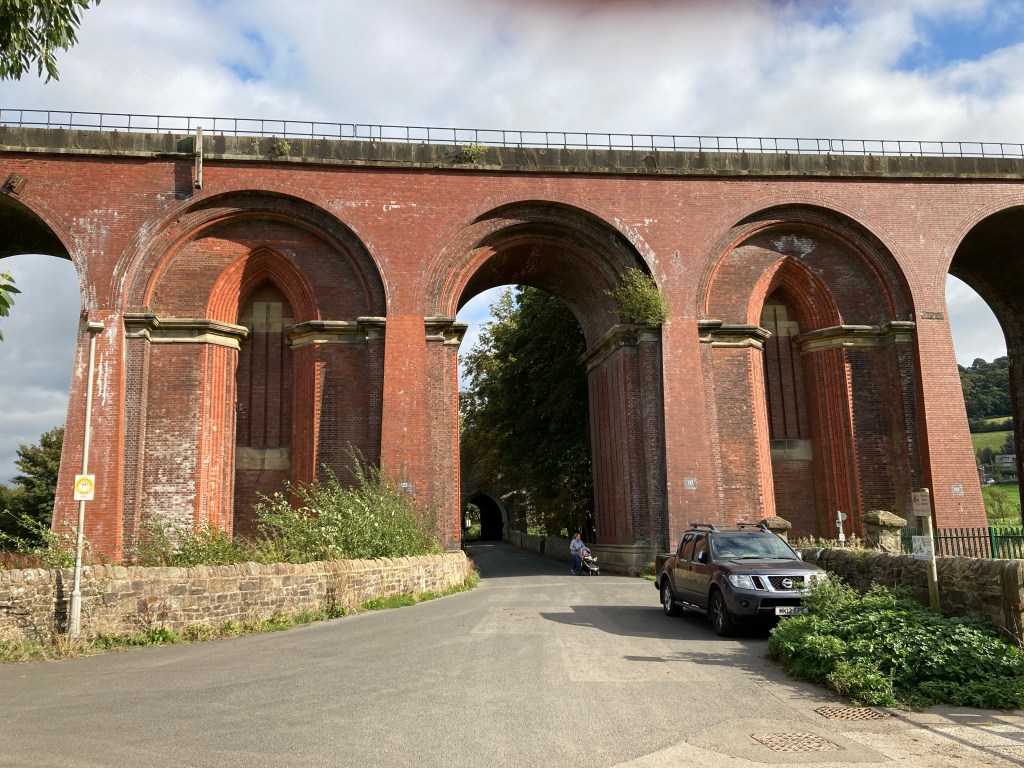
Two of the rounded, Romanesque arches, each either side of Ridding Lane, are filled with recessed brickwork in a ‘lancet’ style to reflect the gothic theme of nearby Whalley Abbey, in architectural terminology these are called ‘blind’ arches as they are solid and cannot be seen through.
Personally I’m not too convinced that the ‘Gothic within Roman’ style works that well but there’s no denying that Whalley viaduct is impressive, I would argue even more so than its smaller, younger, upstart brother in Yorkshire, Ribblehead viaduct.
Renovation
Like Ribblehead viaduct Whalley’s still carries a lot of traffic, most of it light passenger, occasionally steam specials and very often very heavy freight on its way to and from Hanson’s cement works to the east of Clitheroe.
To keep the 174 and 149 year-old structures functional and fit for purpose they have both recently been given a thorough inspection by structural engineers. Whalley viaduct, now grade 2 listed, was scanned with a 3-D laser in 2022 by Network Rail 6 years after major renovation works in 2016 when £1.6m was spent reinforcing the arches with 2,800 steel brackets.
Visiting Whalley
Whalley is a pretty and popular little town with several historic attractions to visit as well as the viaduct.
In the town’s centre stands the 13th century Church of St Mary and All Saints with its fascinating interior and well-preserved Anglo-Saxon crosses in the churchyard and just round the corner the ruins of Whalley Abbey make for a pleasant and atmospheric afternoon’s stroll, walking further up towards the viaduct this lane passes through the abbey’s eastern gatehouse (pictured in the photo at the start of this article).
There are several cafes, pubs and a great selection of shops to pop into too whilst you’re there and on the last Sunday of every month a market is held in the town centre, if you happen to call through yourself why not post some photos in the comments section below.

by Timmy Mallet (Malletspalette)
If you enjoyed this article please consider showing your appreciation by buying me a coffee, every contribution will go towards researching and writing future articles,
Thank-you for visiting,
A B-H
(July 2024)
 Northwest Nature and History
Very informative. I always give it a look from wherever in the area.
LikeLiked by 1 person
The abbey, church and viaduct are fascinating to look at but I’m not really a fan of the town itself to be honest, sadly the new housing developments have wrecked it but people have to have that BB7 postcode!
LikeLiked by 1 person
Great article and the viaduct is incredible 😍.
LikeLiked by 1 person
Thanks 🙂 it is an incredible landmark!
LikeLike
Wonderful Lancashire pressed engineering brick and civil engineering prowess!
LikeLiked by 1 person